
Selecting the right arts craft sets for elementary school students in the Philippines requires balancing classroom requirements, safety standards, and the unique challenges of a tropical climate. While a massive, multi-tiered plastic art case filled with dozens of colorful markers and crayons might seem like an ideal choice, these novelty sets often contain low-quality materials that dry out quickly or fail to perform well on standard school paper. A more practical and cost-effective approach is to select or build a set focused on high-quality, age-appropriate basics that align with your child’s specific grade level. By focusing on durable tools, non-toxic formulations, and replenishable consumables, you can ensure your child has everything they need for creative success without wasting money on unused filler items.
Identifying Core Supply Needs Before Buying
Before purchasing any pre-packaged art set, the first step is to consult the official school supply list provided by your child’s teacher. In the Philippines, elementary school art curricula are highly structured, and teachers often require very specific materials for their weekly projects. For example, a teacher might specify “long bond paper” (8.5 x 13 inches) or “short bond paper” (8.5 x 11 inches) rather than standard international A4 sizes. Buying a pre-packaged set that only includes non-standard paper sizes can lead to frustration when your child’s assignments do not fit the required submission formats.
It is also helpful to categorize the items in any prospective art set into two distinct groups: consumable basics and durable tools. Consumables are materials that get used up, such as crayons, colored pencils, glue, and drawing paper. Durable tools are the instruments used to apply or shape these mediums, such as safety scissors, rulers, pencil sharpeners, and paintbrushes. When evaluating a set, ensure that the durable tools are of high enough quality to last the entire school year, as cheap plastic scissors that dull quickly or sharpeners that break pencil leads will only need to be replaced within a few weeks.
Products mentioned in this guide
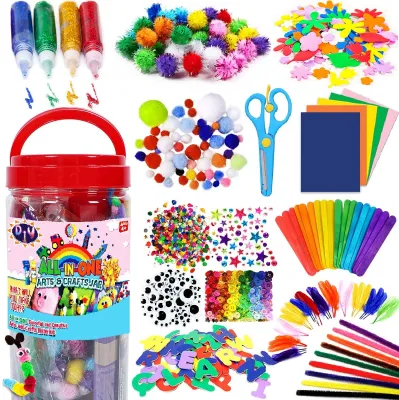
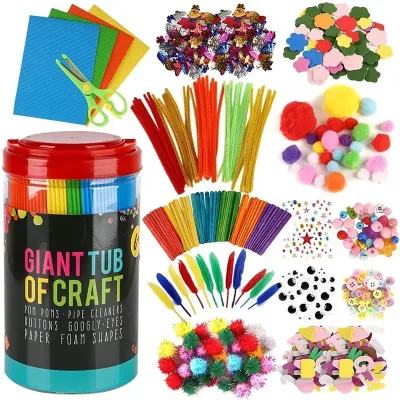
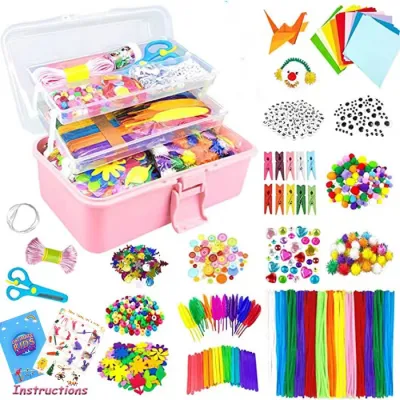
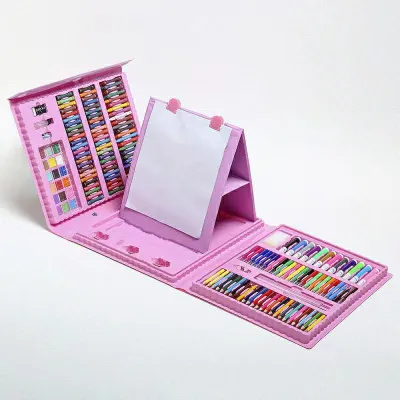
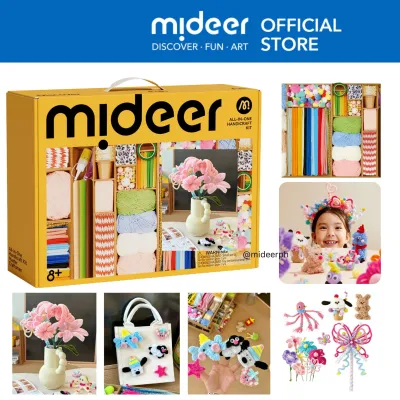
Prices are valid at publication and may change. Please refer to the product page for the latest price.
Additionally, check for specific medium requirements to avoid buying incompatible sets. Some school grades focus heavily on dry mediums like oil pastels and colored pencils, while others introduce wet mediums like watercolor cakes or poster paints. A set that is heavily weighted toward oil pastels will be of little use if your child’s class syllabus requires liquid tempera paint. Understanding these curriculum boundaries beforehand prevents you from buying a large, expensive kit filled with mediums your child is not permitted to use in the classroom.
Evaluating Quality, Safety, and Usability
Safety is the most critical factor when choosing art supplies for elementary students, who frequently handle materials and may accidentally transfer them to their mouths or eyes. Always look for recognized non-toxic certification marks printed directly on the product packaging. The most common international standard is the AP (Approved Product) seal from the Art and Creative Materials Institute (ACMI), which certifies that the product contains no materials in sufficient quantities to be toxic or injurious to humans. Another reliable standard is the European EN71 safety certification. Avoid buying unbranded art sets from discount markets that lack these clear safety labels, as they may contain harmful chemicals or heavy metals.

The tropical climate in the Philippines introduces specific challenges for paper and paint compatibility. High relative humidity can soften paper fibers, making standard school notebook paper highly susceptible to tearing, pilling, and severe ink bleeding. If your child’s art set includes watercolors, verify that the kit also contains heavy-duty watercolor paper, ideally with a weight of 200 gsm or higher. When testing paints, observe how they dry on the paper; high-quality watercolors should dry smoothly without leaving a chalky residue that flakes off when touched.
Markers and colored pencils also require careful observation before they are packed into a school bag. Perform a quick trial on a sheet of standard school paper to check for bleed resistance and drying speed. Water-based markers are preferred for elementary students because they wash out of school uniforms easily, but they must dry quickly enough to prevent smudging when a child’s hand moves across the page. For colored pencils, check the hardness of the lead; very hard leads require excessive pressure to deposit color, which can tear thin paper and tire out young hands, while excessively soft leads break constantly during sharpening.
Adhesives are particularly vulnerable to the local heat and humidity. Cheap glue sticks often dry out inside their plastic casings before the school term even begins, while low-quality liquid white glue can separate into watery layers. Check that glue caps screw on tightly to create an airtight seal, and verify that glue sticks have a smooth, slightly tacky consistency that spreads evenly without clumping.
Matching Set Compositions to Grade Levels
An art set that delights a grade one student will likely frustrate a grade six student who is ready for advanced techniques. Matching the complexity of the tools to your child’s developmental stage ensures they can express their creativity without physical strain or mechanical limitations.
Lower Elementary (Grades 1 to 3)
For children in grades one through three, the primary focus is on developing fine motor skills, hand-eye coordination, and basic color recognition. At this stage, art projects are often messy, making washable, non-toxic, and easy-to-clean materials absolutely essential. Look for water-based markers, washable tempera paints, and wax crayons that can be easily cleaned from skin, desks, and cotton school uniforms using standard laundry soap and water.
Ergonomics play a vital role in preventing hand fatigue for early writers. Jumbo-sized crayons, thick triangular colored pencils, and chunky markers are much easier for small hands to grip securely, promoting a proper pencil grasp without straining developing muscles. Safety scissors should feature blunt, rounded tips and plastic-covered blades that only cut paper, protecting fingers and clothing from accidental snips. Large-format drawing paper gives younger children the physical space they need to draw without feeling restricted by narrow margins.
Upper Elementary (Grades 4 to 6)
As students enter upper elementary school, their art projects become more detailed and structured. They transition from simple coloring to shading, blending, and color mixing. This is the ideal time to introduce standard watercolor pans with multiple color wells, sketching pencils of varying hardness (such as 2B and 4B), and basic blending stumps or tortillons.
Fine-tip markers and dual-tip brush pens allow older students to execute precise line work and hand lettering for school posters and science diagrams. At this stage, students are also expected to manage their own supplies independently. Look for art sets housed in durable, organized storage cases with dedicated slots for each item. This organization teaches children to keep track of their tools and prevents loose pencils and paintbrushes from getting lost at the bottom of their school bags.
Smart Purchasing and Replenishment Strategies
When shopping for art supplies in the Philippines, it is easy to be swayed by the convenience of a pre-packaged mega-set. However, calculating the cost-per-item often reveals a different story. A set priced at ₱500 containing fifty items might seem like a bargain, but if thirty of those items are low-quality plastic stencils, tiny paper clips, or dried-out markers, you are paying a premium for filler. Compare the total price of the set against the cost of purchasing high-quality individual items from a local stationery store to find the true value.
Online marketplaces offer incredible convenience, but they are also flooded with counterfeit and substandard art supplies. Counterfeit markers may contain toxic solvents, while fake colored pencils often have brittle leads that break every time they are sharpened. To protect your child, always purchase from official brand stores or authorized local distributors on these platforms. Look for verified reviews, official store badges, and realistic pricing structures.
Keep in mind that art supplies are not a one-time purchase for the entire school year. High-use consumables like glue sticks, black drawing pens, and sketchpad paper will almost certainly run out by the end of the first grading period. Instead of buying an entirely new set mid-year, establish a replenishment budget. Buying these high-use items in small bulk packs during back-to-school sales can save you significant money and prevent last-minute, stressful trips to the store before a major school project is due.
Finally, consider how you store these supplies at home. The high humidity in the Philippines can attract household pests like silverfish and ants, which are drawn to the starch-based adhesives in paper and glue. Storing your child’s art supplies in a sealed, clear plastic storage bin with a few silica gel packets will protect the paper from moisture damage and keep pests away, ensuring the materials remain in excellent condition throughout the school year.
Frequently Asked Questions (FAQ)
How can I prevent markers and paints from drying out between school terms?
To maximize the lifespan of school markers, store them horizontally. This position prevents the ink from pooling at one end, keeping both tips of dual-tip markers evenly saturated. For single-tip markers, storing them cap-down can also keep the nib moist, but horizontal storage remains the safest default.
For paints and glues, the humid climate of the Philippines can actually accelerate mold growth if containers are left dirty, or cause them to dry into solid blocks if left open. Always wipe the threads of paint tubes and glue bottles with a damp cloth before screwing the caps back on tightly. Store watercolor pans in a cool, dry drawer away from direct sunlight, and ensure they are completely dry before closing the lid to prevent mildew.
Is it better to buy a massive all-in-one set or separate specialized kits?
While massive all-in-one art cases look impressive under the Christmas tree or on the first day of school, they often contain a high volume of low-quality filler items that students rarely use. Niche tools like plastic scissors that cannot cut, low-pigment oil pastels, and chalks often go untouched, taking up valuable space.
For the best educational experience and value, prioritize separate, specialized kits or build your own set. Investing in a dedicated box of high-quality colored pencils, a reliable watercolor palette, and a sturdy sketchpad ensures that every tool your child uses performs reliably, lasts longer, and can be easily replaced when empty.
Community discussion
Share your experience or ask a question. Comments are reviewed before publication.