
Selecting the right eco-friendly plastic bags for your business requires balancing your product’s physical requirements, your storage capacity, and the actual waste disposal infrastructure available to your customers. There is no single universal option that fits every business model. For businesses packaging dry office supplies, books, or non-perishable retail goods, recyclable plastic bags often provide the most practical path, provided local collection systems are active. Conversely, businesses dealing with food service, fresh produce, or organic items benefit most from compostable packaging, which can break down alongside food waste. Biodegradable bags serve as a broad category, but their environmental benefits depend heavily on specific disposal conditions that are not always present in standard municipal waste streams.
To make an informed decision, businesses must look past marketing buzzwords and understand the precise technical definitions of these materials. The term “biodegradable” is a broad scientific classification rather than a specific environmental guarantee. A biodegradable bag is designed to break down into smaller pieces over time through the action of naturally occurring microorganisms such as bacteria, fungi, and algae. However, without specific industry certifications, the term does not guarantee a set timeframe for this breakdown, nor does it ensure that the remaining residue is free from toxic chemicals or microplastics. Many conventional plastics with chemical additives are labeled as biodegradable, yet they may simply fragment into microscopic plastic particles that persist in the soil or water supply.
In contrast, “compostable” is a highly regulated term with strict performance standards. Compostable bags are a specific subset of biodegradable materials designed to biodegrade within a set timeframe under controlled composting conditions, leaving behind only water, carbon dioxide, inorganic compounds, and biomass, with no toxic residues. To ensure a bag is truly compostable, businesses must verify that the product carries recognized third-party certifications. Look for labels indicating compliance with international standards such as ASTM D6400 (in the United States) or EN 13432 (in Europe). These certifications guarantee that the material will disintegrate completely in a professional composting environment within a specified period, typically around 180 days, without harming the quality of the resulting compost.
Products mentioned in this guide
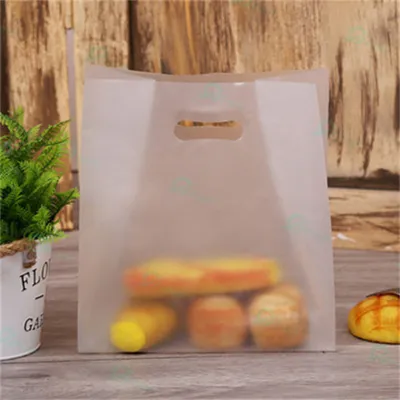
603 Lazada user ratings
Cake color option available, Easy to carry and transport, Convenient handle design, Easy to carry and transport, Attractive blank color, Eas…Read full reviewShow less
Cake color option available, Easy to carry and transport, Convenient handle design, Easy to carry and transport, Attractive blank color, Easy to carry and transport, Easy to carry and transport,
Quality:Great craftsmanship, Great for packaging and takeaway, Easy to carry and transport, Design:Modern look, Price:Reasonable price, Grea…Read full reviewShow less
Quality:Great craftsmanship, Great for packaging and takeaway, Easy to carry and transport, Design:Modern look, Price:Reasonable price, Great value,
Ang cute nya tapos minimal! Thank you po seller! Complete order and nagsesend pa si seller ng picture bago iship out!😊😊😊
Multiple sizes available, Perfect for pastry and food takeout, Eco-friendly and biodegradable,
Quality:Great craftsmanship, Design:Modern look, Price:Reasonable price, Great value,
Prices are valid at publication and may change. Please refer to the product page for the latest price.
“Recyclable” bags represent a circular economy approach where the material is collected, cleaned, processed, and pelletized to manufacture new plastic products. These bags are typically made from traditional polymers like Low-Density Polyethylene (LDPE) or High-Density Polyethylene (HDPE). Unlike bio-based alternatives, recyclable bags do not break down in nature; instead, their environmental value relies entirely on the existence of a closed-loop collection and processing system. If a recyclable bag ends up in a landfill or the natural environment, it behaves exactly like conventional plastic, persisting for decades or centuries. Therefore, choosing recyclable options is only effective if your customers have convenient access to soft-plastic recycling programs.
The prevalence of “greenwashing”—where packaging is marketed as environmentally friendly through vague terms like “eco-safe,” “earth-friendly,” or “bio-degradable” without any scientific backing—makes rigorous verification essential. When sourcing packaging materials, businesses should request official certification documents from suppliers rather than relying on printed claims on the box. Legitimate eco-friendly bags will feature clear, traceable certification logos from organizations like the Biodegradable Products Institute (BPI) or TÜV AUSTRIA (such as the “OK Compost” or “OK biobased” marks). Checking these credentials protects your business from regulatory non-compliance and ensures your sustainability investments yield genuine environmental benefits.
Comparing Durability, Shelf Life, and Use Cases
When transitioning to eco-friendly packaging, businesses must evaluate how these materials perform under daily operational demands. Unlike conventional plastics, which can sit in a warehouse indefinitely without losing their physical properties, bio-based alternatives have a distinct shelf life. Compostable and biodegradable bags are designed to degrade, meaning they are sensitive to environmental factors like humidity, ambient temperature, and ultraviolet (UV) light. Over time, exposure to these elements initiates the breakdown of the polymer chains, causing the bags to become brittle, lose their elasticity, and tear easily. Businesses must plan for an active expiration date, which typically ranges from 10 to 18 months from the date of manufacture, depending on the specific material formulation.
The physical strength of eco-friendly bags also varies based on their composition. Traditional recyclable plastics, such as LDPE, offer excellent tensile strength, high tear resistance, and reliable moisture barriers, making them highly dependable for heavy or sharp items. Bio-based compostable bags, often made from cornstarch, polylactic acid (PLA), or polybutylene adipate terephthalate (PBAT), tend to have a softer, more matte texture. While modern manufacturing has significantly improved their performance, they generally offer lower puncture resistance and may soften when exposed to prolonged moisture or high heat. Rather than assuming a bag can handle your product weight, it is critical to request comprehensive manufacturer specification sheets detailing the exact load capacity, tear strength, and recommended thickness (usually measured in microns) for your specific application.
Mapping these material characteristics to your daily business operations helps prevent packaging failures and customer dissatisfaction. Recyclable plastic bags are highly suited for dry, non-perishable items. If your business sells office stationery, books, apparel, or dry electronics, recyclable LDPE mailers or carrier bags provide excellent protection against transit damage while remaining fully compatible with established soft-plastic recycling streams. Because these items do not contaminate the plastic with food residue or oils, they can be easily processed by recycling facilities without requiring intensive washing.
Compostable bags are the ideal choice for businesses operating in the food, beverage, or agricultural sectors. When packaging fresh produce, bakery items, takeout meals, or organic waste, the packaging inevitably becomes soiled with food scraps, grease, and moisture. Conventional recycling facilities cannot process food-contaminated plastics, as the organic residue ruins the recycling batch. Compostable bags solve this issue because they can be disposed of directly into organic waste bins along with the food scraps they contain. The entire package can then be sent to a composting facility, where the food waste and the bag decompose together into nutrient-rich soil conditioner.
Biodegradable bags are often utilized by general retail businesses that require a versatile carrier bag but operate in regions where specialized composting or soft-plastic recycling infrastructure is limited. These bags are designed to offer a middle ground, providing a similar shelf life and strength profile to conventional plastics while incorporating additives intended to accelerate degradation in open environments. However, because their breakdown depends on unpredictable environmental factors, they should be selected with a clear understanding of their limitations. They are best suited for dry retail goods where customers are likely to reuse the bag multiple times before final disposal.
End-of-Life Processing and Local Infrastructure
The true environmental impact of any eco-friendly bag is determined by what happens to it after the customer discards it. A bag’s design is only as sustainable as the waste management infrastructure available to process it. For recyclable plastic bags, successful processing requires a clean, dry stream of material. In the Philippines, flexible soft plastics like shopping bags and shipping mailers are generally not accepted in standard curbside recycling bins because they can tangle in the sorting machinery at material recovery facilities. Instead, they must be collected through specialized drop-off programs, plastic-to-cement recycling initiatives, or dedicated clean-up drives. Businesses choosing recyclable packaging must actively educate their customers on where and how to drop off these bags to ensure they do not end up in municipal landfills or waterways.

Compostable bags present a different set of infrastructure challenges, primarily centered on the distinction between home-compostable and industrially-compostable materials. Bags certified as “home compostable” are designed to break down at the lower, ambient temperatures found in a typical backyard compost bin or garden pile. These are highly convenient for eco-conscious consumers who manage their own compost. However, many compostable bags on the market are certified only for “industrial composting.” These materials require the high, sustained temperatures (often above 55°C), controlled moisture levels, and specific microbial activity found only in commercial composting facilities. If an industrially compostable bag is placed in a backyard compost pile, it may take years to degrade, if it degrades at all. Businesses must verify the availability of commercial composting partners in their operational areas before distributing industrially compostable packaging.
A common misconception is that biodegradable bags will safely and rapidly dissolve once they reach a standard landfill. In reality, modern landfills are engineered to be dry, compressed, and anaerobic (oxygen-deprived) environments to prevent shifting and minimize greenhouse gas emissions. Without the necessary oxygen, moisture, and microbial activity, even highly biodegradable materials remain preserved for decades. Furthermore, when organic materials do break down in anaerobic landfill conditions, they often produce methane, a potent greenhouse gas. Sending biodegradable or compostable bags to a standard landfill defeats their environmental purpose and can contribute to landfill gas emissions.
Before committing to a specific eco-friendly bag material, businesses should conduct a thorough audit of their local waste management landscape and their target customer demographics. If your primary customer base resides in urban areas with access to specialized recycling drop-offs or organic waste collection, recyclable or compostable bags are highly viable. If your customers are spread across regions with basic waste disposal systems, you must carefully weigh whether premium compostable materials will actually achieve their intended ecological benefits, or if focusing on reducing overall packaging volume is a more effective initial step.
Cost, Sourcing, and Supply Chain Factors
Transitioning to sustainable packaging involves significant financial and logistical planning. Generally, conventional plastic bags made from virgin petroleum-based resins represent the lowest baseline cost due to decades of optimized global manufacturing. Eco-friendly alternatives, particularly certified compostable and bio-based biodegradable options, carry a price premium. This premium is driven by the higher cost of raw agricultural inputs, such as cornstarch or vegetable oils, and the specialized chemical processing required to synthesize compostable polymers. When planning your packaging budget, it is important to request comprehensive bulk quotes in ₱ from local distributors to evaluate the exact per-unit cost impact on your retail margins.
Beyond the raw material costs, sourcing eco-friendly bags introduces unique supply chain dynamics, particularly regarding minimum order quantities (MOQs) and production lead times. Because specialized bio-based resins are produced in smaller volumes than standard polyethylene, manufacturers often require higher MOQs for custom-printed or custom-sized compostable bags to justify setting up their extrusion machinery. This can present a cash flow and storage challenge for small to medium enterprises. Additionally, because many high-quality certified resins are imported, lead times for custom orders can be longer than those for standard packaging, requiring businesses to forecast their inventory needs several months in advance.
The limited shelf life of bio-based bags also demands a fundamental shift in warehouse management. While conventional plastic bags can be ordered in massive quantities and stored in a warehouse for years, compostable and biodegradable bags must be treated as perishable inventory. Implementing a strict first-in, first-out (FIFO) inventory management system is essential. This practice ensures that older stock is distributed and used before the material begins to lose its structural integrity. Warehouse staff must be trained to monitor batch dates and store these materials in climate-controlled areas away from moisture, heat, and direct sunlight to prevent premature degradation.
Decision Framework: Which Option Fits Your Business?
To help streamline your procurement process, businesses can use the following structured framework to identify the most compatible eco-friendly bag option based on operational realities and product types.
- Choose Recyclable if:
- Your primary products are dry, non-perishable goods, such as office stationery, books, apparel, or packaged electronics.
- Your packaging remains clean and free of food residues or oils after use.
- Your business operates in an area with active soft-plastic collection programs, or you can establish a take-back program for your customers.
- You require high tensile strength, excellent puncture resistance, and a long warehouse shelf life for bulk storage.
- Choose Compostable if:
- You operate in the food service, hospitality, or agricultural sectors, where packaging is frequently soiled with organic matter.
- You have access to certified industrial composting facilities, or your target customers actively practice home composting (for home-compostable certified bags).
- You want to divert organic waste from landfills and can verify that your bags meet ASTM D6400 or EN 13432 standards.
- You can manage a strict FIFO inventory system and use your stock within 10 to 12 months of purchase.
- Choose Biodegradable if:
- You need a versatile carrier bag for general retail but lack access to dedicated composting or soft-plastic recycling streams.
- You are looking for a transitional packaging option that offers physical properties similar to conventional plastic while you transition to fully circular materials.
- You can clearly communicate to your customers the specific disposal instructions and limitations of the material to prevent littering.
- Verify first if:
- You are unsure about the local waste infrastructure in your primary delivery zones.
- You need to confirm the compatibility of the bag material with your specific product weight, moisture content, or sharp edges.
- You want to verify the authenticity of a supplier's environmental claims by requesting official third-party certification certificates.
Frequently Asked Questions (FAQ)
Can biodegradable or compostable bags be put in standard recycling bins?
No, biodegradable and compostable bags should not be mixed with conventional plastic recycling streams. Because these bio-based materials are made from different chemical compounds (such as cornstarch or PLA) than traditional plastics like PET or HDPE, they act as contaminants in the recycling process. When melted down together, bio-plastics can compromise the structural integrity and quality of the recycled plastic batch, rendering the entire lot unusable. Always instruct customers to keep compostable and biodegradable bags out of standard plastic recycling bins.
How should businesses store compostable bags to maintain their integrity?
To prevent premature degradation, businesses should store compostable bags in a cool, dry, and dark environment. Keep the boxes sealed until ready for use, and store them off the ground on pallets to avoid moisture absorption from concrete floors. Avoid exposing the bags to direct sunlight, high humidity, or temperatures exceeding 35°C, as these conditions accelerate the breakdown of the bio-polymers. Always follow the specific storage thresholds and shelf-life guidelines provided on the manufacturer’s product label.

Community discussion
Share your experience or ask a question. Comments are reviewed before publication.