
The most effective marker and highlighter colors depend on your specific task, balancing visual hierarchy for studying, aesthetic harmony for journaling, and blending capabilities for art. Selecting the right palette involves matching ink properties with your paper type to prevent bleeding, especially in humid tropical climates where ink drying times can vary. By understanding how different hues and ink bases interact with paper, you can build a versatile collection that serves academic, organizational, and creative needs.
Choosing Colors for Studying and Academic Note-Taking
Pastel or muted highlighters, such as soft mint, mild yellow, or dusty rose, work exceptionally well for text overlay because they do not strain the eyes during long review sessions. Vibrant markers or high-saturation neon colors are better reserved for headers, titles, or margin notes where you need immediate visual cues.
Establishing a consistent color-coding framework is key to active recall. For example, you can use yellow for core definitions, green for dates or formulas, and pink for critical exam topics. Keeping the system simple with three to four colors prevents cognitive overload and ensures you can quickly scan your notes before an exam.
Products mentioned in this guide
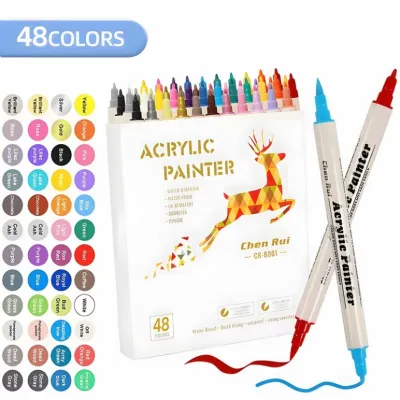
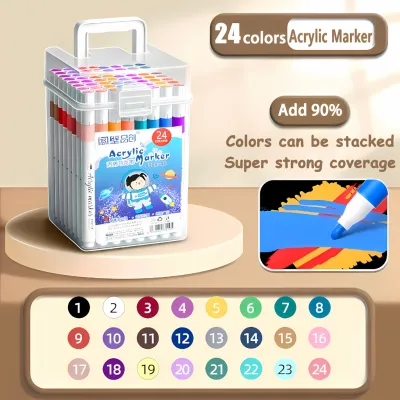
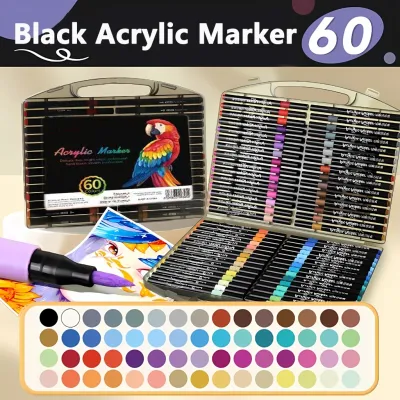
Prices are valid at publication and may change. Please refer to the product page for the latest price.
Standard school notebooks and loose-leaf papers in the Philippines often have lower paper weights, such as 50 to 70 gsm, which are highly susceptible to ghosting and bleed-through. Always test your highlighters on a back page first. If you notice ink bleeding through to the other side, switch to dry highlighters or lighter pastel shades that deposit less liquid ink onto the page.
Building Color Palettes for Bullet Journaling
Bullet journaling relies on cohesive color schemes to create visually appealing layouts. You can use basic color theory to design monthly or weekly spreads, such as monochromatic schemes using different shades of a single blue, or analogous colors like warm oranges and yellows for summer.

Translucent highlighters are ideal for layering over written text or creating subtle background washes without obscuring your handwriting. Opaque markers, such as water-based brush pens or paint markers, are better suited for drawing solid borders, headers, and hand-lettering where you want rich, solid blocks of color.
If you intend to keep your journals as long-term keepsakes, check product labels for lightfastness or fade resistance. Acid-free, pigment-based inks are less likely to yellow or fade over the years when exposed to light and humidity, preserving your memories and creative layouts.
Selecting Marker Colors for Art and Creative Projects
For art projects, the choice between alcohol-based and water-based inks dictates your blending technique. Alcohol-based markers excel at creating smooth, streak-free gradients and seamless color transitions because the ink rewets itself on the page, though they require thick, bleed-proof paper. Water-based markers are easier to control for layering and can be blended with a wet brush for watercolor effects, but excessive layering can pill standard paper.
When starting out, purchasing pre-packaged color sets can be cost-effective, but buying individual markers allows you to customize your palette to your specific subject matter. For portraiture, look for skin-tone families; for landscapes, focus on earth tones and botanical greens. Ensure you have a range of values, including light, medium, and dark shades, within each color family to create realistic depth and shading.
While professional individual markers can cost upwards of ₱150 each, budget-friendly starter sets under ₱300 offer a practical way to test different color families before investing in premium brands. Verify that your markers are compatible with your chosen surface by checking the manufacturer’s specifications. Heavyweight mixed-media paper, watercolor paper, or specialized marker pads prevent ink from spreading uncontrollably, while canvas or textured boards may require acrylic-based paint markers to achieve vibrant, opaque coverage.
Evaluating Ink Properties for Cross-Scenario Use
Understanding the differences between ink bases helps you determine if one set can do it all. Water-based inks are highly versatile, odorless, and safe for thin journal pages, but they do not blend as smoothly as alcohol-based inks. Alcohol-based inks offer professional-grade blending but will bleed through almost all standard notebook and journal papers. Acrylic inks provide complete opacity on dark surfaces but are permanent and cannot be easily layered with other media.
The shape of the marker tip changes how you apply color. Dual-tip markers are highly practical, often featuring a flexible brush tip on one end for sweeping strokes and hand-lettering, and a fine-liner or chisel tip on the other for detailed writing and precise highlighting. Chisel tips are excellent for broad highlighting strokes, while bullet tips offer consistent line widths for sketching and writing.
To avoid ruining an expensive notebook or art piece, establish a personal swatch chart on the exact paper you plan to use. Draw small blocks of each color, noting the drying time, how the ink behaves when layered, and whether it bleeds through to the back of the page. This simple test is especially important in humid environments, where ink may take longer to dry and smudge more easily.
Frequently Asked Questions (FAQ)
How many highlighter colors do I actually need for studying?
For effective studying, limit yourself to three or four highlighter colors. Using too many colors creates visual clutter, making it harder for your brain to process and recall information. A simple setup includes one color for key terms, a second for supporting details or examples, and a third for formulas or deadlines. This disciplined approach ensures your eyes are drawn only to the most critical elements when reviewing.
Can I use the same markers for journaling and art projects?
Yes, you can use the same markers, but you must consider paper weight and ink consumption. Casual journaling is typically done on thinner paper, around 80 to 100 gsm, which cannot handle heavy alcohol-based art markers without significant bleed-through. Additionally, using professional art markers for daily journaling will deplete their ink quickly on absorbent paper. For a balanced approach, use water-based brush pens or dual-tip markers, which perform well for both decorative journaling and light creative sketching.
Community discussion
Share your experience or ask a question. Comments are reviewed before publication.