
Finding the right art supplies for school projects can be a balancing act. For Filipino students in elementary and high school, oil pastels are a staple medium because of their vibrant colors, blendability, and tactile application. However, choosing the perfect set requires looking beyond just the number of colors in a box. You need to consider how the pastels perform under local classroom conditions, their safety for young artists, and how well they survive the daily commute in a student’s backpack.
By understanding the specific demands of school art curricula and the physical properties of different pastel formulations, parents and students can make informed decisions. The ideal set should not only inspire creativity but also withstand the high humidity and warm temperatures typical of local classrooms. This guide breaks down the essential criteria to help you select a set that balances performance, safety, and value.
Baseline Requirements for School Art Classes
School art teachers typically look for specific performance standards when recommending oil pastels. The most critical factor is pigment opacity. Standard school drawing paper, often referred to locally as oslo paper, has a slight texture that requires a pastel with high coverage. If the pastel is too hard or contains too much wax filler, it will leave patchy, white gaps on the paper, forcing the student to press down hard, which often leads to hand fatigue or broken sticks. A good student-grade pastel should glide smoothly and deposit a rich, opaque layer of color with minimal effort.
Products mentioned in this guide
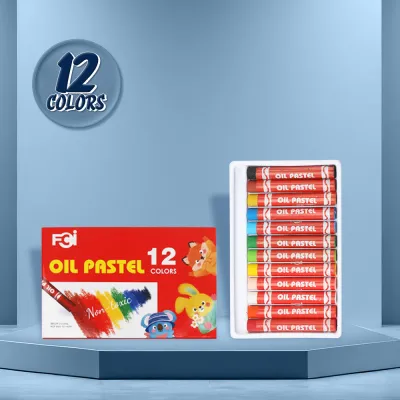
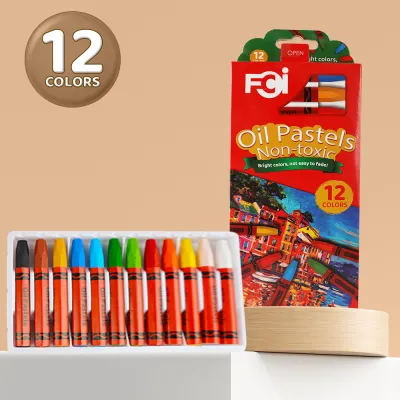
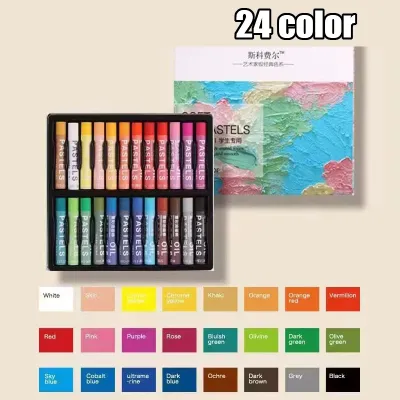
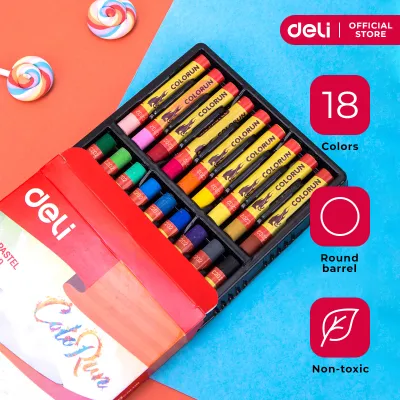
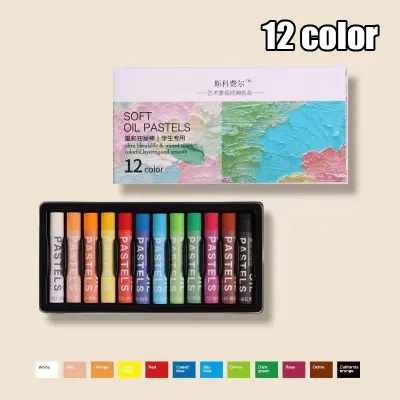
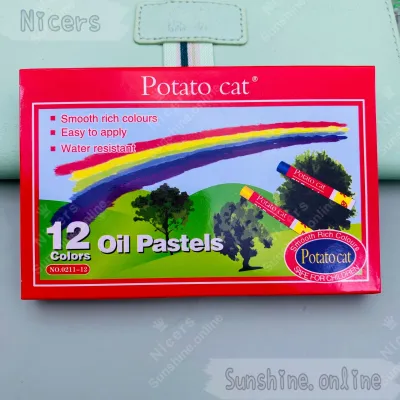
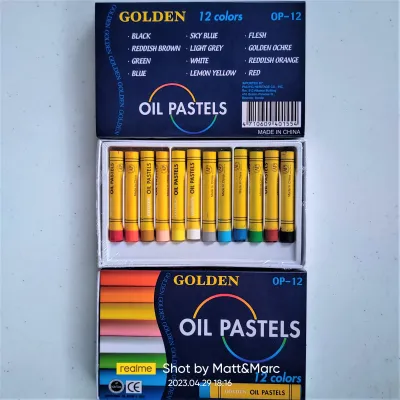
Prices are valid at publication and may change. Please refer to the product page for the latest price.
Safety is another non-negotiable requirement for classroom environments. Because students handle these pastels directly and often get pigment on their hands, the product must carry clear non-toxic certifications. Look for labels indicating compliance with international safety standards, such as the AP (Approved Product) seal from the Art and Creative Materials Institute (ACMI) or the EN71 certification for European toy safety standards. These labels guarantee that the pastels do not contain harmful levels of heavy metals or toxic chemicals, making them safe for prolonged skin contact.
Finally, pay close attention to the physical construction of the pastel sticks. High-quality student sets feature durable paper wrappers that run the entire length of the stick. These wrappers serve two vital purposes: they reinforce the structural integrity of the pastel to minimize snapping during heavy-handed coloring, and they keep the student’s fingers clean. Wrappers that are perforated or designed to peel away easily in small sections are highly preferred, as they allow students to expose more pastel without tearing off the entire protective sleeve.
Matching Features to Elementary and High School Needs
As students progress from elementary to high school, their artistic needs and motor skills change significantly. For elementary school students, the primary focus is on comfort, ease of use, and durability. Younger children are still developing their fine motor skills and tend to apply uneven, heavy pressure. For these students, jumbo-sized or hexagonal-shaped oil pastels are highly recommended. The thicker barrel is much easier for small hands to grip securely, reducing hand strain and preventing the pastels from rolling off slanted school desks. A basic color range of 12 to 24 shades is more than enough for elementary art curricula, allowing children to learn color identification and basic mixing without feeling overwhelmed by too many choices.

In contrast, high school art classes demand a higher level of detail, precision, and technical execution. High school students transition to standard-sized, thinner pastel barrels that allow for fine lines, sharp edges, and intricate layering. Their art projects often require a broader color palette, typically ranging from 36 to 50 or more shades. This expanded selection allows students to experiment with subtle color gradations, realistic skin tones, and complex landscapes. High schoolers also benefit from pastels with a slightly softer consistency, which facilitates advanced blending techniques like scraping, overlaying, and using solvents.
Understanding when to transition from basic student-grade sets to advanced student or semi-professional sets is key to supporting a student’s artistic growth. While elementary students do best with firmer, waxier pastels that resist breaking, high school students will quickly outgrow these limitations. If a student shows a strong interest in visual arts or is enrolled in a specialized arts track, upgrading them to a softer, highly pigmented set will allow them to practice professional techniques without the frustration of stiff, unyielding materials.
Core Criteria for Comparing Oil Pastel Sets
When comparing different oil pastel sets on the market, it is easy to get distracted by large color counts. However, a high color count does not always translate to practical usability. Many budget-friendly sets pad their numbers by including multiple shades of the same color that look virtually identical on paper. When evaluating a set, look for a balanced distribution of colors. A practical school set should feature strong primary colors, versatile secondary colors, a good selection of earth tones for landscapes, and multiple white sticks, as white is the most frequently used color for blending and highlighting.
The packaging of the oil pastel set is another crucial factor, especially considering the daily wear and tear of a student’s backpack. Cardboard boxes are common and affordable, but they tend to degrade quickly in the high humidity of the Philippines, often tearing at the corners or absorbing moisture during the rainy season. Plastic carrying cases with secure snap locks or slide-on sleeves offer far superior protection. They keep the pastels organized, prevent them from rubbing against other school supplies, and shield them from accidental spills or humid air.
Additionally, consider whether the set includes useful accessories or if you need to purchase them separately. Some packages come bundled with plastic blending stumps, scrapers for sgraffito techniques, or even small plastic holders to grip short, used-up pastel stubs. While these accessories are convenient additions that add value to a purchase, they should not overshadow the quality of the pastels themselves. If a set has excellent pigment quality but lacks accessories, you can easily substitute them with common household items like cotton swabs, plastic cards, or wooden toothpicks.
Pre-Purchase Checklist for Online and In-Store Buying
Whether you are shopping at a local brick-and-mortar bookstore or browsing an online marketplace, a systematic pre-purchase check will save you from receiving damaged or counterfeit goods. First, inspect the product packaging or online listing photos carefully. Look for clear, legible printing of the brand name, manufacturer details, and safety certifications. Avoid products with generic packaging that lacks clear ingredient disclosures or safety labels, as these may contain substandard materials that are difficult to blend or unsafe for children.
When buying online, customer reviews are an invaluable resource for assessing real-world quality. Scroll past the generic five-star ratings and look specifically for reviews written by parents or students. Pay attention to comments regarding how the product was packaged for shipping. Oil pastels are sensitive to heat and physical impact; poor packaging can result in pastels arriving melted together or shattered into pieces. Also, look for mentions of dried-out or unusually hard pastels, which can happen if stock has been sitting in a hot warehouse for too long.
To ensure you are getting an authentic product, compare prices across multiple sellers. If a deal on a popular brand seems too good to be true, it may be a counterfeit product. Counterfeit art supplies often use cheap, toxic binders and low-grade pigments that perform poorly and pose health risks. Whenever possible, purchase directly from the official flagship stores of established stationery brands on major ecommerce platforms, or visit reputable local stationery retailers. Spending a little extra, perhaps choosing a set in the ₱150 to ₱500 range from a trusted source, guarantees peace of mind and a better artistic experience.
Everyday Care and Storage for Student Artists
Proper care and storage are essential to prolonging the life of oil pastels, particularly in a tropical climate. Because oil pastels are made from a mixture of pigments, non-drying oils, and wax, they are highly sensitive to temperature changes. Storing your pastel sets in a cool, dry place away from direct sunlight is critical. Never leave an art bag inside a parked car or near a window where the afternoon sun hits, as the intense heat can quickly soften, deform, or even melt the pastel sticks into a single solid block.
Keeping the workspace and the artist clean is another common challenge when working with this medium. Because oil pastels do not dissolve in water, washing hands with plain water will only smear the pigment further. A highly effective and safe way to clean hands and plastic tools is to use a small amount of baby oil, mineral oil, or even common cooking oil on a cotton pad or paper towel. The oil easily dissolves the pastel pigment, allowing you to wipe it away before washing the area with regular hand soap and warm water to remove the oily residue.
Finally, protecting finished artwork is necessary to prevent hours of hard work from being ruined. Oil pastels never truly dry or cure completely, meaning the surface of a finished drawing remains tacky and prone to smudging indefinitely. To protect school projects inside a portfolio or folder, place a sheet of tracing paper, parchment paper, or wax paper directly over the artwork. This prevents the pigment from transferring onto the back of other pages or sticking to the inside of plastic folders. For high school students working on major projects, applying a specialized aerosol fixative designed for oil pastels can provide an extra layer of protection against accidental smudges.
Frequently Asked Questions (FAQ)
Can regular drawing paper be used with oil pastels?
While you can technically use oil pastels on regular copier or printer paper, it is not recommended for school art projects. Standard copier paper is typically very thin and lacks the surface texture, or tooth, required to hold the heavy, oily layers of pastel. When you attempt to blend colors on thin paper, the friction can easily cause the paper to buckle, pill, or tear. Furthermore, the oils in the pastels will seep through the paper, leaving greasy stains on the back and on any surfaces underneath. For the best results in the classroom, students should use heavy-weight drawing paper, oslo paper, or mixed-media paper with a minimum weight of 160 gsm, which can handle multiple layers and blending techniques without tearing.
How do you fix mistakes when using oil pastels?
Correcting mistakes in oil pastel drawings requires a different approach than using a traditional pencil eraser, but it is entirely manageable with the right techniques. If you make an error or apply the wrong color, the most effective method is to gently scrape away the excess pastel layer using a plastic palette knife, the edge of an old plastic card, or a specialized scraper tool. Once the bulk of the pigment is removed, you can use a piece of low-tack masking tape to gently lift any remaining residue from the paper fibers without tearing the surface. After clearing the area, you can easily color over the spot with the correct shade, as the opaque nature of oil pastels allows for excellent layering and coverage over minor corrections.
Community discussion
Share your experience or ask a question. Comments are reviewed before publication.