
Sand art is a highly engaging, tactile medium that helps elementary school students develop fine motor skills, explore color theory, and express their creativity. However, introducing loose colored sand into a busy classroom requires careful planning. The most practical sand art kits for school lessons are those that balance vibrant visual appeal with effective mess containment, quick setup, and resistance to tropical humidity.
By selecting the right format—whether peel-and-stick boards, sealed frames, or bulk sensory trays—educators and parents can deliver a memorable creative experience without overwhelming their cleanup schedules. Understanding how different materials behave in local classroom environments is the key to a successful, stress-free art lesson.
Key Criteria for Classroom-Friendly Sand Art Kits
When evaluating sand art kits for a school environment, classroom management must be your top priority. Shared desks in typical classrooms offer limited workspace, meaning large, sprawling kits can quickly lead to accidental spills. Look for kits that feature compact designs or include dedicated containment trays that fit comfortably within a student’s individual desk space.
Products mentioned in this guide
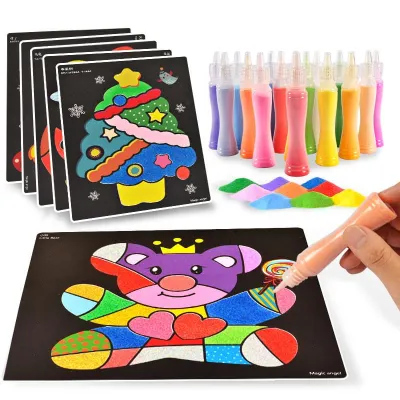
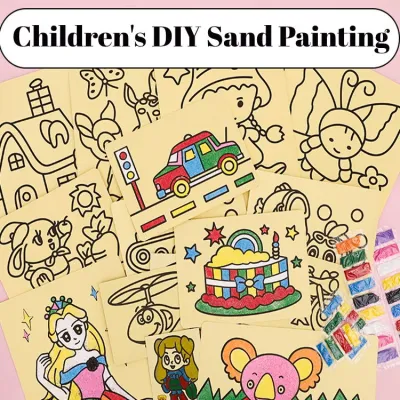
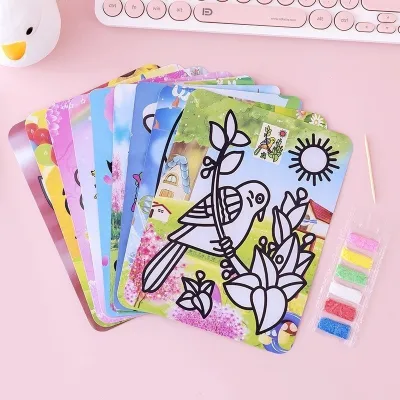
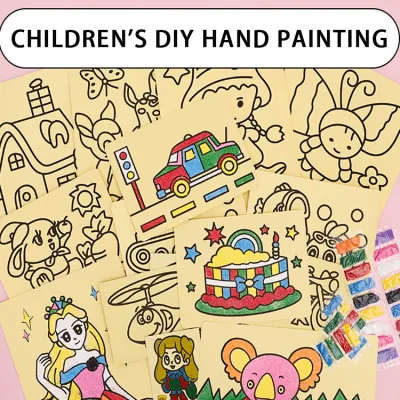
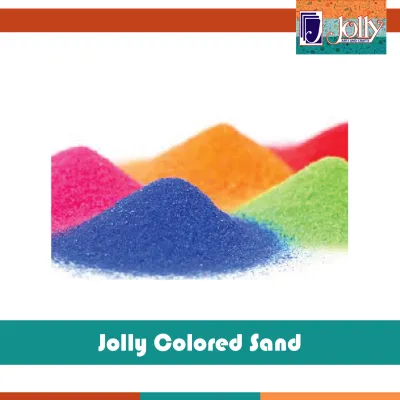
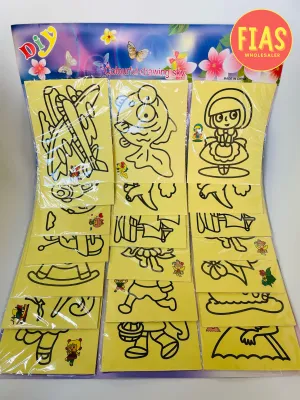
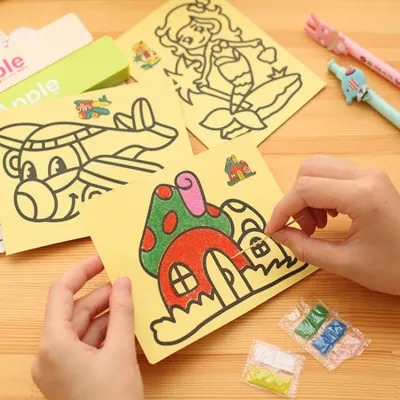
Prices are valid at publication and may change. Please refer to the product page for the latest price.
Age appropriateness is another critical factor when selecting supplies. Younger students in kindergarten through Grade 3 benefit from simple designs with large, easily identifiable sections. Older elementary students in Grades 4 to 6 can handle more intricate patterns that require precise pouring tools, fine-tip funnels, and detailed color layering.
Decide whether your lesson plan favors individual or collaborative projects. Individual kits, such as pre-cut adhesive cards, allow each student to work at their own pace and take home a completed project. Collaborative bulk sets, on the other hand, are excellent for group activities but require dedicated workspace stations and a higher level of teacher supervision to keep materials organized.
Safety verification should never be overlooked when purchasing art supplies for children. Always check product packaging for recognized non-toxic safety markings, such as ASTM D-4236 or EN71 certifications. Because fine sand can easily become airborne, especially in classrooms cooled by wall or ceiling fans, choosing dust-free, medium-grain sand is essential for maintaining a comfortable and safe breathing environment.
Recommended Types of Sand Art Kits for School Lessons
Different sand art formats require varying levels of preparation, supervision, and cleanup. Matching the kit type to your specific lesson objectives and classroom layout ensures that the activity fits neatly into your scheduled art period without running over time.

For quick, structured lessons with minimal cleanup, adhesive-based kits are generally the most efficient choice. For lessons focusing on three-dimensional design or color layering, enclosed containers or frames offer a more dynamic medium. Understanding these distinctions helps you allocate your classroom time effectively.
Pre-Glued Sand Art Boards and Stickers
Pre-glued sand art boards and stickers are highly popular for classroom use because they eliminate the need for liquid glue. These kits feature pre-printed designs on thick cardstock covered by a protective peel-off backing. Students simply peel away one section at a time to reveal an adhesive surface, sprinkle their chosen sand color, and tap off the excess.
When selecting these kits, pay close attention to the adhesive quality and paper thickness. In humid tropical climates, low-quality adhesives can dry out quickly once peeled, or the cardstock may warp when exposed to moisture in the air. Opt for heavy, rigid cardboard backings that remain flat and hold the sand securely over time.
Another practical advantage of pre-glued boards is their ease of storage. Because the sand adheres flat to the cardstock, finished projects can be stacked immediately without smudging or spilling. This makes them incredibly easy to organize, display on classroom bulletin boards, or pack into student backpacks at the end of the school day.
Enclosed Sand Art Frames with Funnels
Enclosed sand art kits involve pouring colored sand into transparent plastic frames, bottles, or ornaments to create beautiful layered patterns. These kits are excellent for teaching students about gravity, density, and geological layers. Because the sand is contained inside a vessel, the risk of loose grains scattering across the floor is significantly reduced.
To prevent messy accidents, inspect the sealing mechanisms of the frames before purchasing. Look for kits with tight-fitting silicone plugs, snap-on lids, or threaded caps. If the seals feel loose, a small drop of craft glue applied by the teacher during the final sealing step can permanently secure the lid and prevent future leaks.
These kits typically include small plastic funnels and layering tools, such as thin sticks or scoops, which help students guide the sand into tight corners. While plastic frames are often designed for permanent display, some high-quality options allow students to empty the sand back into containers, making the frames reusable for future classes.
Bulk Sand and DIY Tray Sets for Sensory Play
Bulk sand sets are ideal for open-ended sensory play, collaborative murals, or custom DIY projects where students mix their own adhesives. These sets usually consist of large jars of colored sand paired with wide, shallow plastic trays. This format gives students complete creative freedom to draw their own designs and apply sand where they choose.
To make bulk sand practical for the classroom, the containment trays must have deep, sturdy walls—ideally at least five centimeters high—to keep the sand within bounds. The sand itself should have a consistent, medium-grain texture. Avoid ultra-fine, powdery sand, which easily escapes the trays and clings to hands and clothing.
Colorfastness is another critical quality to verify with bulk sand. Lower-quality colored sands may use water-soluble dyes that bleed onto wet hands or stain clothing. Before starting a large-group lesson, test a small sample of sand with a damp paper towel to ensure the color remains locked within the grains.
Managing Sand Art Activities in the Classroom
Successful classroom sand art relies heavily on pre-lesson preparation and structured routines. Before distributing any sand, cover all work surfaces with old newspapers, plastic tablecloths, or large sheets of butcher paper. This simple step makes collecting stray sand at the end of the lesson incredibly fast and straightforward.
In classrooms that rely on electric fans for cooling, managing airflow is crucial. A strong breeze can easily blow fine sand off desks and into students’ eyes. Temporarily turn off or redirect fans away from the active workspace during the pouring and tapping phases of the art lesson to keep the environment calm and controlled.
Instead of handing out large bottles of sand to individual students, portion the sand into smaller, manageable containers. Clean plastic egg cartons, silicone muffin cups, or small condiment cups work beautifully for holding individual color portions. This limits the amount of sand that can be spilled in a single accident and prevents students from mixing colors in the main supply bottles.
Establish a clear post-lesson cleanup routine. Teach students to tap their finished art boards gently over a shared “collection tray” to gather excess sand for reuse. For final cleanup, use small hand brushes and dustpans rather than wet cloths, as wet sand can smear and stick to surfaces, making it much harder to remove from wooden school desks.
Where to Source and Verify Sand Art Supplies
Finding affordable, high-quality sand art kits in bulk requires exploring a mix of local stationery stores and online marketplaces. Many local school supply distributors offer significant discounts when purchasing in carton quantities, which is ideal for grade-level coordinators or art teachers planning lessons for multiple sections.
When browsing online marketplaces, look for sellers that specialize in educational toys and school supplies. Be sure to read the product descriptions carefully to confirm what is included in the package. Some listings may showcase beautiful finished sand art frames but only sell the replacement sand bottles, so verify that you are purchasing complete kits with boards, sand, and tools.
Always prioritize safety certifications over low prices. Legitimate products will clearly display safety standards on their packaging. If a product listing lacks clear photos of the ingredient labels or safety seals, reach out to the seller to verify the materials before placing a bulk order for young children.
Reading customer reviews can provide valuable insights into how a kit performs in a real-world classroom setting. Look for feedback regarding the actual quantity of sand provided, as some budget kits do not include enough sand to cover all the design boards. Reviews that mention strong chemical odors or clumpy sand are clear indicators to look for alternative options.
Frequently Asked Questions (FAQ)
Is sand art safe for young elementary students?
Yes, sand art is safe for young elementary students provided you use certified non-toxic materials. Always look for packaging labeled with safety standards such as ASTM D-4236 or EN71. To prevent inhalation risks, ensure the classroom is well-ventilated and choose dust-free, medium-grain sand rather than ultra-fine powder. If working with very young children, close supervision is recommended to ensure they do not rub their eyes with sandy hands.
How can I prevent sand from spilling all over the classroom?
Spills can be minimized by using shallow plastic trays, baking sheets, or even cardboard box lids as individual workspaces for each student. Establish clear classroom rules, such as keeping sand containers low to the desk and working on one color at a time. Additionally, turning off or redirecting electric fans during the activity prevents loose sand from blowing off the desks.
Can sand art projects be kept as long-term displays?
Yes, sand art projects can be preserved for long-term display. For pre-glued boards, applying a thin, even coat of clear craft sealer or non-toxic spray sealant once the project is dry will lock the sand grains in place and prevent shedding. To protect finished projects from tropical humidity and moisture, display them in clear plastic sleeves or frames away from direct sunlight.
Community discussion
Share your experience or ask a question. Comments are reviewed before publication.