
Finding the right colored mechanical pencil requires looking beyond vibrant casing designs to examine the core mechanics of the pencil and the physical properties of the lead. Unlike traditional graphite, colored lead formulations are inherently more delicate, meaning your writing pressure, paper choice, and primary activity dictate which tool will perform reliably. By matching the lead diameter, clutch mechanism, and body ergonomics to your specific workflow—whether it is expressive sketching, rapid color-coded note-taking, or decorative journaling—you can prevent frequent lead breakage and achieve clean, vibrant results.
Identifying Your Primary Use Case and Workflow
Before investing in a colored mechanical pencil system, analyze how you interact with paper on a daily basis. Heavy-handed illustrators require a setup that can withstand lateral pressure and deep shading, whereas students and professionals taking rapid notes need a tool optimized for speed and fine legibility. If your work involves intricate diagrams, a thick, soft lead will quickly become frustrating as the tip dulls, while an ultra-fine lead will snap instantly under the sweeping strokes of artistic shading.
The paper you use also plays a critical role. In the tropical climate of the Philippines, ambient humidity can cause paper fibers to absorb moisture over time, making pages slightly softer and more receptive to smudging. A heavy, textured sketchbook paper handles wax-based colored leads beautifully, allowing for rich layering, but it can quickly wear down fine-tipped leads. Conversely, thin notebook paper or planner pages may suffer from ghosting or tearing if you use a hard, sharp colored lead with excessive pressure.
Products mentioned in this guide
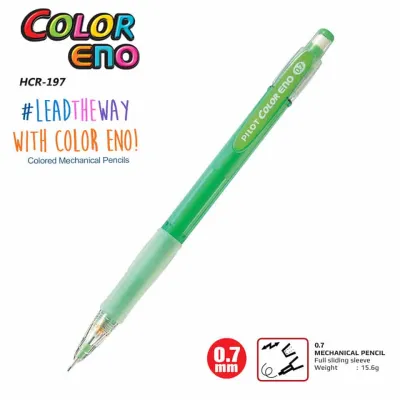
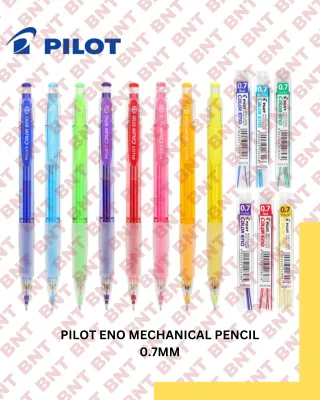
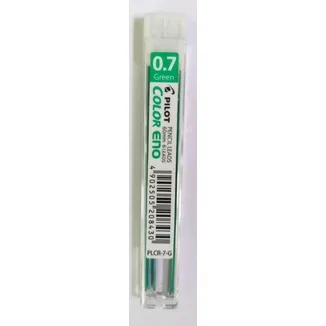
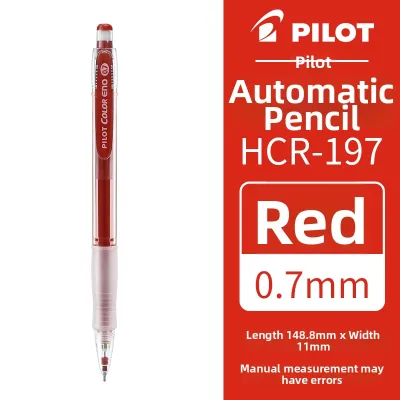
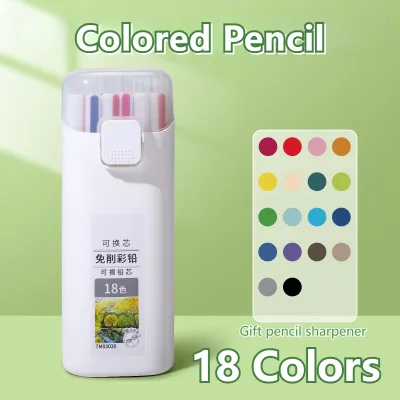
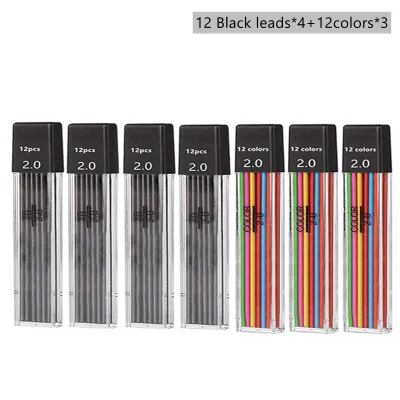
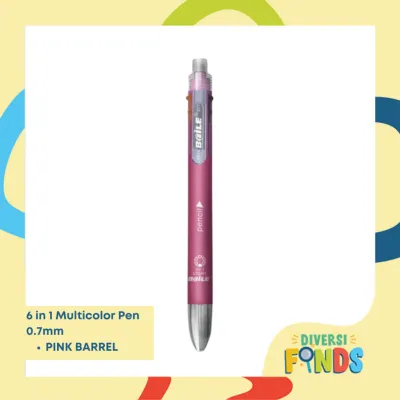
Prices are valid at publication and may change. Please refer to the product page for the latest price.
Matching Pencil Features to Artistic Sketching
For artistic applications, lead durability and shading capability are paramount. Standard graphite mechanical pencils often rely on thin 0.5mm leads, but colored leads of this size are highly prone to snapping under the angled pressure used for sketching. Artists should look toward thicker lead diameters, such as 0.7mm, 0.9mm, or even 2.0mm lead holders. These larger diameters provide a broader contact point with the paper, allowing you to shade, blend, and lay down base colors without the constant interruption of a breaking tip.

When evaluating colored leads for sketching, pay close attention to binder materials. Colored leads generally use synthetic polymers, wax, or clay binders instead of the clay-and-graphite mixture found in standard pencils. A higher wax content typically yields a smoother, more blendable stroke that mimics traditional colored pencils, though it wears down faster. If you plan to layer multiple colors, verify that the lead formula is rated for layering; some harder, budget-friendly colored leads tend to slide over previous layers rather than adhering to them.
Long-term project sustainability depends heavily on the availability and cost of replacement leads. Before committing to a specific pencil body, check local stationery shops and online marketplaces to ensure that refill packs in your preferred color palette are readily accessible in the Philippines. Refill packs can range from ₱50 for basic utility colors to ₱250 or more for specialized, high-pigment artist grades. Opting for a pencil that accepts standard-sized refills from multiple brands will save you from being stranded with an unusable pencil body when a single proprietary color runs out.
Optimizing for Color-Coded Note-Taking
For students and professionals, color-coding is a highly effective way to organize information, highlight key terms, and structure complex diagrams. In these fast-paced environments, legibility and speed are the primary goals, making thinner lead sizes like 0.3mm or 0.5mm the ideal choice. These fine tips allow you to write small, neat characters within standard notebook lines and execute precise underlining without the colors bleeding into adjacent text.
However, because thin colored leads are structurally fragile, rapid writing requires specialized pencil engineering. Look for mechanical pencils equipped with active lead-protection systems. Many modern pencils feature spring-loaded internal clutches or sliding tip sleeves that retract slightly under excessive pressure. These shock-absorbing mechanisms cushion the delicate colored lead, allowing you to write at a natural pace without constantly adjusting your hand pressure to prevent snaps.
Ergonomics and weight distribution are equally important during long writing sessions. A pencil with a heavy metal grip can cause hand fatigue during a two-hour lecture, while an unbalanced, top-heavy plastic body can make your handwriting feel unstable. Seek out pencils with comfortable, textured rubber or silicone grips and a low center of gravity. A lightweight, well-balanced body ensures that your hand remains relaxed, allowing you to transition smoothly between different colored pencils as you update your notes.
Enhancing Creative Journaling and Planning
Creative journaling and planning require a balance between artistic expression and daily portability. If you use your journal on the go—whether in local cafes, libraries, or during a commute—carrying a bulky pencil case filled with ten different colored mechanical pencils is rarely practical. For these scenarios, multi-color mechanical pencils offer an elegant solution. These multi-pen style bodies house three to eight different colored leads in a single barrel, allowing you to switch colors with a simple slide of a selector. While the barrels of multi-color pencils are naturally thicker, the convenience of having a complete palette in one hand is unmatched for quick planning.
When journaling, the interaction between the lead and your planner’s paper is crucial. Many popular journals use smooth, low-tooth paper designed to prevent ink bleed-through. However, this smooth surface can make hard, wax-based colored leads feel scratchy or faint. Conversely, soft colored leads can leave excess wax residue that smudges onto the opposite page when the journal is closed. To prevent this, look for colored leads formulated with polymer binders, which resist smudging and provide clean, crisp lines on smooth paper.
Portability features also dictate how often you will actually use your pencil. A sturdy, spring-loaded metal clip is essential for securing your pencil to the cover or spine of your journal, preventing it from getting lost at the bottom of your bag. Additionally, look for pencils with retractable tip sleeves; a fixed metal sleeve can easily bend if dropped or poke holes through delicate fabric pockets during travel.
Cross-Scenario Compatibility and Pre-Purchase Checks
If your budget or desk space is limited, you might prefer a single, versatile colored mechanical pencil that can transition from morning lecture notes to evening sketching sessions. In this case, a mid-range lead size like 0.5mm or 0.7mm serves as the most practical compromise. A 0.5mm pencil can handle detailed writing while still allowing for light, careful sketching if you maintain a gentle hand. A 0.7mm pencil offers excellent break resistance for sketching and can still be used for note-taking, provided you write slightly larger or use wider-ruled paper.
Before making a final purchase, perform a quick cost-benefit check on lead refills. In the Philippines, high-quality colored mechanical pencil leads are specialized items. While a standard pack of graphite refills might cost under ₱50, specialized colored refills can be more expensive and harder to find in physical retail stores outside major metropolitan areas. Confirming that your chosen pencil can accept widely distributed third-party colored leads will ensure you are not locked into an expensive or hard-to-source proprietary refill system.
Finally, inspect the physical build quality of the pencil itself. A reliable brass or high-grade synthetic clutch mechanism is vital for colored leads, as cheap plastic clutches can slip or crush the softer colored lead over time. Additionally, check the eraser situation. Many mechanical pencils come with a small eraser under the cap, but these are often designed for graphite and will smudge colored pigments. Plan to carry a separate high-quality eraser designed specifically for lifting colored wax and polymer marks cleanly.
Frequently Asked Questions (FAQ)
Why do colored mechanical pencil leads break more easily than graphite?
Colored mechanical pencil leads are structurally different from standard graphite leads. Graphite leads are made from a mixture of graphite and clay, which can be baked at high temperatures to create a highly flexible, strong crystalline structure. Colored leads, however, rely on organic pigments, wax, and synthetic polymer binders that cannot withstand high-temperature baking without destroying the color pigments. This results in a softer, more brittle composition that lacks the tensile strength of graphite. To minimize breakage, keep the lead extension to a minimum—ideally no more than one or two clicks—and store your pencils vertically in a pen cup or case to prevent internal fractures from accidental drops.
Can I use standard graphite erasers on colored mechanical pencil marks?
Standard vinyl or rubber erasers are designed to lift graphite particles from paper fibers, but they are often ineffective against the wax and polymer binders used in colored leads. Using a standard eraser on colored marks usually results in smudging, as the friction melts the wax and spreads the pigment across the page, potentially damaging the paper’s surface. For clean corrections, use a specialized colored lead eraser, a soft kneaded eraser, or a plastic eraser designed for colored pencils. When erasing, use light, dabbing motions to lift the pigment off the paper rather than scrubbing back and forth, which preserves the paper’s texture and prevents smearing.
Community discussion
Share your experience or ask a question. Comments are reviewed before publication.