
The best clipboard for organizing paper documents depends on your specific environment, the volume of paper you handle, and how often you swap sheets. For high-mobility tasks in humid tropical climates, a lightweight plastic or durable aluminum clipboard with a low-profile clip is often ideal. For stationary desk work where a solid, traditional writing surface is preferred, a classic wooden clipboard offers excellent rigidity. Choosing the right combination of board material and clip mechanism ensures your documents remain secure, legible, and easy to access throughout the workday.
Understanding Your Paper Organization Needs
Before selecting a clipboard, analyze your daily document workflow. Consider how many sheets of paper you typically handle at one time. A standard daily log might only require holding five to ten sheets, whereas inventory audits, medical charts, or construction blueprints can easily demand a capacity of fifty sheets or more. The frequency of document swapping also dictates your choice; if you constantly slide pages in and out, a quick-release mechanism is essential.
Your primary working environment plays an equally critical role. A stationary office desk allows for heavier, more aesthetic materials. In contrast, outdoor field inspections, warehouse rounds, or clinical environments require lightweight, weather-resistant options that can be held comfortably in one hand for hours.
Products mentioned in this guide
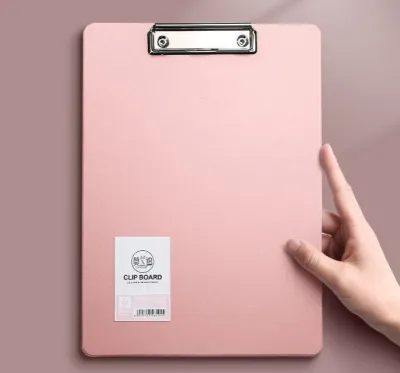
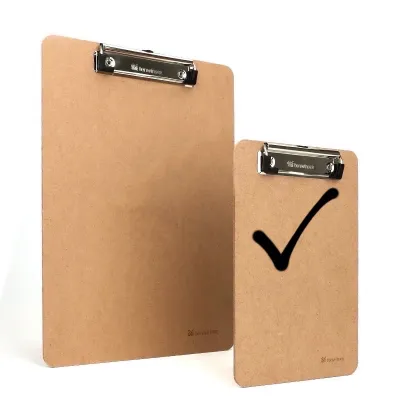
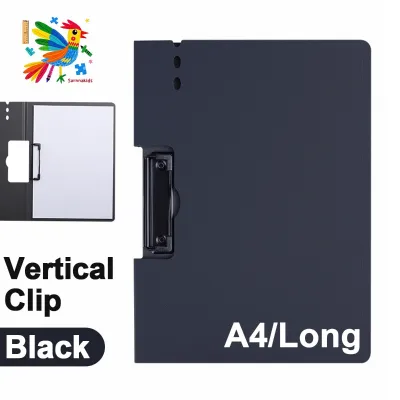
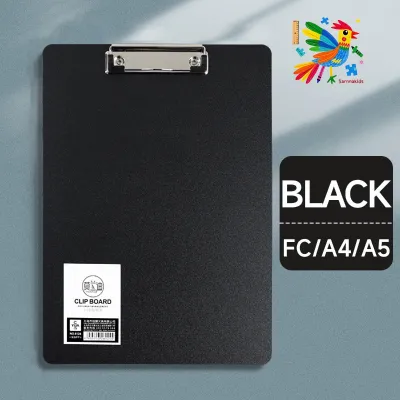
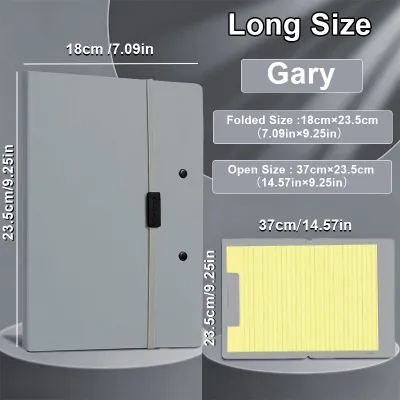
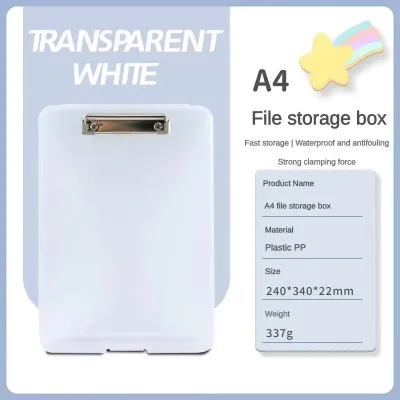
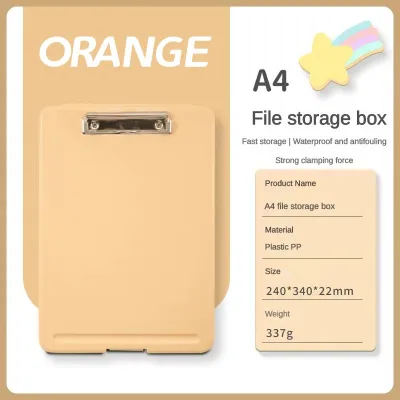
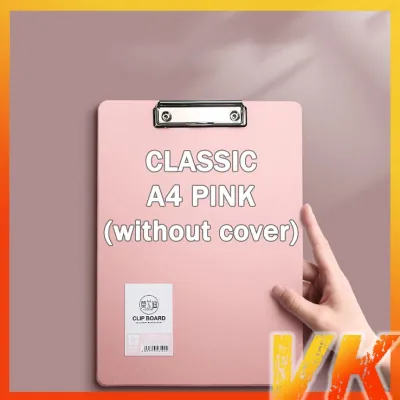
Prices are valid at publication and may change. Please refer to the product page for the latest price.
Finally, evaluate how you plan to store and transport the clipboard. If you frequently slip the board into a backpack, messenger bag, or filing cabinet, a bulky clip can snag on fabrics or prevent the bag from zipping. If you need to display schedules or checklists on a wall, look for integrated hanging loops that slide out when needed.
Comparing Clipboard Materials for Daily Use
The material of your clipboard determines its weight, structural rigidity, and surface texture. These physical properties directly affect your writing comfort and how well the board survives daily wear. While basic designs look similar, long-term durability depends heavily on manufacturing quality and board thickness.

Wood Clipboards
Wooden clipboards, often made from hardboard, MDF, or compressed wood fibers, provide a classic aesthetic and a highly rigid writing surface. When holding a wooden board for extended periods, check its weight and balance; denser wood composites can cause wrist fatigue during long standing sessions.
The quality of the surface finish is crucial for a smooth writing experience. A poorly finished wooden board can have tiny wood fibers or rough patches that cause pen tips to snag, leading to torn paper or uneven ink pooling. You can verify this by running your fingers along the surface before use to check for any grain imperfections.
In highly humid environments, such as tropical offices or outdoor field sites, untreated wood is susceptible to absorbing moisture. Over time, this moisture absorption can lead to warping, swelling, or edge splintering, which compromises the flat writing surface and can ruin your documents.
Plastic Clipboards
Plastic and acrylic clipboards are highly popular due to their lightweight nature, water resistance, and cost-effective design, with basic models often starting around ₱100 on local online marketplaces. When evaluating plastic options, assess the flexibility of the board; high-quality polymers offer a balance of slight flex and structural support, whereas cheap plastics can be brittle and prone to cracking or shattering if dropped on hard concrete floors.
Another factor to consider is static electricity. In dry, air-conditioned offices, plastic surfaces can build up a static charge, causing loose papers to stick awkwardly to the back of the board or making it difficult to separate individual sheets.
Transparency is a major advantage of clear acrylic or plastic clipboards. A transparent board allows you to view underlying reference documents, maps, or quick-reference guides stored underneath your active working sheet without having to unclip them.
Aluminum and Metal Clipboards
Aluminum and other metal clipboards offer unmatched ruggedness, a sleek professional appearance, and exceptional structural stability. They are highly favored in industrial, medical, and outdoor settings where equipment must withstand rough handling. However, the added weight of metal can contribute to arm and shoulder fatigue during prolonged standing use.
When choosing a metal clipboard, carefully inspect the edge finishing. High-quality aluminum boards feature rounded corners and deburred, smooth edges to ensure there are no sharp metal burrs that could tear your paper, scratch your wooden desk, or cut your fingers.
Additionally, metal is highly temperature-sensitive. If left in direct sunlight or used in air-conditioned spaces, the surface can become uncomfortably hot or cold to the touch, which may affect your comfort during outdoor inspections.
Evaluating Clip Mechanisms for Secure Filing
The clip mechanism is the heart of the clipboard, determining how securely your documents are held and how flat the board lies when stored. The right clip must balance strong grip tension with a physical profile that fits your storage setup.
Spring Clips vs. Low-Profile Binder Clips
Standard heavy-duty spring clips, often featuring a raised lever or a large metal bracket, offer immense grip strength. They are designed to hold thick stacks of paper securely without letting the sheets slip, even when exposed to windy outdoor conditions. However, their bulky, protruding design makes them difficult to stack neatly or slide into tight bag compartments.
In contrast, low-profile binder clips lie almost flat against the board. These flat mechanisms significantly reduce the overall thickness of the clipboard, making them ideal for slipping into backpacks, folders, or desk drawers without snagging on other items.
The trade-off lies in capacity and ease of use. While a heavy-duty spring clip can easily be pried open with one hand using a built-in lever, some low-profile clips require more finger strength or two hands to operate, which can slow down quick document swapping in fast-paced environments.
Storage and Folding Clip Designs
For professionals who need to carry sensitive documents, folding clipboards (often called padfolios or heavy-duty storage clipboards) offer an excellent solution. These designs feature a hinged cover that closes securely over your papers, protecting them from dust, rain, and prying eyes.
Many storage clipboards also include built-in internal compartments. These hollow spaces underneath the writing surface are perfect for holding extra blank forms, pens, rulers, or sticky notes, turning your clipboard into a portable mini-desk.
If you plan to integrate your clipboard into an office filing system, verify the presence of a retractable hanging hook. This small metal loop slides out from the top of the clip, allowing you to hang the board on wall hooks, pegboards, or filing cabinet rails, and retracts completely out of the way when not in use.
Decision Framework: Matching Features to Your Workflow
To choose the ideal clipboard configuration, match the material and clip features directly to your daily workflow requirements:
Choose wood if you primarily work at a stationary desk or indoors, require a highly rigid and traditional writing surface, and do not need to worry about high humidity or water exposure. A standard wood board paired with a heavy-duty spring clip is a reliable, cost-effective choice for office administrative tasks.
Choose plastic if you prioritize lightweight portability, need a water-resistant surface that can handle occasional spills, and are working within a budget. Opt for a transparent acrylic board with a low-profile clip if you frequently travel between desks or need to carry the board in a backpack.
Choose aluminum if you require maximum structural durability for field inspections, warehouse operations, or medical rounds. A heavy-duty aluminum clipboard with rounded edges and a secure spring clip will withstand drops, heavy impacts, and harsh outdoor elements while maintaining a professional look.
Verify first if you need to carry the clipboard in a tight bag or stack multiple boards together. In these scenarios, prioritize a low-profile clip mechanism to prevent snagging and minimize bulk, or choose a folding storage clipboard to keep your documents protected and organized in transit.
Key Features to Verify Before Purchasing
Before finalizing your purchase, confirm that the clipboard’s dimensions match your standard paper size. In many regions, including the Philippines, offices commonly use both A4 and Letter (8.5 x 11 inches) paper sizes. Ensure the board provides at least a half-inch margin of extra edge support around your paper to prevent the corners of your documents from bending or tearing.
Check the manufacturer’s stated clip capacity limits. Overloading a clip beyond its intended sheet capacity can permanently stretch the internal spring, reducing its grip strength and causing future documents to slip out.
Finally, inspect the backing material and corners. Look for clipboards with non-slip rubber grips on the back or rubber-coated corner guards on the clip itself. These small details prevent the board from sliding off your lap and protect your paper from being creased or torn by bare metal edges.
Frequently Asked Questions (FAQ)
Can I use a standard clipboard for thick stacks of paper?
Standard clipboards are typically designed to hold between 50 and 100 sheets of standard copy paper. Exceeding this capacity forces the spring mechanism to its physical limit, which can result in uneven pressure, slipping documents, and bent paper edges. If you regularly manage thick stacks of paper, look for specialized heavy-duty storage clipboards or clamp-style boards designed specifically for high-volume document organization.
Are metal clipboards safe to use around electronic devices?
Metal clipboards are highly durable, but their hard, conductive surfaces can pose risks to electronic devices if handled carelessly. Uncoated aluminum edges can scratch tablet screens, laptop casings, or smartphone glass if they rub together inside a bag. To prevent damage, choose a metal clipboard with protective rubber bumpers, or opt for high-density plastic or wood alternatives when working in tight spaces alongside sensitive electronic equipment.

Community discussion
Share your experience or ask a question. Comments are reviewed before publication.