
Quick Guide to Matching Deli Markers to Your Usage Scenario
Selecting the right whiteboard marker is not just about grabbing the first pen you see; it depends heavily on where and how you write. A teacher facing a large, humid classroom in the Philippines has vastly different needs than an office worker in a tightly sealed, air-conditioned boardroom, or a parent managing a chore chart on a kitchen refrigerator. Deli provides a diverse lineup of whiteboard markers designed to address these distinct environments through varying tip shapes, ink capacities, and barrel designs.
By matching the marker’s specifications to your daily tasks, you can ensure clear visibility, comfortable writing, and effortless erasing. Choosing the wrong type can lead to faint writing, stubborn stains, or markers that dry out far too quickly. This guide will help you evaluate your specific environment so you can select the ideal writing tool for your whiteboard.
Evaluating Tip Sizes, Ink Formulations, and Ergonomics
Before choosing a specific marker set, it is essential to understand the core design elements that dictate how a whiteboard marker performs. The most immediate choice you will face is between bullet tips and chisel tips. Bullet tips feature a rounded, symmetrical point that produces a consistent line width, making them excellent for standard handwriting, detailed diagrams, and structured lists.
Products mentioned in this guide
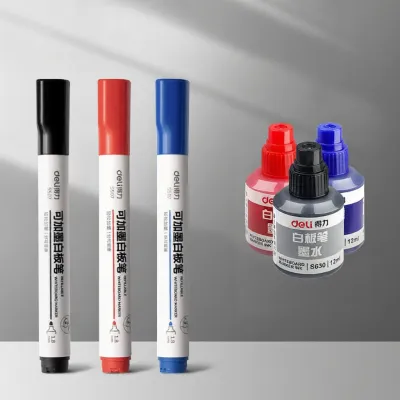
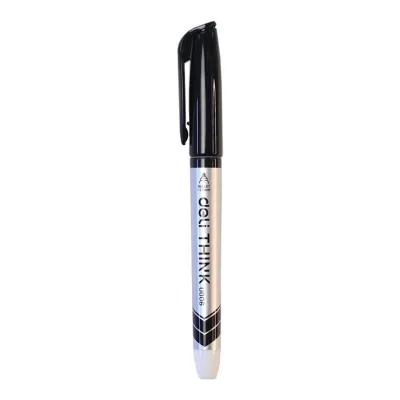
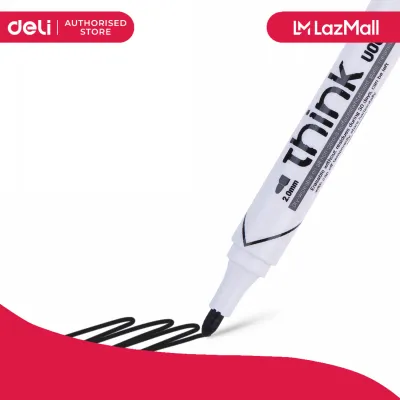
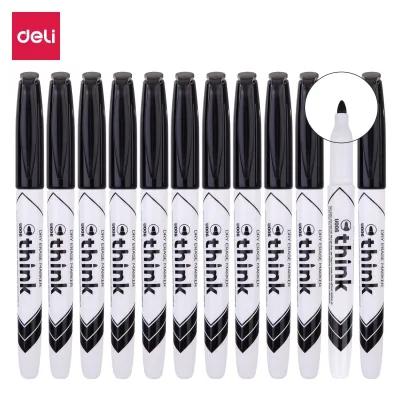
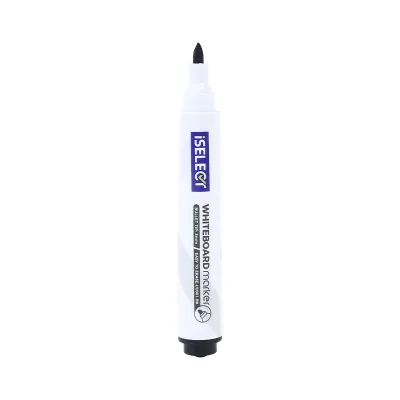
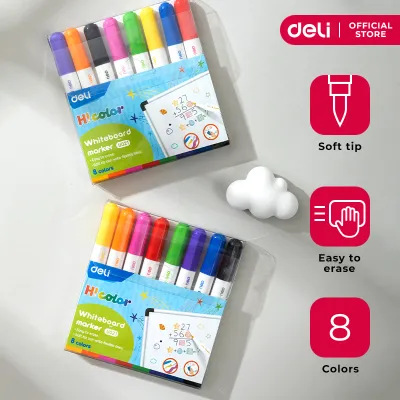
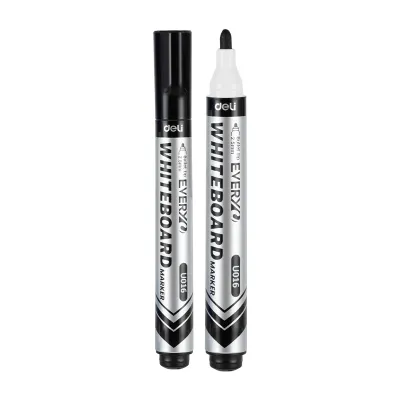
Prices are valid at publication and may change. Please refer to the product page for the latest price.

Chisel tips, on the other hand, have an angled, flat edge that allows you to vary your line thickness from broad strokes to fine lines simply by rotating the marker in your hand. This versatility is highly valued by those who need to emphasize headings or draw bold lines.
Ink formulation is another critical factor that directly impacts your daily writing experience. High-contrast ink ensures that your writing remains legible from a distance, which is particularly important in larger rooms. Because whiteboard markers rely on solvents to keep the ink liquid inside the barrel, you should check the product packaging for low-odor or non-toxic certifications if you are sensitive to strong chemical smells.
Ergonomics and barrel design also play a significant role in user comfort, especially during long writing sessions. Markers with thick, round barrels are often easier to grip for extended periods, reducing hand fatigue. Some models feature specialized rubberized grips or triangular barrels that prevent the marker from rolling off slanted desks or whiteboard trays.
Choosing Deli Markers for Classroom Teaching
Classroom environments demand writing instruments that can withstand heavy, continuous use while remaining highly visible to students seated at the back of the room. For teachers, chisel tips or thick bullet tips are generally the most effective choices. These tips allow you to write bold, thick letters that stand out clearly, even in spacious lecture halls or classrooms with bright overhead lighting.
Given the high volume of writing required during a typical school day, ink capacity is a major consideration. Look for Deli markers that feature high-capacity ink reservoirs or refillable designs to minimize how often you need to replace your writing tools. This is especially practical in tropical climates where high humidity can sometimes affect ink flow and board surface conditions.
Erasability is equally crucial in a fast-paced teaching environment where boards are constantly written on and wiped clean. To prevent ghosting—the faint, stubborn residue left behind after erasing—verify that the marker ink is formulated for clean, dry erasing on standard melamine or porcelain whiteboards. Testing a small stroke on the corner of your board before full use is an excellent way to check compatibility.
For added convenience during lectures, consider markers equipped with magnetic caps or built-in felt erasers. These features allow you to stick the marker directly to a magnetic whiteboard or make quick corrections on the fly without searching for a separate eraser.
Selecting Deli Markers for Office Meetings
Office meetings, brainstorming sessions, and collaborative workshops require a different set of marker characteristics, focusing on precision, cleanliness, and professional presentation. In these settings, fine or standard bullet tips are highly recommended. They allow you to write neat, compact text, draw intricate flowcharts, and map out detailed project timelines without cluttering the board.
Because office meeting rooms are frequently enclosed and air-conditioned, ventilation can be limited. Using markers with strong chemical odors can quickly make a small conference room uncomfortable. Prioritize Deli markers that explicitly state low-odor formulations on their packaging to maintain a comfortable working environment for everyone involved.
Smudging is another common issue during collaborative sessions when multiple team members are writing, pointing, or editing on the board simultaneously. Opt for quick-drying ink formulas to ensure that your diagrams and action items remain intact even if someone accidentally brushes against the board shortly after writing.
To make your presentations and brainstorms more effective, look for multi-color packs that include black, blue, red, and green. Color-coding is an excellent way to separate action items, highlight key deadlines, and distinguish between different departments’ responsibilities on a shared board.
Picking Deli Markers for Home Organization
Using whiteboards at home—whether for tracking family schedules, listing groceries, or helping children with homework—calls for versatile and compact writing solutions. Standard bullet tips are ideal for home use because they offer a balanced line width that fits perfectly on smaller personal whiteboards, magnetic refrigerator calendars, or family chore charts.
Storage space is often at a premium in residential settings, making compact marker sets highly desirable. Markers with built-in magnets on their caps are particularly convenient for home organization, as they can be stored directly on the refrigerator or magnetic board, keeping them within easy reach and preventing them from cluttering kitchen drawers.
At home, markers are occasionally used on non-traditional surfaces, such as glass panels, laminated planners, or even painted walls by curious children. Before letting family members use the markers, verify the ink’s erasability on these specific surfaces. It is important to note that standard whiteboard ink is designed primarily for non-porous surfaces and may permanently stain porous materials like painted drywall or wood.
If children will be using the markers for schoolwork or drawing, safety should be your top priority. Always check the product packaging for non-toxic labels and safety certifications to ensure the markers are safe for younger hands and prolonged contact.
Cross-Scenario Compatibility and Marker Care
To get the most value out of your Deli whiteboard markers, proper maintenance and storage are essential, regardless of the scenario in which you use them. If you notice a marker starting to dry out or fade, you can often revive it by storing it horizontally or tip-down for a few hours, depending on the manufacturer’s specific instructions. Storing markers horizontally is generally the best practice to keep the ink evenly distributed throughout the fiber reservoir.
Keeping your whiteboard surface clean is just as important as caring for your markers. Over time, whiteboard surfaces accumulate oils from hands, dust, and microscopic ink residue, which can make writing look faint or cause markers to skip. Cleaning the board regularly with a dedicated whiteboard cleaner or a damp microfiber cloth will help maintain a smooth writing surface and extend the life of your marker tips.
When deciding whether to buy a universal multi-pack or specialized sets, consider your primary writing locations. A large, diverse multi-pack is highly cost-effective if you need to supply both an office and a home study, while specialized high-capacity markers are better reserved for heavy-duty classroom use. Always review the specific product packaging for surface compatibility and safety guidelines before introducing new markers to your daily routine.
Frequently Asked Questions (FAQ)
Can I use Deli whiteboard markers on glass surfaces?
Standard whiteboard markers may not perform optimally on modern glass whiteboards or home glass panels, as the ink can bead up or fail to erase cleanly. If you plan to write on glass, check the Deli product label specifically for glass board compatibility, or look for specialized liquid chalk or glass board markers designed for non-porous glass surfaces.
How do I prevent my whiteboard markers from drying out?
To maximize the lifespan of your markers, always click the cap securely in place immediately after use to prevent the solvent from evaporating. Store your markers horizontally when not in use to ensure consistent ink flow to the tip. Avoid leaving markers uncapped during long meetings or lectures, and store them away from direct sunlight and extreme heat.
Community discussion
Share your experience or ask a question. Comments are reviewed before publication.