
Finding the right gel pen depends on matching your writing speed, paper choice, and daily tasks to the specific ink properties and tip designs of these two distinct Japanese stationery giants. While both are often grouped together as premium “sign pens” in local offices and schools, they excel in different areas. If you prioritize lightning-fast drying times to prevent smudging in humid tropical weather, Pentel’s EnerGel is an exceptional choice. If your work demands high water resistance, archival security, and ultra-fine precision for detailed forms, Uni-ball’s Signo series offers the specialized pigment-based ink you need.
Choosing between these lines requires looking beyond the brand name to understand how tip shapes, ink formulations, and barrel ergonomics affect your daily writing experience. Whether you are a student taking rapid lecture notes on intermediate pads, a professional signing official documents, or an artist detailing a personal journal, selecting the correct pen ensures comfort and clarity. By evaluating your specific writing environment and paper types, you can find a reliable writing instrument that performs consistently without skipping or smearing.
Clarifying the Search: Uni-ball Signo vs. Pentel EnerGel
To make an informed decision, it is first necessary to resolve a common point of confusion among stationery enthusiasts. Many writers search for a “Uni-ball Signo EnerGel” pen, assuming they are part of the same product line. In reality, these are two entirely separate pen series manufactured by different, competing Japanese companies. The Signo series is produced by the Mitsubishi Pencil Company under the Uni-ball brand, while the EnerGel series is manufactured by Pentel Co., Ltd. Both brands have earned global reputations for high-quality writing instruments, but they utilize distinct ink technologies and design philosophies.
Products mentioned in this guide
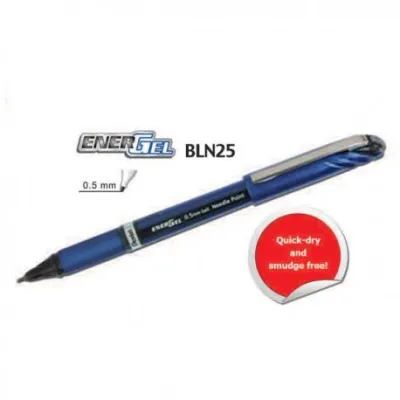
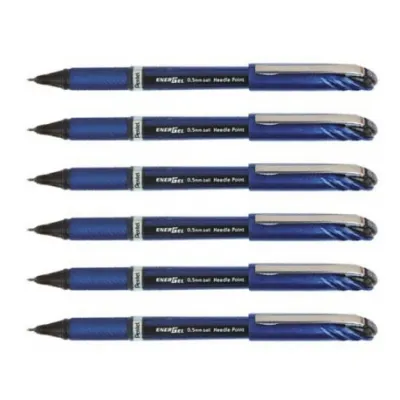
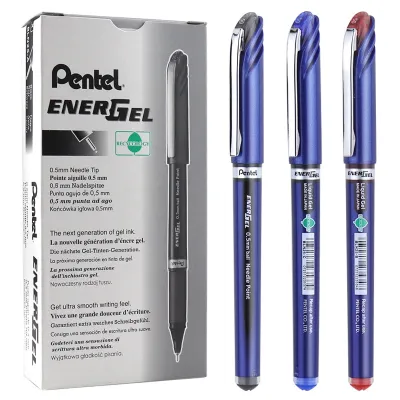
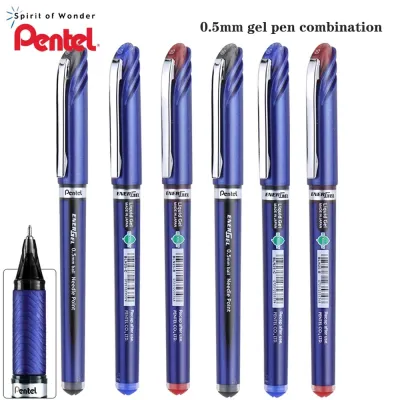
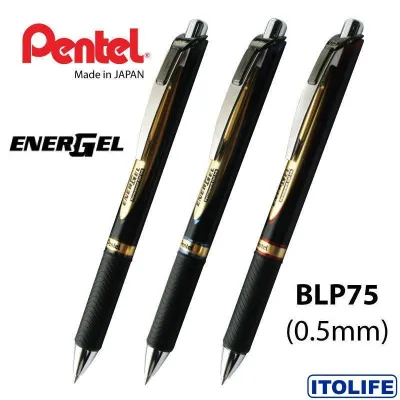
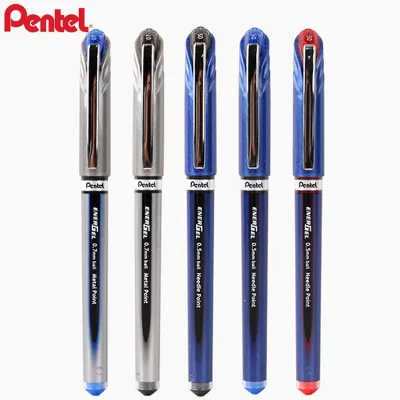
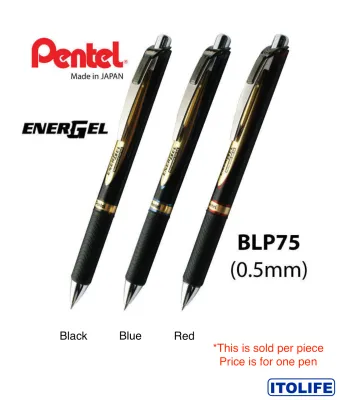
Prices are valid at publication and may change. Please refer to the product page for the latest price.
In the Philippines, the term “sign pen” is widely used as a generic category for any liquid, gel, or felt-tip pen that produces a bold, clear line suitable for signatures, schoolwork, and official documents. However, gel pens like the Signo and EnerGel use water-based gel inks that suspend pigments or dyes, offering a smoother glide than traditional ballpoints without the bleeding associated with liquid rollerballs. Understanding this distinction helps you narrow down your choices based on the specific performance characteristics of each manufacturer.
To ensure you are purchasing an authentic product and the correct refills, always check the physical markings on the pen. Guide your eyes to the exact manufacturer logo, the specific model name, and the country of origin printed or embossed on the pen barrel or clip. Authentic models from both brands are typically manufactured in Japan and feature precise, clean branding. Verifying these details prevents the accidental purchase of counterfeit goods or mismatched refills that do not fit your pen body.
Key Selection Criteria for Gel and Sign Pens
Evaluating pen performance requires looking at three primary technical dimensions: tip style, ink characteristics, and body design. The tip style directly influences line variation, precision, and how smoothly the pen glides across the paper. Needle tips, which are highly popular in fine-point EnerGel models, feature a slim, straight tube that offers an unobstructed view of the paper, making them excellent for ruling lines and writing in tight spaces. Bullet tips, standard on most Signo and medium-point EnerGel pens, provide greater structural stability under heavy writing pressure, making them highly durable for everyday use. Broad tips, such as those found on 1.0mm Signo pens, deliver a generous ink flow that feels incredibly smooth but requires more drying time.

Ink characteristics are equally critical and depend heavily on the chemical formulation of the gel. EnerGel pens utilize a high-performance dye-based gel ink known for its rapid absorption and drying speed. This quick-drying property is highly advantageous in humid tropical climates, where moisture in the air can slow down ink evaporation on the page. On the other hand, Uni-ball Signo pens typically feature pigment-based “Super Ink.” This formulation contains pigment particles that chemically bond to the cellulose fibers of the paper, offering excellent water resistance, fade resistance, and archival quality that protects documents from tampering.
Finally, body design elements dictate physical comfort and usability. Assess the grip texture, weight balance, and mechanism of the pen. Soft, textured rubber grips help prevent your fingers from slipping, which is especially helpful when writing in warm, humid environments. Weight balance is also crucial; lightweight plastic barrels reduce hand fatigue during long writing sessions, while metal-accented bodies provide a front-weighted feel that guides the hand naturally during signatures. Additionally, choose between capped and retractable mechanisms based on your daily carry needs, ensuring retractable models have secure locking clips for pockets.
Recommended Variants for Daily Note-Taking
For students and professionals taking rapid, high-volume notes, ink drying speed is the most critical factor to consider. In tropical climates where humidity can keep ink wet on the page, a slow-drying pen leads to messy smudges across your notebook. Left-handed writers particularly benefit from quick-drying formulations, as their writing hand naturally follows the freshly written line. Pentel’s EnerGel line is highly recommended for this scenario due to its rapid-dry ink technology, which minimizes the risk of smearing even during fast-paced writing.
When selecting a tip size for daily note-taking, a medium bullet tip, such as a 0.5mm or 0.7mm, balances a smooth glide with a manageable ink volume. This size ensures the pen keeps up with fast cursive or print without skipping, even on standard intermediate pads or copy paper. The bullet tip design also tolerates varied writing angles and pressures, making it a reliable workhorse for long study sessions or back-to-back meetings.
Ergonomics play a vital role in preventing hand cramps and fatigue during extended writing sessions. Look for lightweight plastic barrels equipped with textured, latex-free rubber grips. A lighter pen requires less grip tension, allowing you to write for hours with minimal strain on your fingers and wrist. Retractable models are highly convenient for note-taking, as they allow you to quickly start writing with a single click without worrying about losing a pen cap.
Top Choices for Document Signing and Official Use
Signing legal documents, contracts, or official certificates requires a pen that leaves a bold, permanent mark. Broad tip sizes, specifically 0.7mm to 1.0mm, are ideal for this task. They lay down a rich, saturated line of ink that stands out clearly on official forms and photocopies, giving your signature an authoritative presence. The generous ink flow of a broader tip also ensures that the signature remains continuous and free of skips, even when signing quickly.
For official records, ink permanence is non-negotiable. You must verify that the pen’s packaging or barrel explicitly states that the ink is water-resistant, fade-proof, and resistant to tampering or fraud. Uni-ball’s Signo series, particularly those featuring pigment-based “Super Ink,” is highly suited for this purpose. The pigment particles chemically bond with the paper fibers, ensuring the signature remains legible and intact even if the document is exposed to accidental spills, high humidity, or sunlight over the years.
The physical appearance of the pen also matters in professional settings. While a basic plastic pen works fine, using a pen with a professional body design—featuring metal accents, a brushed finish, or a weighted barrel—adds a touch of polish to executive meetings and client interactions. A heavier, metal-bodied pen provides a premium feel and a balanced weight that helps stabilize your hand, allowing for more controlled and elegant pen strokes during important signings.
Ideal Picks for Journaling and Detailed Planning
Journaling and bullet planning often require writing in compact grids, tracking habits, or drawing intricate layouts. For these tasks, fine or needle tips ranging from 0.3mm to 0.5mm are highly effective. These ultra-fine tips allow you to write tiny, legible characters within 5mm grid lines without the ink pooling or letters running together. The precision of a needle tip is especially useful for drawing straight lines, borders, and detailed icons in your planner.
Because journal paper quality varies widely—from thin notebook pages to thick mixed-media sheets—it is essential to check how the ink interacts with your specific paper. Before committing to a full page, perform a simple test in an inconspicuous area, such as the back pages of your journal. Look for feathering, where the ink spreads sideways along the paper fibers, and bleed-through, where the ink seeps through to the other side of the page. Adjusting your tip size or choosing a faster-drying ink can help mitigate these issues on thinner paper.
Color-coding is a popular method for organizing tasks, events, and personal reflections. When selecting a pen line for journaling, check the manufacturer’s catalog for color variety. Some lines offer dozens of vibrant shades, including specialized metallic, pastel, or white inks that allow you to write on dark or colored paper, adding creative flair to your planning routine. Having a wide palette of colors makes it easy to categorize different aspects of your life, such as work, personal goals, and fitness tracking.
Pre-Purchase Checklist and Refill Compatibility
Before purchasing your next gel pen, a few practical checks can save you time and money. First, unscrew the pen barrel to locate the specific refill model number printed directly on the ink tube. Gel pens consume ink much faster than ballpoints, so verifying that your local stationery store or preferred online marketplace regularly stocks the exact replacement refill is crucial for long-term, cost-effective use. Using refills also reduces plastic waste, making it a more sustainable choice for avid writers.
Next, evaluate the pen’s physical mechanism against your daily routine. If you frequently carry your pen in a pocket, bag, or lanyard, a retractable model with a sturdy, spring-loaded metal clip is highly practical to prevent accidental ink stains on your clothes or bags. If you prefer capped pens, ensure the cap snaps on tightly with a reassuring click, which prevents the tip from drying out when not in use and protects the delicate writing point from damage if dropped.
Finally, if you are buying pens or refills in bulk, inspect the packaging for any manufacturing dates or batch codes. While gel ink has a relatively long shelf life, older stock stored in hot, humid warehouses can occasionally suffer from dried-out tips or separated emulsion. Choosing fresh stock ensures a smooth, skip-free writing experience from the very first stroke. Additionally, check that the protective wax seal on the tip of new pens is intact, as this seal prevents the ink from drying out before purchase.
Frequently Asked Questions (FAQ)
Can I use gel pen ink on glossy or coated paper?
Traditional gel ink is water-based and relies heavily on the porous fibers of standard paper to absorb the liquid and dry properly. When applied to glossy photo paper, coated planner stickers, or plastic-coated labels, the ink cannot penetrate the surface. Instead, it sits on top of the coating, leading to severe smearing, pooling, or failing to dry completely even after several hours. If you must write on slick, non-porous materials, check the pen packaging for specialized multi-surface, quick-dry, or permanent ink formulations. Alternatively, performing a quick smudge test on a small scrap of the coated material can help you verify if the ink will set before you write important information.
How do I revive a gel pen that has skipped or dried out?
If your gel pen begins to skip or seems dried out, there are several gentle, low-risk troubleshooting steps you can try. First, scribble in firm, rapid circles on a textured rubber surface, such as a clean eraser or the sole of a shoe; this friction can help dislodge dried ink particles blocking the tiny ball in the tip. Another effective method is to store the pen tip-down in a cup for a few hours, allowing gravity to pull the ink column back down to the feed mechanism. You should strictly avoid using open flames, lighters, or boiling water to heat the pen tip, as excessive heat can easily melt the delicate plastic housing or permanently ruin the ink’s chemical emulsion. Similarly, avoid introducing harsh chemical solvents like acetone or alcohol into the refill tube, which will break down the ink formula and cause it to leak.
Are EnerGel and Signo refills interchangeable?
While many gel pen refills look remarkably similar at a glance, they are rarely interchangeable across different brands. Pentel EnerGel and Uni-ball Signo refills feature proprietary ink formulations, varying tube diameters, and distinct tip housing shapes designed specifically for their respective pen bodies. Attempting to force a mismatched refill into a different brand’s barrel can result in a loose tip that wobbles while writing, a spring mechanism that fails to retract, or internal ink leakage that ruins the pen. To avoid buying incompatible consumables, always check the exact alphanumeric refill model number printed on your empty refill tube and match it precisely when purchasing replacements.

Community discussion
Share your experience or ask a question. Comments are reviewed before publication.