
Finding the right writing instrument depends heavily on your daily tasks, writing speed, and the paper surfaces you use. The G-Tech pen, known for its ultra-fine needle point and crisp gel ink, is a staple in classrooms, corporate offices, and design studios across the Philippines. Choosing the ideal model requires matching your specific role—whether you are a student rushing through lecture notes, a professional signing official documents, or an artist rendering intricate details—with the correct tip size and ink formulation. By understanding how tip dimensions and ink behaviors interact with local paper types and tropical humidity, you can select a pen that delivers smooth lines without skipping or smudging.
Understanding G-Tech Pen Specifications and Tip Designs
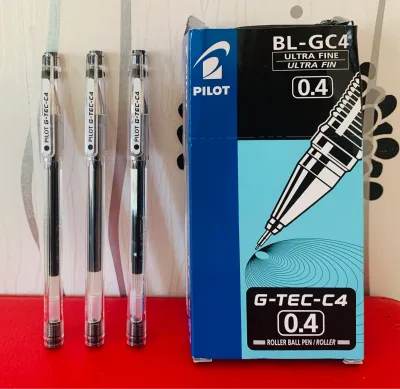
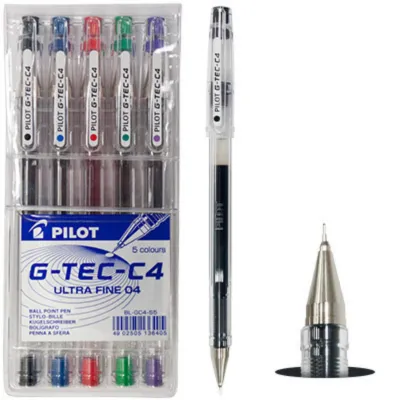
Needle-point tips differ significantly from traditional conical tips in both construction and performance. A needle-point tip features a slender, cylindrical pipe that houses the writing ball at its very end, offering an unobstructed view of the paper. This design is highly advantageous for precise work, as it allows you to see exactly where the ink meets the page. However, because the metal casing is thin, it requires a lighter hand to prevent bending. Conical tips, by contrast, taper gradually to the point, providing more structural support and handling heavier writing pressure, though they slightly reduce line-of-sight visibility at the tip.
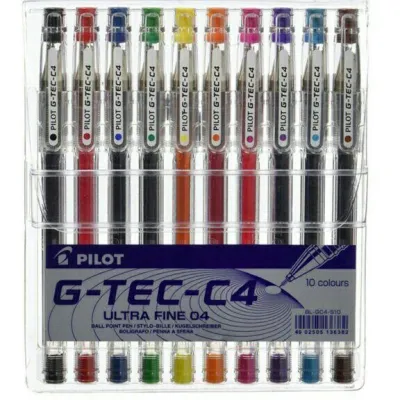
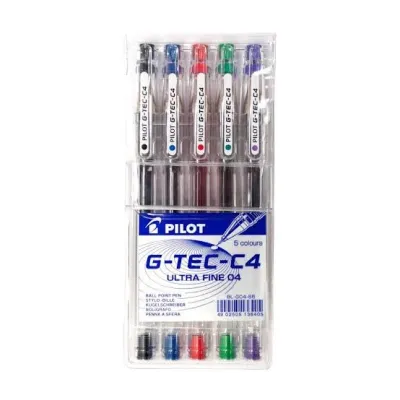
Tip sizes typically range from ultra-fine options like 0.3mm to slightly broader sizes like 0.4mm and 0.5mm. A 0.3mm tip produces an incredibly thin, delicate line, making it ideal for compact handwriting, complex mathematical formulas, and detailed technical drawings. The 0.4mm tip serves as a highly versatile middle ground, offering a balance of precision and smooth ink flow for everyday writing. The 0.5mm tip provides a bolder, more continuous line that is easier to read from a distance, making it well-suited for signatures and rapid note-taking where legibility is paramount.
Products mentioned in this guide
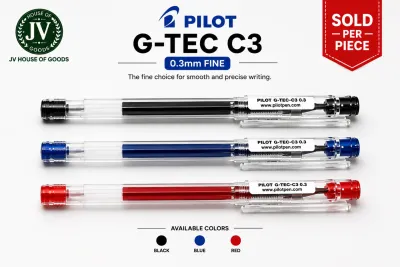
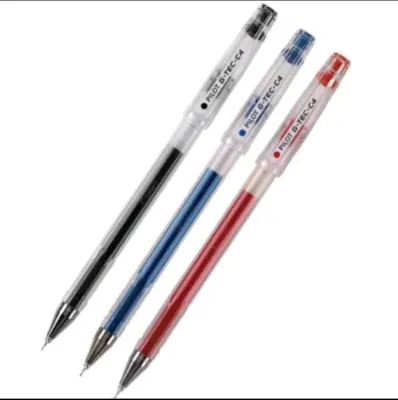
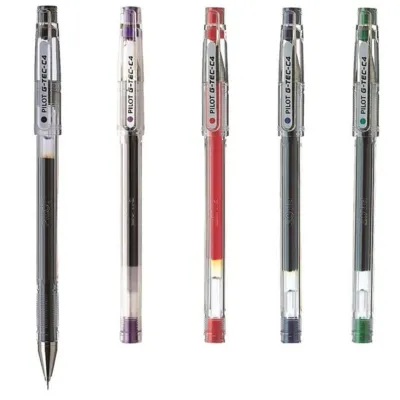
![Ballpen PILOT Brand Gtec G-tec Gtech C3 0.3mm C3 Refill Gtec Refill G-tec Refill Gtech Refill 0.3mm C3 Refill 0.3mm Ballpen Refills For Rolling Ball Pens Point Black Blue Red EACH SOLD SEPARATELY [Future Industries]](https://img.lazcdn.com/g/p/ec8345da10732d4baa507be2657cc5c2.jpg_400x400q80.jpg_.webp)
Prices are valid at publication and may change. Please refer to the product page for the latest price.
The ink formulation inside these pens is primarily gel-based, which combines the smooth flow of liquid ink with the stability of a water-based gel. Gel ink remains viscous while at rest inside the barrel but thins out under the shearing action of the rotating ball tip during writing. This characteristic allows for highly saturated, opaque lines that do not feather easily on standard paper. However, because gel ink lays down a relatively wet line, its drying characteristics are highly dependent on ambient humidity and paper porosity. In warm, humid tropical climates, gel ink may require a few extra seconds to dry completely compared to dry climates, a factor that must be considered when choosing your writing speed and paper pairing.
Best G-Tech Features for Students and Academic Note-Taking
Students often write at high speeds for extended periods, making ink drying time a critical factor in preventing smudges. During rapid lecture transcription or timed exams, a slow-drying ink can easily smear under a moving hand, particularly for left-handed writers whose hands naturally follow the written line. To minimize this risk, students should opt for tip sizes that lay down less ink, such as the 0.3mm or 0.4mm variants. These finer tips deposit a thinner layer of gel ink onto the page, which dries significantly faster and reduces the likelihood of accidental smudging on standard school notebook paper.

Ergonomics play an equally vital role in academic success, as holding a thin, hard plastic pen for hours can lead to finger cramping and hand fatigue. When selecting a pen for long study sessions, look for models that feature a rubberized or textured grip section. A soft grip cushions the fingers, reduces the amount of gripping force required to maintain control, and prevents the pen from slipping when hands become warm or sweaty in non-airconditioned classrooms. If your preferred model lacks a built-in grip, aftermarket slip-on silicone grips can be added to the barrel to improve comfort.
The choice of tip size should also align with the layout of your study materials. Students who frequently write dense margin notes, annotate textbooks, or solve complex equations in cramped spaces will benefit greatly from the precision of a 0.3mm tip. However, for general essay writing and standard notebook entries, a 0.4mm or 0.5mm tip is often preferable. These slightly broader tips glide more smoothly over the fibrous surface of budget-friendly notebook paper, preventing the scratchy sensation that can sometimes occur when using ultra-fine tips on rough, low-grade paper.
Ideal G-Tech Specifications for Professionals and Office Documents
In a professional office environment, the legibility and permanence of your writing are paramount. When signing official contracts, filling out legal forms, or taking minutes during board meetings, you need a pen that produces clean, authoritative lines without bleeding through standard copy paper. Standard office printer paper is often relatively thin and uncoated, which can cause broader gel pens to bleed or show through on the reverse side. A 0.4mm or 0.5mm G-Tech pen strikes the perfect balance for professional use, offering a bold enough line for clear signatures while maintaining enough control to prevent ink from spreading into the paper fibers.
The physical appearance of the pen also contributes to a professional image during face-to-face meetings and client consultations. While basic plastic barrels are highly functional for daily desk work, professionals may prefer models with a more refined aesthetic. Pens featuring metallic accents, a sleek matte finish, or a heavier, balanced body convey a sense of professionalism and durability. A slightly heavier pen can also help stabilize your hand, leading to more controlled, elegant cursive writing and signatures.
Document security is another critical consideration for administrative and legal professionals. Before using a gel pen on permanent records, check the manufacturer’s packaging or official specifications to verify if the ink is water-resistant, fade-resistant, or archival-safe. Archival-quality gel inks contain pigmented formulas that bind chemically to the paper fibers, making them highly resistant to water spills, light exposure, and chemical alteration. This ensures that signatures and critical data remain legible and tamper-proof over decades of storage in office archives.
G-Tech Options for Artists, Drafting, and Creative Sketching
For artists, illustrators, and drafting professionals, the G-Tech pen serves as a precision instrument capable of rendering incredibly fine details. The ultra-fine 0.3mm needle point is particularly valued for intricate line work, cross-hatching, stippling, and technical drafting where line weight consistency is critical. Because the needle-point design provides an unobstructed view of the paper, artists can execute precise intersections and delicate textures with high accuracy. The consistent ink flow ensures that lines do not break or skip, even when drawing rapid, repetitive strokes.
Creative work often involves specialized papers, such as heavy sketching paper, marker boards, or watercolor sheets. It is essential to test how the gel ink interacts with these different surfaces before beginning a major project. On highly textured watercolor paper, an ultra-fine tip may catch on the surface fibers, leading to a scratchy feel and potential ink skipping. Conversely, on smooth marker paper or Bristol board, the ink will glide effortlessly but may require additional drying time due to the low porosity of the surface. Testing the ink’s water resistance is also crucial if you plan to apply watercolor washes or alcohol-based markers over your line work.
To create depth, visual hierarchy, and dimension in drawings, artists should consider utilizing a range of tip sizes within a single piece. For example, you can use a 0.5mm pen to establish bold foreground outlines and structural boundaries, a 0.4mm pen for mid-ground details, and a 0.3mm pen for distant elements, fine textures, and delicate shading. This multi-pen approach allows for a sophisticated variation in line weight that elevates the overall quality of the illustration, transforming a simple ink sketch into a highly detailed, professional-grade artwork.
How to Verify Paper Compatibility and Refill Availability
To ensure a seamless writing experience, it is highly recommended to perform a simple paper compatibility test with your chosen pen. Take a sheet of the paper you use most frequently—whether it is a school notebook, office copy paper, or a personal journal—and draw a series of lines, grids, and solid blocks. Observe how long the ink takes to dry by gently tapping the lines at one-second intervals. Additionally, turn the paper over to check for ghosting (where the writing is visible through the page) or actual bleed-through (where the ink physically penetrates to the other side). If ghosting is severe, switching to a finer tip size or a heavier paper weight will resolve the issue.
Sustainability and cost-effectiveness are also important factors when choosing a daily writing tool. Before committing to a specific pen model, verify the local availability of replacement ink refills. Many G-Tech models are designed to be refillable, which is both environmentally friendly and more economical over time than purchasing entirely new pens. Check local stationery stores, bookstores, or reputable online marketplaces to ensure that refills in your preferred tip size and color are consistently in stock. Budgeting a small amount in ₱ for refills rather than buying a new pen body each time is a practical way to maintain your stationery collection.
Finally, consider how you plan to transport and store your pens. Needle-point tips are delicate and can be easily damaged if dropped or if they come into direct contact with hard objects inside a bag or pencil case. If you frequently carry your pens on the go, look for models with secure, click-on caps that protect the tip from impact and prevent the ink from drying out. Alternatively, retractable models offer excellent convenience and tip protection, as the writing point is safely retracted inside the pen body when not in use, eliminating the risk of lost caps or accidental ink stains on your clothes.
Frequently Asked Questions (FAQ)
How do I fix a scratchy or skipping G-Tech needle point?
If your pen begins to feel scratchy or skips while writing, the issue is often caused by a small buildup of dried ink or paper fibers around the tiny ball at the tip. To resolve this, gently wipe the needle point with a soft, damp cloth or a paper towel moistened with warm water to dissolve any residue. Next, check your writing posture; needle-point pens perform best when held at a relatively upright angle (around 60 to 90 degrees to the paper) with light to moderate pressure. Writing at an extremely shallow angle or applying excessive downward force can restrict the rotation of the ball and scrape the metal casing against the paper. If the pen continues to skip after cleaning and adjusting your angle, inspect the tip closely; if the metal needle is bent or misaligned from a drop, the refill must be replaced.
Can I use G-Tech gel pens on glossy or coated paper?
Using gel pens on glossy, coated, or non-porous surfaces like photo paper, plastic-coated labels, or metallic cards requires caution. Because gel ink is water-based, it relies on the porous fibers of standard paper to absorb the liquid and dry properly. On glossy coatings, the ink cannot penetrate the surface, resulting in extremely long drying times and a very high risk of smudging, even hours after writing. If you must write on coated paper, check the manufacturer’s packaging for specific surface compatibility ratings. If you proceed, allow the ink to air-dry undisturbed for several minutes, or perform a small test in an inconspicuous corner to verify if the ink will adhere without smearing before completing your work.
Community discussion
Share your experience or ask a question. Comments are reviewed before publication.