
Finding the right long clipboard with a cover in the Philippines requires balancing document protection, writing stability, and portability. Whether you are managing contracts on-site, organizing school worksheets, or handling government forms, a covered clipboard keeps your papers secure from sudden tropical downpours, dust, and prying eyes. The ideal choice depends on your daily environment, the specific dimensions of your documents, and how much auxiliary gear you need to carry alongside your paperwork.
Quick Answer: Matching Clipboard Features to Your Workflow
Selecting a clipboard folder is a trade-off between physical protection and carrying weight. For active fieldwork, such as construction inspections or outdoor surveys, a heavy-duty plastic or aluminum clipboard with a secure latching cover offers the best defense against impact and moisture. Conversely, for office meetings, academic presentations, or desk-bound administrative tasks, a lightweight faux-leather or thin polypropylene cover provides a professional appearance without adding unnecessary bulk to your bag.
Document capacity is another critical dividing line in your decision. If you only need to reference or sign a few sheets at a time, a slim, single-fold cover keeps your profile minimal and easy to hold in one hand. For those managing multi-page reports, patient charts, or thick stacks of legal forms, a clipboard with an integrated internal pocket or a deep storage compartment is essential to prevent loose pages from slipping out.
Products mentioned in this guide
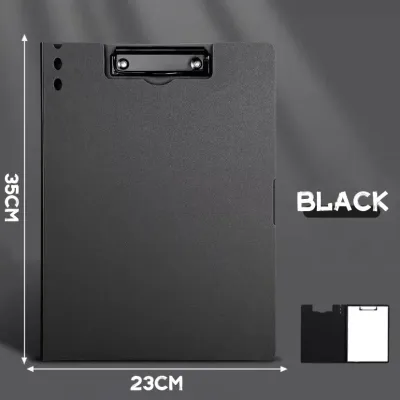
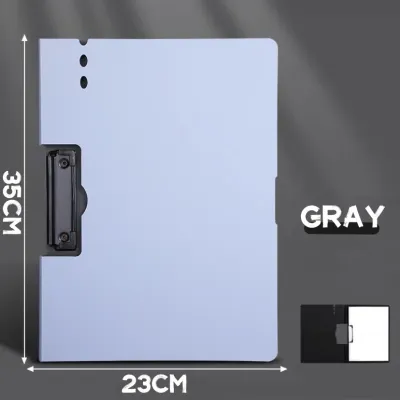
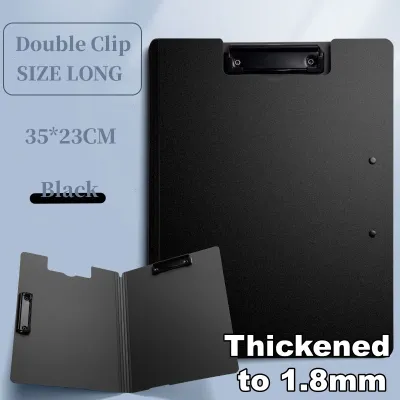
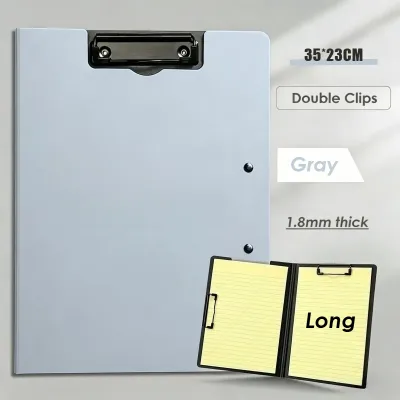
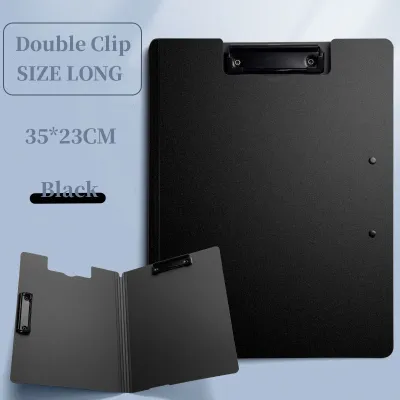
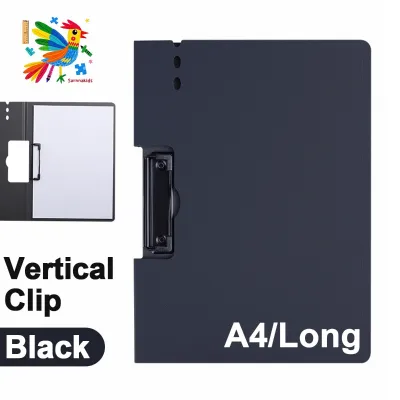
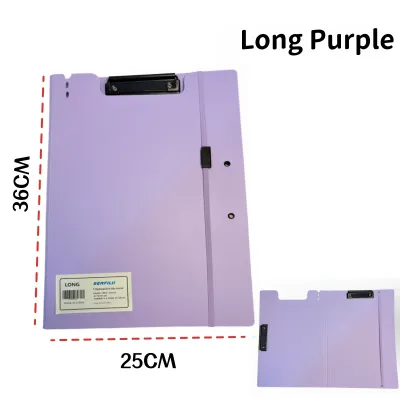
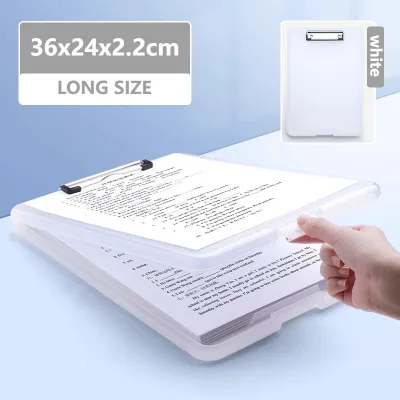
Prices are valid at publication and may change. Please refer to the product page for the latest price.
Before browsing online marketplaces, use this quick reference checklist to narrow down your options:
- Document Size: Verify if the board explicitly fits local long bond paper (8.5 x 13 inches) rather than just standard A4 or US Letter.
- Environment: Choose water-resistant plastic or treated aluminum for outdoor use, and professional faux-leather for indoor or corporate settings.
- Portability: Ensure the outer dimensions fit inside your preferred backpack, tote, or messenger bag.
- Storage: Decide if you need extra slots for pens, business cards, or loose receipts.
Key Dimensions to Evaluate Before Buying
Paper sizes in the Philippines can be confusing, making dimensional verification your first priority. The term “long bond paper” locally refers to the Folio size, which measures 8.5 by 13 inches (216 mm x 330 mm). This is distinct from US Legal paper, which is slightly longer at 8.5 by 14 inches (216 mm x 356 mm), and standard A4 paper, which measures 8.27 by 11.69 inches (210 mm x 297 mm). If you purchase a clipboard designed strictly for A4 or Letter sizes, your long bond documents will overhang the bottom edge, leaving them vulnerable to fraying, creasing, and moisture.

To ensure complete protection, look for a clipboard with outer dimensions that extend at least half an inch beyond the edges of your paper. A clipboard measuring approximately 9 by 13.5 inches is the bare minimum required to shield local long bond paper. If you frequently use US Legal documents, you will need an extra-long board measuring at least 9 by 14.5 inches to ensure the cover closes fully without bending the bottom of your sheets.
Clip mechanism clearance is another dimensional factor that dictates how many sheets you can securely hold. Standard low-profile clips typically offer a clearance of 0.3 to 0.5 inches, which comfortably grips 50 to 80 sheets of standard 70gsm or 80gsm paper. If your work requires carrying thicker stacks or multi-part carbonless forms, look for heavy-duty wire clips or spring-loaded clamp mechanisms that offer higher clearance and stronger grip tension.
Finally, consider how the overall board dimensions affect your daily commute. A long clipboard with a cover is naturally bulkier than a standard open board. Measure the interior compartment of your backpack or briefcase before purchasing. A board that is too wide or too long will force you to carry it by hand, increasing the risk of dropping it or leaving it behind on public transit like jeepneys or buses.
Material and Build Quality Checks
The core material of your clipboard determines both its structural rigidity and its long-term durability under local weather conditions. High relative humidity in the Philippines can cause cheap, untreated cardboard-core clipboards to soften, warp, or delaminate over time. For reliable longevity, prioritize boards made from solid polypropylene, high-density fiberboard (HDF) sealed with a water-resistant coating, or anodized aluminum.
- Polypropylene (PP): Lightweight, flexible yet resilient, and completely waterproof. It is excellent for students and field workers who need a low-maintenance, washable option.
- High-Density Fiberboard (HDF) / Hardboard: Offers a highly rigid, smooth writing surface, but must be fully sealed or wrapped in vinyl to prevent moisture absorption.
- Anodized Aluminum: Extremely durable, rigid, and professional, though heavier and more expensive. Ideal for industrial, medical, or construction environments.
Surface texture is equally important for writing comfort. A completely smooth, non-porous surface allows your pen to glide effortlessly, which is vital when writing on single sheets of paper. If the board surface has a heavy, molded texture, it can cause your pen tip to jump, resulting in jagged handwriting. If you choose a textured plastic board, ensure the texture is fine enough not to interfere with your writing, or plan to keep a few backing sheets underneath your active document.
Inspect the hinge and clip mechanisms closely, as these are the most common points of failure. Look for metal clips that are secured to the board with solid rivets rather than flimsy eyelets. The spring should feel stiff and require a firm press to open; a weak spring will allow papers to slide out when the board is tilted. For covered clipboards, examine the hinge of the cover. Flexible plastic living hinges should be thick and show no signs of stress whitening, while fabric or vinyl hinges should have reinforced double-stitching to prevent tearing along the seam.
Cover and Storage Configurations for Different Needs
The design of the cover dictates how well your documents are shielded from view and environmental hazards. A single-fold cover flips open like a book, providing immediate privacy for sensitive documents, such as medical records or payroll sheets, while you walk around. Some models feature a dual-cover or wrap-around design where the front cover can be folded completely behind the board, allowing you to write comfortably even when standing without a desk.
For outdoor professionals, a clipboard with a full-enclosure storage box design is highly beneficial. These models feature a deep plastic or aluminum tray with a hinged top cover that snaps shut, creating a weather-resistant seal. This configuration not only protects your active documents on the top clip but also provides a dry, dust-free interior compartment to store extra blank forms, reference manuals, tablets, and spare pens.
Internal pockets and auxiliary slots add a layer of utility for busy professionals. Many faux-leather and vinyl clipboard folders include a clear sleeve on the inside cover for quick-reference sheets, a dedicated pen loop, and small slots for business cards or ID badges. Ensure the pen loop is elasticized or wide enough to accommodate your preferred writing instruments, as rigid loops may not fit thicker gel pens or multi-color ballpoints.
Closure mechanisms keep the cover from flapping open during transport. Simple elastic bands are highly adaptable and allow the folder to expand when stuffed with papers. Magnetic closures offer a sleek, modern look and quick access, but they can lose their grip if the clipboard is overfilled. For maximum security, mechanical snap buttons or zipper closures ensure that nothing falls out, even if the clipboard is dropped or packed tightly into a crowded bag.
How to Verify Compatibility and Sizing
To avoid the hassle of returns when shopping on online marketplaces, take a systematic approach to verifying the clipboard’s specifications. Start by gathering the exact measurements of the documents you intend to use. If you primarily use local long bond paper, write down the dimensions (8.5 x 13 inches) and compare them directly against the “internal dimensions” or “applicable paper size” listed in the product description, rather than relying solely on generic terms like “legal size.”
Next, measure the bag you plan to use for your daily commute. Check the height, width, and depth of the main compartment. Compare these measurements against the clipboard’s outer dimensions, paying close attention to the extra width added by hinges, pen loops, or external latches. A clipboard that fits too tightly will stretch your bag’s zippers and make it difficult to retrieve your tools quickly.
When evaluating paper capacity, look for explicit manufacturer specifications regarding clip lift height or maximum sheet capacity. If the seller lists capacity in terms of sheet count, assume this is based on standard 70gsm copy paper. If you use thicker 100gsm paper, cardboard dividers, or file folders, you will need to reduce the estimated sheet capacity by roughly 30% to 50% to ensure the clip can still grip the stack securely.
Because product photos on ecommerce platforms can sometimes be misleading, always check the customer review section for user-uploaded photos and videos. Look for images of the clipboard placed next to common household items, like a standard water bottle or a laptop, to get a realistic sense of its scale. Pay attention to reviews from local buyers mentioning how well the board handles long bond paper, and check for any feedback regarding warped boards, weak springs, or peeling cover materials upon arrival.
Frequently Asked Questions (FAQ)
How do I clean and maintain a leather or faux-leather clipboard cover?
To clean a faux-leather (PU or PVC) clipboard cover, start by wiping away loose dust with a dry microfiber cloth. For light stains or dirt, dampen the cloth slightly with water and a drop of mild dish soap, gently wiping the surface in circular motions. Avoid using harsh chemical solvents, alcohol-based sanitizers, or abrasive scrubbing pads, as these can strip the protective coating, leading to premature peeling, cracking, or a sticky residue.
In the humid climate of the Philippines, moisture control is vital to prevent mold growth on faux-leather surfaces. Never store a damp clipboard inside a closed bag or drawer. If the cover gets wet from rain, wipe it dry immediately with a clean towel and let it air dry completely in a well-ventilated, shaded indoor area. To maintain the material’s flexibility and prevent cracking, keep the clipboard away from direct, prolonged sunlight, such as on a car dashboard.
Can a long clipboard with a cover hold thick stacks of paper securely?
A long clipboard with a cover can hold thick stacks of paper, provided the clip mechanism and board construction are designed for high capacity. Standard low-profile clips rely on spring tension to hold papers flat, but they can lose their grip or distort the sheets if forced to hold more than their rated capacity. For stacks thicker than half an inch, look for heavy-duty wire clips with rubberized corner grips, which distribute pressure more evenly and prevent the pages from slipping.
Board thickness also plays a critical role in supporting heavy loads. A thin, flexible plastic board will bend under the weight of a thick paper stack, making it difficult to write legibly when holding the board in the air. If you regularly carry more than 100 sheets of long bond paper, choose a clipboard with a rigid core, such as 3mm thick polypropylene, heavy-duty aluminum, or a dedicated storage box design. If your document volume consistently exceeds the physical limits of a standard clip, it is best to transition to a heavy-duty three-ring binder or a lever-arch file to ensure long-term organization and document safety.

Community discussion
Share your experience or ask a question. Comments are reviewed before publication.