
Marking non-porous metal surfaces presents unique challenges that standard writing instruments cannot easily overcome. Smooth, cold, and often oily or oxidized metal repels ordinary dye-based inks, causing them to bead up, smear, or fade rapidly under environmental exposure. To achieve a permanent, highly visible mark on steel, aluminum, iron, or copper, selecting a dedicated pen marker for metal is essential. This guide focuses on evaluating different ink formulations, physical marker features, and surface preparation techniques based on manufacturer specifications and product labels. By understanding these technical aspects, you can confidently choose a marker that withstands the demanding conditions of industrial workshops, home DIY projects, and creative crafts.
Understanding Paint Marker Ink Types for Metal
When searching for a pen marker for metal, the ink formulation is the most critical factor determining adhesion and longevity. Paint markers generally fall into three categories: oil-based, water-based, and acrylic. Each formulation interacts differently with non-porous metal surfaces, especially under varying environmental conditions.
Oil-based paint markers are highly regarded for their exceptional adhesion to bare, painted, or rusted metals. The oil carrier allows the pigment to bind tightly to the smooth surface, forming a durable, water-resistant layer once fully cured. These markers are highly suitable for outdoor applications, industrial labeling, and environments exposed to moisture or temperature fluctuations. On product labels, look for terms like “oil-based,” “permanent paint,” or “weather-resistant” to verify this formulation.
Products mentioned in this guide
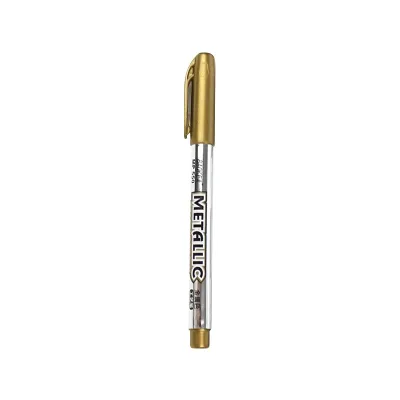
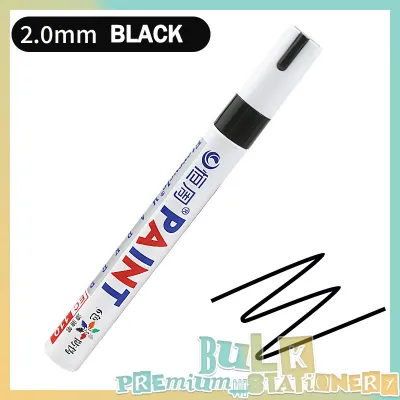
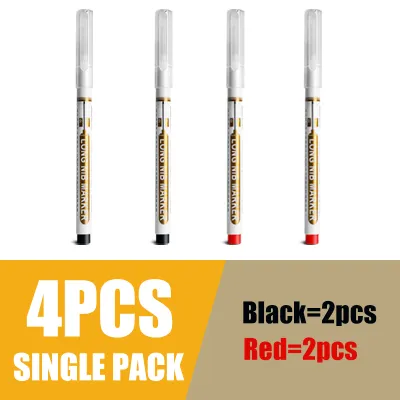
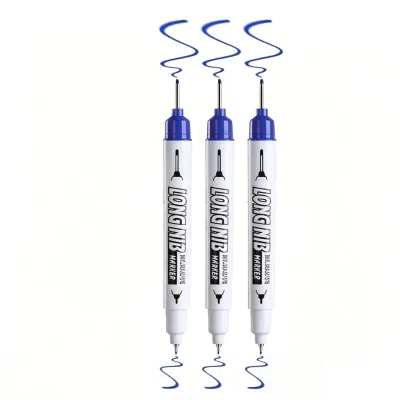
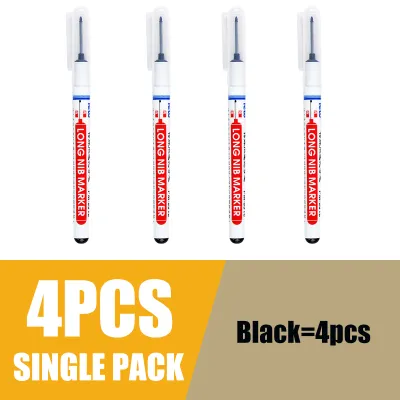
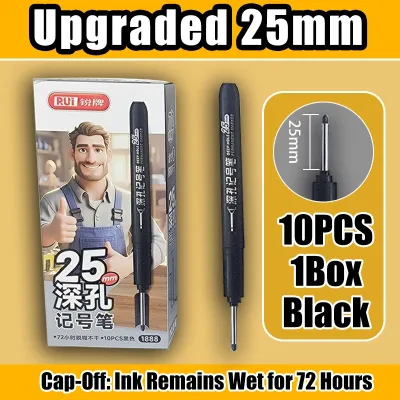
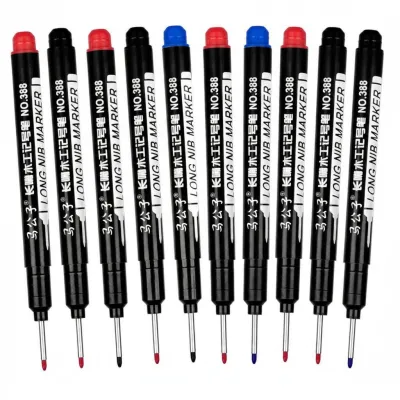
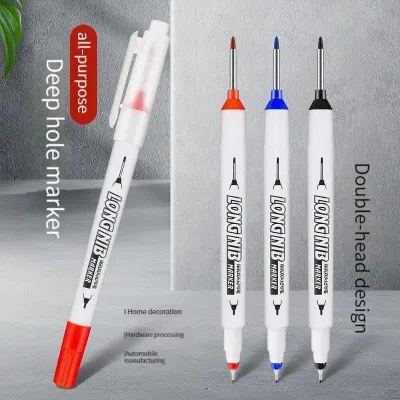
Prices are valid at publication and may change. Please refer to the product page for the latest price.
Water-based paint markers utilize water as the primary solvent, making them low-odor and generally safer for indoor use or enclosed spaces. While they offer excellent opacity and vibrant colors, their adhesion to untreated, smooth metal is typically less robust than that of oil-based alternatives. Water-based formulas are excellent for decorative metalwork, temporary labeling, or indoor projects where the metal will not be subjected to heavy abrasion or outdoor weathering.
Acrylic paint markers feature acrylic polymer emulsions that dry to a flexible, plastic-like finish. They offer a middle ground, providing excellent lightfastness and water resistance once dry. Acrylic markers are highly versatile and work well on primed or slightly textured metal surfaces. When evaluating acrylic options, check the packaging for “multi-surface compatibility” and instructions regarding heat-setting or clear-coating if the item will be handled frequently.
To ensure compatibility, always read the product label carefully. Manufacturers explicitly list compatible surfaces, such as “metal,” “steel,” or “non-porous surfaces.” Look for permanence claims, such as “fade-resistant,” “waterproof,” or “abrasion-resistant.” Additionally, note any required priming steps, such as shaking the marker vigorously or pressing the nib to start the paint flow, which are standard for valve-action paint markers.
Standard permanent markers rely on translucent, dye-based inks dissolved in alcohol or other solvents. On smooth metal, these dyes lack the body and opacity to stand out, especially on dark or oxidized surfaces. They also tend to break down quickly when exposed to sunlight, friction, or moisture. Specialized paint markers, by contrast, use suspended solid pigments that create an opaque, physical barrier of color on top of the metal rather than soaking into it, ensuring long-lasting visibility.
Key Features to Check Before Buying
Beyond the ink formulation, the physical design of a pen marker for metal dictates its usability, precision, and reliability. Evaluating these features against your specific project requirements will help you select the most effective tool.

The nib type directly influences line width, paint flow, and control on smooth metal surfaces. Bullet nibs are the most common, offering a consistent line width from various angles, making them ideal for general labeling, marking parts, or writing text. Chisel nibs provide versatility, allowing you to write fine lines with the sharp edge or thick, bold strokes with the flat side, which is useful for large-scale industrial marking or bold signage. Fine or extra-fine nibs are essential for detailed work, small components, or writing in tight spaces. When choosing a nib, consider the material; acrylic or polyester fiber nibs are highly durable and resist fraying when used on rough or textured metal.
The paint delivery mechanism is another crucial feature. Valve-action markers utilize an internal valve and a spring-loaded mechanism to control the flow of highly viscous paint. To activate, you shake the marker to mix the pigment and solvent, then press the nib down onto a scrap surface to open the valve and saturate the tip. This design prevents the paint from drying out inside the barrel and allows for a fresh, opaque application. Standard felt-tip markers, which rely on capillary action without a valve, often struggle with thick paint pigments, leading to rapid drying, clogging, or faint marks on non-porous surfaces.
Do not assume a marker is weatherproof or fade-resistant simply because it is labeled as a paint marker. Always check the manufacturer’s technical specifications or product datasheets for explicit ratings. Look for terms like “UV-resistant” if your marked metal will be exposed to direct sunlight, as ultraviolet rays can rapidly degrade standard pigments. For industrial or outdoor environments, verify if the marker is rated for “weatherproofing” or “water resistance” to ensure the marks remain legible through rain, high humidity, and temperature shifts.
Finally, evaluate the barrel design, grip, and overall dimensions of the marker. A sturdy metal or high-density plastic barrel protects the paint reservoir from impact in busy workshops or outdoor sites. Ergonomic grips or textured barrels reduce hand fatigue during extended use, which is particularly important for precision marking or detailed artistic projects. Consider the physical size of the marker; larger barrels hold more paint for high-volume tasks, while slim, pen-like designs offer superior control for intricate writing.
Preparing and Testing Metal Surfaces
Achieving optimal adhesion and longevity with a pen marker for metal depends heavily on proper surface preparation. Applying paint directly to untreated metal often leads to premature peeling, smearing, or uneven coverage.
Before writing, the metal surface must be thoroughly cleaned and degreased. Metal sheets, pipes, and parts often carry a thin film of manufacturing oil, protective wax, rust-preventative coatings, or simple dust and grime. Use a mild solvent, such as isopropyl alcohol or a dedicated metal degreaser, applied with a lint-free cloth to wipe the area clean. Avoid using soapy water or household cleaners that leave behind a film or residue, as this can prevent the paint from bonding directly to the metal substrate. Ensure the surface is completely dry before applying any paint.
Even if a marker claims universal metal compatibility, conducting a small, hidden patch test is highly recommended. Apply a small mark in an inconspicuous area of the metal object and allow it to dry completely. Observe the opacity of the paint—does it cover the metal color fully, or does it appear translucent? Once dry, perform a gentle scratch test with a fingernail or a soft cloth to evaluate adhesion. This step helps you verify drying times and ensure the paint will not easily rub off during handling.
Curing times can vary significantly based on environmental conditions. In the Philippines, where high relative humidity and tropical temperatures are common, paint solvents may evaporate differently than in dry environments. High humidity can prolong the drying and curing process of water-based and acrylic markers, while intense heat might cause oil-based paints to skin over too quickly. Always refer to the product packaging for the manufacturer’s recommended drying and curing times, and allow extra time in humid conditions before subjecting the marked metal to handling or outdoor exposure.
If you are working with specialized metal surfaces—such as powder-coated, anodized, heavily rusted, or chemically treated metals—standard paint markers may not adhere correctly. In these cases, stop and consult the manufacturer’s technical support or product documentation. Specialized coatings often require specific primer coats or highly specialized industrial markers formulated to penetrate oily films or bond with treated surfaces.
Maintenance and Storage Best Practices
Proper maintenance and storage are essential to extend the lifespan of your paint markers and ensure consistent paint flow. Neglecting these steps can lead to clogged nibs, dried-out paint reservoirs, or leaky markers.
Always store paint markers horizontally when not in use. This orientation keeps the pigment particles evenly distributed throughout the solvent and prevents them from settling heavily at either the nib end or the bottom of the barrel. Storing valve-action markers vertically with the nib down can cause paint to pool and clog the valve mechanism, while storing them nib up can lead to the nib drying out completely, making reactivation difficult.
If a nib becomes clogged with dried paint, do not discard the marker. Many manufacturers design their paint markers with replaceable or reversible nibs. To clear a clog, gently remove the nib using tweezers and soak it in a small amount of a compatible solvent, such as isopropyl alcohol for acrylic and water-based markers, or mineral spirits for oil-based formulations. Once the dried paint softens, gently wipe the nib clean, reinsert it, and prime the marker on a scrap piece of paper to restore smooth paint flow.
Before using any solvent to clean a clogged nib or wipe down a messy marker, verify its compatibility with the marker’s barrel and nib materials. Strong solvents like acetone can melt certain plastics, ruin synthetic fiber nibs, or erase the printed instructions on the marker barrel. Stick to mild, manufacturer-recommended cleaning agents to preserve the structural integrity of your writing instruments.
Frequently Asked Questions (FAQ)
Can I use regular permanent markers on metal?
Regular permanent markers are generally not suitable for long-term or highly visible marking on metal surfaces. These markers utilize translucent, dye-based inks that lack the physical body to stand out against dark or textured metals. Because the ink does not form a thick, opaque layer, it is highly susceptible to fading from UV exposure, rubbing off under friction, or washing away when exposed to moisture. While a standard permanent marker may suffice for temporary, indoor labeling on clean, bright metal, any application requiring durability, weatherproofing, or high visibility on dark surfaces demands a dedicated, pigment-rich paint marker.
How do I remove paint marker ink from metal if I make a mistake?
Removing paint marker ink from metal requires careful consideration of the metal’s surface finish to avoid causing damage. Before applying any solvent, identify whether the metal is bare, painted, powder-coated, or anodized. For bare metals, mild solvents like isopropyl alcohol, mineral spirits, or acetone are highly effective at dissolving cured paint. However, if the metal has a painted or coated finish, strong solvents like acetone can strip or dull the underlying coating. Always test your chosen removal agent on an inconspicuous area first. Apply the solvent to a clean cloth, gently wipe the unwanted mark, and immediately clean the area with a damp cloth to neutralize any remaining solvent.
Community discussion
Share your experience or ask a question. Comments are reviewed before publication.