
Watercolor painting is one of the most accessible and expressive mediums for students and beginners. When starting out, selecting the right paint set can make the difference between an inspiring artistic journey and a frustrating experience. Among the various options available on the market, Prang watercolors have long been a staple in classrooms and home art studios due to their reliable pigment quality and user-friendly formats. Choosing the best set requires understanding how different formats, color counts, and packaging styles align with a student’s specific learning goals and working environment.
In tropical climates like the Philippines, where high humidity and warm temperatures are constant factors, choosing the right art supplies involves unique considerations. High humidity can affect how paint dries, how it is stored, and how susceptible it is to mold. A well-chosen watercolor set must not only deliver vibrant colors but also withstand the rigors of being carried in a school bag through rainy seasons and stored in humid classrooms. By focusing on practical features, durability, and ease of use, beginners can find a set that supports their creative growth while offering excellent value for their budget.
Comparing Prang Formats: Pans vs. Tubes for Students
Choosing between pan and tube watercolors is the first major decision for any student or beginner. Pan watercolors consist of dry or semi-moist cakes of paint housed in individual plastic wells within a tray. This format is highly self-contained, as the lid of the plastic case typically doubles as a mixing palette. Tube watercolors, on the other hand, contain liquid paste that must be squeezed out onto a separate palette before use. For beginners, the physical setup of a pan set is far less intimidating because it requires minimal preparation and fewer external accessories to get started.
Products mentioned in this guide
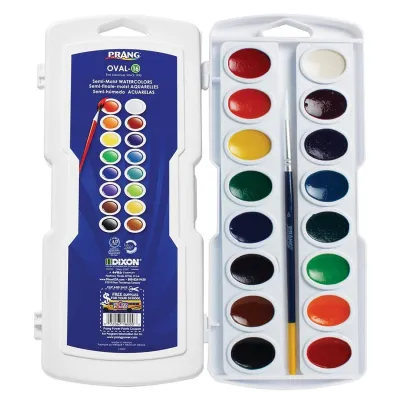
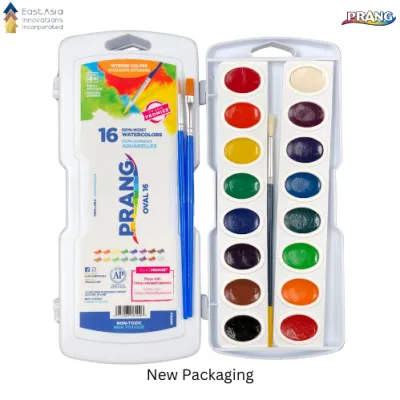
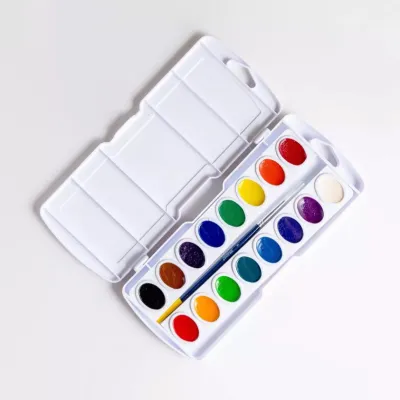
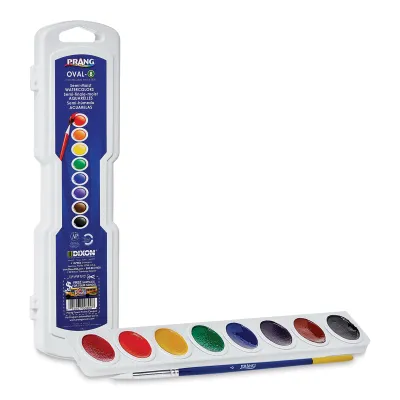
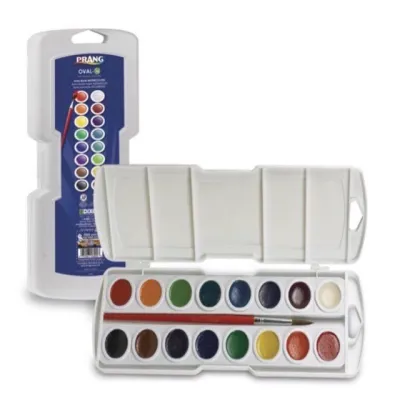
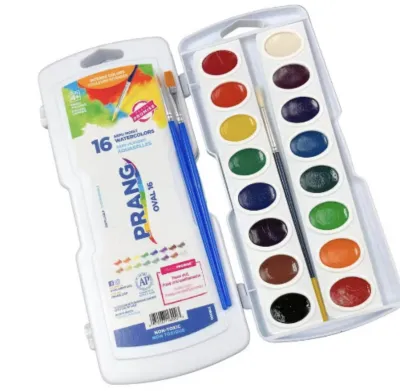
Prices are valid at publication and may change. Please refer to the product page for the latest price.
Portability and cleanup are critical factors for students who must transport their art supplies between home and school. Pan sets excel in this regard because they are compact, lightweight, and dry relatively quickly after use. There is no risk of a tube cap splitting or paint leaking inside a backpack, which can ruin textbooks and school uniforms. Cleaning a pan set is as simple as wiping down the plastic mixing lid with a damp cloth or paper towel. In contrast, tube sets require careful management to ensure the tube threads remain clean; otherwise, dried paint can glue the caps shut, making them difficult to open without damaging the packaging.
Paint reactivation and mixing capacity also differ significantly between the two formats. Pan watercolors are designed to reactivate instantly when touched with a wet brush, making them ideal for quick sketches, color studies, and standard classroom assignments. However, because the paint is concentrated in small wells, mixing large volumes of a single color wash can be challenging. Tube watercolors are superior for large-scale projects, such as painting poster boards or expansive backgrounds, because you can squeeze out a generous amount of fresh, moist paint to mix deep, uniform washes. For most school-aged children and general art classes, the controlled portioning of pan sets prevents paint waste and keeps the workspace tidy.
Storage conditions in warm, humid environments further influence this choice. In tropical regions, open tube paints left on a palette may not dry completely, remaining sticky and attracting dust, lint, or insects. Semi-moist pan sets are formulated to resist cracking in dry conditions while remaining stable in humid weather. After a painting session, leaving the pan set open for a short time allows the surface moisture to evaporate, preventing the growth of mold or mildew before the case is closed and stored away in a locker or desk drawer.
Selecting the Right Color Count for Beginner Projects
Selecting the appropriate color count is a balance between educational value, convenience, and budget. For absolute beginners and younger students, smaller sets containing 8 basic colors are highly recommended. Limiting the palette forces students to learn the fundamentals of color theory and color mixing. By working with primary colors, students learn how to blend their own secondary and tertiary hues, gaining a deeper understanding of color relationships. This hands-on mixing practice builds a strong artistic foundation that pre-mixed colors cannot replicate.

An 8-color set is also highly practical for standard school supply lists. It is compact enough to fit into a standard pencil case alongside pens and pencils, and it represents a very low financial investment, often costing only a few pesos (₱). This makes it an excellent choice for parents looking to fulfill school requirements without overspending on supplies that may only be used a few times a term. The simplicity of an 8-color palette also reduces decision fatigue, allowing beginners to focus entirely on brush control, water management, and basic techniques.
Mid-range sets, such as those featuring 16 colors, offer a practical compromise for intermediate students and hobbyists. These sets introduce pre-mixed secondary colors, earth tones, and neutrals, which can save valuable time during timed classroom activities or examinations. Instead of spending several minutes trying to mix a consistent brown or a specific shade of green, students can access these colors directly from the pan and focus their energy on composition and shading. The 16-color format provides enough variety to tackle more complex projects while remaining portable and affordable.
Larger sets containing 24 or more colors are generally reserved for advanced art students, high school electives, or specialized art curriculums. These comprehensive sets provide a wide array of subtle shades, which are useful for detailed botanical illustrations, portraiture, or landscape painting where precise color matching is required. However, for a true beginner, a large color count can actually hinder progress by discouraging color mixing. It is usually better to master a smaller set first, learning how to manipulate a limited palette before upgrading to a larger, more complex collection.
Aligning Your Choice with School Supply Requirements
When purchasing watercolors for educational use, it is essential to align your choice with the specific guidelines provided by teachers or school boards. Many school supply lists explicitly request “semi-moist” watercolor pans. This specification is important because semi-moist paints do not dry out into rock-hard, unusable blocks like cheaper alternatives. They remain slightly soft to the touch, allowing students to pick up vibrant pigment instantly with a wet brush, which keeps classroom projects moving efficiently within limited class periods.
The scale of the art projects planned for the school year should also guide your purchase. Standard classroom worksheets, sketchbook entries, and small-format paintings are perfectly suited for pan sets. If the curriculum includes larger projects, such as group posters, science fair displays, or theatrical props, you should verify whether the teacher recommends supplementing pan sets with a few tubes of primary colors. Having tubes on hand for large-scale color washes prevents students from wearing down their individual pan cakes prematurely on a single assignment.
Classroom logistics, storage, and sharing policies are additional practical factors to consider. In busy classrooms, art supplies are often stored in shared bins or stacked in cubbies. Watercolor sets with durable, rigid plastic cases are highly desirable because they protect the paint cakes from being crushed by heavy textbooks. Look for cases with secure, easy-to-use latches that will not accidentally pop open inside a school bag. It is also wise to choose a set with a smooth, flat lid surface where a student’s name can be clearly written with a permanent marker, preventing mix-ups during cleanup time.
Finally, consider the durability of the included accessories. Many student watercolor sets come packaged with a starter paintbrush. While these brushes are convenient, they vary widely in quality. A good student set should include a brush with a secure metal ferrule that does not wobble or shed bristles onto the wet paint. If the included brush is prone to shedding, it is worth purchasing a separate, inexpensive synthetic round brush to ensure a frustration-free painting experience for the student.
Pre-Purchase Checklist for Watercolor Sets
Before finalizing your purchase at a local stationery store or through an online marketplace, running through a quick checklist can help ensure you receive a high-quality, complete product. Taking a few moments to inspect the item can prevent the inconvenience of returning defective supplies once the school term has already begun.
- Inspect the Packaging and Latches: Examine the plastic case for any cracks, chips, or broken hinges. Ensure the latch snaps shut securely and stays closed when handled, as a loose latch can lead to messy spills inside a school bag.
- Check the Included Brush: Verify that the starter brush is present inside the case. Gently tug on the bristles to ensure they are securely crimped within the metal ferrule and do not shed easily.
- Observe the Paint Cakes: For pan sets, look through the clear lid to ensure the paint cakes are intact and seated firmly in their wells. They should not be cracked, crumbled, or showing signs of moisture damage, such as fuzzy mold spots or excessive stickiness.
- Verify Tube Integrity: If purchasing a tube set, gently squeeze each tube to ensure the paint inside feels pliable and liquid. Check the caps and seams for any signs of dried paint leakage or pinholes in the metal or plastic packaging.
- Confirm Paper Compatibility: Watercolor paint requires specialized paper to perform correctly. Check your school list or shopping cart to ensure you have watercolor paper or mixed-media paper with a weight of at least 200 to 300 gsm (grams per square meter). Standard copy paper or thin drawing pads will warp and tear when wet.
Frequently Asked Questions (FAQ)
How do I reactivate dried-out Prang pan watercolors?
To reactivate semi-moist pan watercolors that have dried out or hardened over time, place a few drops of clean, room-temperature water directly onto the surface of each paint cake. You can use a clean paintbrush, a dropper, or a small spray bottle to apply the water. Let the water sit undisturbed for one to two minutes to allow the moisture to penetrate and soften the gum arabic binder. Avoid using hot water, as extreme temperatures can break down the binder or cause the paint cake to crack and lift away from the plastic well. Once the paint has softened, gently swirl a wet brush over the cake to work up a smooth, creamy consistency.
Can I use Prang watercolors on regular printer paper?
Using watercolor paint on standard printer paper or copy paper is not recommended. Printer paper is thin, lightweight (usually around 70 to 80 gsm), and lacks the specialized sizing agents found in watercolor paper. When exposed to water, printer paper will immediately warp, buckle, and pill, creating a bumpy surface that causes paint to pool unevenly. The water will also quickly saturate the fibers, causing the paint to bleed through to the back of the sheet and potentially ruin the desk or table underneath. For successful student projects, always use dedicated watercolor paper or heavy mixed-media paper with a labeled weight of at least 200 to 300 gsm, which is designed to absorb water without tearing or warping.
Community discussion
Share your experience or ask a question. Comments are reviewed before publication.