
Choosing a professional drawing set is one of the most critical decisions for a fine arts student in the Philippines. The right collection of tools does not simply make drawing easier; it allows you to execute complex academic assignments with precision, from delicate tonal gradations in classical still lifes to bold, expressive strokes in life drawing sessions. Because fine arts curricula demand rigorous experimentation across multiple dry media, finding a kit that balances durability, versatility, and cost-effectiveness is essential for academic success.
A high-quality set must withstand both the physical demands of daily studio work and the environmental challenges of a tropical climate. High humidity can soften paper fibers and affect how graphite or charcoal adheres to the page, making the quality of your drawing instruments even more critical. By understanding your specific course requirements and the physical characteristics of professional-grade materials, you can select a set that serves as a reliable foundation for your artistic development.
Identifying Your Curriculum's Medium Requirements
Fine arts programs typically structure their drawing courses progressively, starting with foundational techniques before moving into advanced, expressive studios. In your first year, courses often focus heavily on observational drawing, perspective, and technical drafting. These classes require precise control over line weight and value, which is best achieved using high-quality graphite pencils.
Products mentioned in this guide
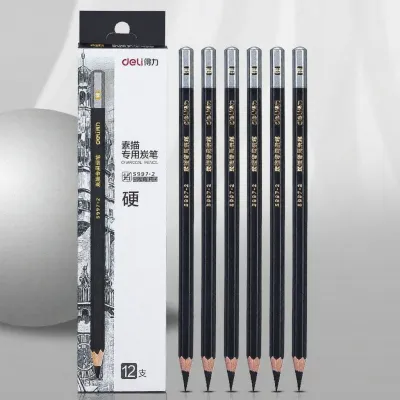
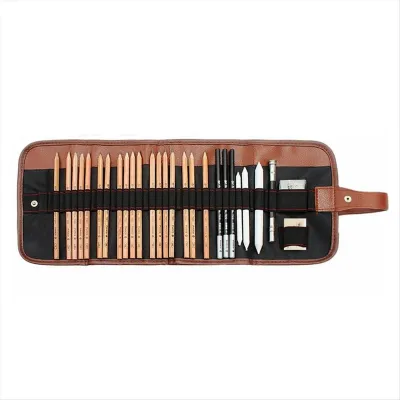
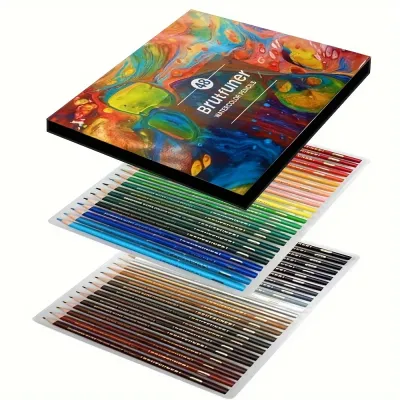
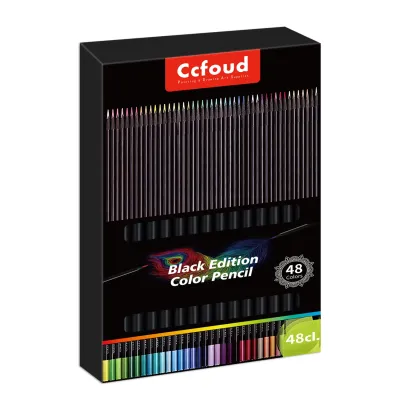
Prices are valid at publication and may change. Please refer to the product page for the latest price.
As you advance to figure drawing, portraiture, and conceptual studio classes, the curriculum shifts toward expressive media like charcoal, conté crayons, and soft pastels. These mediums allow for rapid gestural sketching, deep tonal contrasts, and large-format work. Purchasing a single, massive mixed-media set at the very beginning of your studies might seem convenient, but it often results in paying for specialized tools you will not use until much later, or tools that may degrade before you even open them.
Before making any purchase, obtain a copy of your course syllabus or consult directly with your studio professors. Many instructors have highly specific preferences for certain brands, lead hardness levels, or paper types. A syllabus-first approach ensures you do not waste your budget on redundant items and allows you to allocate your funds toward the exact tools that will be graded in class.
When deciding between a pre-assembled professional drawing set and a custom-built kit, consider your current skill level and budget. Pre-assembled sets offer excellent value for beginners, providing a curated selection of essential grades and a protective case at a lower combined price than buying items individually. However, advanced students often prefer building custom kits, allowing them to select specific high-use grades and premium accessories tailored to their unique drawing style.
Graphite-Centric Sets for Foundational and Technical Drawing
For foundational drawing and technical drafting, a dedicated graphite-centric set is indispensable. These sets are categorized by the hardness of their leads, which is designated by a standardized alphanumeric scale. The “H” series represents hard leads that produce light, precise lines, while the “B” series represents soft leads that yield dark, rich tones. The letter “F” and the standard “HB” sit in the middle of this spectrum, offering a balance of hardness and darkness.

A versatile professional graphite set should ideally span a range from 6H to 8B. Harder leads, such as 4H to 6H, are highly suitable for initial layout lines, perspective grids, and technical drafting because they resist smudging and maintain a sharp point for extended periods. Softer leads, ranging from 2B to 8B, are essential for rendering deep shadows, creating rich textures, and establishing a full range of values in observational drawings.
The physical construction of the pencil is just as important as the lead grade. Professional-grade pencils feature superior lead durability and break resistance, often achieved through specialized manufacturing processes where the lead is glued to the wood casing along its entire length. This prevents the lead from shattering internally when the pencil is dropped, a common issue with student-grade alternatives that leads to frustrating breakages during sharpening.
A complete graphite set should also include essential accessories that expand your mark-making capabilities. Look for kits that feature high-quality kneaded erasers, which can be molded into precise shapes to lift graphite highlights without tearing the paper fibers. Precision metal sharpeners, sandpaper blocks for custom point shaping, and paper blending stumps (tortillons) are also vital for achieving smooth, seamless gradations in your tonal work.
Charcoal and Expressive Media Kits for Figure and Portrait Studies
When transitioning to figure drawing and portraiture, the precise lines of graphite give way to the rich, dramatic values of charcoal. A professional charcoal and expressive media kit must provide a variety of charcoal types, each serving a distinct purpose in the studio. The three primary forms you will encounter are vine or willow charcoal, compressed charcoal, and wood-cased charcoal pencils.
Vine and willow charcoal are made by burning raw twigs in an airtight kiln, resulting in a soft, brittle medium that glides effortlessly across the paper. Because it contains no binders, vine charcoal is incredibly easy to erase or smudge, making it an excellent tool for rapid gestural sketches and initial layout lines on large canvases. Compressed charcoal, conversely, is formulated by mixing charcoal powder with a clay or gum binder, producing intense, velvety black marks that adhere firmly to the page and are much harder to erase.
Charcoal pencils offer the deep contrast of compressed charcoal with the clean handling and precision of a traditional wooden pencil. These are excellent for adding fine details, sharp edges, and deep shadows to a portrait without getting charcoal dust all over your hands. A well-rounded expressive set will include a balanced mix of these three types, allowing you to layer and blend different textures seamlessly.
Working with charcoal generates significant dust and is highly prone to smudging, which requires specialized tools for management and preservation. Your kit should include a workable fixative spray to lock down charcoal layers as you work, allowing you to build up deep values without muddying the underlying layers. Additionally, soft gum erasers and firm vinyl erasers are necessary for lifting highlights and cleaning up stray marks, while heavy-duty blending stumps help control the spread of the loose powder.
The performance of charcoal is deeply dependent on the texture, or “tooth,” of the paper you use. Smooth papers like bristol board cannot grip the loose particles of charcoal, causing the medium to slide off the page and smudge excessively. For optimal results, pair your charcoal set with medium-to-heavyweight paper that features a pronounced tooth, such as cold-press drawing paper, charcoal paper, or textured pastel sheets.
Mixed-Media and Versatile Sets for Multidisciplinary Programs
For fine arts students enrolled in multidisciplinary programs, mixed-media drawing sets offer a highly versatile, all-in-one solution. These comprehensive kits typically combine graphite pencils, charcoal sticks, colored pastels, and water-soluble sketching mediums into a single package. This variety allows you to experiment with different techniques and combine multiple mediums within a single piece of artwork.
However, mixed-media sets come with distinct trade-offs that you must carefully evaluate. While they provide broad versatility, they often contain fewer individual grades of each medium compared to dedicated sets. For instance, a mixed-media kit might only include three graphite pencils (such as 2B, 4B, and 6B) and two charcoal pencils, which may not be sufficient for a highly specialized class. If your curriculum demands deep, exhaustive work in a single medium, a specialized set is usually a more practical investment.
To maximize the value of a mixed-media set, look for options that include high-quality supplementary tools. Essential additions include tortillons for blending, sandpaper pointers for sharpening charcoal, pencil extenders to prolong the life of short stubs, and specialized cutting tools like utility knives. When using utility knives or blades to sharpen charcoal or shape pastel sticks, always prioritize safety: cut away from your body, keep your fingers behind the blade, and store the cutting tools in a secure, protective sleeve.
Portability and storage are critical factors for fine arts students who must commute to campus studios daily. Navigating public transportation in the Philippines, especially during the rainy season, requires a storage case that is both durable and weather-resistant. Zippered canvas pencil rolls, heavy-duty plastic cases, or padded tin boxes are excellent for protecting fragile graphite and brittle charcoal from shattering during transit, ensuring your tools arrive at the studio intact.
Verification Checklist for Quality and Local Availability
Ensuring the authenticity and quality of your professional drawing set is crucial, especially when purchasing supplies in the Philippines. The local market features a wide array of options, but it also carries the risk of counterfeit products, particularly on general e-commerce platforms. To protect your investment, always verify the physical quality of your tools and purchase from reputable sources.
- Check for Authenticity: Look for official manufacturer seals, holographic stickers, and crisp, high-quality branding on the packaging. Counterfeit pencils often have misaligned lead cores, off-center branding, and wood casings that split easily when sharpened. Purchasing from official brand stores or authorized local distributors is the safest way to ensure you are getting genuine, professional-grade materials.
- Verify Paper Specifications: If your drawing set includes an integrated sketchpad or paper samples, check the technical specifications carefully. Ensure the paper has a weight of at least 150 to 200 GSM (grams per square meter) for dry media to prevent tearing and warping. Additionally, look for "acid-free" or "pH-neutral" certifications, which guarantee the paper will not yellow, become brittle, or degrade your artwork over time in the humid Philippine climate.
- Evaluate Sourcing and Budgeting: Compare the benefits of buying from specialized local art supply stores versus online marketplaces. Local brick-and-mortar art shops allow you to physically inspect the pencils for straightness and casing quality before buying, and they eliminate the risk of transit damage. Online marketplaces offer convenience and competitive pricing, but you must ensure the seller packages fragile leads securely in bubble wrap or sturdy boxes to prevent internal shattering during shipping.
- Plan for Long-Term Replenishment: When budgeting in ₱, consider both the initial cost of the set and the long-term expense of replacing individual items. A high-quality professional drawing set can range from ₱800 to over ₱3,000, depending on the completeness and brand. While this is a significant upfront investment, professional pencils can often be purchased individually for ₱50 to ₱150 each, allowing you to replenish your most frequently used grades without buying an entirely new set.
Frequently Asked Questions (FAQ)
How do I prevent graphite and charcoal from smudging in my portfolio?
To protect your finished drawings from smudging and friction damage inside your portfolio, always place a sheet of glassine interleaving paper over each artwork. Glassine is a smooth, acid-free, and grease-resistant paper that prevents drawings from rubbing against one another. For charcoal and soft graphite drawings, apply a light, even coat of workable or final fixative spray in a well-ventilated outdoor area, holding the can about 12 inches away from the paper to avoid spotting. Store your portfolio flat or vertically in a cool, dry room, away from high humidity and direct sunlight, to prevent the paper from warping or absorbing moisture.
Is it better to buy a pre-made set or individual pencils for college?
For most fine arts students entering college, starting with a high-quality pre-made drawing set is the most cost-effective and convenient choice. Pre-made sets are curated by manufacturers to include a balanced spectrum of essential grades, and they usually come with a protective tin or case that keeps your tools organized. However, as the semester progresses and you discover your personal drawing style, you will likely wear down specific grades (such as 2B, 4B, or medium charcoal) much faster than others. A highly practical hybrid approach is to purchase a core pre-made set at the beginning of the year, and then buy individual open-stock pencils to replenish your favorite grades and customize your kit as needed.

Community discussion
Share your experience or ask a question. Comments are reviewed before publication.