
The primary difference between 2B, 4B, 6B, and 8B shading pencils lies in their graphite-to-clay ratio. Higher “B” numbers indicate a higher graphite content, resulting in softer leads that produce darker, richer tones and blend easily, but they wear down faster and smudge more. Lower “B” numbers contain more clay, offering lighter values, finer textures, and better point retention. Your ideal choice depends entirely on your specific drawing style, the techniques you employ, and the texture of your drawing paper.
In tropical climates like the Philippines, high humidity can soften paper fibers and affect how graphite adheres to the surface. Understanding how these different grades behave under varying conditions is essential for achieving clean, professional results without damaging your drawing medium.
Understanding the Graphite Grading Scale
Graphite is a naturally slick, crystalline form of carbon that is too soft and crumbly to be used on its own for drawing. To create a stable pencil lead, manufacturers mix raw graphite powder with fine clay and a binding agent, then bake the mixture. The clay acts as a structural stabilizer; the more clay in the mix, the harder and lighter the pencil lead will be.
Products mentioned in this guide
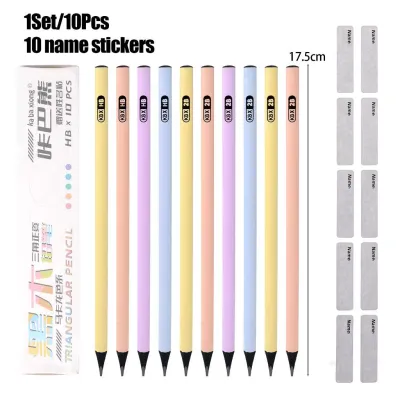
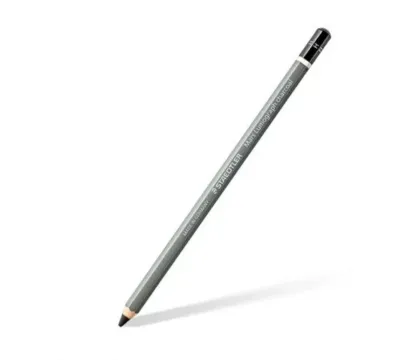
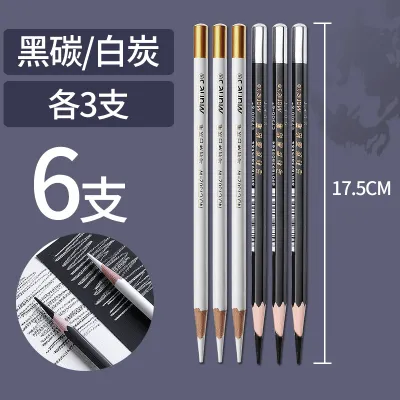
Prices are valid at publication and may change. Please refer to the product page for the latest price.
The standard grading scale uses “B” to denote “Blackness” and “H” to denote “Hardness.” When you move up the scale from 2B to 8B, the proportion of graphite increases while the clay content decreases. This physical shift makes the lead progressively softer, allowing more graphite particles to transfer to the paper fibers with minimal physical pressure.
While the grading scale is standardized, there is no universal formula enforced across all manufacturers. A 4B pencil from an Asian brand may feel slightly softer or look darker than a 4B from a European brand due to regional differences in clay sourcing, grinding techniques, and binder formulations. Testing different brands on your preferred paper is the best way to verify how a specific grade will perform.
Comparing 2B, 4B, 6B, and 8B Shading Pencils
Each graphite grade serves a distinct purpose in an artist’s toolkit, offering a unique balance of darkness, texture, and structural integrity.

2B Shading Pencils
As the gateway to the softer side of the grading scale, the 2B pencil offers a clean, light-medium gray value. Because it retains a relatively high proportion of clay, it holds a sharp point well and resists crumbling. This makes it highly reliable for initial layout sketches, fine cross-hatching, and rendering delicate details where a soft, smudgy line would compromise precision.
4B Shading Pencils
The 4B pencil is the versatile workhorse of the shading family. It sits comfortably in the middle of the soft range, delivering a rich, medium-dark tone while maintaining enough structural integrity to resist immediate wear. It blends smoothly with a paper stump, making it an excellent choice for rendering midtones, soft shadows, and smooth skin textures.
6B Shading Pencils
With a high graphite-to-clay ratio, the 6B pencil is noticeably soft and dark. It excels at creating deep shadows, dramatic contrasts, and expressive, painterly strokes. However, the soft lead wears down rapidly, requiring frequent sharpening if you need to maintain a fine point. It is also highly prone to smudging, which is beneficial for blending but requires careful hand placement to avoid ruining clean areas of your drawing.
8B Shading Pencils
The 8B pencil is the darkest and softest of the standard range, producing intense, near-black values that can mimic charcoal. The lead is incredibly soft and glides across the paper with virtually no resistance. The trade-off is extreme fragility; the tip can crumble under heavy pressure, it wears down to a dull nub in a matter of strokes, and it smudges at the slightest touch.
| Pencil Grade | Relative Darkness | Lead Softness | Blendability | Smudge Risk | Point Retention |
|---|---|---|---|---|---|
| 2B | Light-Medium | Medium-Firm | Moderate | Low-Medium | High |
| 4B | Medium-Dark | Medium-Soft | High | Medium | Moderate |
| 6B | Dark | Soft | Very High | High | Low |
| 8B | Very Dark | Very Soft | Extremely High | Very High | Very Low |
Decision Framework
- Choose 2B if you are sketching initial outlines, drawing fine hair or skin textures, or working on highly detailed architectural drawings.
- Choose 4B if you want a single, versatile pencil for general sketching, rendering midtones, and creating smooth transitions between light and shadow.
- Choose 6B if you need to lay down deep shadows quickly, create expressive life drawings, or blend large tonal areas.
- Choose 8B if you require maximum contrast, rich charcoal-like blacks, or dramatic, dark backgrounds.
Matching Graphite Grades to Drawing Styles and Techniques
Your choice of shading pencil should align with your preferred drawing techniques, as different grades respond uniquely to various application methods.
Precision techniques like hatching and cross-hatching rely on clean, distinct lines that do not merge into a muddy blur. If you attempt to cross-hatch with an 8B pencil, the lines will quickly spread and lose their definition. Therefore, 2B and 4B are the standard choices for these techniques, allowing you to build up values gradually through overlapping, crisp lines.
For expressive sketching, gesture drawing, or smooth tonal rendering, 6B and 8B pencils are superior. Their soft leads allow you to use the side of the exposed graphite core to cover large areas with a soft, grain-like texture. They respond beautifully to blending tools, allowing you to create seamless gradients with minimal effort.
To achieve professional depth, you should employ the technique of layering, working from hard to soft (light to dark). Start by mapping out your values and midtones with a 2B or 4B pencil. Once these foundations are established, use a 6B or 8B to deepen the shadows. Avoid layering a hard pencil over a thick layer of soft graphite; the hard tip will scratch through the soft layer, creating shiny, uneven patches and damaging the paper fibers.
Testing and Verifying Performance on Your Paper
The texture of your paper, known as “tooth,” plays a massive role in how different graphite grades perform. Rough paper has tiny peaks and valleys that act like a grater, scraping graphite off the pencil. Soft pencils like 6B and 8B perform exceptionally well on rough paper because the tooth holds onto the heavy graphite particles, resulting in deep, rich textures. Smooth paper, such as bristol board, has very little tooth; while excellent for the precise lines of a 2B, it can quickly become saturated with soft graphite, preventing you from achieving the true darkness of an 8B.
In humid environments, paper naturally absorbs moisture from the air, which softens the fibers and can cause the graphite to slide rather than grip. When working in high humidity, soft grades like 6B and 8B can smudge even more easily, and the paper is more prone to denting if you apply too much pressure. Keeping your drawing paper in a sealed folder with silica gel packets can help maintain its crispness and improve graphite adhesion.
To verify how your pencils interact with your paper, always create a personal value scale and blend test before starting a major project. Draw a five-step value scale for each grade on a scrap piece of the exact paper you plan to use. Draw five adjacent squares, leaving the first white, and gradually shade the remaining four from light gray to the absolute darkest tone the pencil can produce. This exercise teaches you the limits of each grade and how much pressure is required to achieve specific values.
When applying heavy pressure with soft pencils, you may encounter “graphite shine” or burnishing, which occurs when the graphite crystals are flattened into a highly reflective, metallic surface. To maintain a matte finish, build up your dark values gradually using multiple light layers of a 6B or 8B pencil rather than forcing the pencil into the paper with heavy physical pressure.
Building a Versatile Shading Pencil Kit
You do not need a massive, multi-piece pencil set to start drawing. A minimalist kit consisting of just a 2B and a 6B is highly effective for beginners. The 2B handles your outlines, light values, and fine details, while the 6B provides the deep shadows and contrast, establishing a wide value range without unnecessary spending.
As your skills progress, you can expand your kit by adding a 4B to bridge the gap for smoother tonal transitions, and an 8B for those final, dramatic dark touches. This step-by-step expansion allows you to master the characteristics of each grade before introducing more variables to your workflow.
When selecting shading pencils from online marketplaces or local stationery shops, pay close attention to the physical build quality. Look for options with centered leads; if the graphite core is off-center, the pencil will break constantly during sharpening. High-quality wood casings, such as incense cedar, sharpen smoothly without splintering, protecting the fragile soft leads of 6B and 8B pencils from internal breakage.
Frequently Asked Questions (FAQ)
Can I use a single shading pencil for an entire drawing?
Yes, you can use a single pencil, and a 4B is generally the most versatile choice for this approach. However, using only one grade limits your value range; you will struggle to achieve both the crisp, clean details of a 2B and the deep, rich shadows of an 8B. Utilizing at least two distinct grades yields a much more dynamic and professional result.
How do I prevent 6B and 8B pencils from smudging my artwork?
To prevent smudging, place a clean sheet of scrap paper under your drawing hand to act as a barrier, protecting the paper from your skin’s natural oils. Always work from the top-left of the page to the bottom-right if you are right-handed (or top-right to bottom-left if left-handed). Once your drawing is complete, apply a light coat of artist’s fixative spray to lock the graphite particles in place.
Why does my 8B pencil look shiny instead of matte black?
This metallic shine is called burnishing, and it occurs when you apply too much physical pressure, flattening the graphite plates into a smooth, reflective surface. To achieve a deep, matte black, use a lighter hand and build up the darkness gradually through multiple overlapping layers, or switch to a specialized matte drawing pencil designed to reduce reflection.

Community discussion
Share your experience or ask a question. Comments are reviewed before publication.