
Selecting the ideal Sharpie marker variant requires matching the ink formulation and tip configuration to your specific surface material and environmental conditions. While the classic fine-point permanent marker is highly versatile, specialized tasks like outdoor labeling, detailed illustration, or delicate paper crafting demand distinct chemical and physical properties. In tropical climates where high humidity and intense sunlight can affect ink drying times and longevity, making the correct choice ensures your markings remain crisp, legible, and permanent.
Quick Decision Guide for Sharpie Markers
To help you quickly identify the right marker for your project, the table below maps common tasks to their recommended ink types, tip sizes, and compatible surfaces.
| Intended Use Case | Recommended Ink Type | Recommended Tip Size | Key Surface Compatibility |
|---|---|---|---|
| Everyday Labeling | Alcohol-Based Permanent | Fine Point (1.0 mm) | Cardboard, paper, dry plastics, metal |
| Detailed Crafting | Water-Based or Acid-Free | Ultra Fine Point (0.5 mm) | Cardstock, photo paper, vellum |
| Outdoor Signage | Oil-Based Paint | Chisel or Medium Point | Wood, concrete, glass, dark plastics |
| Ceramics & Glass | Oil-Based Paint | Fine or Medium Point | Glazed ceramics, glassware, porcelain |
| Fabric Customization | Specialized Fabric Ink | Fine or Brush Tip | Cotton, canvas, polyester blends |
Standard permanent markers rely on fast-evaporating alcohol solvents, making them quick-drying but prone to bleeding through thin paper. Specialized paint markers use a valve-action system to dispense opaque liquid paint, which sits on top of the surface rather than soaking in, making them ideal for dark or non-porous materials. Water-based variants use water as the primary solvent, preventing bleed-through on paper but offering less water resistance on non-porous materials.
Products mentioned in this guide
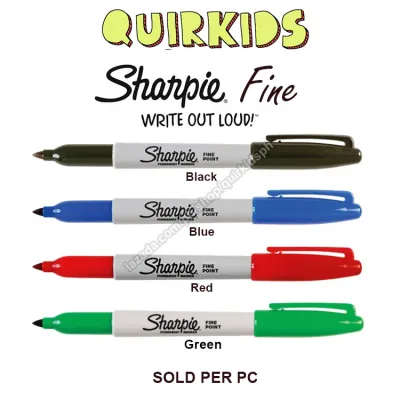
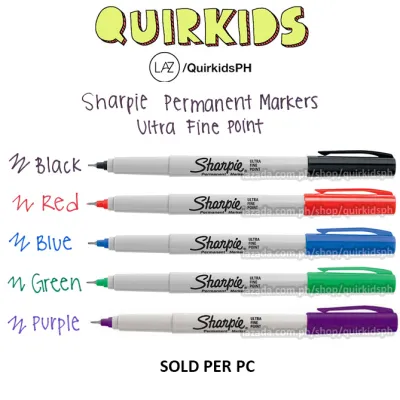
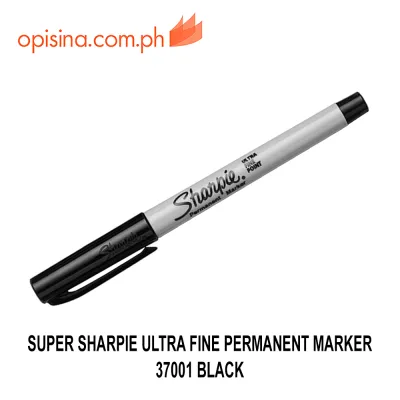
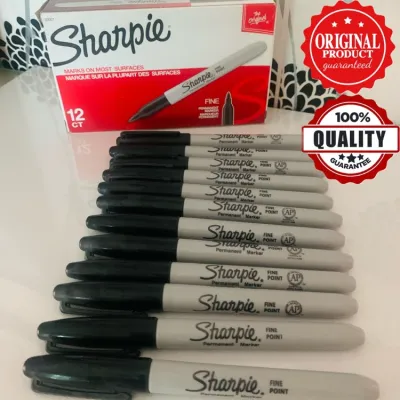
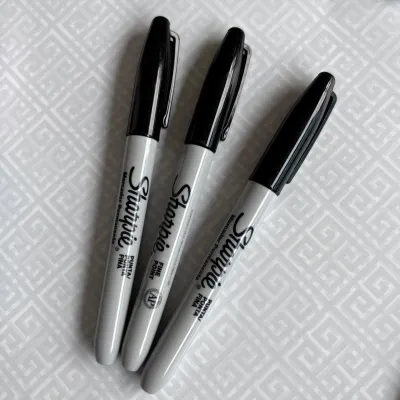
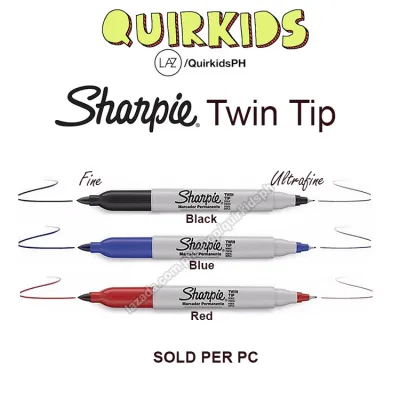
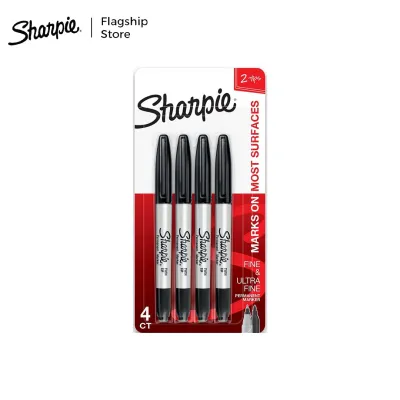
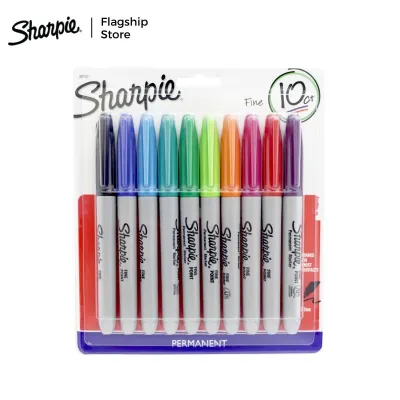
Prices are valid at publication and may change. Please refer to the product page for the latest price.
Understanding Sharpie Ink Formulations
Standard permanent ink relies on alcohol-based solvents to carry the colorants. This formulation dries almost instantly on porous surfaces like cardboard because the solvent is absorbed and evaporates rapidly. On non-porous surfaces like glossy plastic storage bins or metal laminates, drying speed depends heavily on ambient humidity. In humid tropical environments, the solvent may evaporate slightly slower, increasing the risk of immediate smudging. Furthermore, standard permanent ink is translucent, meaning it will not show up clearly on dark or black surfaces.

Paint markers, available in both oil-based and water-based formulations, use a liquid paint mixture rather than a simple dye-solvent solution. These markers feature an internal mixing ball and a valve-action tip that must be primed by pressing down. Oil-based paint markers deliver a highly opaque, glossy finish that resists water, fading, and abrasion, making them excellent for outdoor plant labels, garden tools, or painted metal. However, they require a longer drying time and emit strong solvent odors. Water-based paint markers offer high opacity with less odor and are easier to correct while wet, but they lack the extreme weather resistance of their oil-based counterparts unless sealed with a clear protective coat.
Water-based and specialty inks are designed specifically to prevent bleed-through on standard notebook paper or sketchbook pages. Because water does not dissolve paper fibers or spread as aggressively as alcohol solvents, the ink remains on the surface layer, providing clean, crisp lines. These inks are also typically acid-free, which is essential for preserving photographs and delicate archival papers without causing yellowing or chemical degradation over time. However, they are not suitable for outdoor use, as rain or high humidity can cause the ink to run.
Selecting the Right Tip Size and Shape
Ultra-fine tips (approximately 0.5 mm) are engineered for precision, making them ideal for filling out small labels, writing in tight planner grids, or adding intricate details to illustrations. Fine points (approximately 1.0 mm) serve as the standard utility size for general writing and labeling. However, users must consider the texture of the writing surface. Writing with an ultra-fine felt tip on rough, abrasive surfaces like unpolished wood, textured cardboard, or concrete will quickly wear down the delicate fibers. Once frayed, the tip loses its precision, resulting in split lines and uneven ink flow.
Chisel tips feature an angled nib that allows for variable line widths. By adjusting the angle of your hand, you can produce broad strokes for large signage or thin lines for detailed lettering. This versatility makes chisel tips highly popular for school posters, warehouse labeling, and shipping boxes. However, achieving consistent line quality requires practice and hand control. Bullet tips, by contrast, provide a uniform, thick line regardless of the writing angle, making them easier for quick, bold labeling tasks where precision is secondary.
The physical durability of a marker tip depends on its material composition, typically polyester or acrylic felt. Acrylic tips are harder and more resistant to abrasion, making them better suited for rough, textured surfaces. When selecting a marker for demanding tasks like labeling construction materials or rustic wooden crates, verifying that the tip is made of high-durability acrylic felt can prevent the marker from becoming unusable long before the ink reservoir is empty.
Matching Sharpie Variants to Your Specific Use Cases
Everyday Labeling and Organization
For organizing a home pantry, labeling plastic food containers, or marking school supplies, standard fine-point permanent markers are the most practical choice. In these indoor environments, look for low-odor formulations to ensure comfort during extended labeling sessions. When labeling plastic containers that will be washed frequently, keep in mind that while the ink is water-resistant, repeated exposure to dishwashing liquid and warm water will eventually fade the markings, requiring occasional touch-ups.
Crafting and Scrapbooking
Scrapbooking and paper crafts require materials that protect the integrity of your photos and paper. Standard permanent markers contain acidic solvents that can discolor photo paper and cause thin craft papers to deteriorate over time. For these projects, select water-based, acid-free, and photo-safe variants. These markers allow you to write directly on scrapbook pages or the backs of photographs without risking bleed-through or long-term chemical damage.
Art, Illustration, and Customization
Customizing everyday objects like canvas sneakers, ceramic mugs, or glass jars has become a popular creative outlet. For these non-porous and flexible surfaces, oil-based paint markers are highly recommended. They provide the necessary opacity to stand out against dark backgrounds and the flexibility to resist cracking on canvas. When customizing ceramics or glassware, keep in mind that the paint must be cured—typically by baking the item in a home oven according to the manufacturer’s instructions—to ensure the design survives washing.
Industrial and Outdoor Marking
Marking items exposed to the elements, such as garden plant stakes, outdoor utility meters, or construction materials, requires maximum durability. Standard permanent markers will quickly fade under intense tropical sunlight due to UV degradation. For these applications, look for industrial-grade permanent markers or heavy-duty paint markers specifically labeled as UV-resistant and weather-resistant. These formulations utilize specialized pigments that resist fading and water wash-off, ensuring your labels remain legible for months or even years.
Essential Checks Before You Buy
Before applying any marker to your final project, always perform a small test patch on a hidden or inconspicuous area. Certain plastics, such as polystyrene, can react chemically with the strong solvents found in permanent markers, leading to a sticky, melted surface. Similarly, finished or varnished wood can absorb ink unevenly along the grain, causing the ink to bleed and blur. A quick test ensures the ink adheres smoothly and dries without damaging the material.
Always check the marker packaging for safety certifications, such as the AP (Approved Product) seal, which verifies that the product is non-toxic and safe for use, even by children. When working with oil-based paint markers or industrial-grade solvents, proper ventilation is essential. Work outdoors or in a well-ventilated room with open windows to prevent the inhalation of strong fumes, which can cause headaches or dizziness during prolonged use.
Proper storage is critical to maintaining ink flow and extending the life of your markers. Many specialized variants, particularly dual-tipped markers or paint markers, must be stored horizontally. Storing them vertically can cause the ink to pool at one end, leading to a dried-out tip on one side and an oversaturated, leaky tip on the other. For paint markers, horizontal storage also prevents the heavy pigments from settling and clogging the valve mechanism.
Frequently Asked Questions (FAQ)
How do you revive a dried-out Sharpie marker?
The method for reviving a dried-out marker depends entirely on its ink chemistry. For standard alcohol-based permanent markers, you can often restore ink flow by dipping the felt tip into a small container of isopropyl (rubbing) alcohol for a few seconds, then capping the marker and letting it sit horizontally for a few hours. For water-based markers, a single drop of warm water applied directly to the nib can rehydrate the dried ink. Note that these techniques are only effective if there is still ink remaining in the reservoir; if the reservoir is completely depleted or the felt tip is physically frayed and split, the marker cannot be revived and must be replaced.
Can you use standard Sharpie markers on skin or fabric?
Standard permanent markers are not formulated or dermatologically tested for use on skin. The solvents and dyes they contain can cause skin irritation, allergic reactions, or absorption of unwanted chemicals, especially in children. For body art or temporary tattoos, always use markers specifically labeled as skin-safe or cosmetic-grade. When applied to fabric, standard permanent markers will bleed along the textile fibers, resulting in blurry lines, and the ink will gradually fade and wash out over time. For permanent fabric customization, use dedicated fabric markers containing pigments designed to bind to textile fibers, and follow the manufacturer’s instructions for heat-setting the design with an iron.
Community discussion
Share your experience or ask a question. Comments are reviewed before publication.