
Choosing a technical pen requires balancing your specific medium, your required line precision, and your willingness to perform regular maintenance. In the Philippines, where high relative humidity can affect both ink drying times and paper behavior, selecting the correct tool is essential for clean, professional results. Whether you are an architecture student drafting floor plans, an engineer detailing schematics, or an illustrator rendering intricate cross-hatching, understanding the structural differences between these specialized writing instruments will ensure your work remains crisp and smudge-free.
To find the right pen, you must look beyond the brand name and evaluate the physical design of the nib, the ink delivery system, and the chemical formulation of the ink. Different workflows demand different tools; a rigid metal tip designed for ruled lines on drafting film behaves very differently from a flexible fiber tip meant for expressive sketching on textured paper. By matching these technical specifications to your daily tasks, you can avoid common frustrations like clogged nibs, bleeding ink, and uneven line weights.
Identifying the Right Staedtler Pen Structure for Your Workflow
Technical pens generally fall into two primary structural categories: refillable pens with rigid metal nibs and disposable or refillable fineliners with fiber tips. Refillable technical pens, such as the classic Mars Matic series, are precision-engineered instruments designed for lifetime use. They feature a hollow, tubular stainless steel nib housing a delicate internal wire attached to a small drop-weight. When you move the pen, this weight bounces slightly, clearing the tube and regulating the gravity-fed flow of ink to the page.
Products mentioned in this guide
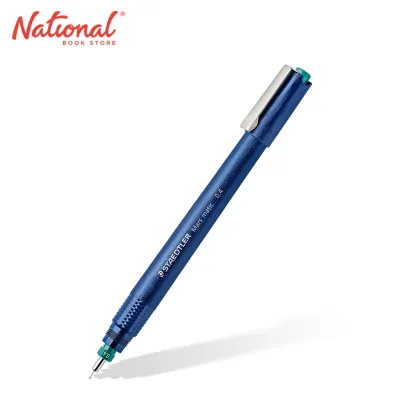
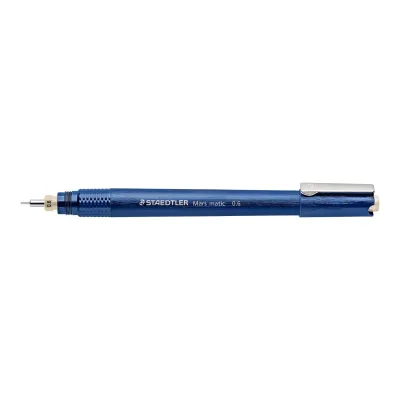
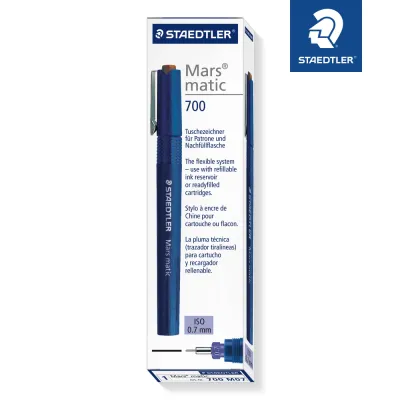
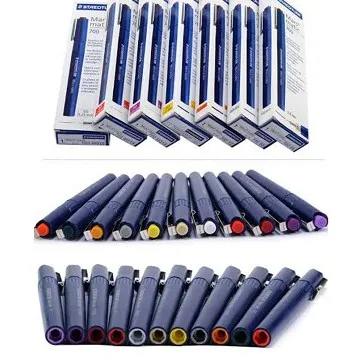
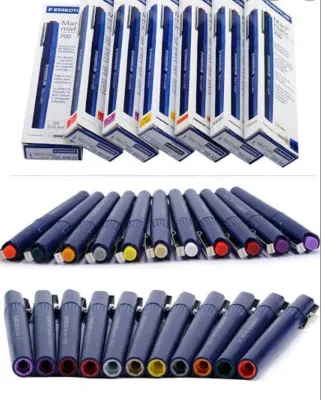
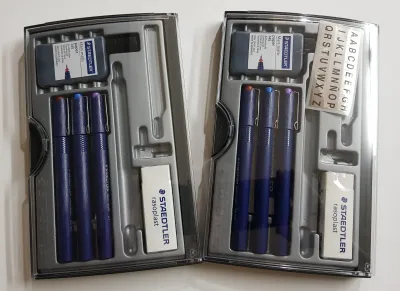
Prices are valid at publication and may change. Please refer to the product page for the latest price.
In contrast, fineliners and disposable technical pens utilize capillary action to draw ink from an internal reservoir through a porous fiber tip. Because fiber tips naturally compress and wear down over time, these pens are typically designed to be discarded or replaced once the ink runs dry or the tip loses its shape. Understanding this distinction is crucial because it dictates how you must hold and pressure the pen during use.
Gravity-fed metal nibs require a nearly vertical writing angle, typically between 80 and 90 degrees, to allow the internal weight to move freely and maintain a consistent ink flow. If you prefer a relaxed, angled grip, a fiber-tip pen is far more forgiving. Furthermore, metal nibs deliver a highly consistent, unvarying line width regardless of the direction or speed of your stroke, which is a fundamental requirement for formal drafting. Fiber tips, while highly precise, can produce slight line variations depending on how hard you press against the paper.
Before purchasing, always check the product packaging or official specification sheets for structural limitations. Manufacturers clearly print indicators such as “refillable,” “waterproof,” or specific ISO designations on the box. If you require a tool for heavy-duty drafting against hard plastic rulers, look for pens explicitly labeled with metal-clad tips, as unprotected fiber tips will quickly shave down or split when dragged repeatedly against sharp template edges.
Matching Nib Sizes and Ink Formulations to Your Medium
Selecting the correct line width is governed by international standards that ensure consistency across different drawing scales. Standard technical pens follow the International Organization for Standardization (ISO) classifications, which define line widths such as 0.13 mm, 0.18 mm, 0.25 mm, 0.35 mm, 0.50 mm, 0.70 mm, and 1.0 mm. These sizes are color-coded on the pen barrel, cap, or nib unit, allowing you to quickly identify the correct tool on a busy drafting table without searching for tiny printed numbers.

When choosing a nib size, consider the scale of your drawing and the texture of your paper. Ultra-fine nibs, such as 0.13 mm or 0.18 mm, are excellent for high-density detailing and micro-lettering, but they are incredibly delicate. On rough or highly textured paper, these fine metal tips can catch on the fibers, causing scratching, paper tearing, and ink splattering. For general drafting and sketching on standard media, mid-range sizes like 0.25 mm to 0.50 mm offer a more reliable balance of line clarity and smooth gliding.
Ink formulation is the next critical variable to evaluate. Technical pen inks are broadly categorized as pigment-based or dye-based. Pigment-based inks contain microscopic solid particles suspended in a liquid binder. Once dry, these pigments lock onto the surface of the paper, offering exceptional water resistance, high lightfastness, and resistance to fading over time. Dye-based inks, on the other hand, consist of fully dissolved colorants that penetrate deep into the paper fibers. While dye inks can dry very quickly, they are highly susceptible to water damage and will fade if exposed to sunlight for prolonged periods.
In the warm and humid climate of the Philippines, ink behavior can change dramatically. High humidity slows down the evaporation of water-based solvents, which can prolong drying times and increase the risk of smudging. When working on non-porous media like tracing paper or drafting film, always verify paper compatibility using the manufacturer’s labels. Some pigment inks are formulated specifically for drafting film and contain specialized binders that adhere to plastic surfaces without pooling or flaking off once dry.
Evaluating Pen Specifications for Specific Applications
Architectural and Technical Drafting
Formal architectural and engineering drafting demands absolute geometric precision and line consistency. For this application, a refillable technical pen with a rigid, tubular metal nib is indispensable. The stainless steel sleeve surrounding the nib is designed to withstand the physical friction of sliding against the hard edges of T-squares, parallel bars, triangles, and French curves without bending or wearing away.
Consistent ink flow is vital when drawing long, continuous lines across large sheets of vellum or drafting film. Because these specialized media do not absorb ink the way standard paper does, the pen must deposit a precise, uniform layer of ink that dries evenly without pooling. Additionally, if you use traditional drafting compasses, verify in the product manual that the pen model is compatible with standard compass adapters, which secure the pen at a perfect 90-degree angle to draw flawless circles.
Fine Art and Technical Illustration
For fine art, comic illustration, and concept sketching, your workflow may benefit from a mix of rigid and flexible tools. While rigid metal nibs are excellent for laying down precise perspective grids and border lines, they can feel stiff and sterile when rendering organic shapes, portraits, or dynamic landscapes. Fiber-tip technical pens allow for subtle line variations and a more natural, expressive hand movement.
When creating finished illustrations intended for scanning, reproduction, or gallery display, archival quality is non-negotiable. Ensure your chosen pen uses lightfast, pigment-based ink that will not degrade under intense scanner lights or UV exposure. If your style involves mixed media, such as applying watercolor washes or alcohol-based markers over your line work, always perform a patch test on scrap paper first. Even highly water-resistant pigment inks require a full curing time—which can be longer in humid environments—before they can safely withstand wet washes without bleeding.
Maintaining and Storing Technical Pens to Prevent Clogging
Refillable technical pens are precision instruments that require regular, active maintenance to function correctly. Because pigment-based drafting ink is designed to dry into a permanent, water-resistant film, any ink left inside the delicate tubular nib will quickly harden and clog the pen. Establish a routine visual inspection habit: check the nib tip, the tiny breather hole on the side of the nib unit, and the inner seal of the cap for any signs of crusty, dried ink buildup.
If you notice a reduction in ink flow or if the pen has been sitting idle for more than a few weeks, perform a thorough flushing procedure. Remove the ink cartridge or reservoir and soak the nib unit in lukewarm distilled water or a manufacturer-recommended technical pen cleaning solution. Avoid using hot water, tap water with high mineral content, or harsh household solvents, as these can warp the plastic housing or corrode the internal metal wire. For stubborn clogs, a specialized cleaning syringe or an ultrasonic cleaning bath can help dislodge dried particles without damaging the delicate internal weight.
Proper storage orientation is equally important in preventing clogs and leaks. Always store your technical pens horizontally when not in use, or vertically with the nib pointing upward. Storing a pen nib-down allows gravity to pull pigment particles into the narrow tip, where they can settle and form a dense plug. Always ensure the cap is screwed or snapped on tightly immediately after use; even a few minutes of exposure to the air can cause the ink at the very tip of a fine nib to dry out, requiring a manual restart.
Verifying Specifications and Sourcing Authentic Pens
To ensure you are getting a genuine, high-performance tool, always cross-reference the specifications of the pen you intend to buy with the official manufacturer catalogs or authorized distributor websites. Pay close attention to model numbers, compatible ink types, and available replacement parts. Authentic technical pens are precision-engineered, and their performance relies on exact manufacturing tolerances that counterfeit products cannot replicate.
When shopping on online marketplaces or visiting local stationery stores in major cities like Manila, inspect the physical packaging carefully. Genuine pens are typically sold in sealed blister packs or sturdy plastic cases with intact nib protectors. Look for clear, crisp printing on the pen barrel, valid batch codes, and holographic security stickers if applicable. Be wary of listings offering professional-grade technical pens at prices that seem too good to be true, as these are often low-quality imitations that clog instantly or leak ink.
Finally, consider the total cost of ownership before making your final decision. While a disposable fiber-tip fineliner has a low upfront cost (often ranging from ₱100 to ₱200), a professional refillable technical pen is a long-term investment that can cost upwards of ₱1,500 for a single pen or more for a complete set. However, because you can replace individual components—such as the nib unit, the ink reservoir, or the cap—and refill the ink from bulk bottles, a well-maintained refillable pen can save you money over years of continuous professional use. Ensure that replacement nibs and bottled inks are readily available from your local suppliers so that a worn-out tip does not put your projects on hold.
Frequently Asked Questions (FAQ)
Can I use technical pens on standard printer paper?
While you can physically write on standard printer paper with a technical pen, it is generally not recommended for professional work. Standard copy paper (typically 70 to 80 gsm) is highly porous and lacks the surface sizing found on dedicated drafting papers or heavy bristol boards. This high absorbency causes pigment-based inks to feather, where the ink spreads outward along the paper fibers, ruining your precise line widths. It also increases the risk of bleed-through to the back of the page. Furthermore, the rough, uncoated cellulose fibers of standard printer paper can act like sandpaper, rapidly wearing down delicate fiber-tip fineliners and clogging fine metal nibs with paper dust.
How do I know if a technical pen nib is permanently damaged?
Diagnosing a damaged nib involves looking for specific visual and tactile clues. For refillable metal nibs, if the pen scratches or digs into the paper even when held at a correct, near-vertical angle, the tip of the stainless steel tube may be bent, chipped, or split. Another sign of permanent damage is if the pen leaks large blobs of ink or fails to produce a line despite thorough cleaning, indicating that the delicate internal wire has bent or snapped. For fiber-tip pens, a tip that has become mushy, split into multiple points, or recessed entirely into the metal sleeve is permanently worn out. If a deep soak in a specialized cleaning solution fails to restore consistent ink flow, the internal capillary system or metal tube is likely compromised, and the nib unit must be replaced.
Community discussion
Share your experience or ask a question. Comments are reviewed before publication.