
For a beginner artist in the Philippines, selecting your first professional-grade drawing tool can feel overwhelming given the sheer variety of options. If you are looking to start your illustration journey with the popular Uni Pin series, the most practical choice is a medium-sized 5-piece or 6-piece Uni Pin pen set (typically featuring tip sizes ranging from 0.1mm to 0.8mm, often accompanied by a brush pen). This configuration provides the ideal balance of fine detailing, structural outlining, and bold filling capabilities, allowing you to explore diverse drawing styles without a large upfront investment.
While smaller sets might limit your shading techniques and larger sets can introduce highly specialized sizes you may not yet need, a medium set adapts beautifully to the common paper types and humid environmental conditions found locally. By understanding how these pens perform on different surfaces and how to maintain them, you can establish a solid foundation for your creative projects.
Understanding Uni Pin Fine-Liners for Illustration
Uni Pin fine-liners are highly regarded by illustrators, architects, and hobbyists worldwide for their reliable performance and structural design. At the core of their popularity is the formulation of the ink. These pens utilize a specialized pigment ink that, unlike dye-based inks, sits on top of the paper fibers rather than soaking deeply into them. This characteristic is particularly beneficial in the Philippines, where high relative humidity can cause standard inks to feather or spread across the page. The pigment ink is formulated to be water-resistant and fade-resistant, ensuring that your sketches and line art remain crisp and archival over time.
Products mentioned in this guide
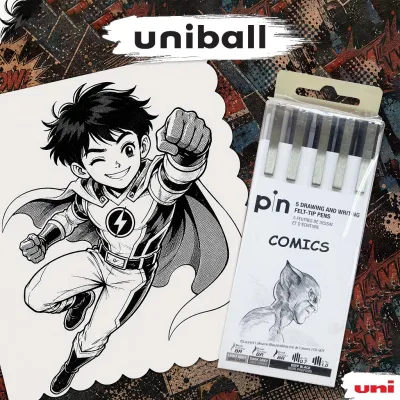
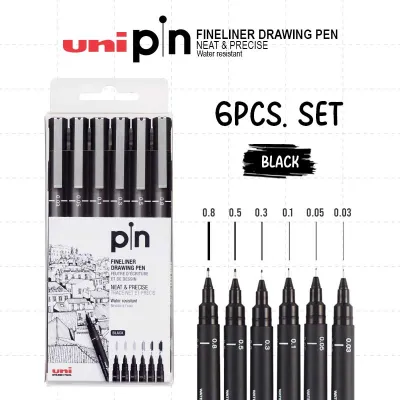
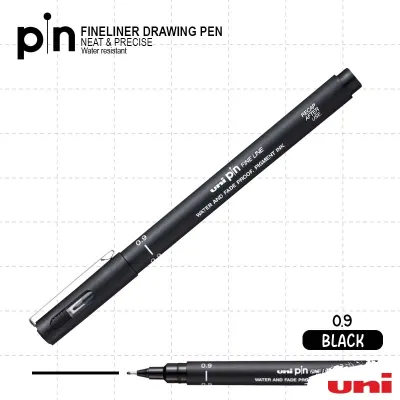
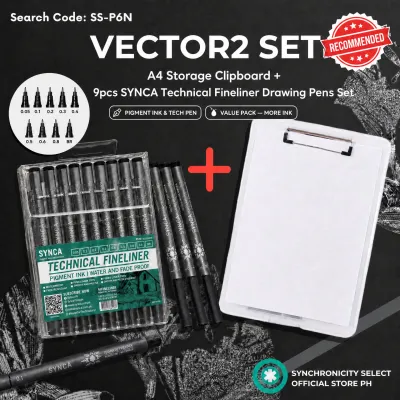
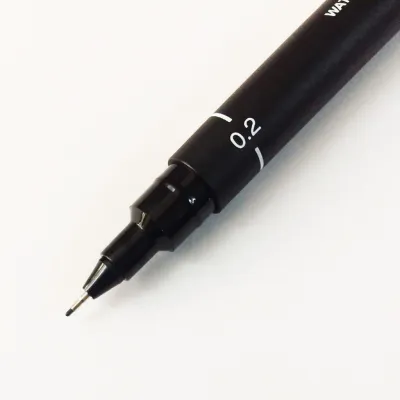
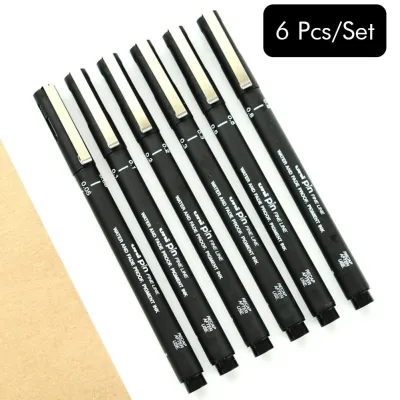
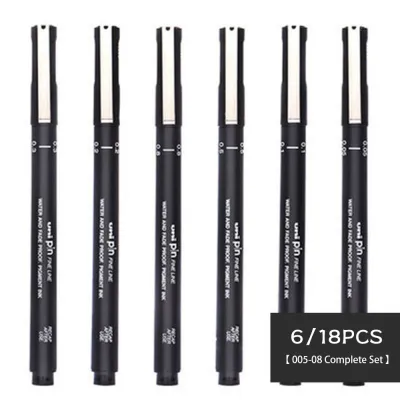
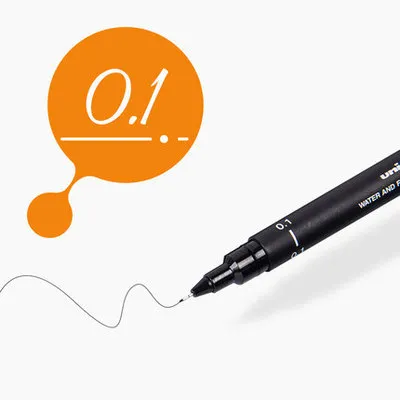
Prices are valid at publication and may change. Please refer to the product page for the latest price.
Another defining feature of the Uni Pin series is the construction of the pen tip. Each fine-liner utilizes a delicate polyacetal nib supported by a protective steel sleeve. This metal collar ensures that the tip remains rigid and aligned, even when you apply varying degrees of hand pressure. The tip sizes are calibrated in precise millimeter measurements, allowing artists to achieve highly consistent line weights. This predictability is essential when executing technical drawings, clean comic outlines, or intricate mandalas where line uniformity is critical.
From an ergonomic standpoint, the lightweight plastic barrel of the Uni Pin is designed for comfort during extended drawing sessions. The matte finish provides a secure grip, which helps prevent slipping if your hands become warm or damp in tropical weather. The cap is engineered to seal tightly, preserving the moisture of the ink feed while featuring a sturdy steel pocket clip that keeps the pen secure in your pencil case or sketch folio.
Key Factors When Selecting Your First Pen Set
When choosing your first pen set, the variety of tip sizes should be your primary consideration. Different artistic styles require distinct line weights to create depth and dimension. For instance, intricate detailing, cross-hatching, and delicate stippling rely heavily on ultra-fine tips like 0.05mm or 0.1mm. Conversely, structural outlines, border work, and bold character designs require thicker lines, which are easily achieved with 0.5mm, 0.8mm, or chisel tips. A well-rounded set should offer a logical progression of sizes so you can transition smoothly from fine textures to bold structural elements.

Ink characteristics and tip flexibility also play a major role in your selection. While the standard Uni Pin line is famous for its rigid, uniform tips, the series also includes soft brush tips and specialized colored inks like sepia and grey. As a beginner, starting with classic black pigment ink is highly recommended, as it provides the highest contrast and is the easiest to master. Rigid tips offer more control for developing hand-eye coordination, whereas flexible brush tips require a lighter touch and consistent pressure control to avoid unpredictable line variations.
Finally, you must balance the size of the set with your budget and immediate creative needs. While a massive 12-piece set offers maximum variety, it also carries a higher price tag and includes ultra-fine or highly specialized chisel tips that a beginner might rarely use. Starting with a smaller, focused set allows you to master the essential line weights first. As your skills develop and you identify specific gaps in your toolkit, you can easily purchase individual replacement pens to supplement your collection.
Evaluating Common Uni Pin Set Configurations
To help you make an informed decision, it is helpful to evaluate how different set configurations align with specific drawing styles and skill levels. Uni Pin sets are generally packaged in three main categories, each serving a distinct creative purpose.
Small Sets (3-Piece Configurations)
These minimalist sets typically contain essential mid-range sizes such as 0.1mm, 0.3mm, and 0.5mm. They are highly portable and budget-friendly, making them excellent for quick outdoor sketching, bullet journaling, and basic note-taking. If your primary goal is to practice clean, simple outlines or to carry a lightweight sketching kit in your daily bag, a 3-piece set is an excellent entry point. However, you may find it limiting if you wish to explore complex shading or very bold graphic fills.
Medium Sets (5-Piece to 6-Piece Configurations)
Generally considered the sweet spot for beginner artists, these sets usually include a versatile spread such as 0.05mm, 0.1mm, 0.3mm, 0.5mm, 0.8mm, and occasionally a brush pen. This range allows you to experiment with extreme contrasts—using the 0.05mm for delicate facial features or distant background elements, and the 0.8mm or brush pen for heavy foreground outlines and solid fills. It provides a complete toolkit for comic illustration, botanical drawing, and detailed mandalas without overwhelming you with too many similar sizes.
Comprehensive Sets (8-Piece or Larger Configurations)
Designed for advanced students, architectural drafting, and professional illustrators, these expansive sets feature a dense gradient of sizes (including 0.03mm, 0.2mm, 0.4mm, 0.6mm, and multiple brush or chisel options). While highly versatile, the subtle differences between a 0.2mm and a 0.3mm line may not be immediately useful to a beginner. These sets are ideal if you are pursuing highly technical drafting or dense, large-scale stippling projects where precise incremental line weights are mandatory.
| Set Configuration | Typical Tip Sizes Included | Best Art Styles & Applications | Beginner Suitability |
|---|---|---|---|
| 3-Piece Set | 0.1, 0.3, 0.5 | Bullet journaling, basic sketching, travel diaries | High (Simple & affordable) |
| 5/6-Piece Set | 0.05, 0.1, 0.3, 0.5, 0.8, Brush | Comic art, mandalas, general illustration, detailed sketching | Excellent (Best value & versatility) |
| 8+ Piece Set | 0.03 to 0.8, Chisel, Brush | Architectural drafting, professional rendering, complex stippling | Moderate (More specialized than needed) |
Where to Buy and How to Verify Authenticity
Because Uni Pin pens are highly popular, counterfeit products occasionally find their way into the market. These fake pens often suffer from inconsistent ink flow, fragile tips that bend easily, and ink that bleeds or fades when exposed to water. To ensure you are purchasing genuine products, it is best to shop at established physical stationery stores, national book chains, or official brand flagship stores on reputable online marketplaces in the Philippines.
When purchasing your set, perform a quick visual inspection of the packaging. Genuine Uni Pin packaging features crisp, high-quality printing with clear, legible barcodes and official distributor labels. Counterfeit packaging often displays blurry text, misaligned graphics, or lacks the distinct holographic security seals sometimes used by authorized importers.
Once you open the set, inspect the individual pens closely. Genuine pens have clean, scratch-resistant silver or white lettering printed on the matte black barrel. The cap should snap onto the pen with a distinct, solid click, indicating an airtight seal. Additionally, look closely at the tip: the metal sleeve supporting the polyacetal nib should be perfectly straight, smooth, and free of rough edges or discoloration.
Care and Maintenance for Long-Lasting Fine-Liners
Proper care and maintenance will significantly extend the lifespan of your Uni Pin pens, ensuring that the ink flows smoothly until the reservoir is completely empty. One of the most important habits to develop is storing your pens horizontally. When stored vertically, the heavy pigment particles in the ink can either settle at the bottom of the pen (causing the tip to clog) or drain away from the nib (resulting in a dry, scratchy line). Keeping them flat in a pencil case or drawer ensures an even distribution of ink throughout the feed system.
Always make it a habit to recap your pens immediately after use. Even a few minutes of exposure to the air can cause the ink at the very tip of the nib to dry out, creating a microscopic plug that blocks the ink flow. When capping the pen, press firmly until you hear or feel a clear click. This ensures the inner seal of the cap is fully engaged, protecting the delicate tip from drying out, even in air-conditioned or highly humid environments.
If you notice that a pen is beginning to feel scratchy or is skipping, it may be due to paper fibers becoming trapped in the tip. This is common when drawing on textured watercolor paper or low-quality sketchbooks. To clear the tip, gently draw a few light, circular patterns on a piece of smooth, clean scrap paper at a 45-degree angle. Avoid pressing down hard, as excessive pressure can bend the metal sleeve or push the delicate plastic nib back into the collar, permanently damaging the pen.
Frequently Asked Questions (FAQ)
Can I use Uni Pin pens with watercolors and alcohol markers?
Yes, Uni Pin pens are highly compatible with watercolors because the pigment ink becomes water-resistant once fully dry. However, because the high humidity in the Philippines can slow down drying times, it is essential to let the ink cure completely—ideally for several minutes—before applying watercolor washes over your line art.
When it comes to alcohol-based markers, caution is advised. The strong solvents in alcohol markers can sometimes dissolve the binding agents in pigment inks, leading to smudging. To prevent this, always perform a small test patch on a scrap piece of your specific drawing paper to observe how the ink and marker interact before working on your final piece.
What is the difference between Uni Pin and Uni Pin Soft Ink?
Standard Uni Pin pens feature a rigid, metal-sheathed polyacetal tip designed to deliver a highly consistent, uniform line width regardless of how much pressure you apply. This makes them the preferred choice for technical drawing, clean outlining, and precise detailing where line variation is not desired.
In contrast, Uni Pin Soft Ink or brush variants feature flexible, responsive nibs that bend under pressure. This flexibility allows you to create expressive, variable line weights—ranging from ultra-fine details to broad strokes—with a single pen. While highly versatile for calligraphy and organic sketching, beginners usually find the standard rigid tips much easier to control when first learning basic line work.
How do I fix a scratchy or dry Uni Pin pen?
If your pen begins to write scratchily, first check if the tip has accumulated paper fibers or dried ink crust. Gently scribble light circles on a smooth sheet of scrap paper to help clear any debris and coax the ink back to the nib.
If the pen has been left uncapped and has dried out slightly, you can try wrapping the capped pen in a warm, damp cloth for a few minutes to help loosen any dried ink within the cap assembly. However, if the plastic nib has receded entirely into the metal sleeve due to heavy writing pressure, or if the ink reservoir is completely depleted, the pen cannot be repaired and must be replaced.
Community discussion
Share your experience or ask a question. Comments are reviewed before publication.