
Starting your artistic journey with acrylic painting in the Philippines is an exciting venture, but walking into an art supply store or browsing online marketplaces can quickly become overwhelming. With dozens of brands, varying price points, and different formulations, choosing the right starter set requires understanding how these paints behave in a tropical climate. The ideal beginner set balances affordability with workable quality, allowing you to learn color mixing and brush control without fighting poor pigment coverage or rapid drying times. By focusing on student-grade sets that offer a balanced color spectrum, you can build a solid foundation in painting techniques before investing in expensive professional materials.
What Makes an Acrylic Paint Set Suitable for Beginners
When selecting your first acrylic paint set, the distinction between student-grade and professional-grade paints is the most critical factor to understand. Student-grade acrylics are formulated with lower pigment concentrations and often contain more fillers or synthetic substitutes for expensive organic pigments. This formulation makes them significantly more affordable, which is ideal for beginners who need to practice techniques, experiment with paint consistency, and complete exercises without worrying about the cost of every brushstroke. While professional paints offer superior vibrancy and coverage, student-grade sets provide a highly workable medium that behaves predictably on various surfaces.
The binder quality in beginner-friendly sets is designed to offer a forgiving learning curve. Professional acrylics often feature high-viscosity “heavy body” formulas or highly fluid consistencies tailored to specific techniques. Student-grade paints typically feature a medium-viscosity, buttery consistency that is easy to manipulate straight from the tube or dilute with water. This balanced texture allows you to practice both thick, textured impasto strokes and thin, watercolor-like washes, helping you discover your preferred painting style.
Products mentioned in this guide
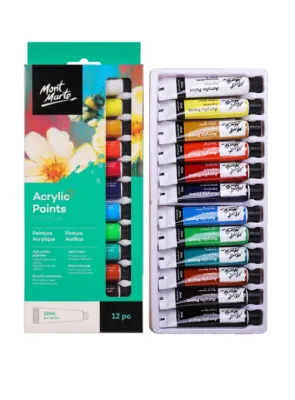
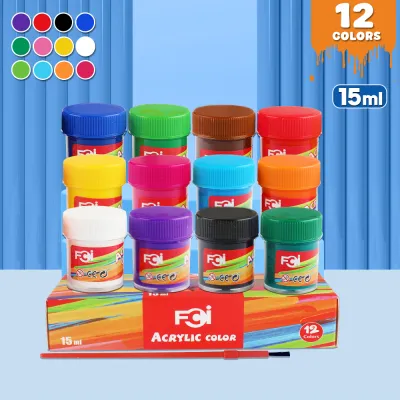
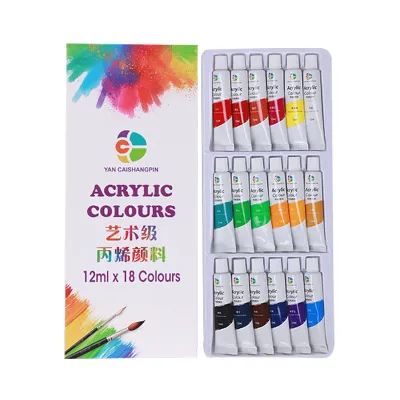
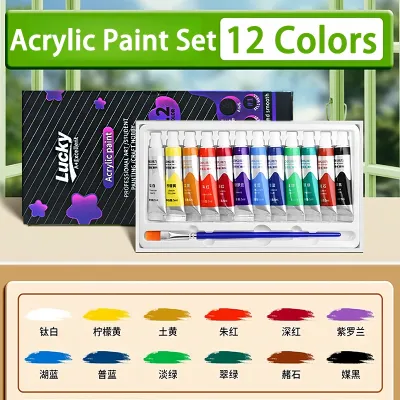
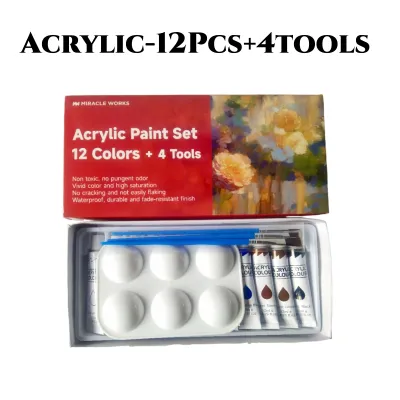
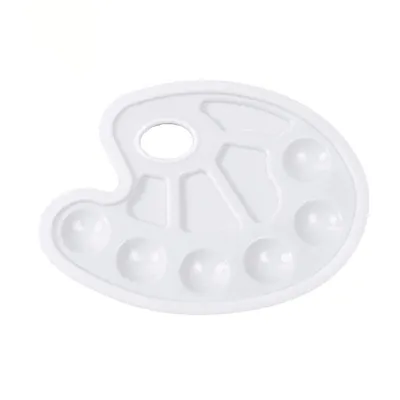
Prices are valid at publication and may change. Please refer to the product page for the latest price.
A common mistake for beginners is purchasing a massive set with dozens of pre-mixed colors. While a 48-color set might seem convenient, it often hinders your artistic growth by bypassing the essential skill of color theory. A starter palette of 12 to 18 colors is generally considered the sweet spot. This range provides enough variety to paint immediately while forcing you to learn how to mix secondary and tertiary shades, such as creating rich greens from blues and yellows.
The packaging format also plays a significant role in your daily practice and storage convenience. Acrylic paints are primarily sold in tubes, jars, or pans, with tubes being the most practical choice for beginners. Tubes, typically ranging from 12ml to 20ml in starter sets, keep the paint sealed from air exposure, preventing the product from drying out prematurely in warm environments. Jars are excellent for large-volume projects but are highly susceptible to contamination and drying when left open during long painting sessions.
Key Specifications to Check Before Buying
Before purchasing any acrylic paint set, reading the product label carefully can save you from frustrating results and safety hazards. One of the first specifications to look for is the lightfastness rating, which indicates how resistant the paint pigment is to fading when exposed to light over time. Lightfastness is usually rated on an ASTM (American Society for Testing and Materials) scale from I (excellent) to III (fair or non-permanent). For beginners practicing in sketchbooks or canvas boards, standard student-grade lightfastness is perfectly acceptable, but ensuring your set has at least a Class II rating will preserve your favorite early pieces for years to come.

Safety is paramount, especially when painting in home environments, bedrooms, or classrooms that may not have industrial ventilation. Always check the packaging for recognized non-toxic certifications, such as the Art and Creative Materials Institute (ACMI) “AP” (Approved Product) seal or compliance with ASTM D4236 standards. These certifications guarantee that the paints do not contain harmful levels of toxic materials, heavy metals, or volatile organic compounds (VOCs), making them safe for artists of all ages and prolonged skin contact.
The binder quality and listed ingredients directly influence how the paint behaves under local environmental conditions. In the Philippines, high ambient temperatures and varying humidity levels significantly affect drying times. Acrylics dry through the evaporation of water, meaning that in a dry, air-conditioned room, the paint will skin over very quickly, while in a humid, naturally ventilated space, it may remain workable slightly longer. Checking the label for the type of acrylic polymer binder used can give you clues about the paint’s flexibility; high-quality acrylic binders dry to a flexible, water-resistant plastic film that will not crack or yellow as the canvas expands and contracts with seasonal humidity changes.
Finally, pay attention to the opacity indicators on the tubes, often represented by small squares (solid black for opaque, half-filled for semi-opaque, and empty for transparent). Understanding these symbols helps you plan your layers. Opaque colors are excellent for base coats and covering mistakes, while transparent colors are essential for glazing techniques where you want underlying layers to show through.
Types of Starter Sets and Their Best Use Cases
Starter sets come in several configurations, each tailored to different learning styles and budgets. The most fundamental option is the basic primary color set, which typically includes five to six tubes: three primary colors (a cool or warm red, blue, and yellow), plus titanium white and lamp black. These minimalist sets are highly recommended by art educators because they strip away the distraction of choice, forcing you to master the mechanics of color mixing. Learning to mix your own purples, oranges, and earthy browns from a limited palette builds an intuitive understanding of color harmony that will benefit your art permanently.
For those who find color mixing intimidating or want to focus immediately on composition and brushwork, expanded spectrum sets are an excellent alternative. These sets usually contain 12 to 24 tubes, including popular convenience colors like burnt sienna, sap green, and yellow ochre. Having these pre-mixed shades readily available saves time and ensures color consistency across larger paintings. This setup is particularly useful for hobbyists who want to complete quick projects, paint models, or work on craft items without spending time blending precise shades from scratch.
If you are starting completely from scratch without any art supplies in your home, an all-in-one kit offers the most convenient entry point. These comprehensive packages bundle a selection of acrylic paints with essential tools, such as a few basic synthetic brushes, a plastic mixing palette, and small painting surfaces like canvas panels or heavy-duty paper pads. While the individual components in these kits may not always match the quality of items bought separately, they eliminate the guesswork of matching compatible tools and allow you to start painting the moment you open the box.
Essential Accessories to Pair With Your Paints
Acquiring a quality paint set is only the first step; you also need the right supporting tools to ensure a smooth painting experience. When it comes to brushes, avoid natural hair options like sable or hog bristle, which can be damaged by the alkaline nature of acrylic binders and the constant soaking in water. Instead, opt for synthetic brushes made from nylon or polyester. Synthetic bristles are durable, retain their springiness when wet, and are easy to clean with mild soap and water. A basic starter assortment should include a medium flat brush for covering large areas, a round brush for detail work, and a filbert brush for soft, curved strokes.
The choice of palette material can make or break your painting session, especially in warm climates. Standard wooden palettes absorb moisture and cause acrylics to dry out almost instantly. Plastic or ceramic palettes are much better alternatives as they are non-porous and easy to clean. However, for artists working in tropical conditions, a “stay-wet” palette is highly recommended. This specialized tool uses a damp sponge layer beneath a sheet of permeable paper to keep the acrylic paint moist and workable for hours, or even days, preventing costly paint waste.
Your painting surface must also be robust enough to handle the weight and moisture of acrylic layers. Standard printer paper or thin sketchbooks will warp, buckle, and tear when wet paint is applied. For practice, look for heavy mixed-media paper or dedicated acrylic paper pads with a minimum weight of 300 gsm (grams per square meter). For finished projects, primed canvas boards or stretched cotton canvases are the industry standard; ensure they are pre-treated with gesso, a primer that prevents the paint from soaking directly into the fabric fibers and rotting the support over time.
Where to Buy and How to Verify Authenticity
Finding genuine art supplies in the Philippines requires choosing reliable purchasing channels. Specialized local art supply stores and established national bookstores are the safest brick-and-mortar options, as they source directly from authorized distributors and store their inventory in temperature-controlled environments. If you prefer shopping online, look for official brand flagship stores on major e-commerce platforms. These digital storefronts often carry authenticity guarantees and are less likely to stock counterfeit goods than unverified third-party sellers offering unusually low prices.
When your paint set arrives or when inspecting it in a physical store, perform a few quick visual and physical checks to verify its quality. Inspect the packaging for any signs of damage, such as dented metal tubes, cracked plastic caps, or dried paint residue around the seals, which indicate air exposure. Gently squeeze the tubes; they should feel uniform and pliable. If a tube feels rock-hard or has a distinct separation where liquid oil or water leaks out when squeezed, the paint has likely degraded due to improper storage or extreme heat exposure during transit.
Additionally, check the product packaging for batch numbers, manufacturing dates, or expiration codes. While acrylic paint does not have a strict expiration date like food, sets that have sat in hot warehouses for several years can suffer from binder separation or bacterial growth. Always review the seller’s return and refund policies before purchasing, especially when buying online. Reliable sellers will offer straightforward return windows for defective items, allowing you to exchange a dried-out or damaged set without hassle.
Frequently Asked Questions (FAQ)
How long do unopened acrylic paint sets last?
Under proper storage conditions, unopened student-grade acrylic paint sets can last anywhere from two to five years. To maximize their shelf life, store your paint tubes in a cool, dry place away from direct tropical sunlight and extreme temperature fluctuations, such as near windows or tin roofs. When you open a tube that has been stored for a long time, check for signs of degradation. A slight separation of the clear binder liquid from the pigment is normal and can often be resolved by mixing the paint on your palette; however, a foul, sour odor, a rubbery, solid texture, or mold growth indicates that the paint is no longer usable and should be discarded.
Can I mix student-grade and professional acrylics?
Yes, you can safely mix student-grade and professional-grade acrylic paints, as they both utilize compatible acrylic polymer binders. However, blending them will alter the performance characteristics of the paint. Mixing a highly pigmented professional paint with a student-grade paint will dilute the overall pigment load, resulting in slightly less vibrant colors and reduced opacity compared to using pure professional paint. This is a highly practical strategy for beginners who want to upgrade their palette gradually; for example, investing in a professional-grade titanium white—which is used in almost every mix—while keeping student-grade colors for less critical shades is an excellent way to improve your painting quality without a massive financial investment.

Community discussion
Share your experience or ask a question. Comments are reviewed before publication.