
Finding an analog writing tool that seamlessly integrates into your daily routine can be surprisingly difficult when faced with subtle differences in cover materials, binding styles, and page layouts. While many writers default to the iconic Moleskine name, choosing the wrong notebook line can lead to pages that resist laying flat on your desk, covers that wear out prematurely in your bag, or layouts that fail to support your specific note-taking system. The ideal choice depends entirely on your physical writing environment and mobility: the Classic line provides maximum durability and page capacity for structured desk work or bag carry, the Cahier offers a lightweight, flexible cardstock option for minimalist setups, and the Reporter features a top-bound, vertical-flip design optimized for rapid, one-handed note-taking on the move.
How Do Cover Flexibility and Durability Differ Between Classic, Cahier, and Reporter?
The physical exterior of your notebook determines how well it survives daily transport, whether it requires a flat desk to write comfortably, and how it ages over months of continuous handling. Classic Moleskine notebooks are available in both rigid hardcover and flexible softcover variants, each offering distinct advantages for different environments. The hardcover version uses a sturdy, bound cardboard core wrapped in a synthetic material, providing a firm, self-supporting surface that allows you to write comfortably even when resting the notebook on your lap or holding it in mid-air. The softcover Classic, by contrast, offers a more pliable synthetic cover that bends slightly to conform to the shape of a packed bag, making it easier to slide into tight compartments while still offering substantial protection against spills and scratches.
In contrast to the heavy-duty synthetic covers of the Classic line, the Cahier line features a flexible, heavy-duty cardstock cover made of raw cardboard. This material makes the Cahier exceptionally lightweight and slim, but it is also highly susceptible to visible wear, edge fraying, and moisture damage if carried loosely in a bag without a protective sleeve. Over time, a Cahier cover will develop a distinct patina, softening and creasing at the corners, which many minimalist writers appreciate as a record of their daily journeys, though it may not suit those who prefer a pristine professional appearance.
Products mentioned in this guide
10,835 Lazada user ratings
Quality: Good quality, paper is thick enough with more lines than the usual notebook/journals of this size. Design: Simple but elegant. I li…Read full reviewShow less
Quality: Good quality, paper is thick enough with more lines than the usual notebook/journals of this size. Design: Simple but elegant. I like this dark green color, the page marker and the rubber strap to keep the notebook close at all times. Beautiful cover, The moleskin material feels great. Price: Reasonable cost for 80 leaves (160 pages) , less expensive than others like it. I actually bought the same exact cover design (black) & no. of leaves from another supplier for almost twice the price!
Quality: Good quality, paper is thick enough with more lines than the usual notebook/journals of this size. Design: Simple but elegant. I li…Read full reviewShow less
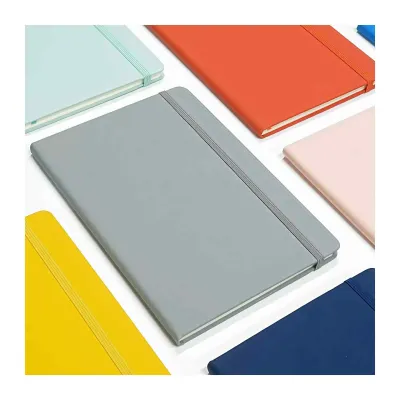
Quality: Good quality, paper is thick enough with more lines than the usual notebook/journals of this size. Design: Simple but elegant. I like this light gray color, the page marker and the rubber strap to keep the notebook close at all times. Beautiful cover, great to the touch, Price: Reasonable cost for 80 leaves (160 pages) , less expensive than others like it. I actually bought the same exact cover design (black) & no. of leaves from another supplier for almost twice the price!
The moleskin material feels great, Beautiful color options available, The string lock adds a nice touch, Perfect for keeping my notes organi…Read full reviewShow less
The moleskin material feels great, Beautiful color options available, The string lock adds a nice touch, Perfect for keeping my notes organized, The string lock is a great feature, Great quality notebook, The rubber diary strap is so convenient, The diary strap keeps everything secure, The diary strap keeps everything secure, The rubber diary strap is so convenient, The moleskin material feels great, Beautiful color options available,
The moleskin material feels great, The rubber diary strap is so convenient, Great quality notebook, Love the variety of colors available, Th…Read full reviewShow less
The moleskin material feels great, The rubber diary strap is so convenient, Great quality notebook, Love the variety of colors available, The diary strap keeps everything secure, Complete order. What you see is what you get. Packed properly. Walang sira, same colors sa order ang dumating. Dito ako oorder ulit sa susunod!
2,099 Lazada user ratings
Maayos at sobrang bilis nadeliver ang item. Maayos ang pagkakapack at maayos din ang product. Salamat seller at kay sir na nagdeliver ng ord…Read full reviewShow less
Maayos at sobrang bilis nadeliver ang item. Maayos ang pagkakapack at maayos din ang product. Salamat seller at kay sir na nagdeliver ng order ko.
Sobrang bilis nadeliver at maayos pagkakapack. Salamat seller at kay sir na nagdeliver. Thumbs up sa inyo pareho.
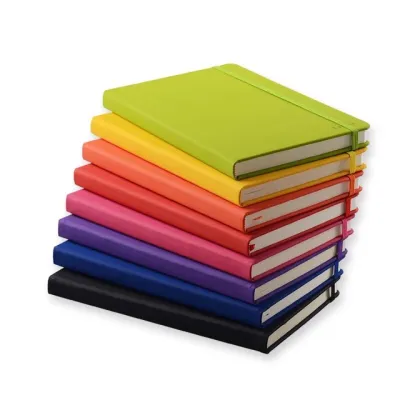
Convenient size for carrying around!, The A6 size is compact and portable!, Love the vibrant colors available!,
The A6 size is compact and portable!, High-quality materials used!, Convenient size for carrying around!,
Great quality. Great look to them. I will be ordering more.
Prices are valid at publication and may change. Please refer to the product page for the latest price.
The Reporter line is specifically engineered for rapid, unpredictable environments, featuring a highly durable cover design that prioritizes quick access and physical protection. Available in both hard and soft variants, the Reporter’s cover is uniquely configured with a top-bound hinge and a protective flap that folds completely back, allowing the notebook to be held securely in one hand while the other hand writes. To ensure your chosen notebook matches your environment, always check the current product labels and manufacturer specifications for exact cover material compositions, as limited editions or seasonal releases may introduce alternative textiles or paper finishes that require specific care.
Which Binding and Page Lay-Flat Experience Suits Your Writing Environment?
Traditional spine-bound notebooks, such as the Classic and the side-bound Reporter variants, utilize a thread-bound, section-sewn spine that provides excellent long-term structural integrity but requires a brief break-in period to lie completely flat. When you first open a new Classic notebook, the spine may resist staying open on its own, requiring you to gently massage the center fold of the pages to relax the binding adhesive and thread tension before it sits comfortably on a flat desk. This structured, book-like durability is ideal for dedicated journaling spaces where you have the room and time to settle into a writing session.

The Cahier line takes a completely different approach to construction, utilizing a visible saddle-stitch binding along the spine where the pages are sewn directly through the center fold. This minimalist stitching allows the Cahier to lie completely flat the very first time you open it, offering an unobstructed, edge-to-edge writing surface that is highly comfortable for both left-handed and right-handed writers. Because there is no rigid spine or heavy adhesive layer, the pages turn smoothly without any spring-back tension, though the overall page count is naturally limited by what a single stitched seam can securely hold.
For those who write on the move or lack access to a flat desk, the top-bound Reporter binding offers a specialized vertical-flip experience that changes how pages are managed. Instead of turning pages horizontally like a traditional book, the Reporter’s pages flip upward over the top spine, allowing you to write continuously on one side of the sheet before flipping the entire notebook over to use the reverse side. This vertical orientation prevents the binding from interfering with your wrist or hand placement, making it highly suitable for rapid note-taking during interviews, site inspections, or standing presentations where a desk is unavailable. Before purchasing, consider testing your preferred writing angle on a temporary surface to verify whether a horizontal book-style binding or a vertical top-bound spine aligns better with your natural hand movements.
How Do Internal Layouts and Page Counts Align With Your Journaling Habits?
Selecting the right page layout and sheet capacity ensures your notebook can accommodate your specific analog system, whether you practice structured bullet journaling, freeform sketching, or daily long-form writing. All three Moleskine lines generally offer the standard selection of ruled, dotted, squared, and blank formats, allowing you to choose the visual guidance that matches your style. Ruled pages provide clean horizontal lines for traditional journaling and professional meeting notes, while dotted and squared grids offer subtle alignment guides for diagrams, tracking tables, and structured layouts without cluttering the page. Blank pages remain the preferred choice for artists, designers, and visual thinkers who require complete freedom from pre-printed lines.
While the layout options are highly consistent, the total page capacity varies dramatically across the three lines and directly dictates how quickly you will fill the notebook. Classic notebooks typically offer a high page count, often ranging from 192 to 240 pages depending on the size, making them long-lasting companions for daily journaling or comprehensive project tracking. The Cahier, sold in sets of three, features a much slimmer profile with only 64 to 80 pages per journal (with the last 16 sheets detachable), making them ideal for short-term projects, single academic semesters, or lightweight travel logs. The Reporter line strikes a middle ground, usually offering around 192 pages in a compact format designed to maximize writing space without adding excessive bulk to your pocket.
Beyond page count, the physical properties of the paper must be verified to ensure compatibility with your preferred writing instruments. Standard Moleskine paper is typically lightweight (often around 70 gsm), which provides a smooth, pleasant surface for ballpoint pens, standard gel pens, and pencils, but may exhibit feathering, ghosting, or bleed-through when used with wet fountain pen inks, heavy markers, or dark rollerballs. Because paper smoothness, drying speed, and ink resistance depend entirely on the specific combination of your pen’s ink formula and the paper’s surface treatment, it is highly recommended to perform a small test stroke on a back page or a detachable sheet before committing to a full journaling session. Always verify the exact page counts, paper weight, and opacity listed on the product packaging or official store descriptions to ensure the notebook matches your medium.
What Everyday Carry Features Actually Impact Your Daily Workflow?
The small functional details of a notebook’s design—such as elastic bands, ribbon bookmarks, and storage pockets—often make the biggest difference in how smoothly the book integrates into your daily carry setup. The Classic line is fully equipped with these signature features, including a durable elastic closure band that keeps the notebook securely shut in your bag, preventing loose items from sliding between the pages and causing creases. It also includes a matching ribbon bookmark to help you instantly locate your active page, and an expandable inner pocket made of fabric and cardboard at the back cover, which is incredibly useful for storing loose receipts, business cards, or small paper clippings.
To maintain its ultra-slim, lightweight profile, the Cahier line deliberately omits almost all of these physical add-ons. You will not find an elastic closure band, a ribbon bookmark, or a heavy fabric pocket in a standard Cahier; instead, it features a simple, built-in cardboard pocket on the inside back cover for minimal storage. This lack of hardware allows the Cahier to remain incredibly thin and flexible, making it easy to slip into a back pocket or tuck inside the sleeve of a larger planner cover without adding noticeable bulk or weight.
The Reporter line adapts these everyday carry features to suit its vertical, rapid-access design. Rather than utilizing a horizontal elastic band, the Reporter features a vertical elastic band that runs from top to bottom, securing the top-bound cover flap tightly against the body of the notebook to protect the pages from opening accidentally. It also includes the signature expandable rear pocket, oriented horizontally to prevent loose items from falling out when the notebook is flipped open vertically. When choosing between these lines, carefully evaluate the overall weight, thickness, and physical footprint of the notebook against the capacity of your daily bag, jacket pocket, or clipboard to ensure it fits comfortably into your physical routine.
How Should You Choose the Right Moleskine Notebooks for Your Specific Routine?
Choosing the right notebook ultimately comes down to mapping your physical workspace, writing frequency, and mobility to the structural strengths of each design. For office professionals, administrative managers, and dedicated daily journalers who work primarily at a desk, the Classic line offers the durability, high page capacity, and structured feel needed to anchor a long-term archive. If you are a student, a minimalist traveler, or someone who prefers to carry a notebook everywhere without feeling weighed down, a pack of Cahier journals allows you to dedicate separate, lightweight booklets to individual subjects or trips while keeping your daily carry incredibly light. For field workers, journalists, sketch artists, and anyone who frequently takes notes while standing or walking, the Reporter’s top-bound spine and rigid flip-cover provide the specialized ergonomics required for stable, one-handed writing.
Many productive writers find that mixing different lines within a single analog system yields the better results rather than trying to force one notebook to do everything. For example, you might keep a large Classic hardcover permanently on your desk for comprehensive planning and long-form journaling, while carrying a pocket-sized Cahier in your jacket or bag for quick, spontaneous ideas and temporary to-do lists that can be discarded or archived later. This hybrid approach allows you to enjoy the high capacity of a bound book alongside the effortless portability of a slim journal.
Before finalizing your purchase, walk through a quick pre-purchase checklist to verify that the specific model matches your needs: confirm the physical dimensions (such as Pocket, Medium, Large, or XL), select your preferred page layout (ruled, dotted, squared, or blank), and ensure the binding style matches your writing posture. Finally, remember to check local stock, authorized stationery retailers, and current pricing in ₱ within the Philippines before checking out, as availability and local pricing can vary across physical stores and online marketplaces. By matching the physical architecture of the notebook to your daily habits, you ensure that your analog writing experience remains a seamless, productive, and enjoyable part of your routine.
Community discussion
Share your experience or ask a question. Comments are reviewed before publication.