
Choosing the ideal clearbook capacity is the key to maintaining an organized, damage-free document filing system. Whether you are a student compiling school projects, an office professional managing corporate reports, or a homeowner preserving vital household documents, selecting the wrong pocket size can leave you with an overstuffed, torn folder or an unnecessarily bulky, empty binder. Finding the right balance requires evaluating your document volume, paper thickness, and how often you need to carry or update your files.
By understanding how different clearbook capacities—ranging from slim 20-pocket books to heavy-duty 100-pocket archives—align with specific storage needs, you can make an informed purchase. This guide breaks down the essential factors of document bulk, local paper sizes, and common pitfalls to help you select the perfect clearbook for your daily life.
Assessing Your Document Volume and Thickness
Before browsing through stationery aisles or online marketplaces, you must accurately estimate the physical bulk of the documents you plan to store. A common mistake is assuming that sheet count directly translates to pocket count. In a clearbook, each plastic sleeve is a double-sided pocket, meaning you can display two separate pages back-to-back in a single sleeve. However, the physical thickness of the paper itself is the true limiting factor, not just the number of pages.
Products mentioned in this guide
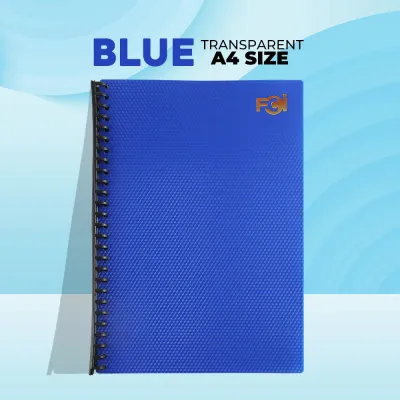
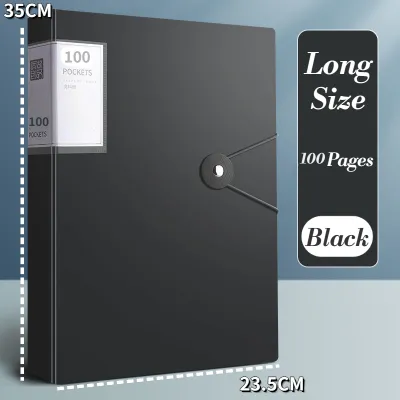
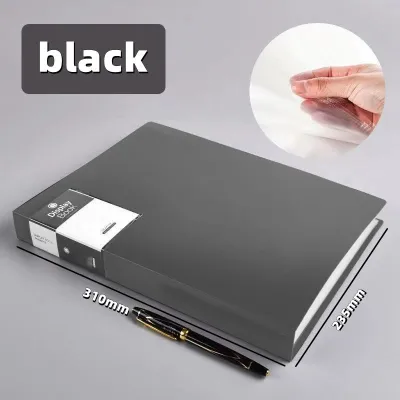
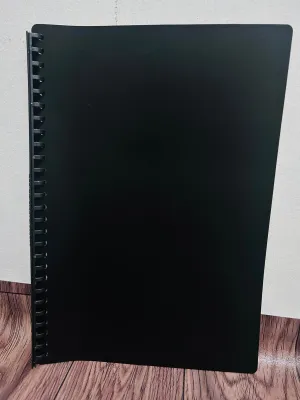
Prices are valid at publication and may change. Please refer to the product page for the latest price.
To evaluate your storage needs, consider the weight and material of your papers. Standard office copy paper in the Philippines is typically 70gsm or 80gsm bond paper, which is relatively thin and allows multiple sheets to sit comfortably in a single pocket. If you are storing heavier materials, such as 220gsm cardstock, high-gloss photo paper, certificates, or laminated sheets, these items will occupy significantly more physical space. A clearbook filled with thick cardstock will reach its physical limit much faster than one filled with standard copy paper, resulting in a much thicker and more rigid folder.
This physical limitation brings us to the concept of the “bulk limit.” When you overstuff individual plastic sleeves or force too many thick sheets into a clearbook, you exert constant outward pressure on the heat-sealed spine or the plastic welding of the folder. Over time, this mechanical strain causes the seams to split and the plastic pockets to tear, exposing your valuable documents to dust, tearing, and tropical humidity. A warped, overstuffed spine also prevents the clearbook from laying flat, making it difficult to read or present your work.
To avoid these issues, group your documents by project, subject, or calendar period before choosing a folder. Sorting your papers beforehand reveals whether your files naturally split into smaller, distinct categories or if they form a single, continuous archive. If your documents are divided into separate school subjects or independent business clients, purchasing multiple smaller clearbooks is far more practical than trying to cram everything into one massive folder.
Matching Document Needs to Clearbook Capacities
Clearbooks are manufactured in several standard pocket capacities to serve different organizational purposes. Matching your specific workflow to the right capacity ensures your documents remain secure, presentable, and easy to manage.

20 to 40 Pockets: Light Daily Use and Portability
A clearbook with 20 to 40 pockets is the ultimate solution for active, highly portable document storage. This capacity range is ideal for daily meeting agendas, corporate sales pitches, short business reports, restaurant menus, or student handouts for a single academic subject. Because these folders hold a modest number of pages, they remain incredibly slim and lightweight.
In the Philippines, daily commutes via jeepneys, buses, or crowded trains require compact and manageable bags. A 20- to 40-pocket clearbook fits effortlessly into standard backpacks, tote bags, or slim briefcases without adding unnecessary weight or taking up valuable space. This makes it an excellent choice for professionals and students who need to carry their reference materials with them every day.
Additionally, these smaller capacities are perfect for dynamic, frequently updated documents. Because there are fewer pages to flip through, you can quickly swap out older papers for newer sheets. This keeps your active files organized and prevents the buildup of outdated clutter.
60 to 80 Pockets: Medium Projects and Coursework
If you need to balance storage capacity with physical manageability, the 60- to 80-pocket range offers a highly versatile sweet spot. This mid-sized capacity is highly recommended for semester-long university coursework, medium-sized design portfolios, or organizing essential household files. It is particularly useful for storing monthly utility bills, medical records, appliance warranties, and insurance policies in one centralized location.
These clearbooks hold a substantial volume of paper—up to 160 pages when utilized back-to-back—yet they remain relatively easy to carry and store on standard office shelves. They do not sag or warp under their own weight as easily as larger binders, making them highly reliable for medium-term storage.
To maximize the efficiency of a 60- to 80-pocket clearbook, use adhesive colored tabs or index dividers along the edges of the sleeves. Since searching through dozens of pages can be time-consuming, creating distinct sections within a single folder allows you to find specific documents quickly without needing to buy multiple separate files.
100 Pockets and Above: Heavy Archiving and Large Portfolios
For maximum storage capacity, clearbooks with 100 pockets or more are designed specifically for long-term archiving and extensive document collections. The primary users of these high-capacity folders include accounting offices archiving year-long financial ledgers, legal professionals organizing comprehensive case files, corporate trainers storing thick instructional manuals, and artists preserving large design catalogs.
Before purchasing a 100-pocket clearbook, you must consider its physical weight and footprint. When fully loaded with hundreds of sheets of paper, these folders become incredibly heavy and bulky. It is vital to inspect the spine construction and the thickness of the outer cover before buying. Look for heavy-duty, rigid polypropylene covers and reinforced welded spines that can support the heavy downward pull of the pages without bending or warping.
Because of their weight, these high-capacity clearbooks are not practical for daily transport. Instead of carrying them in a backpack, treat them as stationary reference binders. Store them upright on a sturdy bookshelf or inside a filing cabinet, pulling them out only when you need to archive a new document or consult historical records.
Factoring in Paper Size and Sleeve Dimensions
Choosing the right pocket capacity is only half the battle; you must also ensure that the clearbook physically accommodates the dimensions of your local documents. In the Philippines, the standard paper landscape is uniquely divided, and buying the wrong size can lead to damaged files.
Understanding Local Paper Standards
- A4 Size (210 x 297 mm): Widely used for academic papers, international business correspondence, and modern office printing.
- F4 / Folio Size (215 x 330 mm): Commonly referred to locally as "long bond paper" or "legal size" in government, legal, and local administrative offices. Note that true US Legal paper is slightly longer (215 x 356 mm), but F4 is the standard for most local "long" documents.
If you purchase an A4-sized clearbook for your F4 legal documents, the top of your papers will stick out of the sleeves by more than an inch. This leaves the exposed edges vulnerable to folding, dust, and moisture. Always check the product label to ensure the clearbook size matches your document format.
Beyond the general size label, verify the actual internal dimensions of the plastic sleeves. Some budget-friendly clearbooks are cut so close to the standard A4 or F4 limits that inserting slightly thicker paper, laminated sheets, or pages with rough edges becomes a frustrating struggle. A slightly oversized sleeve design allows documents to slide in smoothly without crimping the corners.
Additionally, consider the sleeve loading design. Top-loading sleeves are the most common and secure option, as they prevent papers from sliding out when the clearbook is carried upright in a bag. Side-loading sleeves, on the other hand, are highly convenient for inserting wide, stiff, or delicate materials without bending them, though they require more careful handling during transit.
To avoid mismatched supplies, check the default paper size settings on your home or office printer before purchasing a clearbook. Aligning your folder purchases with your most common print outputs will save you both time and money.
Common Clearbook Sizing Mistakes to Avoid
Avoiding common purchasing errors can save you from wasted money, damaged documents, and physical clutter. One of the most frequent mistakes is overestimating your capacity needs. Buying a massive 100-pocket clearbook to store only 30 sheets of paper results in a floppy, oversized folder. The empty plastic sleeves will sag inside the cover, putting uneven tension on the spine and causing the entire binder to warp and look unprofessional.
Conversely, ignoring sleeve thickness limits is equally damaging. Forcing multiple thick sheets or heavy cardstocks into a single pocket designed for one or two pages stretches the plastic beyond its elastic limit. This weakens the heat-sealed edges, eventually causing the sleeve to split down the side and slide off the paper.
Another error is purchasing non-standard or highly decorative clearbooks without measuring your existing documents first. While unique sizes or shapes may look appealing on a store shelf, they often fail to fit standard bond papers, leaving your documents sticking out of the edges where they can easily get bent or stained.
Finally, never prioritize pocket count over plastic quality. A 40-pocket clearbook made with thick, acid-free, anti-glare polypropylene sleeves is far superior to a cheap 100-pocket clearbook made with thin, static-cling plastic. In the hot and humid climate of the Philippines, low-quality PVC plastics can react chemically with printed toner over time. This chemical reaction causes the ink to fuse to the plastic sleeve, permanently ruining your valuable documents when you try to remove them. Opting for copy-safe, non-stick polypropylene ensures your files remain preserved for years.
Frequently Asked Questions (FAQ)
Can I put more than one sheet of paper in a single clearbook pocket?
Yes, you can place multiple sheets of paper in a single pocket, but it is highly recommended to limit this to 2 to 4 standard 80gsm sheets placed back-to-back so that one page faces forward and the other faces backward. Exceeding this limit stretches the plastic sleeve, weakens the spine welding, and makes it incredibly difficult to turn the pages smoothly without tearing the plastic or creasing your documents.
Is it better to buy one 100-pocket clearbook or two smaller ones?
For most everyday users, buying two smaller clearbooks, such as two 40-pocket or 60-pocket options, is a much better choice. Multiple smaller folders allow for better weight distribution, making them far easier to carry in a backpack or tote bag. They also provide a natural system for categorizing your files by subject, project, or department. A single 100-pocket clearbook is only preferable for continuous, chronological archives where splitting the documents would disrupt the overall record-keeping order.
Do clearbooks with more pockets cost significantly more?
Yes, the retail price of a clearbook scales directly with the pocket count, the thickness of the outer cover, and the overall quality of the materials. In the local market, standard 20-pocket clearbooks are highly economical, typically ranging from ₱40 to ₱100. In contrast, heavy-duty 100-pocket archiving clearbooks made with premium, acid-free, non-stick polypropylene can cost from ₱250 to over ₱500. Purchasing a larger capacity than you actually need is an inefficient use of your budget, as the extra cost only adds unnecessary bulk to your daily storage.
Community discussion
Share your experience or ask a question. Comments are reviewed before publication.