
Acrylic paint markers have revolutionized how artists, students, and hobbyists approach illustration, crafting, and customization. Unlike traditional paints that require brushes, palettes, and water cups, a high-quality color acrylic marker delivers opaque, fast-drying acrylic paint with the precision and convenience of a pen. Whether you are drawing on canvas, customizing a pair of sneakers, or designing a school poster board, these versatile tools offer a clean and efficient way to create vibrant art.
However, walking into a local art supply store or browsing online marketplaces in the Philippines can quickly become overwhelming. The sheer volume of choices—ranging from inexpensive student sets to high-end professional systems—makes it difficult to know which set will serve your creative needs without draining your budget. Selecting the ideal set is not about finding the most expensive option on the shelf; it is about matching the marker’s technical specifications to your current skill level, project demands, and the unique environmental conditions of a tropical climate.
How to Match Acrylic Markers to Your Skill Level
Choosing the right acrylic markers is a balancing act between your creative goals and the technical capabilities of the tool. Beginners, students, and professional artists approach their work with entirely different priorities, and understanding these distinctions will prevent you from either overspending or feeling frustrated by underperforming equipment.
Products mentioned in this guide
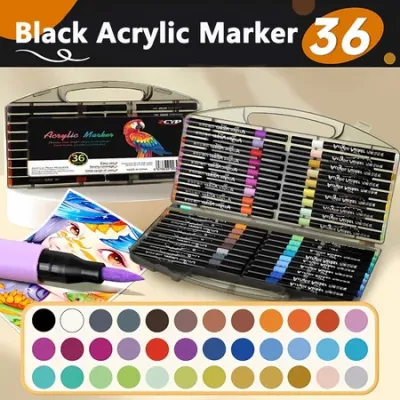
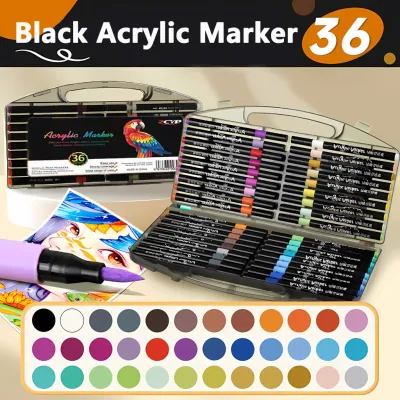
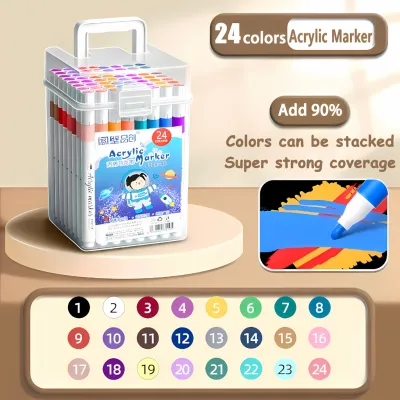

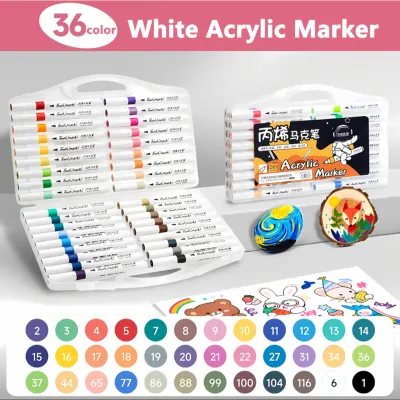
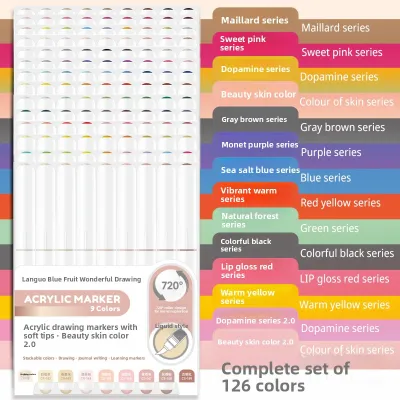
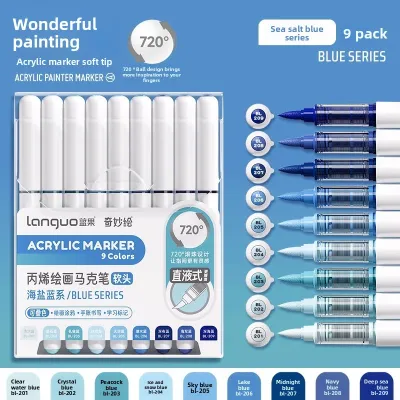
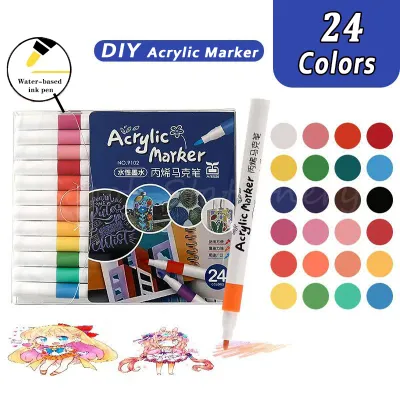
Prices are valid at publication and may change. Please refer to the product page for the latest price.
For beginners, the primary need is forgiveness and usability. When you are first experimenting with the medium, you do not need an overwhelming spectrum of colors or highly sensitive brush tips that require precise hand control. Instead, you need a reliable, basic palette that allows you to practice fundamental strokes, understand ink flow, and complete simple projects without a steep learning curve.
Students and dedicated hobbyists require a step up in both versatility and cost-efficiency. If you are working on school assignments, mixed-media illustrations, or intermediate craft projects, you need markers that can handle layering without lifting previous coats of paint. You also need a broader color range and tips that remain durable across a variety of textured, school-approved surfaces.
Professionals demand uncompromising quality, archival properties, and absolute precision. When creating commissioned gallery pieces, outdoor murals, or custom merchandise for clients, you cannot afford colors that fade under the Philippine sun or markers that clog mid-stroke. Professionals look for high pigment loads, verified lightfastness, and refillable systems that represent a long-term investment in their career.
Key Features to Evaluate Before Buying Color Acrylic Markers
Before investing in any set, it is crucial to understand the technical specifications listed on the packaging or manufacturer data sheets. These features dictate how the ink flows, how long the marker lasts, and how well the paint adheres to your chosen surface.

Nib Types and Sizes
The nib is your direct point of contact with the surface, and its shape determines your line work. Standard bullet tips are the most common, providing a consistent line width that is excellent for outlines, coloring, and detailed drawings. Chisel tips feature a flat, angled edge, allowing you to switch between broad strokes for filling large areas and sharp, thin lines for calligraphy or geometric designs. Brush tips are highly flexible, mimicking a traditional paintbrush to allow for expressive line variation based on hand pressure. Additionally, nib sizes range from ultra-fine (0.7mm or less) for intricate detailing to extra-broad (15mm or more) for large-scale murals and background washes.
Ink Opacity and Pigment Load
The visual impact of your work depends heavily on ink quality. High-quality acrylic markers use pigment-based inks, where finely ground color pigments are suspended in an acrylic polymer emulsion. This formulation results in excellent opacity, allowing you to paint light colors over dark backgrounds with solid coverage. In contrast, cheaper, dye-based markers often appear translucent, requiring multiple coats to achieve an even finish and tending to fade quickly when exposed to light. Always verify manufacturer claims regarding coverage, especially if you plan to paint on dark surfaces like black cardstock or dark wood.
Color Range versus Quality
It is easy to be tempted by massive sets containing 80 or 100 colors at a surprisingly low price. However, in the world of acrylic markers, quality should always take precedence over quantity. A smaller, well-curated set of 12 highly pigmented, professional-grade markers will yield far better results than a massive box of student-grade markers that dry out quickly, clog, or require four layers to look solid. Highly pigmented inks allow you to blend and layer effectively, meaning you can often mix your own intermediate shades on a non-porous surface.
Surface Compatibility
Acrylic paint is celebrated for its multi-surface versatility, but not all markers perform equally on every material. Before purchasing, check the manufacturer’s label to ensure compatibility with your intended medium. Standard markers work beautifully on paper, canvas, and cardboard. If you plan to decorate non-porous surfaces like glass, glazed ceramics, metal, or plastic, or flexible materials like leather and fabric, look for markers specifically formulated to adhere to these surfaces without peeling or cracking over time.
What to Look for in Beginner Acrylic Marker Sets
If you are taking your first steps into the world of acrylic painting, your primary objective is to build confidence without a massive financial commitment. The right beginner set should minimize frustration and provide a smooth, predictable introduction to the medium.
Recommended Set Size
For absolute beginners, a set of 6 to 12 essential colors is highly recommended. This range should include the primary colors (red, blue, yellow), green, and the two most critical mixing and highlighting colors: black and white. Starting with a focused palette forces you to learn basic color theory and prevents you from getting overwhelmed by too many choices. It also allows you to test the medium to see if you enjoy it before investing in a larger collection.
Nib Selection for Control
When you are still training your hand to control ink flow, standard bullet tips or medium chisel tips are your best options. Bullet tips provide a highly predictable, consistent line that behaves exactly the same way regardless of the angle at which you hold the pen. Flexible brush tips, while highly expressive, require a level of pressure control that can be frustrating for beginners, often leading to accidental paint puddles or uneven lines.
Budgeting and Value in the Local Market
In the Philippines, entry-level acrylic marker sets generally fall within the ₱150 to ₱500 price range. While it is tempting to buy the cheapest unbranded sets available on local e-commerce platforms, doing so is often a recipe for frustration. Ultra-cheap markers frequently suffer from poor valve mechanisms, leading to leaks that can ruin your artwork, or they may arrive dry. Look for reputable, budget-friendly brands that offer consistent quality control at an accessible price point.
Ideal Usage Scenarios
Beginner-grade sets are perfect for casual crafting, basic bullet journaling, customizing small household items, and practicing fundamental strokes. They are excellent for family craft afternoons or for hobbyists who want to try their hand at painting terracotta plant pots, stones, or simple wooden ornaments.
Choosing Mid-Tier Color Acrylic Marker Sets for Students
Art students, design majors, and dedicated hobbyists require tools that offer a significant step up in performance without the steep price tag of professional-grade equipment. Mid-tier markers bridge this gap, offering improved ink formulations and greater physical durability.
Expanding the Palette
As your projects grow in complexity, a set of 18 to 24 colors becomes highly beneficial. This expanded palette typically includes useful intermediate shades, pastel tones, and metallic options like gold and silver. For school assignments, architectural models, and detailed illustrations, having these pre-mixed colors saves valuable time and allows for more sophisticated gradients and shading.
Ink Quality and Layering
One of the defining characteristics of mid-tier markers is their improved ink opacity and flow consistency. When working on multi-layered illustrations, you need to be able to paint a light detail over a dark background without the base coat bleeding through or reactivating. Mid-tier markers use superior acrylic binders that dry to a stable, water-resistant film, allowing you to layer colors cleanly and build depth in your artwork.
Versatility Across Mediums
Students frequently work on a wide variety of materials depending on their coursework. Your markers must perform consistently on heavy-weight illustration boards, papier-mâché, primed canvas, and even plastic or wood for 3D modeling. Look for mid-tier sets that explicitly state their compatibility with mixed-media applications, ensuring that the paint will not flake off when dry.
Evaluating Cost-Per-Marker
When shopping in local art supply stores or authorized online storefronts in the Philippines, mid-tier sets generally range from ₱600 to ₱1,500. To get the best value, look beyond the upfront box price and calculate the cost-per-marker. More importantly, check if the brand offers replacement nibs or if the markers have a higher ink capacity. A slightly more expensive set with durable nibs that do not fray easily will save you money in the long run compared to a cheaper set that must be discarded as soon as the tip wears down.
Selecting Professional-Grade Acrylic Markers for Fine Art
For professional artists, illustrators, and muralists, acrylic markers are not just hobby supplies; they are precision instruments. When your livelihood and reputation depend on the longevity and appearance of your work, you must demand the highest technical standards.
Pigment and Archival Standards
Professional-grade markers are formulated with maximum pigment concentration and premium acrylic binders, resulting in unmatched opacity and vibrant color payoff with a single stroke. Crucially, professional markers must meet archival standards. Always check the manufacturer’s technical data sheets for lightfastness ratings, which indicate how well the pigment resists fading when exposed to UV light over decades. Look for acid-free certifications to ensure the paint will not degrade paper or canvas fibers over time.
Precision and Interchangeable Nibs
Fine art often requires a dramatic range of line weights, from ultra-fine details in a portrait to massive blocks of color in a street mural. Professional marker systems cater to this by offering interchangeable nibs. If a nib becomes worn or clogged, you can simply pull it out and replace it with a fresh one rather than throwing the entire marker away. Many professional brands also design their markers to be refillable, allowing you to purchase bulk ink bottles to top up your favorite shades, which is both cost-effective and environmentally friendly.
Consistency and Valve Mechanisms
A major differentiator for professional markers is the quality of their internal valve-action mechanism. These markers require a pump action to saturate the nib. Premium valves regulate the flow of thick acrylic paint perfectly, preventing common issues like sudden paint blotting, leaking from the collar, or air-locking during long, continuous drawing sessions. This reliable flow is essential when working on expensive canvases or delicate commission pieces where a single drip could ruin hours of work.
Investment Strategy
Professional sets in the Philippines represent a significant investment, often ranging from ₱1,800 to well over ₱5,000 for comprehensive collections. Instead of buying a massive set immediately, a smart professional strategy is to purchase a small, curated set of core colors, and then buy individual markers in the exact shades and nib sizes your specific projects require. This allows you to build a highly customized, premium toolkit tailored precisely to your artistic style.
Storing and Maintaining Acrylic Markers in a Tropical Climate
The tropical climate of the Philippines, characterized by high relative humidity and elevated temperatures, presents unique challenges for storing and maintaining art supplies. Acrylic paint is water-based, making it susceptible to dry-out, separation, and mold growth if not cared for correctly.
Proper Storage Orientation
Most high-quality acrylic markers utilize a valve-action system. To keep these markers in peak condition, store them horizontally when not in use. Horizontal storage ensures that the pigment particles and acrylic binder remain evenly distributed throughout the marker barrel. It also keeps the nib moderately moist without allowing excess ink to pool at the tip, which can cause leaking, or settle at the back of the barrel, which can cause the nib to dry out completely.
Climate Control
Extreme heat and direct sunlight are the enemies of acrylic markers. Never leave your markers in unairconditioned rooms that experience extreme daytime heat, such as attics, metal-roofed workshops, or inside a parked car. High temperatures can cause the air inside the marker barrel to expand, leading to violent paint leaks the next time you depress the nib. It can also accelerate the evaporation of the water content in the ink, drying out the marker prematurely. Store your markers in a cool, dry drawer or container away from windows.
Cleaning After Use
Because acrylic paint dries to a permanent, water-resistant plastic film, any ink left on the outside of the nib or around the cap seal will harden. Over time, this dried crust prevents the cap from sealing airtight, leading to the entire marker drying out. After every drawing session, take a moment to inspect your markers. If you notice paint buildup, gently wipe the nib and the inside of the cap with a damp cloth or paper towel before snapping the cap securely back in place.
Reviving Dry Nibs
If a marker has been left unused for a while and the ink has stopped flowing, do not panic or use excessive force. Start by shaking the marker vigorously with the cap securely on; you should hear the internal mixing ball rattling to blend the settled pigment. Next, press the nib down gently on a scrap piece of cardboard or heavy paper to prime the valve, holding it down for a few seconds to let the ink travel. If the nib itself has hardened with dried paint, refer to the manufacturer’s care instructions. Many brands allow you to pull the nib out, soak it in warm water to dissolve the dried acrylic, dry it completely, and reinsert it to restore perfect flow. Never use harsh chemical solvents or alcohol, as these can permanently degrade the acrylic binder and ruin the ink formulation.
Frequently Asked Questions (FAQ)
Can I use acrylic markers on regular printer paper?
Using acrylic markers on standard printer paper (typically 70 to 80 GSM) is not recommended. Acrylic ink is water-based and highly saturated, which will quickly saturate thin paper fibers, causing severe buckling, warping, and bleeding through to the other side. For the best results, use paper specifically designed to handle wet media. Look for paper with a weight of at least 200 GSM, such as mixed-media paper, heavy cardstock, watercolor paper, or dedicated marker pads. These papers have the thickness and surface sizing required to keep the paint on the surface without warping.
How do I fix an acrylic marker that stopped flowing?
If your marker stops flowing mid-project, follow this low-risk troubleshooting sequence. First, ensure the cap is on tightly and shake the marker vigorously for 30 seconds to redistribute the pigment. Next, place a scrap piece of paper on a flat surface, hold the marker vertically, and gently press the nib down until it retracts slightly into the body. Hold it for a moment, then release. Repeat this pumping action gently a few times to draw fresh ink into the nib. If the ink still does not flow, inspect the nib for a dried acrylic crust. Wipe the tip with a damp cloth to clear any blockages, or consult the product’s specific instruction leaflet for instructions on removing and washing the nib.
Are acrylic markers waterproof once dry?
Acrylic markers cure to a highly water-resistant finish once they are completely dry, but there is a distinction between water-resistant and fully waterproof. Because acrylic paint is a plastic polymer, it will not reactivate or smudge if it gets lightly splashed with water or if you paint another layer over it. However, its ultimate durability depends on the porosity of the surface and how well the paint adhered. On non-porous surfaces like glass, metal, or glazed ceramics, the paint can still be scratched or scraped off over time. To make your projects fully waterproof and durable against outdoor elements or heavy handling, check the manufacturer’s label for sealing recommendations, which typically involve applying a clear acrylic varnish or sealant.
Community discussion
Share your experience or ask a question. Comments are reviewed before publication.