
Quick Answer: Which Colored Pen Fits Your Needs?
Choosing between colored gel pens and colored fountain pens depends primarily on your daily writing environment, your preferred paper, and how much time you want to spend maintaining your stationery. Colored gel pens are the ultimate high-utility, low-maintenance choice for fast-paced writing. They deliver bright, opaque colors that dry quickly on standard office paper, making them ideal for rapid note-taking, color-coding planners, and everyday tasks where speed and convenience are paramount.
Conversely, colored fountain pens offer a highly expressive, tactile, and customizable writing experience designed for deliberate, slow-paced tasks like journaling, creative writing, and calligraphy. They glide across premium paper with zero downward pressure, allowing you to experiment with hundreds of bottled ink colors that feature unique visual properties like shading and sheen. If you prioritize immediate convenience and write on standard paper, colored gel pens are your best fit; if you value a luxurious, ergonomic feel and enjoy the ritual of pen care on high-quality paper, colored fountain pens are the superior choice.
Colored Gel vs. Fountain Pens: Core Differences at a Glance
To help you understand how these two writing instruments compare across key performance and financial metrics, the table below outlines their fundamental differences.
Products mentioned in this guide
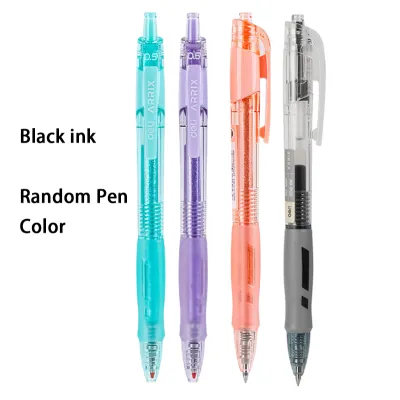
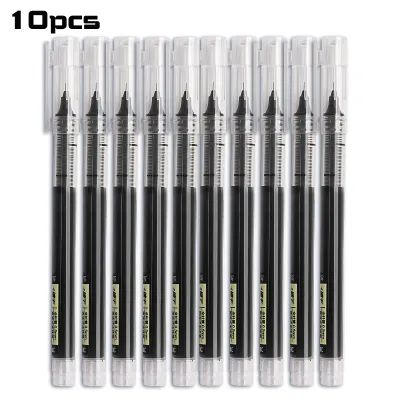
Prices are valid at publication and may change. Please refer to the product page for the latest price.

| Feature | Colored Gel Pens | Colored Fountain Pens |
|---|---|---|
| Ink Formulation | Pigment- or dye-based water gel (thick emulsion) | Water-based liquid dye or pigment ink (fluid) |
| Drying Time | Fast to moderate (typically 1 to 5 seconds) | Moderate to slow (typically 10 to 30+ seconds) |
| Line Variation | Fixed line width (0.3 mm to 1.0 mm) | Variable (depends on nib size, flex, and angle) |
| Paper Requirements | Highly versatile; works well on standard paper | Strict; requires premium, fountain-pen-friendly paper |
| Maintenance Level | None; disposable or simple cartridge swap | Regular cleaning, flushing, and careful storage |
| Initial Cost | Low (typically ₱30 to ₱150 per pen) | Moderate to high (typically ₱150 to ₱3,000+ per pen) |
| Long-Term Cost | Moderate (refills must be replaced frequently) | Very low (bottled ink is highly cost-effective) |
Because ink formulations and paper coatings vary widely, these metrics serve as general baselines. You should always check specific manufacturer packaging for exact line widths, drying times, and paper compatibility recommendations before purchasing specialized art or writing supplies.
Writing Comfort and Hand Fatigue
Writing comfort is closely tied to how a pen transfers ink to paper and the physical pressure your hand must apply to maintain a consistent line. Gel pens utilize a tiny rotating ball in the tip to roll a thick, water-based gel ink onto the page. This gel ink is thixotropic, meaning it liquefies under the shear force of the spinning ball, allowing it to flow more smoothly than traditional oil-based ballpoint ink. While gel pens require significantly less downward pressure than ballpoints, they still require a relatively upright writing angle (usually between 60 and 90 degrees) to keep the ball spinning freely. Many colored gel pens feature lightweight plastic bodies and soft rubberized grips to cushion your fingers, making them highly ergonomic for quick, variable-angle writing.
Fountain pens operate on a completely different physical principle: capillary action. Liquid ink flows from a reservoir, through a plastic feed, and down a split metal nib directly onto the paper. Because the ink flows naturally upon contact, a fountain pen requires absolutely zero downward pressure to write; the weight of the pen itself is sufficient to leave a vivid line. This lack of resistance dramatically reduces muscle tension in your hand, fingers, and forearm, making fountain pens exceptionally comfortable for long, continuous writing sessions.
However, fountain pens demand more deliberate hand control than gel pens. To write smoothly without scratching the paper, you must maintain the pen’s “sweet spot,” which requires holding the nib at a consistent angle (usually between 45 and 55 degrees) and keeping the flat top of the nib facing upward. If you tend to rotate your pen while writing or prefer a tight, high-pressure grip, a gel pen will feel more natural and forgiving. If you suffer from hand cramps during long writing sessions and can adapt to a relaxed, lower-angle grip, a fountain pen provides a glide that gel pens cannot match.
Ink Flow, Vibrancy, and Paper Compatibility
The chemical composition of the ink determines not only how vibrant your writing looks but also how it interacts with different types of paper under various environmental conditions.
Gel Ink Properties and Performance
Gel ink consists of pigments suspended in a water-based polyacrylate gel. This formulation allows for an incredibly high concentration of pigment, resulting in opaque, highly vibrant colors that stand out even on dark or colored paper. Because the pigment particles sit on top of the paper fibers rather than soaking deep into them, gel pens produce crisp, clean lines with minimal feathering (where ink spreads sideways) or bleed-through (where ink leaks to the back of the page).
This surface-level drying behavior makes gel pens highly compatible with standard, inexpensive paper, such as school notebooks, copy paper, and daily planners. In humid climates like the Philippines, where high moisture levels in the air can slow down ink evaporation, choosing a quick-drying gel pen formulation is crucial. Left-handed writers, in particular, should look for rapid-dry gel pens to prevent their hands from smudging the freshly written text as they move across the page.
Fountain Pen Ink Properties and Performance
Fountain pen ink is primarily water-based and colored with highly soluble dyes, though some specialized pigment-based and iron-gall inks are also available. Because the ink is highly fluid, it penetrates deep into the paper fibers. This fluid nature enables beautiful visual effects that gel pens cannot replicate, such as shading (where ink pools in certain parts of a letter, creating a gradient from light to dark) and sheen (where highly saturated ink dries on the surface to reveal a metallic, contrasting color).
However, this high fluidity makes fountain pens exceptionally sensitive to paper quality. When used on standard, low-cost paper, water-based fountain pen ink tends to soak in rapidly, causing severe feathering and bleed-through that can ruin the reverse side of the page. To enjoy colored fountain pen inks fully, you must pair them with premium, fountain-pen-friendly paper that has been treated with specialized sizing to resist deep ink absorption. Furthermore, because fountain pen ink relies on water evaporation to dry, writing in high-humidity environments can significantly extend drying times, sometimes requiring 30 seconds or more. To prevent smearing, writers often use blotting paper or select finer nib sizes that lay down less ink.
Testing and Verification
Because paper manufacturing processes and ink formulations vary, you should always test new pen and paper combinations. To verify compatibility, draw a small grid on an inconspicuous back page of your notebook. Check the reverse side of the page for any signs of bleeding, and run a clean finger across the ink at 5-second intervals to determine the exact drying speed in your local environment.
Ideal Use Cases for Everyday Writing and Hobbies
Mapping your daily tasks, professional requirements, and creative hobbies to the strengths of each pen type ensures a frustrating-free writing experience.
When to Reach for Colored Gel Pens
Colored gel pens are the workhorses of the stationery world, designed for situations where speed, reliability, and immediate usability are essential. They are ideal for:
- Rapid Note-Taking: Perfect for lectures, business meetings, and phone calls where you need to write quickly without worrying about caps, drying times, or paper quality.
- Color-Coding and Annotating: Excellent for highlighting textbooks, marking up printed documents, and organizing tasks in standard paper planners or bullet journals.
- On-the-Go Tasks: Highly convenient for carrying in a pocket, bag, or clipboard, as they do not require special care and are ready to write instantly after clicking or uncapping.
- Detailed Creative Work: Great for adult coloring books, precise mandalas, and fine-line drawing where consistent, opaque color laydown is required in tight spaces.
When to Reach for Colored Fountain Pens
Colored fountain pens elevate writing from a utility to an art form, making them perfect for tasks where the process of writing is just as important as the final output. They excel in:
- Mindful Journaling: Ideal for daily reflection, diary entries, and personal expressive writing where you want to slow down and enjoy the tactile feedback of the nib.
- Creative Writing and Correspondence: Adds a deeply personal touch to letters, greeting cards, and poetry, allowing you to match your ink color to the mood of your message.
- Calligraphy and Sketching: Perfect for practicing italic, copperplate, or modern calligraphy, as well as ink-wash sketching, where line variation and ink shading add depth and character.
- Stationery Collecting: Appeals to hobbyists who enjoy matching different pen bodies, nib sizes, and artisanal bottled inks to create a completely custom writing system.
Maintenance, Refills, and Long-Term Costs
Understanding the ongoing upkeep, environmental impact, and financial commitment of both pen types will help you choose a tool that fits your lifestyle and budget over the long term.
Upkeep and Environmental Impact
Colored gel pens are virtually maintenance-free. They require no cleaning; you simply write until the ink runs out, then replace the internal plastic refill or discard the pen body. While this plug-and-play design is highly convenient, it generates a steady stream of single-use plastic waste. Even when using refillable gel pen models, the empty plastic ink cartridges must be thrown away.
Fountain pens require regular, active maintenance to keep them functioning smoothly. Because fountain pen ink is water-based, it can dry out and clog the tiny channels of the feed if the pen is left unused for several weeks. To prevent clogging, you must flush the pen with room-temperature tap water every month or whenever you change ink colors. This process involves drawing water into the pen using a converter or syringe and flushing it out until the water runs clear. While this maintenance requires time and patience, fountain pens are highly sustainable, heirloom-quality tools. A single well-made fountain pen can last for decades, drastically reducing plastic waste.
Cost Structures and Availability
The initial and long-term costs of these two pen types represent opposite financial strategies. Gel pens have a very low barrier to entry, with high-quality individual pens costing between ₱30 and ₱150, and multi-color sets ranging from ₱200 to ₱800. However, gel ink is consumed rapidly due to its thick application, meaning frequent writers will need to buy refills or new pens regularly, raising the long-term cost per page.
Fountain pens require a higher upfront investment. A reliable entry-level colored fountain pen typically costs between ₱150 and ₱800, while intermediate and gold-nib models can range from ₱1,500 to well over ₱5,000. However, once you own the pen, the ongoing cost is exceptionally low. A single 50ml bottle of fountain pen ink (costing between ₱300 and ₱1,200) contains enough ink to refill a standard converter dozens of times, translating to a fraction of a centavo per page.
When planning your purchases, check the local availability of supplies. While colored gel pens and their refills are widely available in almost every local department store and school supply shop in the Philippines, specialized fountain pen inks, converters, and premium papers are more niche. You will typically need to source them from specialty stationery boutiques or verified sellers on major online marketplaces.
Final Verdict: How to Make Your Choice
To finalize your purchasing decision, use this straightforward framework to match your writing habits to the ideal pen type.
Choose colored gel pens if:
- You want a simple, click-and-write tool that requires zero maintenance or cleaning.
- You write primarily on standard copy paper, cheap notebooks, or sticky notes.
- You need your ink to dry almost instantly to prevent smudges, especially if you are left-handed.
- You prefer a highly portable, budget-friendly option that you can easily replace if lost.
Choose colored fountain pens if:
- You want to eliminate hand strain and enjoy a smooth, gliding writing experience.
- You use high-quality, fountain-pen-friendly notebooks and planners.
- You want to customize your writing with unique ink properties like shading, sheen, and custom color mixing.
- You enjoy the ritual of maintaining, flushing, and refilling your writing instruments.
Before committing to a specific pen or ink color for official use, always verify local institutional guidelines. Many schools, universities, board examinations, and professional offices have strict administrative policies regarding acceptable ink colors (often restricting writing to permanent black or blue ink) and may prohibit erasable gel inks or non-waterproof fountain pen inks on official documents.

Community discussion
Share your experience or ask a question. Comments are reviewed before publication.