
Securing items for transit or storage requires more than just wrapping them in plastic. The most common packaging wrap mistakes—such as choosing the wrong film thickness, applying incorrect tension, failing to overlap layers, and neglecting internal cushioning—directly compromise the structural integrity of your shipment. When these errors occur, items shift, surfaces get scratched, and boxes collapse under pressure. Correcting these mistakes involves matching the wrap material to the load, mastering tension techniques, and preparing the inner package before applying the outer wrap. By understanding how these materials interact, you can prevent costly damage and ensure your packages arrive intact.
Recognizing the Signs of Vulnerable Packaging
Before a package leaves your workspace, several visual and physical cues can warn you that the wrapping job is inadequate. One of the most obvious signs is the presence of visible gaps, loose edges, or heavily wrinkled film. When stretch wrap is applied correctly, it should form a smooth, tight skin around the item. Wrinkles and sagging sections indicate a lack of tension during application, meaning the film cannot exert the necessary containment force to keep the load from shifting.
Conversely, over-tightening presents its own set of structural hazards. If you notice that the cardboard boxes underneath the wrap are bowing, crushing, or deforming at the corners, the tension is far too high. This structural damage compromises the vertical stacking strength of the boxes, making them highly susceptible to collapsing when stacked in a delivery vehicle or warehouse. A deformed box is a weak box, and no amount of plastic wrap can restore its original load-bearing capacity once the cardboard has creased.
Products mentioned in this guide
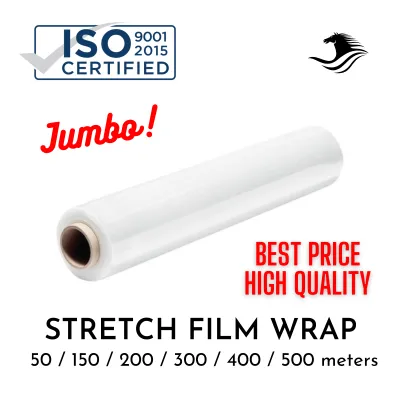
1,119 Lazada user ratings
Efficient packaging solution., Great value for the price., Convenient size for various packaging needs., Provides a tight and secure wrap., …Read full reviewShow less
Efficient packaging solution., Great value for the price., Convenient size for various packaging needs., Provides a tight and secure wrap., High-quality material for reliable protection., Ideal for shipping and storage., Durable stretch film for secure packaging., Perfect for pallet wrapping.,
Durable stretch film for secure packaging. Efficient packaging solution. Easy to use and handle. Perfect for wrapping of many files and stor…Read full reviewShow less
Durable stretch film for secure packaging. Efficient packaging solution. Easy to use and handle. Perfect for wrapping of many files and storybooks.
Received package just in time well package with bubble wrappers intact start to use it good as of now value for the money
Provides a tight and secure wrap., Efficient packaging solution., looks okey. Good for packaging items for shipping.
Strong adhesive for a secure wrap., Efficient packaging solution., Durable stretch film for secure packaging.,
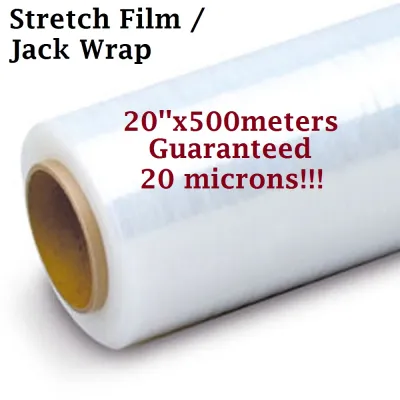
122 Lazada user ratings
Antagal dumating. Wala sa expected delivery date.I’ve seen it on the delivery history namasyal sa bulacan from QC bago nakarating sa Mandalu…Read full reviewShow less
Antagal dumating. Wala sa expected delivery date.I’ve seen it on the delivery history namasyal sa bulacan from QC bago nakarating sa Mandaluyong
Durability: .......................looks durable......... Clarity: very clear....................... Ease of Use: easy
Ease of Use:good Durability:good Clarity:good nice ang item nagustuhan ng asawa ko sya kc gagamit nyan legit seller
great value for money Clarity:should last me a very long time. pretty strong also dkes not tear easily
Received my order on time and in good condition, well packed 👍👍👍 Thank you seller and delivery rider 👍 👍👍👍👍
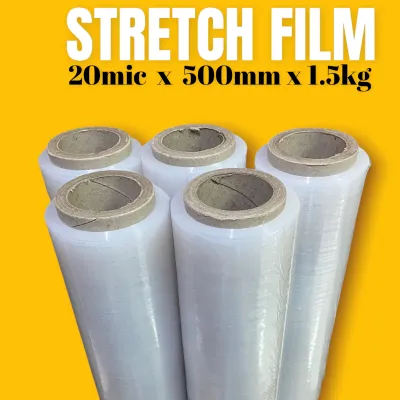
7,066 Lazada user ratings
Strong and tear-resistant, Easy to use and handle, Securely wraps and protects items, Convenient size for wrapping, Yahweh mush njgbah nugah…Read full reviewShow less
Strong and tear-resistant, Easy to use and handle, Securely wraps and protects items, Convenient size for wrapping, Yahweh mush njgbah nugah mga nvhha nbhah
Ease of Use:10/10 Durability:0/10 Clarity:10/10 what you see is what you get certainly will order again fast delivery and well packed
what you see is what you get,, super affordable ang price, fair pricing, fast delivery, courteous ang courier. more sales
napakaayos ang package ng items .medyo manipis yung na order ko ..pero ok n yun nextime nlang ulit .salamat seller
Useful tlga sya..maganda at mura dto sa shop na to..Salamat po
Prices are valid at publication and may change. Please refer to the product page for the latest price.
Another reliable diagnostic method is the gentle shake test. Lift the wrapped package slightly and give it a soft shake. If you feel or hear items sliding, rattling, or shifting inside, the packaging has failed to secure the contents. This internal movement is a primary cause of transit damage, as items collide with one another or with the inner walls of the box, regardless of how tightly the exterior is wrapped.
Finally, inspect the corners and edges of the package for tears, punctures, or exposed surfaces. High-stress areas are the first to fail when wrap is stretched too thin or dragged over sharp edges. If any part of the product or the inner box is peeking through a torn section of film, the barrier is compromised, leaving the item vulnerable to moisture, dust, and further tearing during handling.
The Most Frequent Packaging Wrap Mistakes and Why They Happen
Understanding why wrapping failures occur is the first step toward preventing them. One of the most common mistakes is using the wrong wrap type, material, or thickness for the specific weight and shape of the item. Packaging wraps are not one-size-fits-all solutions; they are engineered with specific gauges (thicknesses) and resin formulations. Using a thin, light-duty film designed for lightweight office supplies to wrap a heavy, sharp-edged metal component will inevitably result in immediate punctures and load failure.

Improper tension application is another frequent error that stems from manual wrapping techniques. When wrapping by hand without a tension-control dispenser, operators often apply inconsistent force. If the wrap is applied too loosely, it fails to reach its optimal yield point, behaving like a loose plastic bag rather than an elastic band. If applied too tightly, the excessive force can snap the film mid-wrap or crush fragile contents inside the box.
Inadequate overlap and coverage also leave critical areas exposed. Many users attempt to save material by wrapping with minimal overlap, leaving wide gaps between each spiral pass of the film. Without a proper overlap ratio, the individual layers of wrap cannot cling to one another effectively. This lack of cohesion allows the layers to separate under the stress of transit vibrations, exposing the corners and edges of the shipment to punctures and moisture.
Lastly, many packers rely solely on the outer wrap while completely ignoring internal voids and edge protection. Wrapping the exterior of a box beautifully does nothing to protect the items inside from colliding with each other if there is empty space. Without appropriate internal cushioning or rigid edge boards to distribute external pressure, the outer wrap simply compresses the empty spaces, leading to crushed boxes and damaged goods.
Step-by-Step Solutions to Correct Wrapping Errors
To correct these common errors, you must first learn to read product labels and manufacturer specifications to match the wrap gauge and material to your specific load. When purchasing stretch wrap, pay close attention to the thickness, which is typically measured in microns or gauge. For lightweight, uniform boxes, a standard 15-micron (60-gauge) cast film is highly effective. For heavier, irregular, or sharp-edged loads, opt for a tougher 20-micron (80-gauge) or 23-micron (90-gauge) blown film, which offers superior puncture resistance. Additionally, verify that the roll’s core size is compatible with your manual dispenser to ensure smooth, controlled unwinding.
Next, master the technique of applying consistent tension and achieving the correct overlap ratio. When wrapping manually, hold the dispenser firmly and walk forward around the package, keeping a steady distance. Pull the film taut so that it stretches by approximately 30% to 50% of its original length as it contacts the surface. This activation of the film’s memory ensures it will contract slightly after application, creating a secure, tight hold. Ensure that each new spiral layer overlaps the previous layer by at least 50% to build a strong, multi-layered protective skin.
Reinforcing high-stress areas is critical for preventing tears at the corners and base. Before wrapping a palletized load or a large box, apply three to four complete wraps around the bottom base to anchor the load securely. As you move upward, pay extra attention to the corners. You can significantly improve structural integrity by placing cardboard edge protectors along the vertical corners of your boxes before wrapping. These protectors distribute the tension of the film evenly, preventing the plastic from cutting into the cardboard while shielding the corners from external impacts.
Finally, always integrate appropriate void fill, dunnage, and edge protectors before applying the outer wrap. Pack the inside of your box tightly using bubble wrap, packing paper, or foam inserts to eliminate all internal movement. Because the actual performance, cling strength, and puncture resistance of stretch wrap depend heavily on the exact material combination of the film and the package surface, always perform a simple trial. Wrap a single test package and check for secure adhesion and structural stability before proceeding with large-scale shipments.
Preventive Strategies for Long-Term Storage and Transit
Proactively avoiding wrapping mistakes requires a systematic approach to your packaging workflow. Implementing a simple pre-packing checklist is an excellent way to ensure consistency. Before any wrap is applied, verify the structural integrity of the box, confirm that the items inside are stable and cushioned, and check that the wrapping material is clean and free of dust. Dust and debris on the surface of the film can severely reduce its cling properties, preventing the layers from bonding together.
Environmental factors must also be taken into account, particularly in regions with challenging climates like the Philippines. The high relative humidity and warm temperatures common in the country can significantly affect packaging materials. High humidity softens cardboard fibers, reducing the vertical stacking strength of standard boxes by up to 50%. Furthermore, moisture and condensation can settle on the surface of stretch wrap, compromising its cling and adhesion. To counter these effects, store your cardboard boxes and wrapping films in climate-controlled areas, use moisture-resistant plastic wraps, and apply extra layers of wrap to compensate for the humidity-induced softening of the inner boxes.
Proper storage of your unused wrapping materials is equally important for maintaining their performance. Stretch wrap rolls should always be stored vertically in a cool, dry place, away from direct sunlight and heat sources. Exposure to high temperatures and UV rays degrades the plasticizers within the film, making it brittle, reducing its elasticity, and ruining its natural cling. Keeping the rolls in their original packaging until they are needed protects them from dust and physical damage.
It is also highly beneficial to evaluate the financial impact of damaged goods versus the cost of upgrading your packaging materials. A single damaged shipment can cost thousands of pesos (often ₱5,000 or more) when you factor in product replacement, return shipping fees, and the loss of customer trust. In contrast, upgrading to a higher-quality, thicker stretch wrap or adding cardboard edge protectors costs only a few additional pesos per package (typically less than ₱50 per shipment). Investing in the correct materials is a highly cost-effective strategy that protects your bottom line.
When to Stop and Seek Professional Packaging Services
While DIY wrapping is suitable for standard office supplies and typical shipments, certain scenarios demand professional intervention. You must recognize when an item exceeds the protective capacity of standard stretch film, bubble wrap, or shrink wrap. Extremely heavy machinery, oversized industrial equipment, and highly fragile items with complex geometries cannot be safely secured using manual wrapping techniques alone. Attempting to wrap these items yourself often leads to structural failure during transit.
In these cases, specialized wooden crating, custom-molded foam inserts, or professional freight services are strictly required. Professional packaging companies have the equipment and expertise to design custom crates that isolate the item from external vibrations, shocks, and environmental hazards. They use heavy-duty strapping, barrier materials, and custom bracing that standard retail packaging supplies simply cannot replicate.
Furthermore, consider the safety and liability limits of DIY packaging when handling high-value, antique, or highly sensitive electronic equipment. If an item is irreplaceable or its value exceeds your organization’s financial risk tolerance, relying on manual wrapping is a significant gamble. Professional logistics providers offer certified packing methods and transit insurance, shifting the liability away from your business. Recognizing these limits ensures that your most valuable assets receive the specialized protection they require.
Frequently Asked Questions (FAQ)
Can I reuse stretch wrap for multiple shipments?
Reusing stretch wrap for active transit is highly discouraged. Once stretch wrap has been applied and pulled to its yield point, it loses its elasticity and memory, meaning it cannot contract again to secure a new load. Additionally, removing the wrap typically stretches it unevenly, creates tears, and destroys its cling properties. Reused wrap also carries a high risk of dust contamination, which prevents the film from adhering to itself. While you might reuse small pieces of clean wrap for temporary, static storage within a warehouse, always use fresh, high-quality film for active shipping to ensure load stability.
Does the color of the packaging wrap affect its protective qualities?
The color of packaging wrap does not inherently change its tensile strength, puncture resistance, or elasticity, as these properties are determined by the film’s thickness and resin formulation. However, colored and opaque wraps offer distinct functional advantages. Opaque black or white wraps provide excellent UV protection, shielding light-sensitive items from sun damage during long-term storage near windows or outdoors. Additionally, opaque wraps offer privacy and security by hiding the contents of the package, which acts as a highly effective theft deterrent during transit.

Community discussion
Share your experience or ask a question. Comments are reviewed before publication.