
Finding the right 6b pencil is a turning point for any artist looking to inject depth, drama, and rich tonal contrast into their drawings. While the “6B” designation technically promises a dark, soft lead, the actual drawing experience varies wildly across different brands. The ideal choice does not depend on a single, universally superior brand, but rather on how a pencil’s specific formulation aligns with your drawing style, technique, and paper choice. The Koh-i-Noor scale, which ranges from 9H to 9B, places the 6B grade at the threshold of extreme softness, where the physical properties of the carbon core begin to challenge the structural integrity of the paper.
A 6B pencil’s performance is dictated by its binder-to-graphite ratio. Wax-rich formulations are excellent for artists who prioritize buttery smoothness, easy blending, and expressive, fast-paced shading. Conversely, clay-rich or modern matte formulations are better suited for artists who require deep, non-reflective blacks, clean layers, and minimal glare. In tropical climates like the Philippines, where ambient humidity can soften paper fibers and alter graphite adhesion, understanding these formulation types is the key to selecting a pencil that remains consistent and reliable on your drawing board. When the air is thick with moisture, paper fibers expand, which can cause softer graphite to drag or clump if the binder is not carefully formulated to resist ambient dampness.
By learning how these binders behave under different conditions, you can avoid common pitfalls like graphite shine, paper tearing, and excessive smudging. This guide will break down the essential performance metrics of 6B pencils, compare the primary formulation categories, and provide you with a practical testing framework to evaluate any brand before committing to a major art project.
Products mentioned in this guide
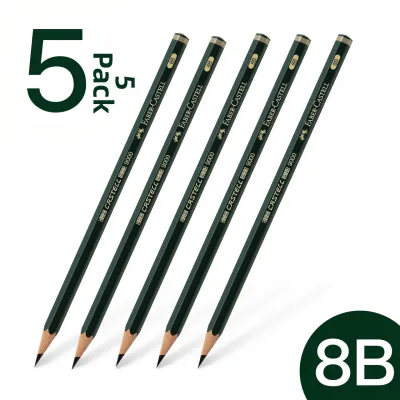
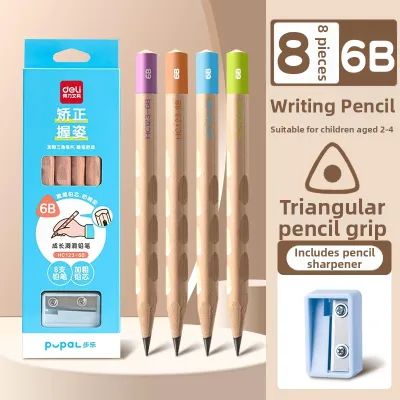
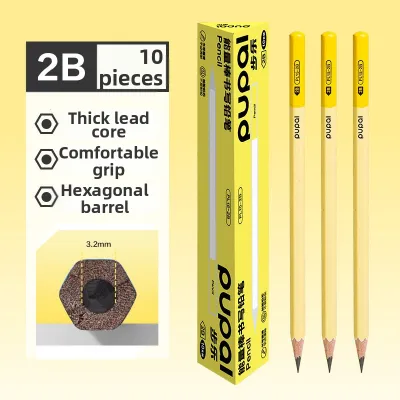
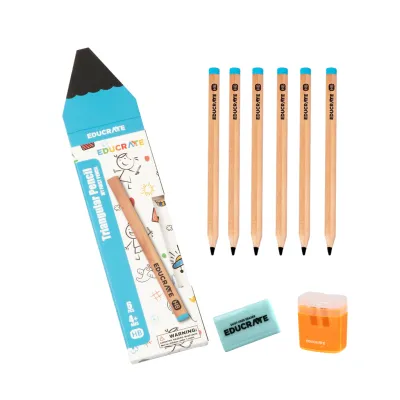
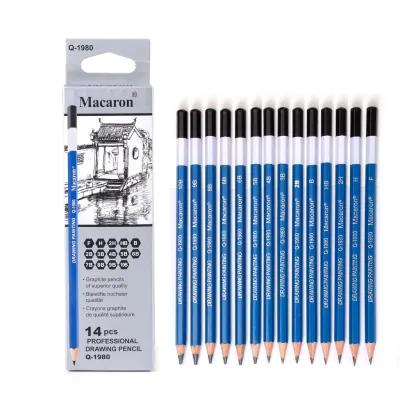
Prices are valid at publication and may change. Please refer to the product page for the latest price.
Core Dimensions for Comparing 6B Pencils
To evaluate how different brands perform, you must look beyond the simple hardness rating on the pencil’s end. A true 6B pencil is engineered to deliver deep, velvety blacks that elevate the shadow areas of a drawing. However, the softer the lead, the higher the concentration of graphite, which naturally introduces the risk of graphite shine, also known as burnishing. When you apply heavy pressure to force a darker value, the graphite particles flatten and align, creating a reflective, metallic sheen that can ruin the depth of your drawing under direct gallery lighting. At a microscopic level, the hexagonal plates of carbon slide over one another and align parallel to the paper surface, turning what should be a deep shadow into a mirror-like reflector that bounces light back at the viewer.
The tactile feedback of a pencil on paper directly influences your control and artistic expression. Smoothness is determined by how well the binders lubricate the graphite as it travels across the paper’s surface. On toothy, textured papers, a scratchy pencil can feel abrasive and produce uneven tones, whereas a well-formulated 6B should glide effortlessly, depositing pigment consistently without catching or dragging on the paper’s fibers. This coefficient of friction is a delicate balance; wax acts as a solid lubricant, filling the microscopic gaps in the paper’s surface to allow the pencil to float across the medium, while clay increases resistance, providing tactile feedback that allows for precise control over line weight.
Because 6B graphite is exceptionally soft, it sheds loose particles more readily than harder grades. This excess dust can easily spread across your paper, leading to accidental smudging and muddy highlights. Different formulations manage this dust differently; some binders hold the graphite particles tightly to the paper fibers, while others leave a loose residue that requires constant vigilance, especially in high-humidity environments where moisture makes paper more susceptible to holding unwanted smudges. In the Philippines, the high relative humidity during the wet season can weaken the paper’s surface sizing, making it easier for loose graphite particles to migrate and embed permanently in areas meant to remain pristine.
The ease with which you can correct mistakes or lift highlights is a crucial factor in professional workflows. Wax-heavy leads tend to bond more permanently with paper fibers, making them resistant to clean erasing and prone to ghosting. Clay-rich formulations, by contrast, allow for cleaner lifting with a kneaded eraser, giving you greater flexibility when rendering highlights or adjusting complex value transitions. This mechanical action of erasing depends heavily on the binder; vinyl erasers use plasticizers to lift graphite through physical abrasion, which can shave away a micro-layer of paper fibers, while kneaded erasers rely on adhesion to lift the graphite cleanly without damaging the paper.
How Different Graphite Formulations Affect Shading and Smoothness
Pencils with a high-wax binder are characterized by a luxurious, buttery glide that feels almost like a crayon. They excel at producing rich, dark values with minimal physical effort, making them a favorite for expressive portraits and quick gestural sketches. However, the high wax content makes them susceptible to “wax bloom”—a cloudy, white film that can develop over heavily shaded areas over time. This chemical phenomenon occurs when temperature and humidity fluctuations cause the wax to migrate to the surface of the drawing, creating a hazy layer that dulls your darkest values. While this can be gently wiped away or prevented with a high-quality fixative, it remains a significant trade-off for artists working in tropical climates.

Pencils with a higher clay or specialized matte binder content are designed to combat the reflective glare typical of traditional graphite. They provide a beautifully flat, matte finish that preserves deep blacks even under harsh, direct lighting. These modern formulations often incorporate carbon black or silica to absorb light instead of reflecting it. While they may feel slightly more toothy or abrasive compared to their waxy counterparts, they offer superior erasability and allow you to build up multiple clean, crisp layers without the risk of burnishing. The tactile feedback is more “pencil-like,” providing a satisfying resistance that many classical artists prefer for high-precision rendering.
The performance gap between budget and premium pencils often comes down to the purity of the graphite and the quality of the manufacturing. Student-grade 6B pencils (typically priced around ₱15 to ₱30 in local Philippine stationery shops) may contain microscopic impurities or air pockets that cause sudden scratchiness or core breakage during sharpening. Raw graphite is mined with impurities like quartz and silica; premium brands use chemical flotation and air-milling to eliminate these impurities, ensuring a scratch-free glide. Professional-grade options (ranging from ₱60 to ₱150 or more per pencil) feature finely milled, homogeneous graphite cores that are perfectly centered and bonded to premium cedar casings. Premium casings, such as California incense cedar, are treated with wax and oil to allow smooth sharpening without splintering, and the cores are secured using SV (Secural) bonding, which glues the lead along its entire length to prevent internal shattering when dropped.
Always check the manufacturer’s product specifications or labels before purchasing, especially if you plan to use fixatives or mix your graphite with other media. Some specialized matte or wax-heavy formulations require specific fixative types to prevent chemical reactions that could discolor or dissolve your hard work. Additionally, verify if the pencil carries safety certifications like the AP (Approved Product) non-toxic seal, which is crucial for artists who spend long hours handling drawing materials.
Matching the 6B Pencil to Your Art Technique and Paper
To narrow down your choices, evaluate your primary drawing style. If your work relies on soft, seamless gradients, smooth skin tones, and rapid blending with a tortillon or blending stump, a wax-rich, ultra-smooth 6B pencil will serve you best. The wax acts as a vehicle, allowing the graphite to slide and merge under the pressure of a blending tool. If your style involves high-contrast realism, heavy layering, or architectural precision where clean lines and non-reflective darks are paramount, a clay-rich or specialized matte 6B is the superior choice, as it allows you to build depth without creating a slick, unworkable surface.
The relationship between your pencil’s formulation and your paper’s texture is highly symbiotic. Very smooth, wax-heavy 6B pencils can struggle to find purchase on highly textured, rough watercolor papers, resulting in patchy, uneven coverage where the pencil skips over the valleys of the paper. Conversely, an abrasive or clay-heavy pencil used on ultra-smooth hot-press paper can fill the paper’s tooth too quickly, preventing you from building up the deep values you need because the paper’s surface sizing cannot hold any more graphite.
Because local environmental factors—such as the high humidity levels common in the Philippines—can cause paper fibers to expand and absorb moisture, the perceived smoothness of any pencil can change dramatically. Moisture-laden paper fibers become soft and spongy, which can cause a soft 6B core to drag or tear the paper surface if too much pressure is applied. Always perform a quick test on a scrap piece of your actual project paper under your current working conditions before committing to a final, large-scale drawing.
| Paper Type | Surface Tooth | Wax-Rich 6B Performance | Clay-Rich / Matte 6B Performance |
|---|---|---|---|
| Bristol Smooth | Very Low (Slick) | Glides effortlessly; prone to slipping and burnishing quickly. | Grips better; allows for cleaner, non-reflective dark values. |
| Vellum / Medium Tooth | Medium (Moderate) | Ideal pairing; creates smooth, seamless gradients and blends easily. | Excellent pairing; builds deep, structured values with great control. |
| Cold-Press Watercolor | High (Rough) | Fills valleys slowly; can leave patchy white spots unless blended. | Grips aggressively; wears down the lead point rapidly but gives rich texture. |
How to Test and Verify Pencil Performance Before Committing
To objectively evaluate a new 6B pencil, draw a gradual value scale starting from the absolute lightest tone you can produce to the deepest black possible. Create a 2×10 cm rectangle on a scrap piece of your project paper and divide it into five distinct value steps. Hold the pencil at a 45-degree angle to observe how the core wears down and how the light reflects off each step. Tilt the swatched paper under a direct light source to inspect the level of binder shine; a high-quality pencil should allow you to achieve a rich dark value before the surface turns into a reflective mirror.
Apply a solid patch of medium-to-dark value and use a clean blending stump, a piece of tissue, or a specialized blending tool to smooth it out. Observe how easily the graphite spreads, whether it leaves harsh, unblendable lines, and how much loose dust is generated during the process. This test will tell you how controllable the pencil will be during complex shading sessions. Note if the graphite integrates smoothly into the paper’s tooth or if it merely sits on top, ready to slide off at the slightest touch.
Create a dark patch of 6B shading and attempt to lift highlights using both a kneaded eraser and a standard vinyl eraser. Perform a “lift test” by drawing a dark grid and trying to erase a clean line through it. Note whether the graphite lifts cleanly to reveal the white of the paper or if it leaves a stubborn gray smudge, which indicates a highly adhesive, wax-heavy binder formulation that may limit your ability to correct mistakes or render fine, highlighted details.
Soft graphite leads are delicate and prone to fracturing inside their wooden casings if dropped or stored poorly. Keep your 6B pencils in a padded pencil wrap or a dedicated tin, especially when traveling. Additionally, because soft pencils generate significant amounts of fine graphite dust, avoid blowing the dust off your paper with your mouth to prevent accidental inhalation; instead, gently tap the paper over a waste bin or use a soft drafting brush. To prevent your hand from transferring natural oils (sebum) to the paper, which permanently locks graphite into the fibers and prevents clean erasing, always use a mahl stick, a drawing bridge, or a clean sheet of scrap paper under your drawing hand. When sharpening, consider using a high-quality single-blade sharpener or a utility knife and sandpaper block to expose a long, strong lead tip, which is a classic professional technique that minimizes core breakage.
Frequently Asked Questions (FAQ)
Why does my 6B pencil look shiny when I shade dark areas?
This metallic reflection, known as graphite burnishing, occurs because graphite is naturally a crystalline carbon structure that becomes highly reflective when compressed. When you apply heavy pressure with a soft 6B pencil, you flatten the paper’s natural texture (tooth) and align the graphite particles and binders into a flat, mirror-like sheet. To minimize this shine, try building up your dark values gradually using multiple light, feathered layers rather than pressing down hard, or consider switching to a specialized matte formulation that uses non-reflective clay binders.
Is a 6B pencil too soft for general sketching?
Yes, a 6B pencil is generally too soft, dark, and smudge-prone for initial layouts, structural outlines, or general sketching. The soft lead dulls incredibly fast, making it difficult to maintain the sharp point required for precise line work, and the heavy graphite deposits are easily smeared by your hand as you work. It is highly recommended to use harder, cleaner grades such as HB, F, or 2B for your initial underdrawings, reserving your 6B pencil strictly for final value adjustments, deep shadows, and expressive, high-contrast shading.
How do I keep my 6B pencil from smudging my artwork?
To protect your drawings from the high smudge risk of soft 6B graphite, establish a disciplined workflow by drawing from top to bottom and left to right (or right to left if you are left-handed). Rest your drawing hand on a clean sheet of heavy scrap paper or use a wooden drawing bridge to keep your skin from directly touching the paper’s surface. Once your drawing is complete, apply a high-quality, workable fixative spray in a well-ventilated area according to the manufacturer’s instructions to lock the delicate graphite particles in place and prevent future smudging.

Community discussion
Share your experience or ask a question. Comments are reviewed before publication.