
When stocking up on school and office supplies, choosing between budget-friendly options and premium legacy brands often comes down to a balance of performance and price. If you are looking for a straightforward answer, a deli pencil is absolutely good enough for everyday writing, note-taking, and high-volume office tasks. Offering a highly economical price point, these pencils perform admirably for general utility where losing a pencil is more common than wearing it down to the stub.
However, if your daily work involves long writing sessions, high-stakes exams, or precise drafting, established brands like Faber-Castell and Staedtler still hold a clear advantage. These premium manufacturers use refined graphite-clay mixtures and specialized core-bonding techniques that deliver superior smoothness, reliable break resistance, and consistent wood casing. While Deli excels in bulk value, the legacy brands remain the go-to choices for demanding environments where structural integrity and tactile feedback are critical.
Key Comparison Dimensions for a Deli Pencil vs. Premium Brands
To understand how a deli pencil holds up against premium alternatives under daily use, it is necessary to look beyond the outer paint and examine the physical characteristics of the graphite, the core bonding, and the wood casing. These factors determine how often you will need to sharpen your pencil, how clean your pages will look, and how comfortable your hand will feel after hours of writing.
Products mentioned in this guide
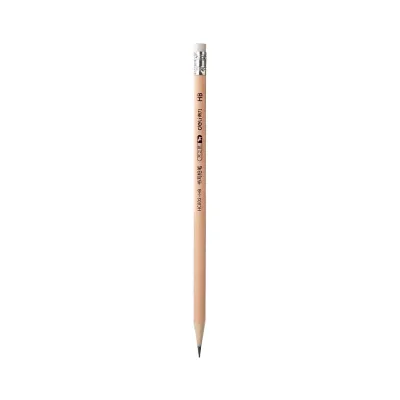
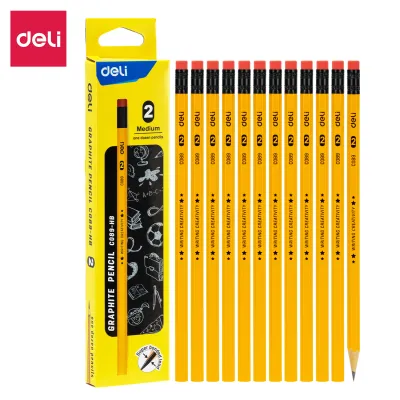
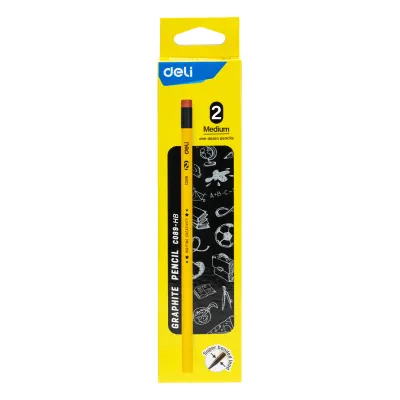
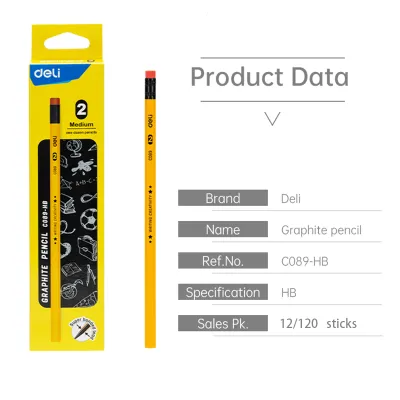
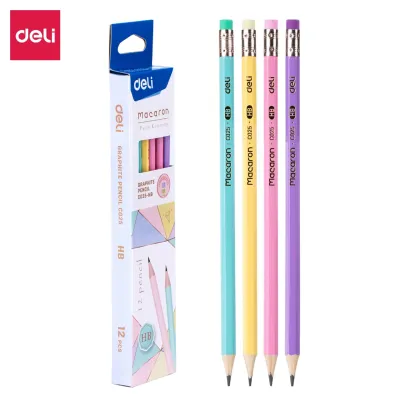
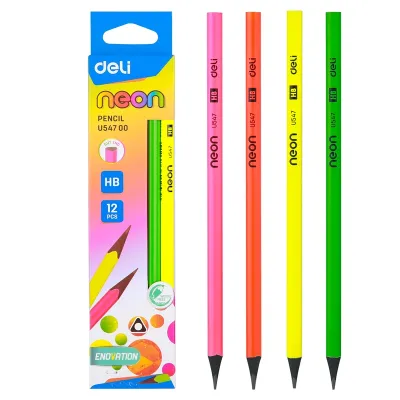
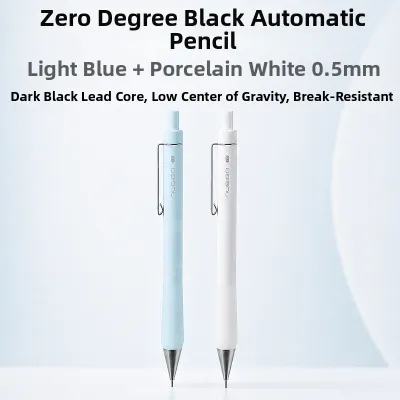
Prices are valid at publication and may change. Please refer to the product page for the latest price.
Graphite Smoothness and Darkness
Evaluating the writing experience begins with how the lead glides across the paper. Premium pencils from Faber-Castell and Staedtler typically use highly refined, high-purity graphite mixed with finely ground clay. This meticulous formulation minimizes impurities, resulting in a consistent glide with minimal scratchiness. When writing with these premium options, the pencil feels as though it is buttery and smooth, requiring very little downward pressure to leave a dark, legible line.
In contrast, budget-friendly options like Deli can sometimes feel slightly more abrasive or dry on standard copy paper. This scratchiness occurs because the clay and graphite mixture may contain larger particle sizes or less uniform blending. If you are using standard 70gsm or 80gsm copy paper, you might notice that a Deli pencil requires a bit more downward pressure to achieve the same dark line as an equivalent HB pencil from a premium brand. Additionally, the grading consistency of budget pencils can vary slightly; a Deli HB might feel slightly harder or lighter than a European-standard HB.
Paper “tooth”—the texture and roughness of the paper surface—also plays a massive role in how smooth a pencil feels. In humid environments, such as typical tropical weather in the Philippines, paper fibers absorb moisture from the air, making the paper slightly soft and limp. This dampness increases friction, which can amplify the scratchy feel of budget graphite. When testing pencils, it is highly recommended to try them on the exact notebook or copy paper you plan to use daily, observing whether the lead glides effortlessly or catches on the damp fibers.
Lead Strength and Break Resistance
Few things are as frustrating as a pencil lead that repeatedly snaps during a writing session or breaks off completely inside the sharpener. This issue is directly tied to how the graphite core is bonded to the wooden casing. Premium brands have spent decades perfecting proprietary bonding processes—such as Faber-Castell’s “Secural” (SV) bonding—where the lead is glued along its entire length to the wood. This reinforcement cushions the graphite core, preventing it from shattering internally when the pencil is dropped onto hard classroom or office floors.
Budget pencils, including many Deli models, may use simpler manufacturing methods where the glue coverage is less uniform. Consequently, if a pencil is dropped or subjected to rough transit in a pencil case, the internal graphite core can fracture into multiple small segments. When you go to sharpen the pencil, these broken segments simply fall out, forcing you to keep sharpening and wasting large portions of the pencil.
To evaluate lead strength in your daily routine, pay attention to the sharpening pattern and the sound of the pencil. If you gently tap the pencil against a desk and hear a distinct, hollow rattling sound, it often indicates that the internal core has already fractured. When writing, heavy-handed writers who apply significant vertical or angled pressure will find that premium cores withstand sudden shifts in pressure much better, whereas budget leads are more prone to snapping at the tip under identical loads.
Wood Casing and Sharpening Experience
The quality of the wood casing dictates how easily a pencil can be restored to a sharp point and how long your pencil sharpener blades will last. High-end pencils are typically encased in premium, sustainably sourced woods like incense cedar. Incense cedar is soft enough to shave away smoothly and evenly, producing continuous, ribbon-like shavings and leaving a clean, splinter-free collar around the graphite core. This wood also possesses a characteristic pleasant aroma and does not dull sharpener blades quickly.
Budget-friendly pencils, on the other hand, are often constructed from more economical wood species such as basswood, poplar, or even reconstituted wood composites. While these materials are highly cost-effective, they are generally denser and more fibrous. When run through a manual or electric sharpener, these cheaper woods can splinter, chip, or shave unevenly. This uneven shaving can leave one side of the graphite core completely unsupported, leading to immediate breakage the moment the pencil touches paper.
When purchasing pencils in bulk or inspecting them in-store, look closely at the exposed wood at the unsharpened end. The wood grain should be tight and uniform, and the graphite core must be perfectly centered within the wooden cylinder. An off-center core is a classic manufacturing defect often found in lower-cost stationery; it prevents sharpeners from shaving the wood evenly, exposing the lead on one side while leaving the other side buried in wood. Checking for a centered core before buying can save you from significant sharpening frustration later on.
Price Positioning and Bulk Value
To make an informed purchasing decision, it is essential to weigh the upfront cost against the long-term utility of each brand. In the Philippines, stationery budgets are a key consideration for families preparing for the school year, as well as offices managing administrative expenses. Deli has positioned itself as a formidable force in the budget segment, offering large boxes of 12, 30, or even 50 pencils at highly competitive price points. In terms of sheer volume, a single box of Deli pencils often costs a fraction of what you would pay for a similar quantity of premium German-engineered pencils.

This dramatic price difference makes Deli an incredibly practical choice for specific high-loss or high-volume scenarios:
- Classrooms and Shared Spaces: In primary schools or shared office areas, pencils are frequently borrowed, misplaced, or lost entirely. Investing in premium pencils for these environments often leads to unnecessary financial waste.
- High-Volume Drafting and Rough Sketching: For temporary drafts, construction marking, or quick brainstorming sessions where the physical longevity of the pencil is not a concern, budget pencils perform the job perfectly at a minimal cost.
- Bulk Office Supplies: For standard corporate supply closets where employees only occasionally use pencils for quick notations, stocking up on Deli ensures that utility is maintained without inflating the administrative budget.
However, calculating true value requires looking beyond the initial purchase price to consider the “cost per successful sharpen.” If a cheap pencil frequently suffers from internal lead breakage or uneven wood splintering, a significant portion of its length is ground away into the trash bin without ever touching paper. A single premium pencil that sharpens cleanly down to the stub without a single broken tip can sometimes outlast two or three budget pencils that suffer from constant internal fractures. For individuals who write heavily every day, investing slightly more upfront in a premium brand can actually result in less waste and a more satisfying, frustration-free experience.
Decision Framework: Which Pencil Fits Your Needs?
Choosing the right pencil depends entirely on your specific writing environment, your budget constraints, and your personal tolerance for minor writing friction. Use the following guidelines to determine which brand aligns best with your daily requirements.
Choose Deli if:
- You are purchasing stationery in bulk for school classrooms, busy offices, or community centers where items are frequently lost or shared.
- Your primary goal is to minimize upfront expenses while acquiring reliable, functional writing tools for general note-taking and casual drafting.
- You or your children use pencils primarily for quick, non-archival tasks where minor variations in darkness and smoothness do not impact the final outcome.
Choose Faber-Castell if:
- You prioritize an exceptionally smooth, dark, and consistent writing line for daily journaling, note-taking, or academic exams.
- You tend to write with a heavy hand or frequently drop your stationery, making reliable core-to-wood bonding a necessity to prevent internal breakage.
- You want a trusted, widely available brand that consistently meets strict graphite grading standards across all retail outlets.
Choose Staedtler if:
- You are engaged in technical drawing, detailed sketching, or professional design work that demands absolute precision and durable lead points.
- You prefer premium wood casings like incense cedar that shave effortlessly and protect your high-quality manual or electric sharpeners from premature wear.
- You value specialized ergonomic designs, such as triangular barrels or non-slip grip coatings, that reduce hand fatigue during extended writing sessions.
Verify first if:
- You are purchasing pencils specifically for standardized optical mark reader (OMR) exams. Some exams require precise 2B graphite darkness to be read correctly by scanning machines; always check the specific product packaging and test the pencil beforehand to ensure compliance.
- You are buying specialized art pencils, as standard school-grade models from any brand may not offer the soft, blendable graphite formulations required for advanced shading and fine art techniques.
Frequently Asked Questions (FAQ)
Do Deli pencils smudge more than Faber-Castell or Staedtler?
Smudging is primarily determined by the ratio of graphite to clay in the lead and the texture of the paper. Budget pencils like Deli sometimes use softer binders or slightly oilier graphite formulations to mimic the smoothness of premium brands, which can make them more prone to smudging under friction. If you are left-handed or write quickly, this can lead to graphite transfer on your hand or paper. Premium brands like Faber-Castell and Staedtler carefully balance their clay-to-graphite ratios to ensure clean, crisp lines that resist smudging. However, in high-humidity climates like the Philippines, paper naturally absorbs moisture, which can make any pencil lead smudge more easily. Testing a single pencil on your preferred paper type is the best way to verify smudge resistance before committing to a bulk purchase.
Are the attached erasers on these pencils actually usable?
The pink or white erasers attached to the ends of standard pencils across all three brands are designed primarily for quick, emergency corrections rather than extensive erasing. Budget pencils often feature stiffer, rubber-based erasers that can dry out quickly, leading to smearing, tearing, or leaving pink streaks on your paper. While premium brands like Faber-Castell and Staedtler often use slightly higher-quality, latex-free synthetic rubber compounds that erase more cleanly, they can still struggle with large areas of dark graphite. For students, artists, or office workers who make frequent or large-scale corrections, it is always recommended to bypass the built-in pencil topper and use a dedicated, high-quality block eraser or a kneaded eraser to protect the integrity of the paper.
How can I tell if a pencil is genuine when buying online?
Counterfeit stationery is a common issue on online marketplaces, where popular brands like Faber-Castell and Staedtler are frequently replicated with inferior materials. To ensure you are buying genuine products, always check for the official store badge or verified seller status on your preferred e-commerce platform. When the package arrives, inspect the exterior printing; genuine pencils feature crisp, clear, and perfectly aligned gold or silver foil stamping, whereas counterfeits often have blurry, off-center, or easily scratched-off lettering. Additionally, look at the wood end of the pencil. Genuine premium pencils will show a perfectly centered graphite core and clean, uniform wood grain. If the pencil splinters immediately upon sharpening or the lead continuously falls out in chunks, it is highly likely a counterfeit product.
Community discussion
Share your experience or ask a question. Comments are reviewed before publication.