
When evaluating popular HB pencil brands for daily use, writing smoothness and durability are determined by material composition and manufacturing precision rather than brand reputation alone. Because independent, standardized laboratory tests comparing every brand’s specific friction coefficients and breakage thresholds are rarely available to consumers, relying solely on marketing claims can lead to mismatched expectations. This guide shifts the focus from unverified brand rankings to the physical traits that dictate performance. By understanding graphite-to-clay ratios, wood casing quality, and core centering, you can establish a reliable evaluation framework to choose an HB pencil set that genuinely aligns with your hand pressure, paper preferences, and daily writing volume.
In tropical environments where high humidity can affect both paper texture and wood casings, selecting the right pencil requires a closer look at how these materials interact. A pencil that glides effortlessly in a dry, air-conditioned office might feel draggy or scratchy on paper that has absorbed ambient moisture. Similarly, a poorly constructed wood casing can swell or warp in humid conditions, leading to frequent lead breakage during sharpening. Understanding the physical properties of your stationery helps you avoid these common frustrations and ensures a consistent writing experience.
Understanding the Core Factors of Pencil Smoothness
The core of any HB pencil is a mixture of graphite and clay, baked at high temperatures and often treated with wax to reduce friction. The “HB” designation represents a middle ground on the hardness scale, balancing the dark, soft characteristics of “B” grades with the light, hard traits of “H” grades. However, because there is no universal industry standard for the exact ratio of graphite to clay, one brand’s HB pencil may feel significantly softer or harder than another’s.
Products mentioned in this guide
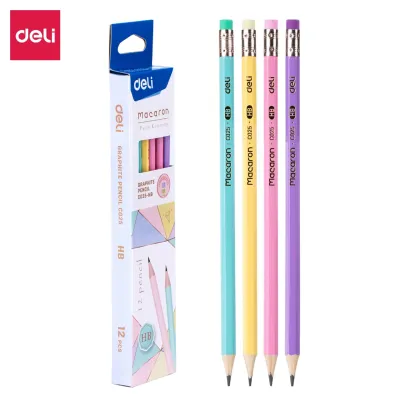
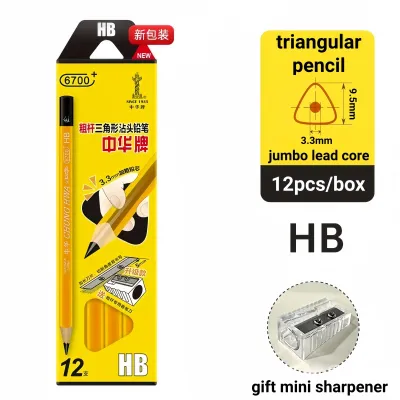
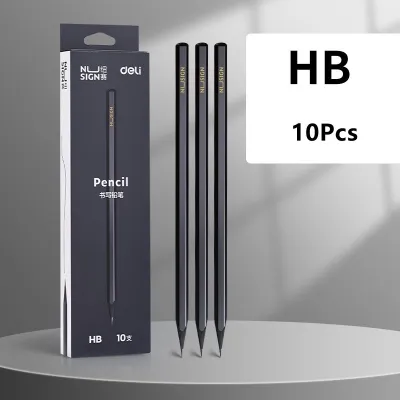
Prices are valid at publication and may change. Please refer to the product page for the latest price.
Graphite acts as the dry lubricant that leaves a dark mark on the page, while clay serves as the binding agent that holds the core together and provides structural rigidity. A higher proportion of graphite results in a smoother, darker line because the material shears off easily onto the paper fibers. Conversely, a higher clay content increases the hardness of the core, which reduces the rate of wear but also increases writing resistance. When testing different brands, you will quickly notice that some HB pencils glide with minimal effort, while others require more downward pressure to achieve the same line density.
The interaction between the pencil core and your paper is another critical factor in perceived smoothness. Paper is not perfectly flat; it has a microscopic texture known as “tooth.” Rougher papers with a prominent tooth act like fine sandpaper, shaving off more graphite with each stroke and making even a hard pencil feel relatively dark. Smooth, highly calendered papers offer less grip, which can make a hard HB core feel slick and faint, prompting you to press harder and cause hand fatigue. In humid climates, paper fibers expand as they absorb moisture, which alters the tooth and can make the writing experience feel noticeably more resistant.
Beyond the graphite-to-clay ratio, the physical dimensions and internal treatment of the core play a vital role in reducing friction. High-quality pencil cores are thoroughly impregnated with molten wax or fats during manufacturing to fill the microscopic voids in the graphite-clay mixture. This lubrication layer is what prevents a scratchy sensation when the pencil meets the paper. Additionally, a slightly wider core diameter provides a larger contact patch, distributing your writing pressure over a broader area and contributing to a more fluid, consistent glide.
Evaluating Pencil Durability and Build Quality
While smoothness dictates how a pencil feels, durability determines how long it lasts before you need to reach for a replacement. The overall lifespan of a pencil is heavily influenced by the quality of its wood casing. Premium pencils typically use incense cedar, a straight-grained wood that yields clean, continuous shavings when sharpened. Cheaper alternatives often rely on fast-growing softwoods or synthetic composite materials, which can splinter, tear, or dull your sharpener blades, leaving the graphite core unsupported and prone to immediate snapping.

Another critical indicator of build quality is core centering precision. During manufacturing, the graphite core is sandwiched between two grooved wooden slats, which are then glued together and cut into individual pencils. If the machinery is misaligned, the core will be off-center, resulting in a pencil with wood that is thicker on one side than the other. When you sharpen an off-center pencil, the sharpener will expose the wood on one side while leaving the graphite unsupported on the other, causing the point to break the moment it touches paper. You can easily check for this by looking closely at the unsharpened end of a pencil to see if the dark circle is perfectly centered within the wooden barrel.
Internal bonding is the third pillar of pencil durability. High-quality manufacturers use a process known as “SV bonding” or secure bonding, where the graphite core is glued along its entire length to the wooden casing. This continuous bond cushions the fragile graphite against shocks, such as when the pencil is dropped onto a hard floor. In contrast, poorly bonded pencils allow the core to slide or fracture internally. When this happens, you may find yourself sharpening the pencil repeatedly, only for the broken segments of lead to fall out of the tip one after another, wasting the entire pencil in a single day.
In humid environments, the choice of wood and glue becomes even more critical. Inferior woods can absorb moisture unevenly, causing the casing to warp and put lateral stress on the internal graphite core. This warping can break the internal bond, leading to mysterious lead failures even if the pencil has never been dropped. A well-made pencil uses seasoned, treated wood and moisture-resistant adhesives that maintain their structural integrity despite seasonal shifts in humidity.
Practical Testing Methods for Your HB Pencil Set
To find the best HB pencil set for your specific needs, you do not need laboratory equipment; you can conduct a series of simple, observable tests at home or in the office. Begin by gathering a few different paper types that you use regularly, such as standard copy paper, a notebook page, and a sketchpad. Draw a series of long, continuous lines across each sheet without lifting the pencil, paying close attention to any sudden changes in resistance or scratchiness. A high-quality core should feel consistent from the beginning of the stroke to the end, without hard spots of unmixed clay catching on the paper.
Next, perform a smudge and line-consistency test. Write a paragraph at your normal speed and pressure, then gently run your finger across the text. While softer HB formulations tend to smudge more easily due to their higher graphite content, a well-balanced core should resist excessive smearing while maintaining a clear, dark line. You can also draw a solid gradient block, starting with very light pressure and gradually increasing to heavy pressure, to observe the pencil’s dynamic range. This test reveals how much control you have over the darkness of your lines without having to press hard enough to dent the paper.
The sharpening process is a revealing test of both wood and core quality. Use a manual, single-blade sharpener and observe the shavings. A durable pencil should produce a single, continuous ribbon of wood rather than a pile of dusty splinters. As you turn the pencil, listen for any cracking sounds and feel for uneven resistance, which can indicate poor wood quality or an off-center core. Once sharpened, inspect the tip: the wood should taper smoothly down to the graphite without any tearing or rough edges that could scratch your fingers or snag on the paper.
Finally, track the point retention of your pencil during a standard writing session. Note how many pages or paragraphs you can write before the sharp point wears down to a dull, rounded tip that compromises legibility. If you find yourself sharpening the pencil every few sentences, the core may be too soft for your writing style, or the internal lead may be fractured. Conversely, if the point lasts for pages but requires significant hand pressure to remain legible, the core is likely too hard, indicating that you need a brand with a slightly softer formulation.
Decision Framework: Choosing the Right HB Pencil Set
Choosing the right HB pencil set is ultimately a matter of matching the pencil’s physical characteristics to your personal writing habits and environment. If you have a light hand, write for extended periods, or suffer from hand fatigue, you should look for a brand that leans toward a softer, darker HB formulation. These pencils release graphite easily with minimal downward force, allowing your hand to remain relaxed. However, keep in mind that softer cores wear down faster and may require more frequent sharpening, which can increase overall consumption over time.
If you naturally apply heavy pressure when writing, or if you primarily write on rough, textured paper, a harder and lighter HB formulation is more suitable. The higher clay content in these cores resists deformation under pressure, allowing the point to stay sharp much longer. This durability is especially useful for detailed work, mathematical calculations, or taking quick notes where you cannot afford to stop and sharpen your pencil constantly. The trade-off is that these pencils can feel slightly scratchier on smooth paper and may produce lighter lines that are harder to read in low light.
When evaluating the cost-effectiveness of different pencil sets, look beyond the initial purchase price and calculate the value based on usable lifespan. A pack of budget pencils might cost significantly less upfront, but if the cores are off-center or poorly bonded, you will lose a large portion of the graphite to sharpening waste and breakage. A slightly more expensive set made with premium cedar and secure bonding can easily outlast several cheap pencils, making it the more economical choice in the long run. To compare options, divide the price of the set by the number of pencils to find the price per piece in ₱, then factor in your observations regarding sharpening waste and point retention.
Ultimately, the best pencil is the one that disappears in your hand, allowing you to focus entirely on your work. By testing a few individual pencils using the criteria outlined above, you can confidently invest in a full HB pencil set that delivers the perfect balance of smoothness, durability, and value for your daily writing tasks.
Frequently Asked Questions (FAQ)
Does the barrel shape affect writing smoothness compared to the graphite itself?
The shape of the pencil barrel does not directly alter the friction between the graphite core and the paper, but it has a profound effect on your grip ergonomics and control. Hexagonal barrels are the industry standard because they provide flat surfaces for your fingers to rest on, preventing the pencil from slipping in your hand and reducing the grip pressure required to write. This improved control can make the writing experience feel smoother because you do not have to strain your hand muscles to maintain a consistent angle. Round barrels offer a seamless feel but can roll off desks easily, while triangular barrels are highly effective for teaching proper finger placement and reducing fatigue during long writing sessions.
How should I store my HB pencil set to maintain the wood and graphite quality?
To preserve the structural integrity of your HB pencil set, store them in a cool, dry place away from direct sunlight and extreme humidity. In tropical climates, high humidity can cause the wooden casings to absorb moisture, leading to warping and weakening of the internal glue bonds. Avoid leaving your pencils in hot cars or near windows, as extreme heat can dry out the wood, making it brittle and prone to splintering during sharpening. Using a dedicated pencil case or wrap protects the exposed tips from impact damage when carried in a bag, ensuring that the internal graphite cores remain intact and ready for use.

Community discussion
Share your experience or ask a question. Comments are reviewed before publication.