
Choosing the right pencil comes down to matching the lead hardness and barrel shape to your writing style, hand size, and paper type. In the Philippines, where high humidity can soften paper fibers and increase graphite smudging, selecting the correct pencil line ensures clean, legible notes whether you are a student preparing for exams or an artist sketching outdoors. By understanding how different graphite grades, ergonomic designs, and core materials interact, you can find a tool that feels natural in your hand and performs consistently across various tasks.
Identifying the Core Stabilo Pencil Categories
Stabilo’s lineup is broadly divided into three functional families: standard graphite pencils, colored pencils, and specialty art or watercolor pencils. Standard graphite options are the workhorses of classrooms and offices, designed for rapid note-taking, standardized test sheets, and general writing. They are typically slim, lightweight, and easy to pack into a standard pencil case. Whether you are purchasing a single pencil for around ₱15 or investing in a premium set for art school, understanding these categories helps you spend your budget wisely.
Colored and watercolor pencils form another distinct category, formulated with pigment-based cores rather than graphite. Standard colored pencils use wax or oil binders to lay down smooth, dry color, while watercolor pencils feature water-soluble binders that dissolve when brushed with water, allowing for paint-like washes. These are ideal for creative journaling, school projects, and detailed illustrations.
Products mentioned in this guide
Prices are valid at publication and may change. Please refer to the product page for the latest price.
For younger writers or those who experience hand strain, ergonomic and jumbo lines represent a specialized category. These pencils feature significantly thicker barrels, often with triangular shapes or molded grip zones, to guide finger placement and reduce the physical effort required to hold the pencil. They are particularly popular for early childhood development, helping young learners transition to writing without cramping their hands.
Because specific model names, local packaging designs, and retail stock can vary across different online marketplaces and physical stationery shops in the Philippines, it is best to use these broad functional categories as your baseline. Focus on the physical characteristics of the pencil and the core type rather than searching for a single, highly specific product name that may not be currently imported or in stock.
Key Packaging Specifications to Verify Before Buying
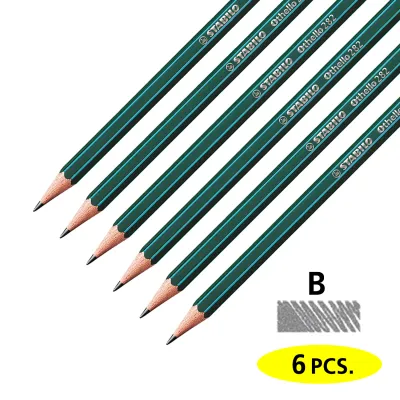
When browsing the stationery aisle, the first specification to check is the graphite hardness scale, usually printed clearly on the pencil barrel and packaging. This scale ranges from “H” (hard) to “B” (black/soft), with “HB” serving as the medium standard. Harder leads like 2H or 4H produce light, precise lines that resist smudging but require more downward pressure, making them excellent for technical drafting. Conversely, softer leads like 2B, 4B, or 6B contain more graphite and less clay binder, yielding dark, rich lines with minimal effort.

In tropical climates where humidity is high, paper naturally absorbs moisture from the air, making it slightly softer and more fibrous. Under these conditions, very soft leads (such as 4B or 6B) can smudge easily across the page if your hand brushes against the paper. For general writing and school exams in local classrooms, an HB or 2B pencil strikes the ideal balance, offering high legibility without excessive smearing.
Break resistance is another critical factor to verify on the packaging. Look for terms indicating that the lead is fully bonded to the wood casing along its entire length, often referred to as “SV bonding” or “double-bonding.” This manufacturing process prevents the internal graphite core from shattering into multiple pieces when the pencil is dropped onto hard school floors, ensuring that the lead does not fall out in chunks during sharpening.
Safety and environmental certifications are particularly important when purchasing stationery for children who might chew on their pencils. Check the box for non-toxic certifications, such as the European EN71 standard or equivalent local safety marks, which guarantee that the paint, varnish, and core materials are safe for skin contact. Additionally, look for the Forest Stewardship Council (FSC) logo, which indicates that the wood casing is sourced from responsibly managed forests.
If you are purchasing colored pencils, verify the water-solubility indicators on the packaging. Watercolor pencils are usually marked with a small paintbrush icon or the word “aquacolor” or “soluble.” Standard colored pencils will not blend with water, so verifying this label prevents purchasing the wrong medium for your art projects.
Matching the Pencil Line to Your Specific Tasks
Selecting the right pencil requires a clear understanding of your daily writing or drawing habits. If your primary goal is everyday note-taking, filling out forms, or completing standard schoolwork, standard graphite lines are the most practical choice. Their familiar, slim barrel size fits easily into standard pencil cases, and they are highly compatible with standard office paper and school notebooks.
For young children who are still developing fine motor skills, or for adults who experience hand fatigue during long writing sessions, ergonomic or jumbo lines are highly recommended. The wider diameter of a jumbo pencil reduces the need for a tight, tense grip, allowing the hand muscles to remain relaxed. This is especially beneficial for preschool and early elementary students in the Philippines who are learning to control their pencil strokes for the first time.
If your tasks lean toward creative expression, such as bullet journaling, sketching, or coloring, pigment-based colored or watercolor lines are the appropriate choice. These pencils allow for layering, shading, and blending that standard graphite cannot achieve. Keep in mind that watercolor pencils require heavier, high-gsm paper to prevent the pages from warping when water is applied.
It is also important to recognize when a standard wood-cased pencil is not the right tool for the job. If your work involves highly precise technical drafting, constant line-width consistency, or heavy-duty outdoor marking like carpentry, standard writing pencils may fall short. In these cases, you should look into specialized mechanical drafting pencils or heavy-duty industrial markers designed specifically for those environments.
Evaluating Ergonomics and Physical Comfort
The physical shape of a pencil barrel plays a massive role in how comfortable it feels during extended use. Standard hexagonal barrels are the traditional choice; they provide flat surfaces for the fingers to rest on and prevent the pencil from rolling off slanted school desks. Triangular barrels, however, are increasingly popular because they naturally guide the thumb, index, and middle fingers into a comfortable “tripod” grip, reducing muscle strain.
Some specialized ergonomic lines feature molded grip zones or non-slip grooves carved directly into the wood. These physical features are incredibly helpful in warm, tropical weather, where sweaty hands can cause standard smooth-varnished pencils to slip. A textured grip ensures that you maintain control over your writing without having to squeeze the barrel tightly.
Weight and balance also affect your writing experience. Jumbo pencils, due to their thicker wood casings and wider graphite cores, are naturally heavier than standard pencils. While this extra weight can help stabilize the hand of a young child or someone with tremors, it might feel tiring for an adult writing at high speeds. Testing the weight in your hand before committing to a large pack is always a wise step.
Finally, consider the practical maintenance requirements of your chosen pencil shape. Jumbo and triangular pencils often will not fit into standard, single-hole pencil sharpeners. Before purchasing these specialty lines, verify that you have access to a dual-hole sharpener with a wider opening designed specifically for larger barrels, ensuring you can keep your pencils sharp without damaging the wood.
Frequently Asked Questions (FAQ)
Do Stabilo pencils come with pre-attached erasers, and are they effective?
Many of Stabilo’s standard writing and art-focused pencil lines do not feature pre-attached erasers on the end of the barrel. This design choice is often intentional, as omitting the metal ferrule and eraser tip keeps the pencil lightweight, perfectly balanced, and easier to recycle. It also ensures that the focus remains entirely on the quality of the graphite and the wood casing.
While some specific student-oriented or promotional lines may include a built-in eraser, these are generally intended for quick, minor corrections. For the cleanest, smudge-free results—especially when using softer graphite grades like 2B—it is highly recommended to purchase a separate, high-quality vinyl or plastic eraser. Standalone erasers lift graphite off the paper fibers far more effectively without tearing the page or leaving dark streaks.
How can I prevent the lead from breaking frequently inside the wood casing?
Frequent lead breakage is usually caused by internal fractures within the graphite core, which often happen long before you actually sharpen the pencil. To prevent this, always store your pencils in a protective case, roll, or pouch rather than letting them roll loosely in a bag. A single drop onto a hard tile floor can shatter the lead inside the wood casing, leading to frustrating breaks every time you try to sharpen it.
Using the correct sharpening tool is equally important. Ensure your sharpener has a sharp, high-quality blade; a dull blade will pull and twist the wood casing, putting uneven lateral pressure on the lead and causing it to snap. When sharpening, hold the pencil straight and rotate it smoothly without forcing it. If you find yourself constantly breaking leads due to heavy writing pressure, try switching to a softer lead grade like 2B, which leaves a dark mark with very little downward force.
Community discussion
Share your experience or ask a question. Comments are reviewed before publication.