
Choosing between corrugated plastic board and foam board depends on whether your project needs to withstand environmental elements like tropical humidity and rain, or requires a perfectly smooth, flat surface for indoor presentations. Corrugated plastic board excels in durability, moisture resistance, and outdoor longevity, while foam board offers superior smoothness, lightweight rigidity, and effortless cutting for indoor displays, mock-ups, and school projects.
Selecting the wrong material can lead to warped signs, melting cores, or ruined prints. By evaluating your project’s physical environment, tool availability, and long-term budget, you can select the board that ensures your work remains intact and professional.
Defining Your Project's Physical and Environmental Needs
Before purchasing any display material, you must define the physical demands of your project. Consider the intended lifespan of your creation. A temporary weekend bazaar sign or a school science fair project only needs to hold its shape for a few days, whereas a permanent menu board or directional signage must endure for months or years without sagging.
Products mentioned in this guide
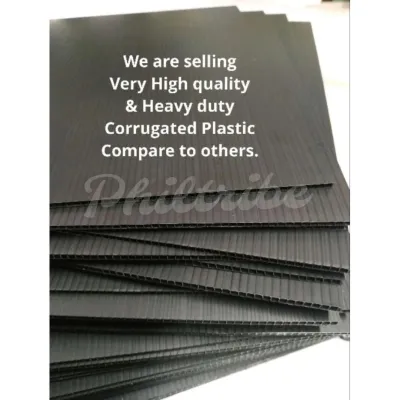
168 Lazada user ratings
Quality:Long-lasting and weather-resistant, Durable and sturdy material, Convenient pack sizes available, Excellent for DIY projects, Appear…Read full reviewShow less
Quality:Long-lasting and weather-resistant, Durable and sturdy material, Convenient pack sizes available, Excellent for DIY projects, Appearance:Convenient pack sizes available, Long-lasting and weather-resistant, Excellent for DIY projects, Durable and sturdy material, Excellent for DIY projects, Durable and sturdy material, Convenient pack sizes available, Long-lasting and weather-resistant,
All items arrived in good and excellent condition; packaged well. Complete and correct variation. Thank you so much seller and Lazada. Will …Read full reviewShow less
All items arrived in good and excellent condition; packaged well. Complete and correct variation. Thank you so much seller and Lazada. Will order again if needed. Used it kaysa plywood. Maganda.
Ideal for construction and packaging, Excellent for DIY projects, Great for heavy-duty use,
High-quality black color, Great for heavy-duty use, Long-lasting and weather-resistant,
High-quality black color, Versatile size options available,
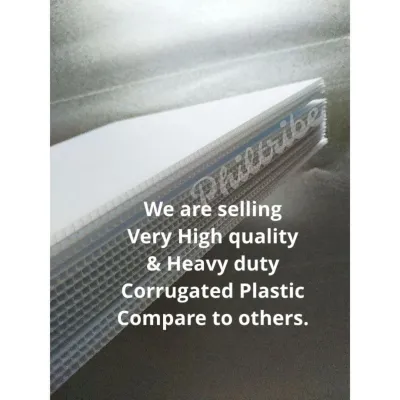
81 Lazada user ratings
Durability:High-quality material, Durable and long-lasting, Versatile and multipurpose, Excellent for crafting projects, Perfect for signage…Read full reviewShow less
Durability:High-quality material, Durable and long-lasting, Versatile and multipurpose, Excellent for crafting projects, Perfect for signage, Lightweight and portable,
salamat po seller and couriers 🫰🫰🫰🫰🫰 dumating ng maayos item🫰🫰🫰🫰🫰🫰 Durable and long-lasting, Great for outdoor use,
Easy to cut and shape, Sturdy construction, Great for outdoor use, very good very good very good very good
Easy to cut and shape, Sturdy construction,
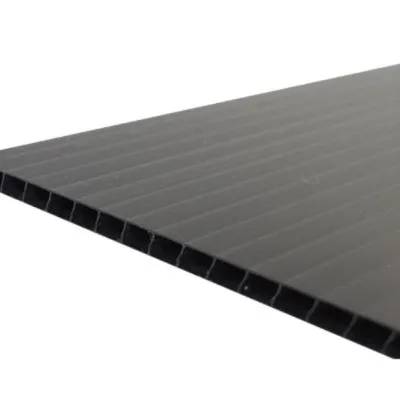
250 Lazada user ratings
Durability:The corroplast boards are sturdy enough to be used as sliding doors for a small open kitchen shelf. They are rigid enough to be m…Read full reviewShow less
Durability:The corroplast boards are sturdy enough to be used as sliding doors for a small open kitchen shelf. They are rigid enough to be mounted upright on rails. Eco-friendliness:There is very little wastage and is easily cut by sharp scissors or an xacto knife. Being made of plastic, cutting will not result in sawdust or small particles that we may inhale. Size Options:The size was adequate to cover the two shelves and the side panels of our open kitchen cabinet. Aside from being used for signages and school projects, the board can also be used for other DIY projects.
Durability:I used the boards as sidings for our open cabinets. They are also sturdy enough to use as sliding doors for the upper and lower s…Read full reviewShow less
Durability:I used the boards as sidings for our open cabinets. They are also sturdy enough to use as sliding doors for the upper and lower shelves. Eco-friendliness:Cutting the boards does not result in residual dust particles. Size Options:The 4 boards I ordered were enough to finish the sides of the open shelf. My first order were utilized to make the sliding doors for the shelf. I will order the boards again for my other DIY projects.
Vibrant colors for eye-catching displays, Smooth surface for easy printing, Great value for the price, Perfect size for various projects,
All good, very well packaged in bubble wrap and cardboard. Nice satin finish. Thank you 😊🙏
Will use this for dividers inside the tuffcase for led lights and cables.
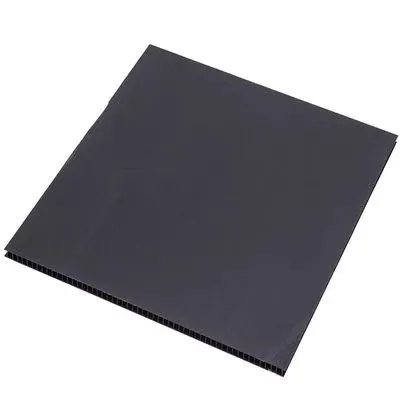
Prices are valid at publication and may change. Please refer to the product page for the latest price.
The installation environment plays a critical role in material survival. In the tropical climate of the Philippines, indoor spaces without continuous air conditioning can experience high relative humidity, which quickly softens paper-based materials. Outdoor installations face even harsher conditions, including direct sunlight, high temperatures, and sudden heavy downpours that can ruin unprotected boards.
Finally, assess the structural load and mounting method. If you plan to hang the board from a ceiling, mount it on an easel, or secure it to a wall with double-sided tape, you must account for the material’s weight and rigidity. A board that is too heavy may fall, while a board that lacks structural integrity will buckle under its own weight over time.
Verifying Durability and Weather Resistance
To ensure your project survives its environment, you must verify the material’s durability against manufacturer specifications. Do not assume all plastic or foam boards perform the same way under pressure.

When browsing local suppliers, check product labels and technical data sheets for specific UV treatment, water resistance, and temperature tolerance claims. Unprotected plastics can become brittle and yellow under intense tropical sunlight, so look for boards explicitly rated for outdoor UV exposure if your project will sit in direct sun.
The internal structure of these materials dictates how they handle physical impacts. Corrugated plastic board features parallel hollow channels, known as flutes, sandwiched between two flat plastic sheets. This design mimics structural I-beams, providing excellent impact resistance, flexibility, and shock absorption, though it can bend more easily along the direction of the flutes.
In contrast, foam board consists of a solid polystyrene foam core laminated between two flat liners, which are typically paper or plastic. This solid core provides exceptional flat rigidity, preventing the board from bowing, but it offers very low impact resistance. The surface and edges dent easily under pressure, and once bent, the crease is permanent.
Moisture tolerance is another critical factor to verify. Review the manufacturer’s guidelines for high-humidity or outdoor applications. Standard paper-faced foam boards absorb moisture from the air, leading to warping, bubbling, and delamination. If you must use foam board in humid conditions, verify if the product features water-resistant plastic liners, or plan to apply protective edge sealants to keep moisture out of the inner core.
Evaluating Cutting, Printing, and Assembly Workability
The ease of shaping and finishing your board depends heavily on the tools you have available and the material’s physical properties. Matching your tools to the material prevents jagged edges and ruined sheets.
Evaluate your cutting requirements before starting. Foam board is incredibly easy to cut, requiring only a standard utility knife, craft blade, or rotary cutter. It slices cleanly in any direction, allowing for intricate shapes, sharp angles, and smooth bevels with minimal physical effort.
Corrugated plastic board is much tougher to cut. While you can cut parallel to the flutes easily, cutting across them requires a heavy-duty utility knife, a specialized cutter, or a scoring tool. Attempting to cut corrugated plastic with a dull craft blade can crush the flutes, leaving jagged, uneven edges and compromising the board’s structural strength.
Printability and ink compatibility also vary between the two materials. Always check the product packaging or manufacturer specifications to confirm compatibility with your intended inks, adhesives, or vinyl sheets. Foam board’s paper face is highly porous, making it excellent for water-based inks, markers, spray adhesives, and direct UV printing, though you must monitor drying times to prevent bleeding.
Corrugated plastic has a non-porous, chemically inert surface (usually polypropylene) that resists standard water-based inks and glues. For a professional finish, you must use specialized UV-curable inks, screen printing, or high-tack adhesive vinyl graphics designed for plastic application.
Assembly and edge finishing require different approaches. The hollow flutes of corrugated plastic leave open, visible edges that can collect dirt or water unless sealed with edge trim or tape. Joining corrugated plastic pieces requires specialized polyolefin hot glues or heavy-duty mounting tapes, as standard white craft glues will not bond to the plastic. Foam board has clean, solid edges but requires solvent-free adhesives, as solvent-based glues will dissolve the polystyrene foam core.
Calculating True Cost and Lifecycle Value
Evaluating the financial aspect of your project requires looking beyond the initial purchase price. A low upfront cost can turn into a high long-term expense if the material fails prematurely.
Start by checking current local supplier prices per square meter or standard sheet size in ₱ to establish a baseline. Generally, standard paper-faced foam board is more affordable upfront than corrugated plastic board of the same size, making it highly attractive for budget-conscious projects.
However, you must calculate the cost-per-use by dividing the initial material price by the expected lifespan of the project in its specific environment. If a cheap foam board warps and needs replacement after a single week at an outdoor market, its cost-per-use is incredibly high. A corrugated plastic board, despite a higher initial price, can withstand months of rain and sun, resulting in a much lower cost-per-use over time.
Do not forget to factor in potential hidden costs. Making foam board viable in demanding conditions might require purchasing protective sealants, specialized edge tapes, or expensive waterproof laminates. Conversely, working with corrugated plastic might require investing in heavy-duty cutting blades or specialized high-tack adhesives, which should be added to your total project budget.
Making the Final Material Choice
To make your final purchasing decision, match your project’s specific conditions against the unique strengths of each material.
Choose corrugated plastic board if your project:
- Will be installed outdoors or in high-humidity environments.
- Needs to withstand rain, wind, or direct sunlight over an extended period.
- Requires high impact durability and resistance to denting or creasing.
- Involves simple geometric shapes that do not require intricate, curved cuts.
Choose foam board if your project:
- Is strictly for indoor use in a dry, climate-controlled environment.
- Requires an exceptionally smooth, flat surface for high-resolution photo mounting or detailed printing.
- Needs to be cut into complex shapes or precise models using basic craft tools.
- Is a short-term display where keeping initial material costs low is a priority.
Always verify first if your project involves extreme temperatures, heavy structural loads, or exposure to harsh chemicals. Standard grades of both corrugated plastic and foam board can fail under extreme conditions. In such cases, you may need to look for specialized industrial-grade variations or alternative materials entirely.
Frequently Asked Questions (FAQ)
Can I use standard glue on both corrugated plastic and foam board?
No, you cannot use the same standard glues on both materials without checking compatibility first. Many solvent-based glues, such as contact cement or certain super glues, contain chemicals that will instantly melt the polystyrene core of a foam board. For corrugated plastic, standard water-based craft glues will fail to bond with the non-porous polypropylene surface. Always check the adhesive label for explicit plastic and foam compatibility, or opt for safer alternatives like low-temperature hot glue, double-sided mounting tapes, or mechanical fasteners.
How do I prevent corrugated plastic from warping outdoors?
To prevent corrugated plastic from warping outdoors, you must account for thermal expansion and contraction. Plastic naturally expands when exposed to hot tropical sunlight and contracts when it cools down. Check the manufacturer’s guidelines for temperature limits, and avoid mounting large sheets too tightly. Leave small expansion gaps around screws or within frames, and secure the board at multiple points across its surface rather than just at the corners to distribute wind and thermal stress evenly.
Community discussion
Share your experience or ask a question. Comments are reviewed before publication.