
Choosing the right illustration board depends on balancing structural support with surface quality. Solid cardboard illustration boards feature dense, uniform compressed layers that provide a smooth, stable surface for detailed drawing, painting, and mounting. In contrast, corrugated cardboard illustration boards utilize a fluted inner layer sandwiched between flat liners, offering a lightweight, rigid structure highly suitable for large-scale displays and three-dimensional models.
Your primary decision driver is the specific demands of your project, including the art medium, display duration, and handling requirements. For instance, wet media like watercolor requires a highly stable, warp-resistant surface, while a school science fair display benefits more from a lightweight, self-standing structure.
This guide compares the structural differences, durability, and use-case suitability of both board types. By understanding how these materials perform under different conditions, you can make an informed purchase for your next creative project.
Products mentioned in this guide
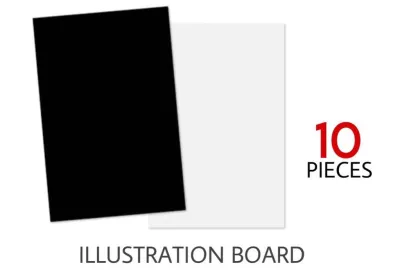
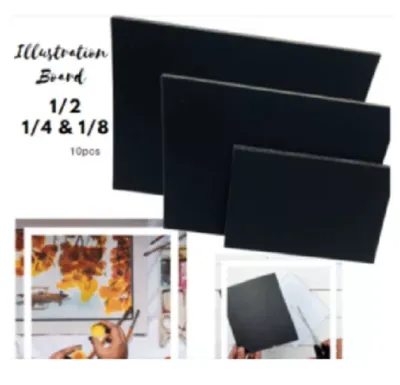
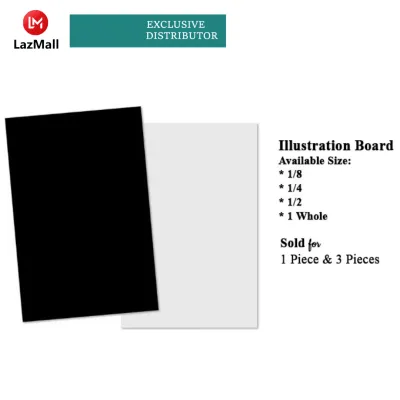
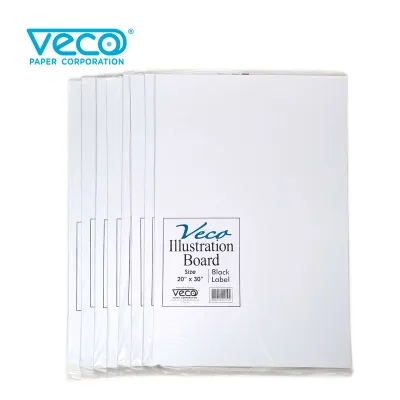
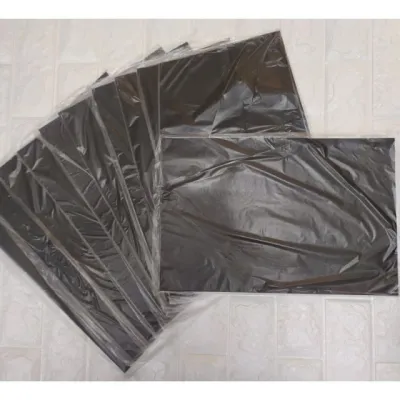
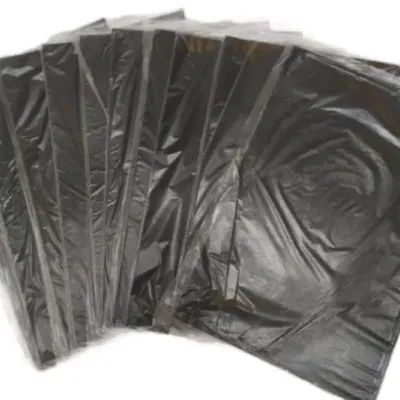
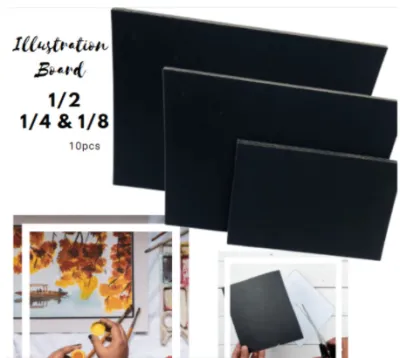
Prices are valid at publication and may change. Please refer to the product page for the latest price.
Structural Differences and Surface Quality
Solid cardboard illustration boards are manufactured by compressing multiple layers of paper pulp into a single, dense sheet. This process creates a highly uniform surface with a consistent texture, often referred to as the board’s “tooth.”
Because there are no hollow spaces inside the board, you can apply heavy pressure with pencils, pens, or carving tools without risking surface indentation. This structural density makes solid boards the standard choice for fine art, detailed drafting, and high-resolution mounting.
Corrugated cardboard illustration boards, on the other hand, consist of a wavy inner paper layer, known as fluting, glued between two flat outer liners. While this design provides excellent structural rigidity relative to its weight, it introduces a major challenge for detailed artwork.
The hollow spaces between the flutes mean the surface is not uniformly supported. If you apply pressure with a pen or pencil, the tool can sink into the gaps, leaving visible ridges or uneven lines that disrupt your work.
The choice of art medium plays a critical role in how these surfaces perform. Wet mediums, such as watercolor, acrylic paint, and heavy markers, introduce moisture that can quickly compromise cardboard.
On a corrugated board, this moisture often causes the thin outer liner to warp, swell, or separate from the internal fluting, making the underlying wavy pattern highly visible. Solid boards handle wet media much better because their dense layers absorb moisture more evenly, though they still require a sufficient thickness or “ply” to prevent overall bowing.
Factory-applied surface coatings further modify how these boards interact with your media. Many high-quality solid illustration boards feature specialized coatings, such as a cold-press surface with a slight texture for watercolor or a hot-press surface that is exceptionally smooth for ink and airbrush work.
Corrugated boards rarely feature these specialized artistic coatings, typically presenting a standard matte paper liner that is highly absorbent and prone to bleeding when used with markers or wet inks.
Durability, Weight, and Handling
Weight is a major practical consideration, especially for students and artists who must transport their work. Corrugated cardboard is exceptionally lightweight because its core is mostly empty space.

If you are carrying multiple large-scale boards on a daily commute through humid transit systems or busy streets, corrugated options significantly reduce physical strain. Solid boards are substantially heavier, which can also increase shipping fees when ordering materials online or require more robust mounting hardware when hanging finished pieces.
However, the tropical climate in the Philippines presents unique challenges for both materials. High humidity levels can soften the adhesives used in cardboard manufacturing, leading to structural weakness.
Solid boards are highly susceptible to gradual warping or sagging if they absorb atmospheric moisture over time, especially if they are stored upright. Corrugated boards resist bending along the direction of their internal flutes, but they can bow quickly if moisture weakens the outer liners, causing the entire structure to lose its rigidity.
Edge vulnerability is another critical point of comparison. The open edges of corrugated boards expose the internal fluting to the elements and physical impact.
During transit, a minor bump can easily crush the edges, flattening the flutes and leaving permanent, unsightly dents. Solid boards have solid, compressed edges that resist crushing much better, though they can still fray or split if dropped directly on a hard surface.
To extend the lifespan of your project, you must consider how the edges and surfaces are protected. Applying edge-sealing tape or framing the board can prevent moisture from penetrating the core of both solid and corrugated materials.
For long-term displays, laminating the surface or using protective spray sealants can shield the paper fibers from humidity and physical wear, though you must verify that the sealant is compatible with your art medium.
Use-Case Suitability: When to Choose Which
Solid cardboard illustration boards are highly suitable for projects that demand precision, detail, and a professional finish. If you are working with fine art mediums like colored pencils, fine-liner pens, gouache, or light watercolor washes, the smooth, dense surface of a solid board ensures your strokes remain consistent.
It is also a common choice for mounting high-resolution digital prints, photographs, or architectural layouts, as the flat surface prevents any underlying texture from distorting the mounted image.
Conversely, corrugated cardboard illustration boards excel in structural and temporary applications. If you need to construct a large-scale display board, a school project backdrop, or a three-dimensional architectural model, the lightweight rigidity of corrugated board is highly advantageous.
For high-volume projects where keeping costs under a specific ₱ limit is essential, corrugated boards offer a highly economical alternative. For temporary event signage or prototype packaging designs, corrugated board provides the necessary bulk and support at a fraction of the weight and cost.
There are scenarios where neither material is the suitable choice. If your project requires a material that is both exceptionally rigid and lightweight, but you cannot tolerate the surface ridges of corrugated board, foam core board is often a better alternative.
For museum-grade framing, archival preservation, or high-end art gallery exhibitions, standard cardboard illustration boards are unsuitable because they contain lignin, which turns acidic over time and yellows your artwork. In these cases, you should opt for specialized, acid-free mounting panels or 100% cotton rag boards.
Before making your final decision, verify the environmental conditions of your display area. If your project will be exposed to outdoor conditions, high-humidity environments, or direct sunlight, standard variants of both solid and corrugated boards will degrade rapidly.
You will need to look for specialized weather-resistant treatments, or consider alternative substrates like corrugated plastic or PVC foam boards that are completely impervious to moisture.
Buying Checklist and Verification Steps
When purchasing illustration boards from local stationery stores or online marketplaces, verifying the physical specifications is essential to ensure a successful project. First, check the standard dimensions and thickness, which is typically measured in ply or points.
A higher ply number indicates a thicker, more rigid solid board, which is crucial if you plan to apply wet media. Ensure the dimensions match your portfolio case or standard frame sizes to avoid the need for difficult, uneven manual trimming later.
Next, verify the surface coatings and chemical properties listed on the product label. If your artwork needs to last for several years without yellowing or deteriorating, look for terms like “acid-free,” “pH-neutral,” or “buffered.”
If these terms are missing, the board is likely made from standard wood pulp, which will degrade over time. Additionally, check whether the surface is designated as “cold press” (textured) or “hot press” (smooth) to match your specific drawing or painting style.
Before starting your main project, perform a small test stroke with your chosen medium on a scrap piece of the board. This allows you to observe the smoothness, bleed resistance, and drying speed firsthand, ensuring the paper and ink combination behaves as expected.
Inspecting the packaging and shipping conditions is particularly important when ordering online. Cardboard products are highly vulnerable to damage during transit.
Upon delivery, carefully inspect the corners and edges for any signs of crushing, bending, or moisture exposure. If the packaging is torn or damp, the boards inside may have already absorbed moisture, which can lead to immediate warping once they are unpacked.
Finally, confirm the exact material composition on the manufacturer’s specification sheet or product description. Generic marketing terms like “heavy-duty board,” “poster board,” or “mounting board” are often used interchangeably by sellers, but they can refer to completely different materials.
Reading the fine print ensures you do not accidentally purchase a corrugated board when your project requires the dense, smooth surface of a solid illustration board.
Frequently Asked Questions (FAQ)
Can I mount heavy canvas or mixed media on corrugated cardboard?
Mounting heavy canvas, thick layers of gesso, or dense mixed-media elements on corrugated cardboard is generally not recommended. The moisture from heavy adhesives or wet media can soften the outer paper liners, causing them to sag into the hollow spaces between the internal flutes.
This structural collapse leads to severe surface buckling and warping, which can ruin your artwork. For heavy or wet applications, you should use thick solid illustration boards (at least 14-ply), wooden panels, or specialized rigid mounting substrates that can support the weight without bending.
How do I store illustration boards to prevent warping?
To maintain the flatness and structural integrity of both solid and corrugated illustration boards, you must store them flat and horizontal. Placing them on a clean, dry shelf in a climate-controlled room away from direct sunlight, open windows, and moisture sources is highly effective.
Leaning large boards vertically against a wall causes gravity to pull down on the center, leading to permanent bowing and damaged corners. If horizontal shelf space is limited, store your boards inside rigid flat files or heavy-duty portfolio cases to keep them flat and protected from dust and humidity.
Community discussion
Share your experience or ask a question. Comments are reviewed before publication.