
Choosing the right coloring tools for a child’s school art kit involves balancing creative freedom with practical classroom realities. When comparing large-format wax crayons and thick markers, parents must look beyond simple color preference to consider how each medium behaves under daily classroom conditions. Thick wax crayons and large-format markers are both engineered to accommodate the developing grip of young learners, yet they deliver entirely different artistic results. While one excels at building rich textures and layered shades, the other provides instant, high-contrast color that stands out on poster boards. Deciding between them requires evaluating the specific paper types used in school, the ease of cleaning up accidental spills, and how well each tool survives the rough-and-tumble environment of a student’s backpack.
Core Differences in Application and Coverage
The fundamental difference between these two coloring tools lies in how they transfer color to a page. Large-format wax crayons rely on physical friction to deposit solid pigment and wax onto the fibers of the paper. This mechanical application means the user must exert downward pressure to achieve deep, saturated tones, which helps children develop hand strength and fine motor control. In contrast, large-format markers utilize a liquid, water-based ink system that flows through a polyester fiber tip. This capillary action requires almost no physical pressure to leave a vivid mark, making markers highly satisfying for quick coloring but offering less resistance for motor skill development.
The physical design of the tips and barrels also dictates the type of lines and coverage they produce. Big crayons typically feature a thick, tapered point that gradually wears down to a broad, rounded surface, allowing for both medium lines and wide, sweeping strokes. Large markers often feature a durable conical or chisel tip, which allows children to draw fine lines using the point or broad strokes by tilting the marker to use the side of the nib. This makes markers exceptionally efficient for filling in large, solid blocks of color quickly, whereas crayons require more time and repetitive strokes to cover the same surface area.
Products mentioned in this guide
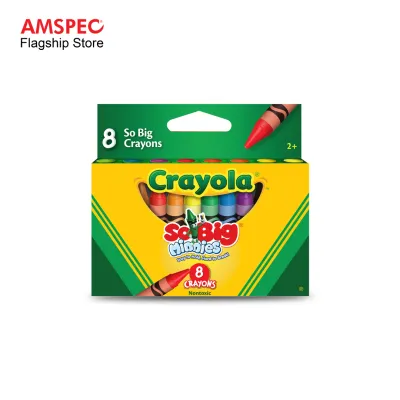
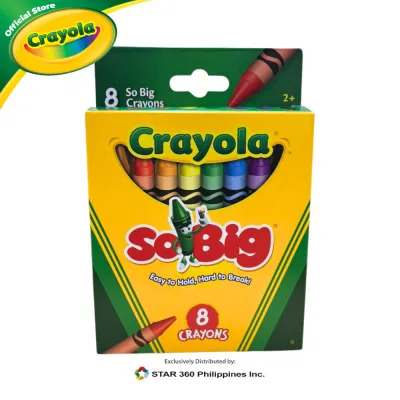
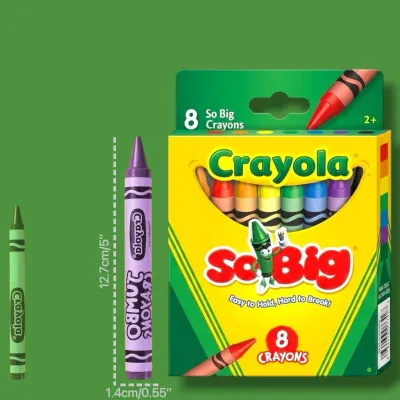
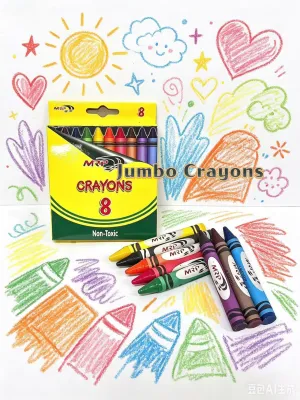
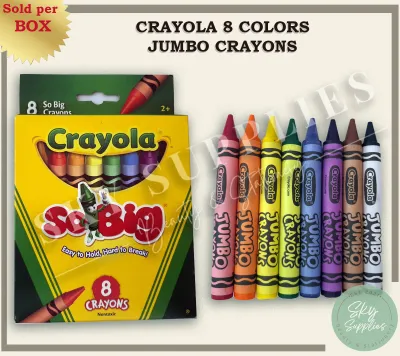
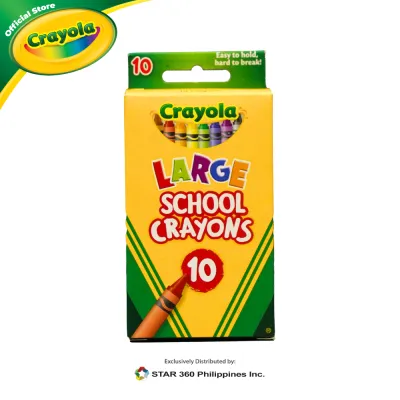
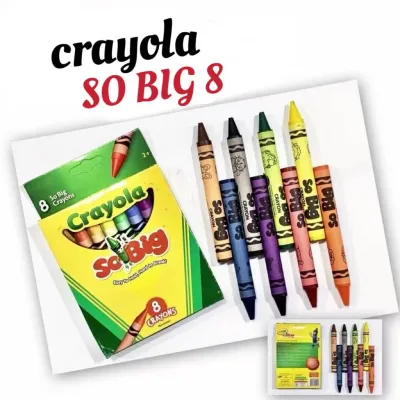
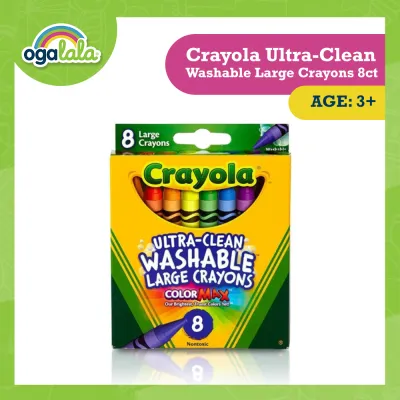
Prices are valid at publication and may change. Please refer to the product page for the latest price.
Before purchasing either option, it is essential to evaluate the paper medium your child will use in class. Wax crayons require paper with a distinct texture, often referred to as “tooth,” which acts like a file to scrape the wax off the crayon and hold it in place. Smooth, glossy papers will cause crayons to slide without leaving much color. Conversely, markers rely on the absorption properties of the paper. On thin, highly absorbent school papers—such as standard newsprint or local pad paper—the liquid ink from markers can easily spread beyond the intended lines or bleed through to the other side, whereas wax crayons will remain on the surface without any bleed-through.
Washability and Cleanup Considerations
Classroom art sessions can quickly lead to colorful messes on hands, desks, and school uniforms, making cleanup a primary concern for parents and teachers alike. When selecting these art supplies, it is crucial to inspect the product packaging to verify specific “washable” or “ultra-washable” designations. Not all coloring tools are formulated the same way; standard wax crayons and permanent markers can leave stubborn stains, whereas specially formulated washable varieties are designed to release from skin and most common fabrics during a standard wash cycle.

The physical residue left by each medium requires different cleaning approaches. Wax crayons leave a solid, water-resistant residue on surfaces. If a child accidentally colors on a classroom desk, cleaning the wax typically requires physical scraping or wiping with a damp cloth and a mild abrasive cleaner to break down the wax binder. Water-based markers, on the other hand, leave a liquid residue that dries into a water-soluble dye. While this dye can stain porous surfaces if left untreated, it generally dissolves quickly when exposed to soap and warm water, making immediate cleanup of hands and non-porous desks relatively straightforward.
Drying times and environmental conditions also play a significant role in the cleanup process, especially in warm, humid tropical climates. Marker ink remains wet for a few seconds after application, creating a brief window where hands, sleeves, and adjacent pages can easily smudge the artwork and transfer wet ink to other surfaces. Wax crayons do not require drying time and are dry to the touch instantly, which significantly reduces the risk of immediate smudging. However, in high-temperature environments, wax crayons can soften slightly, leading to a waxier residue that can transfer under heavy pressure if pages are pressed tightly together in a closed notebook.
Durability and Lifespan in a School Bag
A school bag is a demanding environment where art supplies are subjected to constant movement, drops, and heavy pressure. Large-format wax crayons are structurally solid, but their wax composition makes them susceptible to snapping if they are dropped onto hard classroom floors or subjected to excessive bending force during use. Although the “big” or “jumbo” varieties are significantly stronger than standard thin crayons, they can still break into smaller pieces. Fortunately, broken crayons remain fully functional, and children can continue to use the smaller fragments to color and blend.
Large-format markers present a different set of durability challenges, primarily centered around the preservation of their liquid ink. The structural plastic barrels of markers are highly impact-resistant and rarely break when dropped. However, their lifespan is entirely dependent on the integrity of their caps. If a child fails to click the cap securely back onto the marker, the water-based ink will evaporate, rendering the tool permanently unusable. In hot, humid climates, this drying process can occur even faster if markers are left uncapped during a long school day.
To maximize the lifespan of these supplies, parents should carefully examine the design of the packaging and the tools themselves. Look for markers that feature a distinct, audible “click” when the cap is secured, which helps children verify that the marker is sealed. Some marker sets also feature ventilated caps for safety, which must fit snugly to prevent air exposure. For crayons, look for sturdy storage boxes, plastic sleeves, or reusable cases that keep the crayons organized and cushioned against impacts inside a heavy backpack, preventing them from rolling loose and breaking against heavy textbooks.
Suitability for Common School Art Projects
Matching the unique physical properties of crayons and markers to specific classroom assignments ensures that children can complete their projects with minimal frustration. Wax crayons are uniquely suited for projects that explore texture and depth. For example, they are the ideal medium for leaf rubbings, where paper is placed over a textured object and rubbed to reveal the pattern beneath. Crayons also allow for sophisticated blending techniques, such as scratching away a top layer of dark crayon to reveal bright colors underneath (crayon etching), or layering multiple colors to create soft gradients and realistic shading in landscape drawings.
Large-format markers are the superior choice for projects that demand high visibility, clean lines, and bold graphic elements. When students are tasked with creating posters, science fair display boards, or hand-drawn maps, the vibrant, high-contrast ink of markers ensures that text and illustrations can be easily read from a distance. Markers are also excellent for quick color blocking, where large shapes need to be filled with solid, uniform color without the visible stroke lines often left by crayons.
However, both tools have distinct limitations that can hinder certain projects. Crayons struggle with fine details, precise outlining, and writing legible text, as the thick wax tip quickly rounds off with use. Markers, while excellent for bold lines, cannot be easily blended to create soft color transitions, and layering multiple strokes of wet ink can oversaturate standard school paper, causing it to pill, tear, or warp. Additionally, using markers on thin paper can result in severe bleed-through, potentially ruining the desk surface underneath or the work on the next page of a notebook.
Side-by-Side Comparison Matrix
To help simplify the decision-making process, the following matrix summarizes the observable characteristics, physical behaviors, and ideal applications for both large-format coloring tools.
| Feature | Large-Format Wax Crayons | Large-Format Markers |
|---|---|---|
| Application Style | Dry wax transfer via physical friction | Liquid water-based ink via capillary flow |
| Paper Compatibility | Best on textured paper; zero bleed-through | Best on thick paper; prone to bleed on thin sheets |
| Cleanup Method | Scraping or wiping wax; water-resistant | Washing with soap and water; water-soluble |
| Blending Ability | High; colors can be layered and smudged | Low; colors overlap to create darker tones |
| Durability Risk | Snapping or breaking from drops or pressure | Drying out if caps are left unsealed |
| Best Use Case | Texture rubbings, shading, and thin paper | Posters, bold outlines, and quick color fills |
How to Decide: A Practical Checklist for Parents
Choosing between these two essential art supplies ultimately comes down to matching the tool to your child’s current developmental stage, the specific school curriculum, and your tolerance for cleanup. Use the following guidelines to make the most practical choice for the upcoming school term.
Choose Big Crayons if:
- Your child is working on projects that involve texture rubbings, color blending, or soft shading.
- The school requires the use of thin paper, such as newsprint, sketchpads, or standard notebook paper, where ink bleed-through would be problematic.
- You want a tool that remains functional even if it breaks or is left uncovered for extended periods.
- The primary goal is to help your child build hand strength and fine motor control through physical coloring resistance.
Choose Big Markers if:
- The school projects involve creating posters, signs, bold outlines, or highly visible graphic displays.
- Your child prefers vibrant, high-contrast colors that require minimal physical effort to apply.
- The classroom uses thick drawing paper, cardstock, or poster board that can absorb liquid ink without warping or bleeding.
- Your child has developed the habit of consistently replacing caps to prevent the ink from drying out.
Verify first if:
- The teacher has provided a specific supply list detailing preferred brands, sizes, or medium types for upcoming art units.
- The classroom has specific rules regarding wet mediums, as some teachers prefer crayons to avoid ink stains on desks and clothing.
- The product packaging explicitly states "washable" or "non-toxic" to ensure compliance with school safety guidelines and easy cleanup at home.
Frequently Asked Questions (FAQ)
Are Crayola Big products safe for young children?
When purchasing art supplies for school use, parents should always verify safety standards by examining the physical product packaging. Look for recognized non-toxic certification seals, such as the AP (Approved Product) seal from the Art and Creative Materials Institute (ACMI), which indicates that the materials have been evaluated by a toxicologist and deemed safe for children. Do not assume that all art supplies are universally safe or non-toxic; always check the age recommendations on the label, as some products may contain small parts or formulations not suitable for children under three years old.
Do big markers bleed through standard school paper?
Whether a large-format marker bleeds through paper depends on several factors, including the volume of ink deposited, the pressure applied by the child, and the weight of the paper. Standard school papers, such as thin pad paper or newsprint, have low density and will easily absorb liquid ink, causing it to bleed through to the back of the sheet. To prevent ruined artwork or stained desks, it is highly recommended to test the marker on a scrap piece of the exact paper used in class before starting a final project, or to place a protective sheet of cardboard underneath the drawing page.
Community discussion
Share your experience or ask a question. Comments are reviewed before publication.