
Choosing the perfect paper for a craft project can transform a simple creative activity into a stunning, professional-grade masterpiece. Whether you are crafting delicate paper flowers, assembling intricate scrapbook layouts, or practicing traditional folding arts, the material you select dictates how your project behaves under your hands. Two of the most popular yet distinct specialty papers available in local stationery shops and online marketplaces are crepe paper and Japanese paper (often referred to generally as washi). While both offer incredible aesthetic appeal, they possess fundamentally different physical properties, structural behaviors, and handling requirements. Understanding these differences ensures your finished piece remains durable, vibrant, and structurally sound, especially when working in warm, humid tropical environments.
Understanding the Core Structural Differences
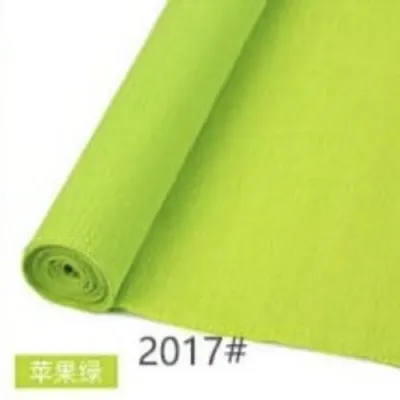
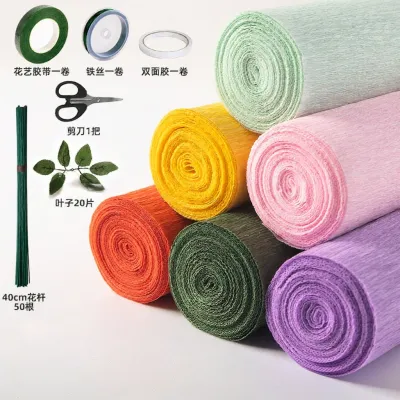
To make an informed choice, you must first examine the physical structure of these two materials. Crepe paper is instantly recognizable by its crinkled, puckered texture, which is created during the manufacturing process through a mechanical treatment called creping. This process gathers the paper fibers into tiny, uniform folds, giving the sheet its signature elasticity and stretch. When you pull crepe paper, these micro-folds expand, allowing the material to shape and hold three-dimensional curves. The degree of stretch, often referred to as the stretch percentage on product labels, can range from a subtle 20 percent to an extreme 150 percent or more, depending on whether it is lightweight florist crepe or heavy double-sided crepe.
In contrast, Japanese paper is defined by its long, visible organic fibers and a smooth, woven-like texture. Traditional Japanese papers are crafted using fibers from plants such as kozo (mulberry), mitsumata, or gampi, though modern commercial varieties may blend these with standard wood pulp to balance cost and availability. When you hold a sheet of Japanese paper up to the light, you can often see the beautiful, irregular web of these long fibers running through the sheet. This fibrous weave gives the paper an incredibly high tensile strength in multiple directions, preventing it from tearing easily even when it is exceptionally thin and translucent.
Products mentioned in this guide
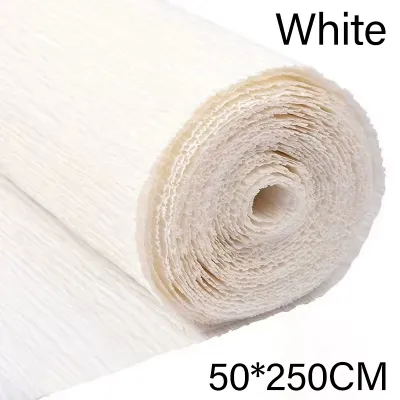
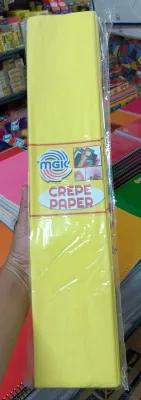
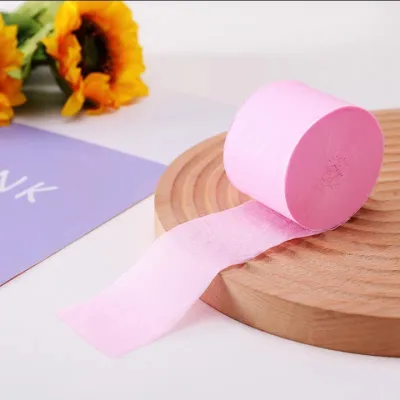
Prices are valid at publication and may change. Please refer to the product page for the latest price.
Before starting your project, it is highly recommended to check the weight, thickness, and opacity of your paper by reviewing the product packaging or manufacturer specifications. Crepe paper weight is typically measured in grams per square meter (gsm), with lighter varieties around 40 gsm to 60 gsm, and heavy florist-grade options reaching 140 gsm to 180 gsm. Japanese paper also spans a wide range of weights, from ultra-thin tissue-like sheets of 10 gsm to heavier, textured cardstocks. Checking these specifications helps you gauge how much light will pass through the material and how much physical weight the paper can support without sagging.
Matching Paper Properties to Craft Techniques
The physical differences between crepe and Japanese paper directly influence how they respond to various crafting techniques. If your project involves floral crafting, sculpting, or creating organic, volumetric shapes, crepe paper is generally the ideal choice. Its unique elasticity allows you to cup, curl, and stretch individual petals or leaves, mimicking the natural curves of real flora. The paper retains its stretched shape beautifully, providing structural support to three-dimensional objects without requiring internal wire frames for every single element.

For projects that require crisp folds, precise scoring, and structural integrity, Japanese paper is the superior option. Traditional origami, geometric folding, and bookbinding rely on the paper’s ability to hold a sharp crease without cracking along the fold lines. Because Japanese paper contains long, interlocking plant fibers, it can be folded and unfolded repeatedly without losing its strength or splitting at the seams. Crepe paper, with its built-in crinkles, does not hold a sharp, clean crease and will naturally resist flat, geometric folding.
When working with wet media such as watercolors, liquid dyes, or calligraphy inks, the absorption and bleeding behaviors of each paper type must be carefully managed. Crepe paper is highly absorbent, but because many varieties are dyed with water-soluble colorants, applying wet media can cause the colors to bleed, run, or transfer onto your hands and work surfaces. Japanese paper, particularly varieties treated with a sizing agent (a starch or glue-like substance that reduces absorbency), handles wet media beautifully, allowing inks and paints to sit on the surface or bleed in a controlled, artistic manner. Unsized Japanese paper, however, will absorb liquid rapidly, causing inks to feather outward.
Because of these variable behaviors, you should always test a small scrap of your chosen paper before committing to your main project piece. Observe how the paper reacts when you stretch it, fold it, or apply a drop of water or ink. Look closely for any signs of unexpected fraying, tearing, or color transfer. This simple trial step prevents ruined projects and helps you adjust your technique or tool selection before working on your final piece.
Handling, Adhesives, and Project Longevity
Assembling your paper craft requires choosing the right adhesive to match the paper’s porosity and texture. Crepe paper’s uneven, crinkled surface means that standard glue sticks may not provide enough contact area for a secure bond. Liquid craft glues, hot glue, or high-tack double-sided tapes are generally more effective because they can penetrate the crevices of the crepe texture. However, because crepe paper is highly sensitive to moisture, applying too much liquid glue can cause the paper to stretch prematurely, warp, or lose its crinkled texture.
Japanese paper, with its fibrous and porous nature, bonds exceptionally well with lightweight adhesives. Traditional starch pastes, dilute white PVA glues, and acid-free glue sticks are excellent choices because they seep into the fibrous weave to create a strong, permanent bond without adding excessive weight or stiffness. When using liquid adhesives on thin Japanese paper, apply the glue sparingly with a brush to prevent the adhesive from seeping through to the front of the sheet, which can leave shiny spots or cause the paper to stick to your work surface.
In tropical climates like the Philippines, where humidity levels are consistently high, moisture sensitivity is a critical factor in project longevity. High humidity can cause crepe paper to lose its tension and sag over time, as the fibers absorb moisture from the air and relax. It can also cause water-soluble dyes in cheaper crepe papers to bleed onto adjacent surfaces. Japanese paper generally handles humidity well due to its breathable, fibrous structure, but excessive moisture can still cause thin sheets to cockle or warp if they are glued tightly to a rigid backing.
To ensure your creations stand the test of time, look for specific product labels or manufacturer specifications regarding archival quality, acid-free composition, and lightfastness. Acid-free papers will not yellow or become brittle over time, which is essential for scrapbooks, memory boxes, and framed art. Additionally, because both crepe and Japanese papers can fade when exposed to sunlight, checking for lightfastness ratings or applying a UV-resistant protective spray can help preserve the vibrant colors of your finished craft.
Decision Framework: Selecting the Right Paper
To finalize your material choice, consider this straightforward, condition-based decision framework tailored to your specific project needs:
Choose crepe paper if:
- Your project requires three-dimensional shaping, stretching, or cupping (such as realistic paper flowers, ruffles, or textured garlands).
- You want a heavily textured, matte, or crinkled finish that adds depth and organic volume to your work.
- The project does not require sharp, geometric folds or precise, flat creases.
Choose Japanese paper if:
- Your project demands high tensile strength, durability, and resistance to tearing during intricate folding or wrapping.
- You are practicing origami, bookbinding, scrapbooking, or creating delicate lanterns where light needs to filter softly through a fibrous weave.
- You prefer a smooth, elegant, and traditional aesthetic with visible organic fibers.
Before purchasing your materials, verify if your project involves mixed media or heavy wet applications. If you plan to paint, dye, or wash the paper with water, ensure you select a sized Japanese paper or a water-resistant, heavy-grade crepe paper. Always check the manufacturer’s specifications for archival and acid-free properties if your project is intended to be kept as a long-term keepsake or displayed in bright, humid rooms.
Frequently Asked Questions (FAQ)
Can I combine crepe paper and Japanese paper in a single project?
Yes, you can combine both papers to create beautiful contrast and texture in a single craft project, but you must plan for their differing physical properties. Crepe paper’s high stretch and moisture sensitivity contrast sharply with the stable, fibrous nature of Japanese paper. When gluing them together, the differing absorption rates can cause the joint to warp or puck as the adhesive dries. To prevent this, use a low-moisture adhesive like double-sided tape or apply liquid glue very sparingly, and always test the bond on scrap pieces first to ensure the structural balance remains intact.
How should I store leftover specialty papers to prevent damage?
Proper storage is essential to preserve the texture, color, and usability of your leftover specialty papers, especially in warm, humid environments. Store your papers in a cool, dry place away from direct sunlight, which can rapidly fade the dyes and degrade the fibers. Keep crepe paper stored flat or loosely rolled in sealed plastic bins or archival boxes to prevent it from absorbing atmospheric moisture, which can cause it to lose its stretch and crinkle. Japanese paper should be stored flat between sheets of acid-free glassine or cardstock to prevent permanent creasing, curling, or tearing of the delicate edges.
Community discussion
Share your experience or ask a question. Comments are reviewed before publication.