
Finding the perfect balance between a charming, eye-catching aesthetic and reliable writing performance is a common challenge for journaling enthusiasts. A pen that looks delightful on your desk can quickly become a source of frustration if it skips, smudges, or feels uncomfortable during a long writing session. Bullet journaling requires a tool that can handle rapid daily logging, intricate habit trackers, and creative weekly spreads without bleeding through the pages. By understanding how to evaluate both the visual design and the underlying technical specifications of decorative writing instruments, you can curate a collection of cute ballpens that are as functional as they are beautiful.
Functional Traits to Look for in Journaling Ballpens
While a whimsical topper or a pastel barrel might draw you in, the physical construction of a pen determines how often you will actually reach for it. Writing comfort begins with grip ergonomics and overall weight distribution. Many decorative pens feature non-standard shapes, such as molded silicone characters, faceted plastic barrels, or heavy metal accents. For extended writing sessions, a pen with a slightly wider, soft-touch grip area helps reduce finger fatigue. The weight distribution should ideally sit lower in the barrel, closer to the writing tip. Top-heavy pens—especially those with large, solid decorative toppers—can pull the pen backward, forcing your hand to grip harder to maintain control and leading to cramping over time.
Ink formulation is another critical factor that directly impacts your journaling experience. Ballpoint pens typically use oil-based ink, which is highly water-resistant and dries almost instantly, making it excellent for quick notes. However, many cute pens utilize gel ink or hybrid ink formulations to achieve vibrant colors and a smoother glide. Gel inks offer rich pigmentation but require longer drying times, which can be problematic in humid tropical climates where moisture in the air slows down evaporation. When selecting a pen, look for hybrid ink options that combine the smoothness of gel with the fast-drying properties of traditional ballpoint ink, and always perform a quick smudge test on a scrap piece of paper before committing to a full page layout.
Products mentioned in this guide
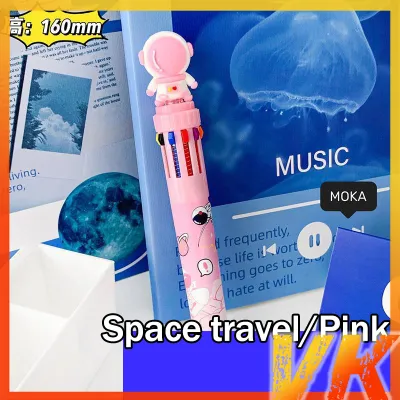
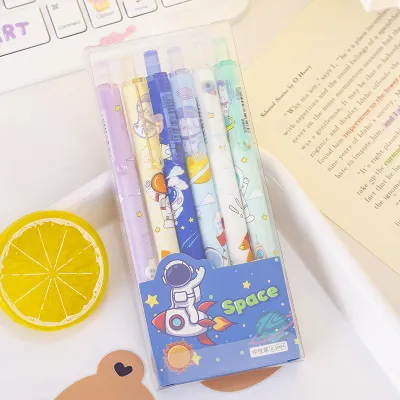
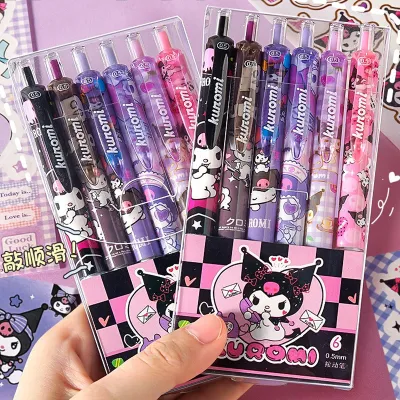
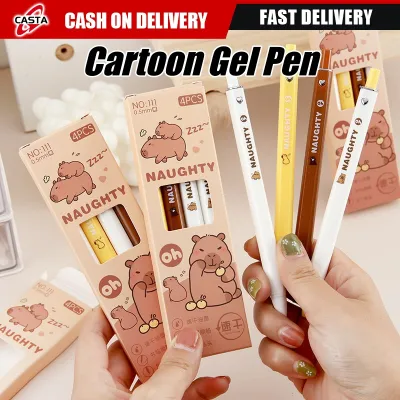
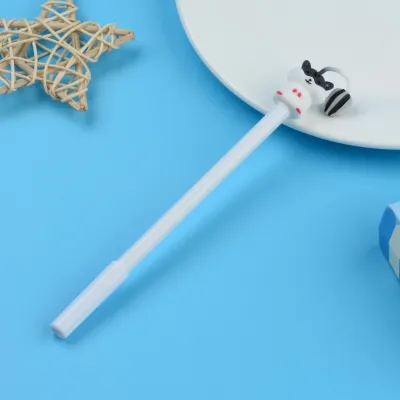
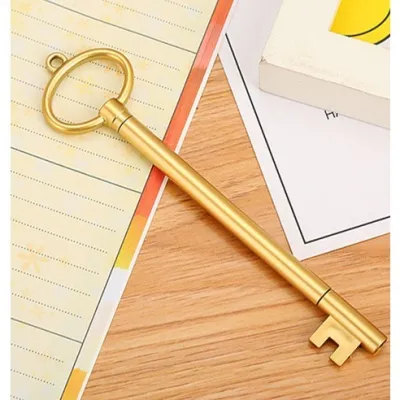
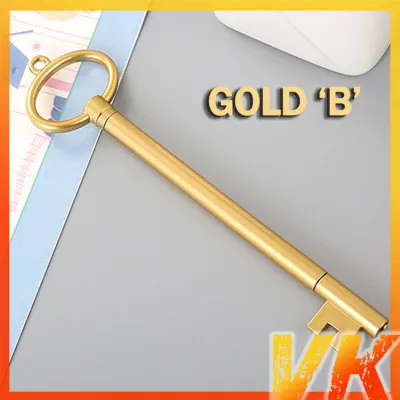
Prices are valid at publication and may change. Please refer to the product page for the latest price.
The tip size of your pen also dictates how neat your journal entries will look, particularly when working within tight grid spaces. Standard bullet journals often feature a 5mm dot grid, which requires precise, clean lines to maintain legibility. A medium tip (0.7mm to 1.0mm) is excellent for bold headers, decorative borders, and coloring in small icons, but it can make small handwriting look cluttered. For detailed daily logging, habit tracking, and writing in narrow margins, fine (0.5mm) or ultra-fine (0.38mm) tips are generally more suitable. These smaller tips deposit less ink onto the page, which not only improves legibility but also significantly reduces drying times and the risk of ink bleeding through the paper.
Popular Design Themes and Their Practical Trade-offs
Cute ballpens come in a vast array of styles, each bringing its own visual charm to your stationery setup, but these designs often come with specific usability trade-offs. Character and mascot pens, featuring beloved animated figures or molded animal shapes, are incredibly popular for their playful appeal. However, these pens frequently feature bulky, top-heavy silicone or plastic toppers that alter the center of gravity. If you plan to use a character pen for long-form journaling, look for designs where the mascot is printed directly onto the barrel rather than attached as a three-dimensional topper, or ensure the topper is lightweight and removable to preserve the pen’s balance.

Vintage and retro aesthetics offer a more sophisticated take on cute stationery, often utilizing muted color palettes, classic push-button mechanisms, and textured grips. These pens frequently mimic the look of classic fountain pens or mid-century office supplies. When evaluating retro designs, pay close attention to the durability of the pocket clip and the click mechanism. Metal clips should have sufficient tension to secure the pen to your journal cover without bending out of shape, and the retraction mechanism should operate smoothly without catching. Additionally, check if the barrel material is prone to scratching, as matte coatings can sometimes wear away with frequent use in a pencil case.
Minimalist and pastel styles focus on clean lines, soft color gradients, and matte finishes that create a calming visual aesthetic. One of the most practical variations of this theme is the semi-transparent or clear demonstrator barrel, which allows you to monitor the remaining ink level at a glance. This feature is incredibly useful for bullet journalers who want to avoid running out of ink in the middle of a monthly setup. When choosing minimalist pens, look for those with rubberized or textured grip sections, as completely smooth plastic barrels can become slippery if your hands get warm or sweaty during a long writing session in warm weather.
Novelty and 3D toppers, such as spinning charms, liquid-filled glitter tubes, or miniature sculpted objects, add a highly interactive and playful element to your desk. While visually entertaining, these pens present distinct storage and portability challenges. Bulky toppers often prevent the pen from fitting into standard elastic pen loops on journal covers or sliding easily into compact pencil pouches. The delicate parts of 3D toppers are also more susceptible to snapping off when carried in a bag. If you love novelty designs, consider keeping them as dedicated desk pens for home use, and opt for streamlined, clip-on designs for your on-the-go journaling kit.
Matching Pen Specifications to Your Journal Paper
The interaction between your pen’s ink and your journal’s paper is the ultimate deciding factor in how clean your pages will look. Standard journal paper weights typically range from 80 gsm (grams per square meter) to 160 gsm. Lighter paper, often found in pocket notebooks or mass-market planners, is highly susceptible to ghosting—where the writing is visible on the reverse side of the page—and bleed-through, where the ink actually penetrates the paper fibers. If you prefer lightweight paper, stick to traditional oil-based ballpoint inks and fine tip sizes, as they deposit less liquid. For thicker 120 gsm to 160 gsm paper, you can safely use wetter gel inks and broader tips without worrying about ruining the next page.
Paper texture, or “tooth,” and surface coatings also play a significant role in how a pen performs. Smooth, coated papers feel wonderful to write on but slow down ink absorption, which can lead to severe smudging if you close your journal too quickly or run your hand across the page. Uncoated, textured papers absorb ink much faster, reducing smudge risks, but they can cause wetter inks to “feather,” creating fuzzy, distorted lines. Before starting a new journal, always dedicate the very last page as a pen test page. Write a few words with each of your cute pens, draw a solid block of ink to check for bleed-through, and wait ten seconds before rubbing the ink to observe the exact drying time on that specific paper stock.
Understanding manufacturer labels and ink properties is essential for preserving your journal entries over time. If you are creating a keepsake journal or a long-term archive, look for pens labeled as using archival-quality, pigment-based, or acid-free ink. These formulations are designed to resist fading from light exposure and will not degrade the paper fibers over decades. Conversely, if you value flexibility and the ability to correct mistakes easily, you might consider erasable gel pens. Keep in mind that erasable inks rely on frictional heat to become invisible; leaving your journal in a hot car or under direct tropical sunlight can cause your writing to disappear, though it can sometimes be recovered by placing the notebook in a freezer.
A Verification Checklist for Buying Pens Online
Purchasing cute stationery from online marketplaces is highly convenient, but it requires a careful verification process to ensure you receive high-quality writing tools rather than cheap, non-functional imitations. Start by thoroughly analyzing user reviews, paying close attention to photos and videos uploaded by actual buyers. Look specifically for feedback regarding ink consistency, skipping, or leaking during transit. If multiple reviews mention that the pens arrived dried out or that the decorative toppers broke off easily, it is a strong indicator of poor manufacturing quality or inadequate packaging.
To avoid counterfeit products or extremely low-grade plastics, prioritize official brand stores or well-known, authorized stationery retailers on your preferred e-commerce platform. Authentic brands generally provide detailed product specifications, including the exact tip size, ink type, and refill compatibility. Be cautious of listings that use generic terms without specifying a brand, as these are often mass-produced novelty items that prioritize appearance over writing utility. Additionally, check if the seller offers multi-pack options or sets, which often provide better value than buying individual pens.
Before finalizing your purchase, always verify the availability and cost of compatible refills. A beautifully designed pen barrel loses its value if you cannot replace the ink once it runs out. Check the product description to see if the pen accepts standard international refills, or if it requires a proprietary cartridge shape. Many cute Japanese and Korean stationery brands use standard refill sizes that are widely available online. Investing in a slightly more expensive, refillable pen body is far more sustainable and cost-effective in the long run than repeatedly buying disposable novelty pens.
Finally, calculate the total cost of your purchase, including shipping fees and any potential taxes. In the Philippines, shipping costs can vary significantly depending on whether the seller is local or overseas. When ordering delicate novelty pens with fragile 3D toppers, look for sellers who use bubble wrap or sturdy cardboard boxes for packaging rather than simple plastic mailers. A low base price of ₱30 per pen can quickly become less appealing if high shipping fees are added, so consolidating your purchases from a single reputable seller is often the most economical approach to building your journaling collection.
Frequently Asked Questions (FAQ)
Can I use standard ballpen refills in cute novelty pens?
Whether you can use standard refills depends entirely on the internal construction of the pen barrel. Many cute novelty pens are designed around standard refill formats, such as the common D1 refill for slim pens or standard gel pen refills (often referred to as the Pilot-style or Parker-style refills). To verify compatibility, carefully unscrew your novelty pen and remove the original refill. Measure its total length, the diameter of the tube, and the shape of the tip assembly, including any plastic wings or springs. You can then compare these measurements against detailed refill specifications provided by online stationery retailers to find a matching third-party replacement that fits perfectly.
How do I prevent smudging when using ballpens in a bullet journal?
Preventing smudging involves a combination of writing technique and simple tools. First, always perform a drying time test on a scrap piece of paper to understand how many seconds your specific pen needs to dry completely. If you are left-handed or write quickly, consider placing a clean piece of scrap paper or a dedicated blotting sheet under your writing hand to act as a barrier, preventing your palm from dragging wet ink across the page. Additionally, adjusting your writing angle to a more upright position can help control the flow of ink, preventing the pen from depositing excess pools of liquid that take longer to dry in humid environments.
Community discussion
Share your experience or ask a question. Comments are reviewed before publication.