
When selecting a binders notebook, the mechanism you choose determines how comfortably you can write, how easily you can reorganize your thoughts, and how much paper you can carry. The ideal choice depends on your daily environment, writing style, and organizational habits.
O-ring binders are the traditional standard, best suited for basic, low-capacity document filing where pages are rarely edited. D-ring binders offer superior page-laying ability and a much higher storage capacity, making them excellent for archiving thick volumes of notes. Discbound notebooks provide the ultimate level of customization, allowing you to fold the cover back completely, swap pages instantly without opening heavy metal rings, and customize your layout on the go.
Each system presents distinct trade-offs in terms of desk space, paper compatibility, and long-term durability. By understanding how these mechanisms interact with your writing hand and your workspace, you can select a system that keeps your notes secure and your daily workflow seamless.
Products mentioned in this guide
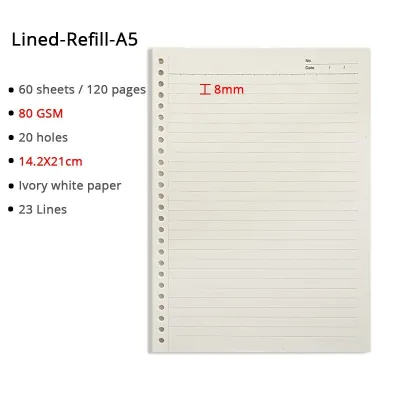
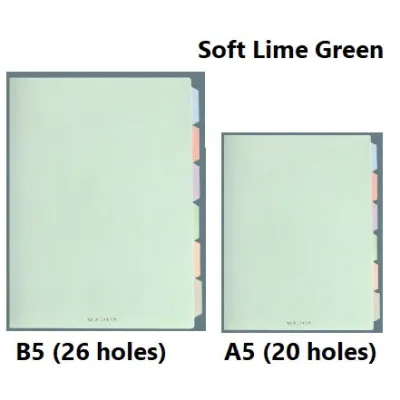
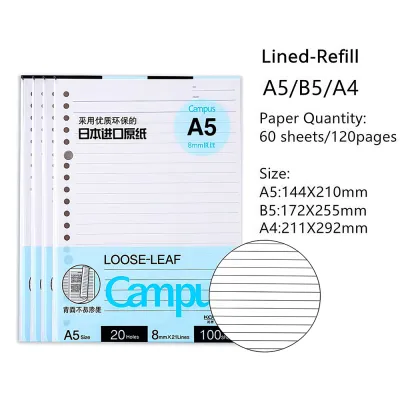
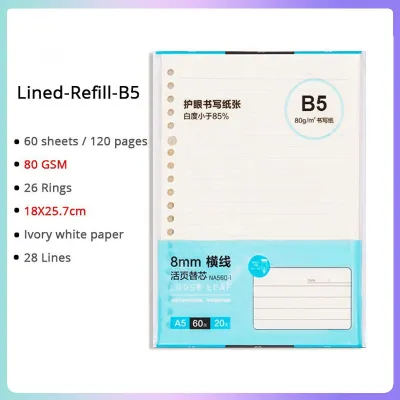
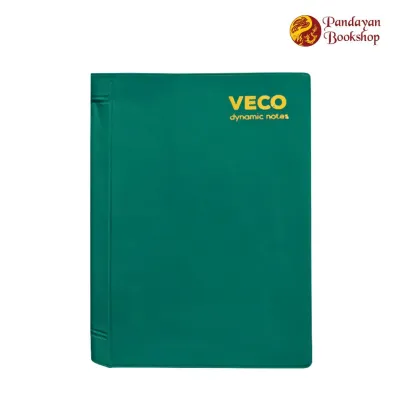
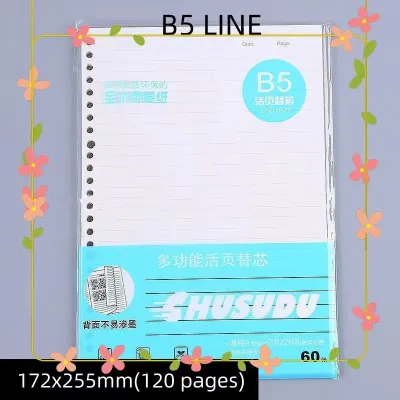
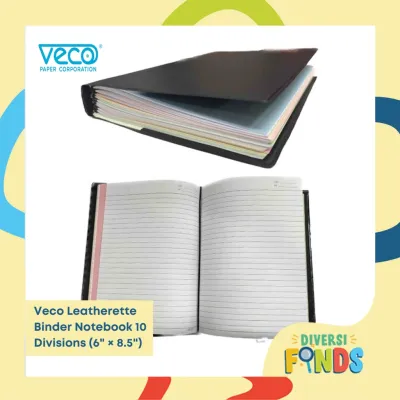
Prices are valid at publication and may change. Please refer to the product page for the latest price.
How O-Ring, D-Ring, and Discbound Mechanisms Work
To choose the right binders notebook, you must first understand the physical engineering behind each binding type. These structural differences dictate how pages move, how the covers sit on your desk, and how much wear and tear the paper edges experience over time.
O-ring binders utilize classic circular metal or plastic rings that are typically anchored directly to the spine of the notebook, or occasionally to the inside back cover. When you open the rings to insert paper, the two curved halves pull apart, creating a gap. When closed, they form a continuous circle. As you flip through your notes, the pages must travel along the circular curve of the rings. This circular path forces the paper to bunch up toward the center of the ring, which naturally limits the usable space inside the binder and causes the pages to ride upward when the book is closed.
D-ring binders feature a specialized ring shaped like the capital letter “D.” This mechanism is almost always mounted on the inside back cover of the notebook rather than the spine. The flat side of the “D” sits perpendicular to the back cover, while the curved side faces the front. This design allows pages to slide smoothly along the curve when you flip them, but they rest flat against the straight edge of the “D” when the notebook is closed. Because the paper stacks vertically on a flat plane, the pages do not bunch up or pinch near the spine, maximizing the internal volume of the binder.
Discbound systems abandon traditional continuous rings and hinges entirely. Instead, they rely on a series of individual, circular discs made of plastic or metal. These discs feature a raised outer rim that slots into specialized, mushroom-shaped punches along the edge of the paper. There is no central spine holding the book together; the covers and the pages are held in place solely by the tension of the paper gripping the individual discs. To add or remove pages, you simply pull the paper away from the discs, sliding the mushroom-shaped stems out from the rims, and press new pages down onto the discs to lock them back in place.
Writing Comfort and Ergonomics: Hand Placement and Lay-Flat Ability
The comfort of your writing experience is heavily influenced by the height and position of the binding mechanism. If you write for hours at a time, a bulky binding can obstruct your wrist, disrupt your hand posture, and make writing near the inner margins highly uncomfortable.

Hand interference is a common frustration for users of traditional ring binders. Because O-rings are mounted along the center spine, they create a high, rigid metal barrier directly in the middle of the notebook. If you are right-handed, writing on the left-hand page forces your hand to bump against the hard rings as you approach the margin. If you are left-handed, you face this exact obstacle on every right-hand page. Because the rings are tall and circular, resting your wrist on top of them is painful, often forcing you to remove pages entirely just to write comfortable, legible notes.
D-ring binders mitigate this wrist fatigue through their offset mounting. Because the rings are anchored to the back cover rather than the spine, the physical barrier is pushed away from the active writing area when the notebook is fully open. The pages lie flat on the desk surface, allowing your hand to glide across the paper with minimal interference from the metal prongs. This offset design is particularly beneficial for left-handed writers, as it reduces the likelihood of your wrist colliding with the binding hardware while working on the right side of a page spread.
Lay-flat performance is another area where these systems diverge. O-ring binders struggle to lie completely flat because the circular shape of the rings naturally pulls the paper upward and inward. This creates a curved slope near the gutter, forcing you to hold the pages down with one hand while writing with the other. In contrast, D-ring binders allow the paper stack to lie perfectly flat against the back cover, creating a stable, level writing surface. Discbound notebooks also excel at lying flat; because the paper rotates freely around the outer edges of the individual discs, there is no central tension pulling the pages upward.
For those working in tight spaces, the ability to fold a notebook back on itself is invaluable. Traditional O-ring and D-ring binders are rigid structures that can only open to a 180-degree angle. They require a large footprint on your desk, which can be highly inconvenient in crowded lecture halls, narrow office cubicles, or during a busy commute. Discbound notebooks offer a distinct advantage here: they can fold a full 360 degrees, allowing you to fold the front cover all the way behind the back cover. This halves the desk space required and makes it simple to take notes while holding the notebook in your lap or standing up.
In tropical climates with high humidity, such as the Philippines, paper can absorb ambient moisture, making it softer and more prone to sagging. When paper loses its crispness, writing on the curved slope of an O-ring binder becomes even more difficult as the damp pages drape awkwardly over the rings. The flat writing plane of a D-ring or the compact, folded footprint of a discbound notebook provides much-needed structural support for softer, humidified paper, keeping your writing surface firm and reliable.
Page Capacity, Durability, and Reorganization
Managing your notes effectively requires a balance between how much paper your notebook can hold, how easily you can rearrange your sections, and how well the pages withstand daily wear and tear.
Maximum capacity is determined by the physical size of your binding hardware. For O-ring and D-ring binders, capacity is measured by the internal diameter of the rings, which typically ranges from 0.5 inches to 3 inches or more. However, a D-ring binder will always hold more paper than an O-ring binder of the exact same size. Because the flat side of the D-ring allows pages to stack vertically without overlapping, you can utilize nearly 100 percent of the ring’s height. An O-ring binder loses roughly 20 percent of its usable capacity because the pages must slide around a circular path, causing them to jam if the binder is packed too tightly.
Discbound notebooks measure capacity by the diameter of the discs, which generally range from 0.5 inches to 2 inches. While you can swap out smaller discs for larger ones to expand your notebook, discbound systems have a lower maximum capacity limit than heavy-duty D-ring binders. Attempting to use discs larger than 2 inches can make the notebook unwieldy, causing the pages to sag and making it difficult to turn sheets smoothly without them catching on the disc rims.
The process of adding, removing, and reorganizing pages highlights the functional differences between these systems. Ring binders require you to manually snap the metal rings open, slide the pages off the prongs, insert your new sheets, and snap the rings shut. This mechanical process is secure, but it can be noisy, slow, and disruptive in a quiet classroom or office. Discbound notebooks offer a completely tool-free, silent reorganization process. You can pull a page out from any section of the notebook with a gentle tug and press it back into a different section in seconds, making it incredibly easy to keep dynamic, evolving projects organized.
However, this ease of reorganization comes with a trade-off in page security and durability. Because ring binders physically lock the paper inside closed metal loops, it is virtually impossible for pages to fall out accidentally, even if the binder is dropped or crammed into a stuffed backpack. The only risk is the paper tearing at the punched holes over time, which can be repaired with standard adhesive reinforcement rings.
Discbound pages, on the other hand, rely entirely on the integrity of the paper’s mushroom-shaped punch to grip the discs. If you frequently remove and reinsert the same sheet of paper, the delicate paper fibers around the punch will eventually wear down, lose their grip, and slip off the discs. Furthermore, in highly humid conditions, the paper can soften, reducing the friction required to hold the pages securely. If a discbound notebook is dropped or pulled roughly from a bag, individual pages can easily pop off the discs and become scattered or damaged.
Paper Sourcing and Punching Requirements
Before committing to a binder system, you must consider the ongoing effort and cost required to source refill paper and prepare your own documents for insertion.
Standard hole punches are inexpensive, widely available, and highly standardized. O-ring and D-ring binders use standard 2-hole, 3-hole, or 4-hole configurations. You can purchase pre-punched loose-leaf paper at almost any local stationery store in the Philippines, from small neighborhood shops to major retail chains. If you need to insert handouts, printed articles, or syllabi, a cheap desktop hole punch is all you need to prepare your documents in seconds, making ring binders highly economical for students and office workers alike.
Discbound systems require a specialized, proprietary mushroom-hole punch to prepare custom paper. These punches are significantly more expensive than standard office hole punches, with prices often ranging from ₱300 to over ₱1,500 depending on the brand and sheet capacity. If you plan to print your own planner templates, dot-grid sheets, or specialized grid paper, investing in a high-quality discbound punch is an absolute necessity. Without it, you will be entirely dependent on pre-punched refill packs, which can limit your paper choices and increase your long-term maintenance costs.
Refill availability is another crucial factor to verify before making your decision. While standard loose-leaf paper for ring binders is ubiquitous, discbound refills can be more difficult to find on short notice. You will typically need to source discbound paper and accessories from specialized stationery boutiques or online marketplaces. When purchasing refills online, you must carefully verify the spacing and number of holes, as different discbound brands sometimes use slightly different disc spacing or sheet sizes (such as A5, B5, or US Letter), which may not be cross-compatible with your existing covers and discs.
If you prefer high-quality, fountain-pen-friendly paper, you must also consider how different paper weights interact with each system. Standard 70 GSM copy paper works perfectly in ring binders, but it is often too thin and fragile for discbound systems, where the daily friction of turning pages can easily tear the delicate mushroom punches. For a reliable discbound experience, it is best to use thicker paper, ideally 100 GSM or higher, which provides the structural stiffness needed to grip the discs securely and resist tearing during frequent page swaps.
Quick Comparison: O-Ring vs. D-Ring vs. Discbound
The following table summarizes the key practical differences between these three binder notebook systems to help you quickly evaluate which mechanism aligns with your daily writing needs.
| Feature | O-Ring Binder | D-Ring Binder | Discbound Notebook |
|---|---|---|---|
| Lay-Flat Ability | Poor; pages curve near the spine and bounce upward | Excellent; pages stack flat against the back cover | Excellent; pages lie completely flat on any surface |
| Page Capacity Potential | Moderate; limited by circular bunching | High; maximizes vertical space on the flat ring edge | Moderate; limited by disc diameter and paper weight |
| Page Editing Ease | Moderate; requires snapping metal rings open/closed | Moderate; requires opening and closing metal rings | Excellent; tool-free, silent pull-out and press-in |
| Punch Requirement | Standard 2, 3, or 4-hole punch (widely available) | Standard 2, 3, or 4-hole punch (widely available) | Specialized, proprietary mushroom-hole punch |
| Best Use Case | Low-cost archiving, general filing, light note-taking | Heavy-duty storage, thick reference manuals, archiving | Highly customized planners, creative journals, active note-taking |
How to Choose the Right Binder for Your Workflow
To make your final decision, evaluate your daily writing habits, your physical workspace, and how often you need to restructure your notes. Choosing the wrong system can lead to cluttered desks, torn pages, or a writing experience that feels more like a chore than a productive habit.
Choose an O-Ring Binder If:
- You need a simple, budget-friendly solution for storing documents that you rarely need to edit or rearrange.
- You primarily use standard, pre-punched loose-leaf paper that you can buy quickly at any local stationery shop.
- Your notebook will mostly sit on a shelf or desk for reference, rather than being carried around and written in constantly throughout the day.
Choose a D-Ring Binder If:
- You are a heavy note-taker, student, or professional who needs to compile hundreds of pages of reference materials, handouts, and notes into a single, secure volume.
- You prefer a traditional, highly secure binding that guarantees your pages will never slip out or get lost, even when your bag is tossed around during a busy commute.
- You want a flat, stable writing surface but still require the massive storage capacity that only large metal rings can provide.
Choose a Discbound Notebook If:
- You value maximum customization and want to mix different paper types—such as blank, ruled, grid, and planner templates—within a single, compact cover.
- You frequently reorganize your thoughts, move task lists between sections, or prefer to write on loose sheets of paper and insert them into your notebook later.
- You work on small desks, coffee shop tables, or while standing, and absolutely need a notebook that can fold a full 360 degrees to save precious workspace.
Before purchasing a discbound system, always verify the local availability of refill paper and the cost of a compatible mushroom punch. If you prefer a low-maintenance setup where you can easily buy cheap paper anywhere, a D-ring binder is the more practical and economical choice. However, if you enjoy curation, tactile customization, and a highly modular workflow, the discbound system offers an unparalleled creative experience.
Frequently Asked Questions (FAQ)
Can I use standard loose-leaf paper in a discbound notebook?
No, standard pre-punched loose-leaf paper will not fit a discbound notebook. Discbound systems require specialized mushroom-shaped holes along the edge of the paper to grip the individual discs. Standard round holes do not have the necessary T-shaped slits to slide onto the disc rims. To use standard loose-leaf paper in a discbound notebook, you must purchase unpunched paper and punch it yourself using a specialized discbound mushroom-hole punch, or purchase pre-punched refills designed specifically for your discbound system’s dimensions.
Are D-ring binders better for left-handed writers?
Yes, D-ring binders generally offer a much more comfortable writing experience for left-handed writers than standard spine-mounted O-ring binders. Because D-ring mechanisms are mounted on the inside back cover, the bulky rings are pushed away from the center of the open notebook. This offset placement allows the pages to lie flat on the desk, minimizing the physical barrier that left-handed writers typically collide with when writing on the right-hand page. However, hand comfort can still vary depending on the thickness of the paper stack and the specific design of the binder cover.
Community discussion
Share your experience or ask a question. Comments are reviewed before publication.