
Choosing between a D-ring and an O-ring binder comes down to how you access your documents, how many sheets you need to store, and how flat you need the pages to lie during daily use. While O-ring binders are highly common and budget-friendly, D-ring binders offer superior page alignment and higher storage capacity for the same spine width. Understanding these structural differences will help you select the right tool for your school or office organization, preventing torn pages and cluttered workspaces.
How Ring Shapes Affect Document Storage
The primary difference between these two binder types lies in the shape of the metal rings and where they are anchored to the binder frame. In a standard O-ring binder, the circular rings are mounted directly onto the spine of the binder. This central mounting means that when you open or close the binder, the pages must travel along a continuous curve, sliding from one side of the spine to the other.
In contrast, a D-ring binder features rings shaped like the letter “D,” with one straight edge and one curved edge. These rings are almost always mounted on the inside back cover of the binder rather than the spine. Because the straight side of the “D” sits flat against the back cover, the pages rest along a straight vertical axis. This structural shift completely changes how paper behaves inside the binder, affecting everything from how pages stack to how much stress is placed on the paper punches.
Products mentioned in this guide
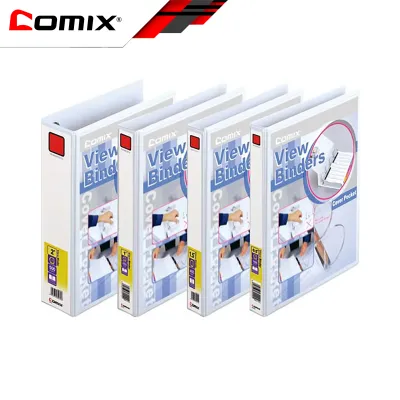
235 Lazada user ratings
Fast delivery! Okay din packaging. Naka box, well-packed! Sobrang sulit nito. Will buy again next time yung white!
The item arrived pretty late, the delivery was delayed quite a bit but the item itself is in good condition.
Got the items in good condition and with a freebie also! Thank you so much
binders were thicker than expected
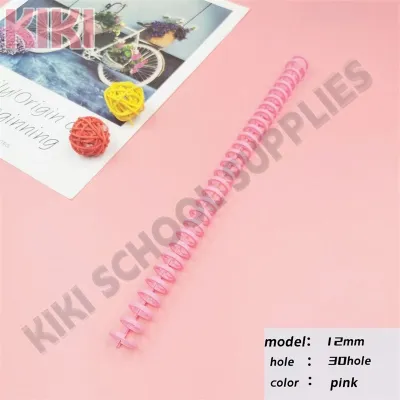
2,293 Lazada user ratings
Super satisfied with my order! ⭐⭐⭐⭐⭐ The product quality is excellent and matches the description and photos provided by the seller. It works ve…Read full reviewShow less
Super satisfied with my order! ⭐⭐⭐⭐⭐ The product quality is excellent and matches the description and photos provided by the seller. It works very well, looks durable, and arrived in great condition. The packaging was very secure with thick bubble wrap, ensuring the item didn't get damaged during shipping. Shipping was also surprisingly fast, and the seller was very responsive and polite when I had a quick question about the order. Excellent product and great service overall. Will definitely order again from this shop soon! Thank you so much!"
Great value for the price, Perfect for organizing school notes, Ideal for DIY projects. As for the downside of this item, the plastic to clo…Read full reviewShow less
Great value for the price, Perfect for organizing school notes, Ideal for DIY projects. As for the downside of this item, the plastic to close the rings on the side can be broken easily. If you want this item to last, you should be extra careful in utilizing it.
Size:nice Design:good Durability:nice Versatile size options available, Durable and sturdy binder rings. The delivered item is correct, I di…Read full reviewShow less
Size:nice Design:good Durability:nice Versatile size options available, Durable and sturdy binder rings. The delivered item is correct, I didn't use it yet, hoping that is very tight when we use.
Quality:10/10 Ease of Use:10/10 Appearance:10/10 ganda sakto sa papel ko thanks seller sa uulitin nkatipid aq
Prices are valid at publication and may change. Please refer to the product page for the latest price.
Page Alignment and Lay-Flat Performance
When you close an O-ring binder, the circular shape of the rings forces the paper to follow a curved path. This design often causes the pages to slant or bunch up near the spine, leading to uneven edges and potential page crumpling. If you try to write directly on a page while it is still inside an O-ring binder, you will find that the pages do not lie completely flat, as the curve of the ring lifts the paper near the center margin.

A D-ring binder solves this alignment issue by keeping the paper stacked flat against the straight edge of the ring. When the binder is closed, the pages remain perfectly aligned in a neat, vertical block, parallel to the cover. When you open the binder, the pages lie completely flat on the back cover, making it much easier to read, write, or photocopy documents without removing them from the rings.
To test this performance with your current setup, you can perform a simple observable check. Place a fully loaded binder on a flat desk and open it to the middle page. If the paper near the rings curves upward and resists laying flat against the desk, or if you notice the page margins overlapping and catching on the ring joints when you turn them, you are likely dealing with the limitations of an O-ring design. A true lay-flat test involves checking if a pen can rest flat across the center seam without rolling off.
Sheet Capacity and Binder Bulk
When comparing storage efficiency, D-ring binders consistently outperform O-ring binders of the same spine width. Because the straight edge of a D-ring allows pages to stack vertically, you can utilize almost the entire height of the ring for paper storage. In an O-ring binder, the curved sides mean that paper can only occupy the widest middle section of the circle; filling the rings to the very top or bottom of the curve makes it impossible to turn the pages without tearing them.
This difference in geometry means a D-ring binder can hold up to 20% to 30% more sheets than an O-ring binder with the same rated ring size. Fully loading an O-ring binder also increases its physical bulk significantly. The pages fan out along the curve, making the binder wider and more difficult to slide into a tight backpack, messenger bag, or office filing drawer.
To avoid storage issues, always check the manufacturer’s product label for the recommended sheet capacity rather than relying solely on the physical width of the spine. Different brands use varying ring thicknesses and cover materials, which can alter the actual usable space. Look for labels that specify capacity based on standard 80 gsm paper, which is the typical weight for school and office documents in the Philippines.
Durability and Long-Term Wear
Daily use subjects both binder types to distinct mechanical stress points. In an O-ring binder, the constant opening and closing of the rings puts direct tension on the spine material. Because the ring mechanism is riveted to the flexible spine, every snap of the rings bends and pulls the outer cover material. Over time, this repetitive stress can cause the spine to crack, tear, or warp, especially if the binder is frequently stuffed past its comfortable capacity.
D-ring binders transfer this mechanical stress away from the spine. Because the ring mechanism is riveted to the rigid back cover, opening and closing the rings does not flex the spine. Instead, the primary stress point shifts to the hinge connecting the back cover to the spine. While this hinge is designed to handle pivoting, frequent heavy loads can cause the cover to sag if the binder is carried vertically in a bag.
Before purchasing a new binder, or when auditing your current office supplies, inspect these key areas for signs of wear. Check if the metal rings align perfectly at the interlocking joints; any gap or misalignment will snag and tear your paper. Look closely at the vinyl or cardboard seams along the spine and hinges for hairline tears or bubbling, which indicate that the material is nearing the end of its usable lifespan.
D-Ring vs O-Ring Binder Comparison Chart
The following table summarizes the key structural and practical differences between the two binder types to help you quickly evaluate which design fits your workflow.
| Feature | O-Ring Binder | D-Ring Binder |
|---|---|---|
| Ring Mount Location | Mounted directly on the spine | Mounted on the inside back cover |
| Page Alignment | Pages curve and slant near the spine | Pages stack flat and straight |
| Lay-Flat Ability | Limited; pages curve upward near center | Excellent; pages lie flat on the back cover |
| Relative Capacity | Lower (limited by ring curvature) | Higher (utilizes straight vertical edge) |
| Ideal Use Case | Light documents, quick reference, budget projects | Heavy manuals, thick reports, frequent writing |
Decision Framework: Which Binder Should You Choose?
Selecting the right binder depends on your daily routine, document volume, and how you interact with your files.
You should choose a D-ring binder if your primary goal is organizing large volumes of paper, such as thick training manuals, multi-subject school reviewers, or archival office records. The flat stacking ensures your documents remain pristine, and the lay-flat design allows you to read and write comfortably during long study or work sessions. It is also the better option if you frequently add or remove pages, as the straight bar keeps the paper aligned and prevents the holes from tearing.
Conversely, an O-ring binder is highly suitable if you are managing lighter, temporary documents, such as weekly school handouts, presentation outlines, or single-project files. Because they tend to have a slimmer profile when empty, O-ring binders are easier to slip into a crowded school bag or commuter pouch. They are also an excellent, cost-effective choice when you need to purchase multiple binders for color-coded organization on a budget.
Before making your final purchase, verify your specific document requirements. If you plan to use thick plastic sheet protectors, index dividers with wide tabs, or heavy cardstock, you must check the ring diameter and cover clearance. Standard binders may not be wide enough to prevent index tabs from protruding past the edge of the closed cover, so look for “extra-wide” or “professional” designations on the product packaging to ensure complete protection for your organized materials.
Frequently Asked Questions (FAQ)
Can I replace O-rings with D-rings in an existing binder?
No, you cannot replace the ring mechanism in a standard binder. During the manufacturing process, the metal ring assembly is permanently riveted or welded directly to either the spine or the back cover. Attempting to pry these rivets loose will damage the backing board and ruin the binder’s structural integrity. If you need a different ring style, you will need to purchase a new binder.
Do D-ring binders cost significantly more than O-ring binders?
D-ring binders typically carry a slight price premium compared to standard O-ring binders. This is due to the more complex manufacturing process required to shape the D-rings and mount them securely to the back cover. To find the most accurate and up-to-date pricing, you can check current listings in ₱ on local online shopping platforms or visit stationery stores in the Philippines to compare options within your budget.
Community discussion
Share your experience or ask a question. Comments are reviewed before publication.