
Choosing the right system to organize your days is more than a matter of aesthetic preference; it is a direct reflection of how your brain processes time, tasks, and cognitive load. A physical notebook with calendar layouts serves as an external hard drive for your mind, helping you offload mental clutter so you can focus on execution. However, with daily, weekly, and monthly formats filling the shelves, finding the structure that matches your workflow requires understanding how you interact with your schedule.
There is no single “best” layout for everyone, as the ideal format depends entirely on the level of granular detail your lifestyle demands. Daily layouts excel at managing intensive, hour-by-hour task tracking and detailed time-blocking, while weekly layouts offer a balanced, bird’s-eye view of upcoming appointments and weekly to-do lists. Monthly layouts, on the other hand, prioritize long-term project mapping, milestone tracking, and high-level goal setting. By analyzing how these structures function physically and practically, you can select a notebook that seamlessly integrates into your daily routine.
Quick Guide: Finding Your Ideal Notebook with Calendar
When searching for your next notebook with calendar spreads, the primary decision lies in balancing the space you need for writing against the physical portability of the book. If your day is packed with back-to-back meetings, detailed action items, and personal journal entries, a daily layout provides the expansive canvas you require. Conversely, if you prefer to see how your tasks distribute across a seven-day cycle without carrying a heavy, thick volume in your bag, a weekly layout offers the ultimate middle ground. For those who manage high-level deadlines, travel schedules, or project phases and prefer to keep daily micro-tasks in a digital app, a monthly layout is the most efficient choice.
Products mentioned in this guide
![[COD] SHPYHT TOY High-quality 2026 Planner Notebook Daily Weekly Monthly Calendar Planner A5 Size With Faux Leather Cover For Business Student](https://img.lazcdn.com/g/p/28414804da9c6ae6a306c5b77de64222.jpg_400x400q80.jpg_.webp)
![[COD] SHPYHT TOY 2026-2028 Highland Cow Monthly Planner 3 Year Calendar Monthly Weekly Planner 50 Pages Spiral Binding Notebook Journal](https://img.lazcdn.com/g/p/e18790cc7c844d4261adbf3abdd19495.jpg_400x400q80.jpg_.webp)
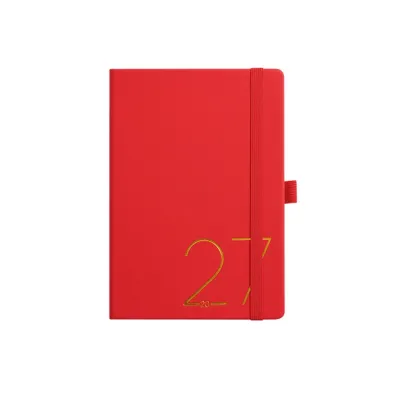
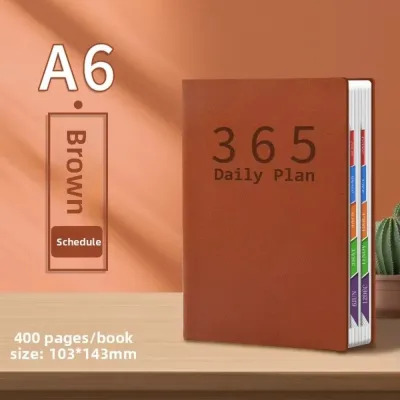
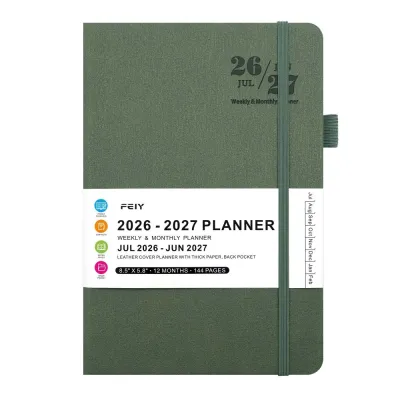
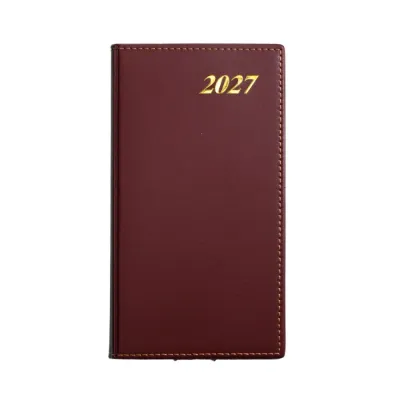
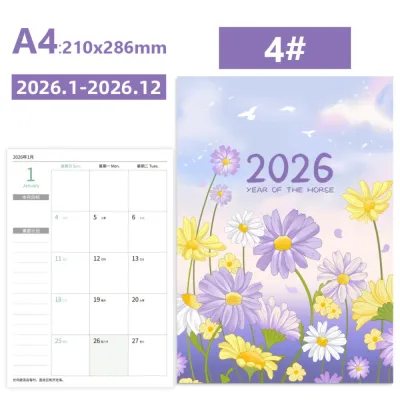
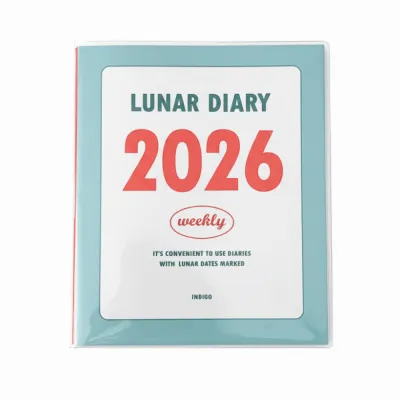
Prices are valid at publication and may change. Please refer to the product page for the latest price.
Selecting the wrong format often leads to “planner guilt”—either the frustration of leaving massive blank spaces on slow days or the stress of cramming complex schedules into tiny, restrictive boxes. Beyond the layout itself, physical characteristics such as paper density, binding durability, and overall dimensions play a critical role in how comfortable the notebook is to use. The following sections break down these variables to help you match your cognitive habits with the physical specifications of your ideal planner.
Daily vs. Weekly vs. Monthly Layouts at a Glance
To establish a baseline understanding of how these formats differ, it is helpful to compare their structural capacities, limitations, and target users side by side.

| Layout Type | Space per Day | Best For | Main Limitation | Ideal User Profile |
|---|---|---|---|---|
| Daily | One full page (or two) per day | Hourly time-blocking, detailed meeting notes, and daily journaling | Physically heavy and bulky; blank pages on quiet days can feel wasteful | Students with dense schedules, busy professionals, and avid journalers |
| Weekly | One half-page or column per day | Balancing daily tasks with a complete 7-day overview | Limited space for long-form writing or extensive meeting notes | Freelancers, general office workers, and multi-project coordinators |
| Monthly | A small grid square (approx. 3×3 cm) | Tracking major deadlines, travel, bill payments, and habits | No room for hourly scheduling; requires a secondary task list | High-level managers, minimalist planners, and digital-first users |
The physical dimensions of your notebook directly dictate the usability of these layouts. For example, a daily layout in a compact A6 or pocket format may feel excessively cramped, forcing you to write in tiny, illegible print. Conversely, a monthly layout in a large B5 size offers an incredibly spacious grid for desk work but becomes highly impractical if you need to carry it during a daily commute.
Furthermore, physical specifications like paper weight—measured in Grams per Square Meter (GSM)—and binding style heavily influence usability. In weekly and monthly formats, you are constantly writing across two-page spreads. If the notebook does not feature a high-quality lay-flat binding or a flexible wire-o system, writing near the center fold (the gutter) becomes an awkward, uncomfortable chore that discourages consistent use.
Deep Dive: Pros, Cons, and Best Use Cases for Each Format
To visualize how these layouts perform under real-world conditions, we must examine the daily practicalities, advantages, and drawbacks of each format.
Daily Planner Notebooks: Maximum Detail and Focus
Daily planner layouts dedicate an entire page (and sometimes two) to a single day, offering an unmatched level of detail. This structure is designed for those whose days are highly variable, packed with tasks, or structured around precise hourly commitments.
- Pros: The primary advantage of a daily layout is its vast writing area. It easily accommodates hourly time-blocking templates (often ranging from 6:00 AM to 10:00 PM), comprehensive to-do lists, and spontaneous meeting notes. Psychologically, focusing on a single page reduces cognitive fatigue; you are not distracted by tomorrow's looming deadlines because they are physically out of sight. It also serves as an excellent hybrid tool for those who want to combine professional task tracking with personal journaling or gratitude lists on the same page.
- Cons: The most obvious drawback is physical bulk. A notebook containing 365 individual daily pages, plus monthly overviews and note sections, requires a thick spine and heavy paper. Carrying a massive, heavy book in a backpack or tote bag during a humid, crowded commute can be physically exhausting. Additionally, daily planners can induce guilt on weekends or holidays when you have fewer tasks, leaving large expanses of empty paper. They also require constant page-flipping if you need to check upcoming appointments later in the week.
- Best For: Daily layouts are ideal for university students managing complex class schedules and study blocks, corporate professionals juggling back-to-back client meetings, and individuals who practice structured daily reflection alongside their task management.
Weekly Planner Notebooks: The Balanced Sweet Spot
Weekly layouts present the entire seven-day week across a single two-page spread, making them the most popular and versatile option on the market.
- Pros: This format allows you to understand the natural flow of your week at a single glance. You can easily spot busy days, balance your workload, and plan ahead without flipping pages. Weekly planners are significantly thinner and lighter than daily planners, making them highly portable and easy to slide into a standard work bag. They are typically structured in either a horizontal layout (ideal for short, sentence-based tasks and journaling) or a vertical layout (ideal for column-based time-blocking and scheduling).
- Cons: Writing space is strictly rationed. If you have a day filled with twenty micro-tasks or need to take extensive notes during a long phone call, a weekly box will quickly overflow. Furthermore, many weekly planners economize space by shrinking the Saturday and Sunday boxes into a single shared slot. This design can be highly frustrating for retail workers, freelancers, or individuals with active weekend schedules who require equal planning space every day of the week.
- Best For: Weekly planners are best suited for general office employees, freelancers managing multiple overlapping client projects, and anyone who wants a portable, highly visual overview of their weekly commitments without the physical weight of a daily book.
Monthly Planner Notebooks: Big-Picture Vision and Tracking
Monthly layouts compress an entire month into a single two-page grid, prioritizing long-term visibility over daily detail.
- Pros: This format is the ultimate tool for macro-level planning. It allows you to visualize project milestones, exam periods, travel itineraries, bill due dates, and monthly goals without any distracting day-to-day clutter. Because they require very few pages, monthly planners are incredibly slim, lightweight, and budget-friendly. They often include dedicated sidebars for monthly habit tracking, making them excellent tools for personal development.
- Cons: The tiny grid squares offer zero room for daily task lists, hourly appointments, or detailed notes. If you attempt to use a monthly planner as your sole organizational tool for a busy daily schedule, you will quickly run out of space and end up with an unreadable, scribbled mess. To be effective, a monthly planner almost always requires a companion system—either a digital calendar app on your phone or a separate blank notebook for daily rapid logging.
- Best For: Monthly layouts are perfect for high-level project managers, minimalists who only need to track key dates, habit-tracking enthusiasts, or as a physical "master calendar" that sits permanently on your desk to supplement a primary digital workflow.
How to Evaluate Your Personal Planning Style and Notebook Specs
Before purchasing a notebook with calendar spreads, you must conduct a realistic self-assessment of your planning habits and verify the physical specifications of the paper and binding.
Planning Style Assessment
To find the right fit, ask yourself how you naturally record information. Do you plan prospectively (scheduling future appointments, mapping out deadlines, and setting strict time blocks) or retrospectively (using your planner as a diary to log completed tasks, track habits, and write daily reflections)? Prospective planners with high-density schedules thrive with vertical weekly or daily layouts. Retrospective planners who write long paragraphs of text require the expansive pages of a daily layout.
Consider your mobility as well. If you work from a dedicated home office or desk, a heavy, spacious B5 daily planner is an excellent choice. If you are constantly moving between cafes, co-working spaces, or university campuses, a lightweight A5 weekly or a slim monthly planner will save you physical strain.
Notebook Specifications to Verify
Once you know your style, pay close attention to the technical details of the stationery:
- Size and Format: Standard paper sizes dictate your writing canvas. A5 (148 x 210 mm) is the industry favorite, offering a perfect balance of writing space and portability. B5 (176 x 250 mm) is noticeably larger, making it ideal for desk-bound users who need extra room for detailed grids. A6 (105 x 148 mm) is highly pocketable but best reserved for minimalist, short-form writing.
- Paper Quality (GSM): Grams per Square Meter measures paper density. If you write with wet inks, such as fountain pens, rollerballs, or dark gel pens, look for paper that is 100 GSM to 120 GSM. In highly humid tropical climates, like the Philippines, paper fibers naturally absorb moisture from the air. This ambient humidity slows down ink drying times and increases the risk of feathering (ink spreading along paper fibers) and bleeding (ink soaking through to the other side). Selecting high-GSM, fountain-pen-friendly paper is crucial to ensure your dense daily or weekly layouts remain clean and legible.
- Binding Type: Look for thread-bound (Smyth-sewn) bindings that advertise a true "lay-flat" design. This construction ensures that when you open the notebook to a weekly or monthly spread, the pages lie completely flat without you having to hold them down. Wire-O (spiral) binding is also highly practical, allowing you to fold the notebook completely in half to save desk space, though the metal coil can sometimes obstruct your hand while writing. Avoid cheap glue-only bindings, as they tend to crack, causing pages to fall out over a year of heavy use.
- Dated vs. Undated: Dated planners provide instant structure, pre-printed dates, and a clear sense of chronological progression. However, if you miss a week or two, those dated pages are permanently wasted. Undated planners feature blank calendar grids where you write in the dates yourself. This design offers total flexibility, allowing you to start your planning journey at any point in the year—such as the mid-year school transition in August—without wasting a single page.
Final Decision Framework: Choosing Your Ideal Notebook with Calendar
To finalize your choice, match your primary organizational needs against this simple decision matrix:
- Choose a Daily Layout if: You practice hourly time-blocking, need to write extensive meeting notes or daily journal entries, and prefer focusing entirely on the present day without being distracted by future tasks.
- Choose a Weekly Layout if: You want a portable, lightweight notebook that shows your entire week's schedule at a glance, allowing you to balance professional appointments with personal tasks easily.
- Choose a Monthly Layout if: You only need to track major deadlines, travel dates, or recurring bill payments, and you prefer to manage your daily micro-tasks digitally or in a separate, blank notebook.
- Verify First if You Are Unsure: If you are torn between two layouts, do not invest heavily upfront. Print out a few free daily and weekly planning templates online, or draw the layouts yourself in a cheap notebook. Test each format for a full week to see which structure feels most intuitive to your daily workflow before purchasing a premium, long-term notebook.
Ultimately, the most effective planning system is not the one with the most complex features or the highest price tag. The best notebook with calendar is simply the one that you look forward to opening, writing in, and maintaining consistently day after day.
Frequently Asked Questions (FAQ)
Should I choose a dated or undated planner notebook?
Dated planners are best if you want immediate structure, pre-printed holidays, and automatic accountability from day one. They save you the time of manually writing in dates and are ideal for consistent, daily users. Undated planners are highly recommended if your planning habits are irregular, if you take extended breaks (such as academic vacations), or if you want to start using your planner mid-year without wasting empty pages.
Can I combine different layouts in one notebook?
Yes, many premium planners feature hybrid layouts. These typically include twelve monthly overview spreads at the front of the book, followed by fifty-two weekly spreads or daily pages in the main body. When choosing a hybrid notebook, carefully verify the binding quality and total page count. Because hybrid planners contain multiple layout formats, they can be physically thicker and heavier, making durable lay-flat stitching essential to prevent the spine from breaking under daily use.
Community discussion
Share your experience or ask a question. Comments are reviewed before publication.