
Selecting the right study planner layout is not a one-size-fits-all decision; the ideal format depends entirely on your daily scheduling style, academic workload, and need for detail. Choosing a layout that does not align with your daily routine often leads to planner fatigue, leaving you with either a sea of overwhelming empty pages or a cramped, unreadable mess.
To find the perfect match, you must evaluate how you process your academic responsibilities. Daily layouts focus on micro-management and hour-by-hour time blocking, weekly layouts balance a comprehensive seven-day overview with decent writing space, and monthly layouts act as a high-level roadmap for tracking major exams and project deadlines.
By understanding the unique strengths and limitations of each format, you can select a tool that actively supports your academic journey. The following sections break down these layouts, helping you choose the best system for your specific student lifestyle.
Products mentioned in this guide
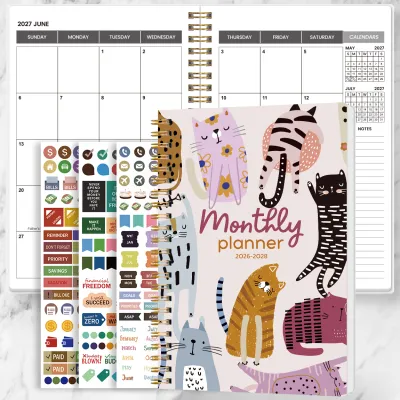
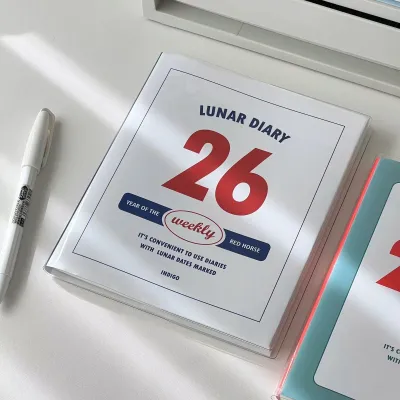
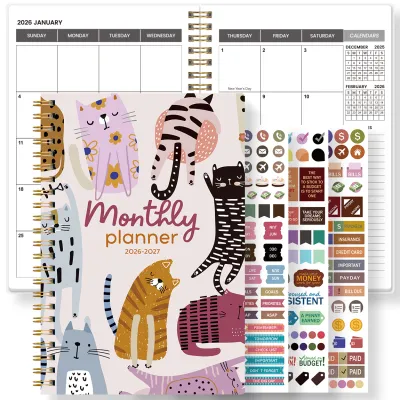
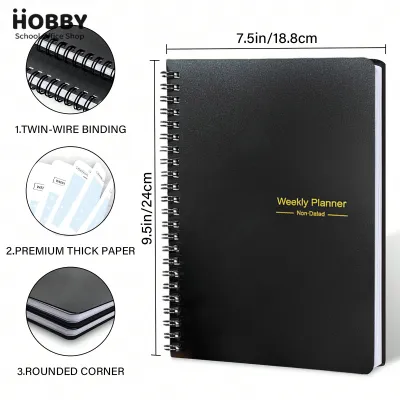
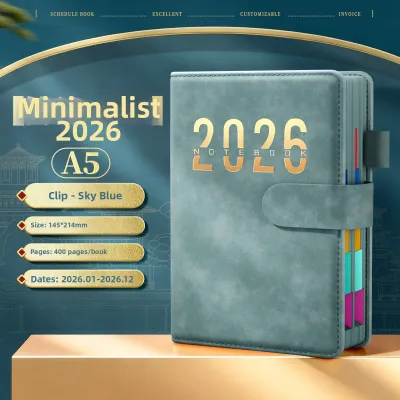
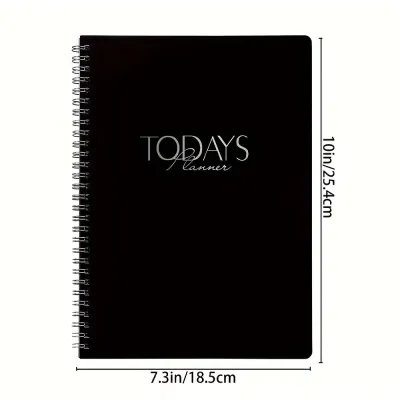
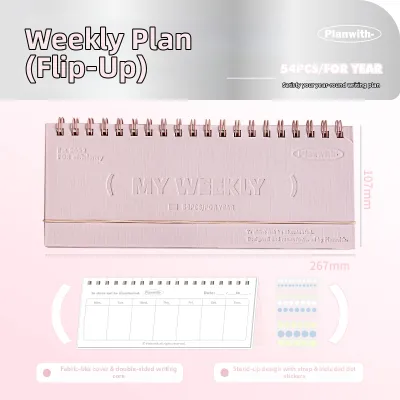
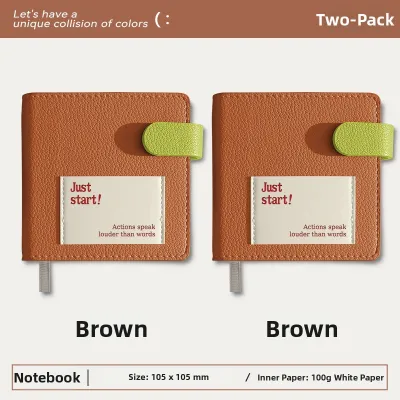
Prices are valid at publication and may change. Please refer to the product page for the latest price.
Understanding the Core Differences: Daily vs. Weekly vs. Monthly
To build an effective academic management system, you must first understand how each layout structures time and space. These differences are not merely visual; they dictate how you process your academic responsibilities and physically interact with your planner every day. Each layout addresses a distinct planning horizon, scaling from hourly tasks to semester-long milestones.
Daily planners dedicate one or two full pages to a single day. This format breaks down your time into hourly increments or provides extensive vertical lists for tasks, notes, and habits. Because they allocate so much paper to each day, these planners are physically substantial. A standard 12-month daily planner can easily exceed 300 pages, resulting in a thick, heavy book that requires significant desk space and can weigh down your bag.
Weekly planners consolidate seven days across a two-page spread. This layout typically comes in two formats: horizontal (days arranged in rows across the pages) or vertical (days arranged in columns, often with hourly grids). This setup offers a medium-term perspective, allowing you to see your entire week’s obligations at a single glance. With around 100 to 150 pages, weekly planners strike a balance between structural detail and physical portability.
Monthly planners present the entire month across a two-page calendar grid. Each day is represented by a small square, leaving just enough room to write down one or two major events or deadlines. These planners are incredibly slim, often consisting of only 30 to 50 pages. They are lightweight, highly portable, and designed for long-term planning rather than day-to-day task execution.
In tropical climates like the Philippines, physical characteristics like size and weight are particularly important. If you commute daily via jeepneys, buses, or the LRT/MRT, carrying a bulky, heavy daily planner in your backpack can quickly become a physical burden, especially during the rainy season when you want to minimize your bag’s weight. Conversely, if you do most of your studying at a fixed desk at home or in a university library, a larger, heavier planner is much easier to manage.
Daily Planners: Deep Focus and Micro-Management
Daily study planners are built for students who need to manage their time with extreme precision. If your academic schedule is packed with back-to-back lectures, laboratory sessions, study groups, and personal review blocks, a daily layout provides the granular structure necessary to keep you on track. It turns your planner into an active, hour-by-hour companion.

The primary advantage of a daily layout is its capacity for micro-management. With a dedicated page for each day, you can implement time-blocking strategies, mapping out exactly when you will study specific subjects, attend classes, or take breaks. This layout also leaves ample room for detailed to-do lists, daily habit trackers, water intake logs, and even quick lecture summaries or reflection notes. For students who struggle with procrastination, writing down a highly specific plan can reduce decision fatigue and provide clear direction throughout the day.
However, this level of detail comes with distinct trade-offs. The most obvious drawback is physical bulk. A daily planner is thick and heavy, making it less convenient to slip into a school bag, especially during wet commutes where keeping your belongings light and dry is a priority. Additionally, daily planners can induce a sense of pressure. If you have a light academic day or miss a few days of planning, you are left with blank, wasted pages that can make your planner feel incomplete or abandoned.
The ideal user for a daily study planner is a student with an intensive, highly demanding academic load. Medical students, law students, and engineering majors who must balance rigorous course schedules with long study hours benefit greatly from this format. It is also excellent for students who prefer to use their planner as a hybrid journal, combining academic scheduling with personal reflections and daily memory-keeping.
Weekly Planners: The Balanced Approach for Most Students
For the majority of university and high school students, the weekly study planner serves as the practical middle ground. By presenting seven days of the week across a single two-page spread, this layout offers a comprehensive view of your upcoming responsibilities without overwhelming you with excessive detail.
The core benefit of a weekly planner is the ability to see the relationship between different days. You can easily spot busy days ahead and adjust your preparation accordingly. For example, if you see a major exam scheduled for Thursday, your weekly spread will remind you on Monday and Tuesday to allocate study blocks. This layout allows you to balance classes, extracurricular activities, part-time jobs, and social commitments side-by-side, ensuring that no single area of your life is overlooked.
Weekly planners are also highly portable. Because they require far fewer pages than daily planners, they are significantly thinner and lighter. They fit easily into standard backpacks or tote bags, making them ideal for students who are constantly on the move between campus, coffee shops, and home.
The main limitation of a weekly planner is the restricted writing space per day. If you have a long list of daily tasks, detailed lecture notes, or need to block out your day hour-by-hour, you may find the small boxes or columns of a weekly layout too confining. You must be concise with your entries, often relying on abbreviations or bullet points to fit everything in.
This layout is perfect for typical college students who need a clear overview of their week to manage deadlines, group meetings, and class schedules. It provides enough structure to keep you organized while remaining light enough to carry with you every single day.
Monthly Planners: Big-Picture Tracking and Long-Term Goals
Monthly study planners focus strictly on the macro view of your academic calendar. By displaying an entire month across a two-page grid, this layout forces you to step back from daily chores and focus on long-term deadlines, milestones, and goals.
The primary strength of a monthly planner is its ability to prevent scheduling surprises. It acts as an early warning system for your semester. At the start of the term, you can map out all your major exam dates, project deadlines, holidays, and school events. This high-level overview helps you pace your study efforts over several weeks, preventing the stressful cramming sessions that often occur when deadlines catch you off guard.
Monthly planners are incredibly slim and lightweight, often resembling a thin booklet. They add virtually no weight to your bag and take up very little space on a crowded desk.
However, a monthly planner is rarely sufficient as a standalone tool for active daily task management. The individual daily squares on a monthly grid are typically too small to hold detailed to-do lists or hourly schedules. Attempting to cram daily chores, homework assignments, and personal reminders into a tiny monthly box will quickly result in an unreadable, cluttered mess.
The monthly layout is ideal for students who prefer a digital-first workflow. If you already use digital calendars or task managers on your phone or laptop for daily scheduling, a physical monthly planner can serve as a distraction-free, analog dashboard for your wall or desk. It is also a great option for students who pair a simple monthly calendar with a separate, blank notebook for free-form bullet journaling.
Quick Comparison: Daily vs. Weekly vs. Monthly Layouts
To help you quickly identify which system aligns with your academic routine, the table below compares the three layout types across key design and usability dimensions.
| Layout | Time Horizon | Detail Level | Best For | Typical Thickness/Portability |
|---|---|---|---|---|
| Daily | 1 Day per page | High | Hour-by-hour time blocking, heavy workloads | Bulky; best kept on a desk |
| Weekly | 7 Days per spread | Medium | Balancing classes, jobs, and social life | Slim to Medium; highly portable |
| Monthly | 30 Days per spread | Low | Long-term deadline tracking, exam dates | Ultra-slim; very lightweight |
Using this structural comparison, you can narrow down your options based on whether you prioritize daily task execution, weekly coordination, or long-term milestone tracking.
How to Choose the Right Study Planner for Your Academic Needs
To make your final decision, evaluate your academic requirements, daily habits, and physical environment. Use this structured decision framework to guide your choice:
- Choose a Daily planner if you need strict hour-by-hour time blocking to stay focused, have a highly complex daily schedule with multiple classes and labs, and prefer writing detailed notes, tracking habits, and journaling alongside your academic schedule.
- Choose a Weekly planner if you want to see your entire week's commitments and deadlines at a single glance, need to balance schoolwork with extracurriculars, and prioritize a lightweight planner that fits easily into your bag.
- Choose a Monthly planner if you only need to track major deadlines, exams, and academic milestones, prefer digital apps for your daily task lists, or want an ultra-lightweight, slim tool to pair with a separate notebook.
- Verify first if your university program or course syllabus follows a specific academic calendar (such as a trimestral system or clinical rotation schedules) that requires a particular layout or start month (e.g., an August start vs. a January start).
Beyond the layout, you must also consider the physical specifications of the planner to ensure it can withstand daily use. Pay close attention to paper quality and binding type before making a purchase:
- Paper Weight (GSM): For students who use gel pens, liquid ink pens, or highlighters, paper weight is crucial. Look for planners with paper weights of at least 80 GSM (grams per square meter), though 100 GSM or higher is ideal to prevent ink feathering and bleed-through. In humid climates like the Philippines, paper can absorb ambient moisture, making it more prone to ink bleeding and slow drying times. High-quality, high-GSM paper helps mitigate these issues. Always test a small, inconspicuous corner of the planner first with your favorite pens to observe drying times and bleed resistance.
- Binding Type: A lay-flat binding (such as thread-bound or spiral/wire-o binding) is essential for comfortable writing, especially when you are working at a cramped desk or taking quick notes during a lecture. Avoid tight, glued bindings that force you to hold the book open with one hand while writing with the other.
- Budget Bands: Planners vary widely in price, from budget-friendly local options under ₱200 to premium, high-GSM imported planners that can exceed ₱1,000. Set a realistic budget that allows you to prioritize paper quality and binding durability over aesthetic cover designs.
Frequently Asked Questions (FAQ)
Can I use more than one planner layout at the same time?
Yes, combining layouts is a highly effective strategy if done intentionally. Many students use a slim monthly planner or a wall calendar to track major, long-term deadlines (like exam dates and project submissions) while using a weekly or daily planner for granular, day-to-day task execution. This hybrid approach keeps your daily workspace clean while ensuring you never lose sight of upcoming milestones.
However, you must keep the system simple to avoid planner fatigue. Avoid duplicating every single task across multiple planners, as this leads to unnecessary data entry and increases the likelihood of abandoning the system. Use the monthly layout strictly for high-level events and the weekly or daily layout for actionable, immediate tasks.
What paper size is best for a study planner?
Selecting the right paper size depends on where you study and how you commute. The three most common sizes for study planners each offer distinct advantages:
- A5 (148 x 210 mm): This is the most popular size for students. It is highly portable, fits easily into standard backpacks or tote bags, and takes up minimal space on small lecture hall desks.
- B5 (176 x 250 mm): B5 offers a comfortable middle ground. It provides significantly more writing space than A5, making it excellent for weekly layouts, while remaining light enough to carry daily.
- A4 (210 x 297 mm): This is a large, letter-sized format. It is best suited for students who do most of their planning at a fixed desk at home, as the size and weight make it cumbersome to carry on daily commutes.
Community discussion
Share your experience or ask a question. Comments are reviewed before publication.