
Quick Answer: Which 2026 Planner Layout Fits Your Style?
Selecting the right planner notebook 2026 format is about reducing the daily friction of organization. A layout that does not align with your natural thinking patterns quickly becomes an abandoned notebook. To find your ideal match, consider how you naturally process time, tasks, and commitments.
Your choice comes down to a few clear scenarios:
- Choose a Daily layout if you manage packed, hourly appointments, handle heavy daily task lists, or want dedicated space for long-form journaling, habit tracking, and creative memory keeping.
- Choose a Weekly layout if you need a balanced view that combines daily task lists with a high-level weekly overview, allowing you to see your entire week at a glance without carrying a heavy, bulky book.
- Choose a Monthly layout if you focus on macro-level project deadlines, travel schedules, or long-term goals, or if you prefer a highly portable, minimalist physical tracker to complement a primary digital calendar.
There is no objectively superior format. The ideal choice depends on your scheduling density, your writing style, and how much weight you are willing to carry in your bag every day.
Products mentioned in this guide
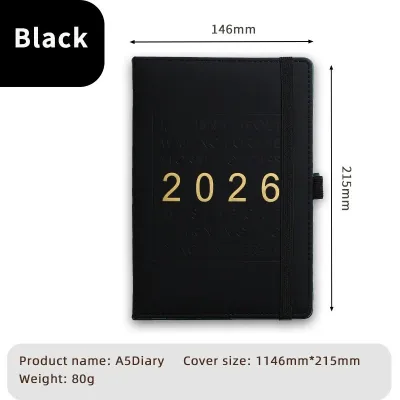
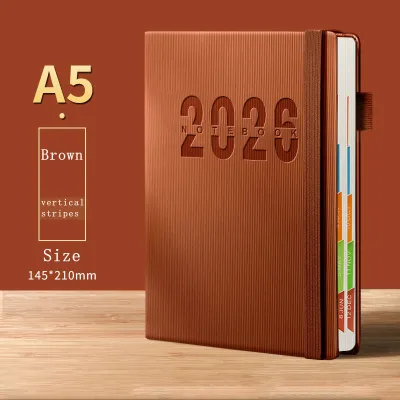
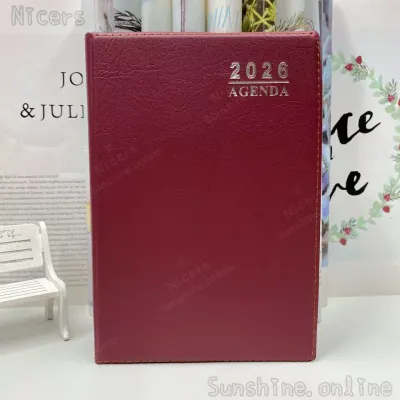
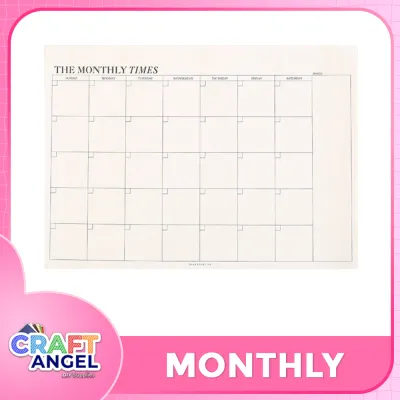
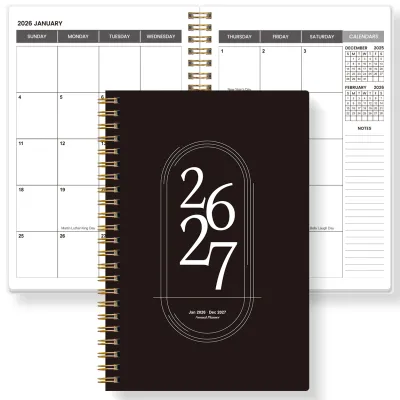
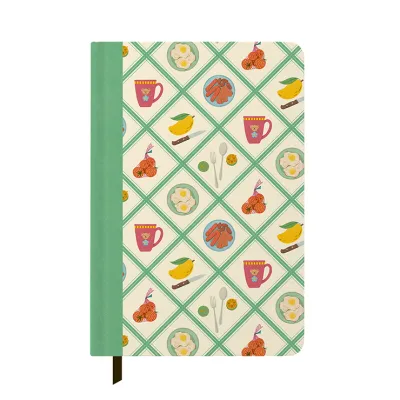
Prices are valid at publication and may change. Please refer to the product page for the latest price.
Daily Layout: Best for Hourly Tracking and Heavy Task Loads
Daily planners dedicate one or two full pages to a single day. This generous allocation of paper allows for a highly structured breakdown of your time. A typical daily page features an hourly timeline running from early morning to late evening, alongside prioritized to-do lists, dedicated notes sections, and space for personal reflections or gratitude journaling. This format treats each day as a blank canvas, giving you the freedom to write without worrying about running out of space.

This layout is highly beneficial for individuals with dense, complex schedules. University students balancing lectures, study groups, part-time work, and extracurricular activities find the hourly blocks invaluable for organizing their time. Corporate professionals with back-to-back meetings can map out their agendas, prep notes, and follow-up tasks all on the same page. It is also the preferred format for dedicated journalers who use their planner as a memory book, combining scheduling with daily sketches, stickers, or written reflections.
The primary advantage of a daily planner is its capacity to prevent scheduling conflicts. By visualizing your day hour by hour, you can avoid overcommitting. It also provides a dedicated space for “brain-dumping” miscellaneous thoughts, ensuring that small details do not slip through the cracks. For those who find satisfaction in detailed planning, the daily format offers unparalleled organization.
However, this layout comes with distinct physical and psychological trade-offs. Because they require at least 365 pages, daily planners are thick, heavy, and bulky. Carrying a thick hardbound daily planner in a backpack or tote bag during a humid commute, or walking between offices in the tropical heat, can be physically tiring. Additionally, if you experience a quiet week or simply skip a few days, you are left with blank pages. For many users, these empty spaces can induce a subtle sense of guilt or unproductive pressure to fill the pages.
Weekly Layout: The Sweet Spot for Balance and Weekly Overviews
Weekly planners present the entire week across a single two-page spread. This format generally comes in two main styles: vertical columns and horizontal blocks. Vertical layouts are designed for time-blocking, with each day represented by a column divided into hourly segments. Horizontal layouts allocate a rectangular block to each day, making them ideal for list-makers who prefer writing down tasks rather than scheduling specific times.
This layout is ideal for professionals, educators, and busy individuals who need to balance work commitments with personal life. It suits those who manage medium-term projects and need to see how tasks on Monday impact deadlines on Friday. If you prefer to plan your energy levels across a seven-day cycle—allocating demanding tasks to high-energy days and leaving lighter tasks for the weekend—the weekly format provides the perfect visual tool.
The main benefit of a weekly planner is its balance of detail and portability. It is thin enough to slip easily into a laptop sleeve or a medium-sized tote bag, making it highly convenient for hybrid workers and students. It allows you to see the “shape” of your week at a single glance, helping you identify open pockets of time and plan ahead without having to flip through multiple pages.
The limitation of the weekly layout is the restricted writing space per day. If you have large handwriting, use thick gel pens, or manage dozens of micro-tasks daily, you may find the small daily boxes restrictive. To make this format work, you must learn to write concisely, use shorthand, or supplement the layout with sticky notes and modular inserts for extra writing space.
Monthly Layout: Ideal for Big-Picture Goals and Minimalists
Monthly planners consist of traditional two-page calendar grids for each month of the year. These grids are usually accompanied by dedicated pages for monthly goal-setting, budget tracking, project milestones, and a few blank dot-grid or lined pages at the back for general notes. This layout strips away daily and weekly increments, focusing entirely on the macro perspective.
This format is designed for high-level planners who do not need to write down hourly schedules. It is highly popular among freelancers tracking client billing cycles, project managers mapping out multi-week phases, and students keeping track of major exam dates and assignment deadlines. It is also an excellent option for minimalists who use digital calendars for their daily alerts but want a physical, tactile overview of their monthly commitments.
The standout advantage of a monthly planner is its portability. Because they contain very few pages, these planners are incredibly slim, lightweight, and flexible. They easily fit into small bags, folders, or document folios without adding noticeable weight. They also provide a clear, uninterrupted map of your month, making it simple to spot upcoming holidays, long weekends, and busy travel periods.
However, a monthly planner cannot function as a detailed daily task manager. The small squares in a monthly grid can only hold a few words per day, such as a single meeting time or a deadline. If you try to cram a daily to-do list into a monthly box, the page quickly becomes illegible. To manage day-to-day execution, users of monthly planners almost always need to pair them with a secondary system, such as a digital task app or a simple pocket notebook.
Key Comparison Dimensions: Space, Portability, and Paper Specs
To make your final decision, look beyond the visual design of the pages and evaluate the physical characteristics of the notebook. How a planner fits into your physical space, your bag, and your writing routine determines whether you will actually use it consistently.
Writing Space vs. Portability
There is a direct trade-off between how much you can write and how easily you can carry your planner. A daily planner offers maximum writing space but requires a larger, heavier book. A monthly planner offers minimal space but is incredibly easy to carry.
The physical size of the notebook also plays a major role. An A5 notebook (148mm x 210mm) is widely considered the standard for planners because it fits comfortably in most bags while offering a reasonable amount of writing space. If you choose a daily layout in an A5 size, you get a thick but manageable book. If you move up to a B5 (176mm x 250mm) or A4 size, you gain massive writing space, but the planner will likely have to stay on your desk. Conversely, an A6 pocket planner (105mm x 148mm) is highly portable but requires very neat, small handwriting.
Planning Horizon
Your planning horizon is how far ahead you need to look to feel organized. Daily layouts focus on micro-management, helping you execute today’s tasks without distraction. Monthly layouts focus on macro-management, keeping your eyes on long-term goals and deadlines. Weekly layouts bridge this gap, offering a mid-range perspective that helps you manage immediate tasks while keeping upcoming commitments in view.
Binding and Paper Specifications
How a planner is put together affects your daily writing comfort. Look for these common binding types:
- Stitched/Thread-Bound: Essential for thick daily or weekly planners. High-quality thread sewing allows the book to lay completely flat on your desk, making it easy to write near the center seam (the gutter).
- Spiral/Wire-O Bound: Allows you to fold the planner completely in half to save desk space. However, the metal or plastic coils can get in the way of your hand when writing near the margins.
- Disc-Bound/Ring-Bound: Offers maximum customization. You can easily add, remove, or rearrange pages. The trade-off is that the discs or rings add physical bulk to the spine of the notebook.
| Layout Type | Best For | Average Space per Day | Portability | Ideal Notebook Size |
|---|---|---|---|---|
| Daily | Hourly schedules, detailed journaling, and heavy task lists | 1 to 2 full pages | Low (Heavy/Thick) | A5 or B5 |
| Weekly | Balancing daily tasks with a 7-day visual overview | 1/4 to 1/2 of a page | Medium (Moderate weight) | A5 or Slim B6 |
| Monthly | Long-term deadlines, project milestones, and travel | A small grid box | High (Ultra-slim/Light) | A5 or A6 |
Paper Compatibility and Climate Considerations
Before purchasing your planner, check the paper weight, which is measured in GSM (grams per square meter). Standard planner paper ranges from 52 GSM to 120 GSM. Thin paper (such as 52 GSM to 68 GSM premium Japanese paper) is highly resilient and keeps a daily planner relatively thin, but it is prone to “ghosting”—where you can see the shadow of your writing on the other side of the page. Thicker paper (80 GSM to 120 GSM) resists ghosting and ink bleed-through but makes the notebook significantly thicker.
In humid tropical climates like the Philippines, paper fibers naturally absorb moisture from the air over time. This ambient humidity can cause paper to soften, which changes how it interacts with ink. Uncoated papers may experience increased feathering (where the ink spreads out along the fibers) or bleeding in high humidity.
If you prefer using gel pens, rollerballs, or fountain pens, look for planners that specify “fountain pen friendly” or coated paper. Always perform a quick pen test on the blank notes pages at the back of the planner before writing on the main calendar pages to check the drying speed, feathering, and bleed-through of your favorite pens.
Frequently Asked Questions (FAQ)
Can I use a hybrid planner with both monthly and weekly layouts?
Yes, hybrid planners are highly popular because they combine different planning horizons. Many commercial planners feature a monthly calendar grid at the start of each month, followed immediately by the weekly spreads for those specific weeks. This allows you to map out major deadlines on the monthly grid and then break them down into daily actionable tasks on the weekly pages.
Alternatively, you can use modular or disc-bound systems. These allow you to insert daily pages only for exceptionally busy weeks, while relying on weekly or monthly layouts for the rest of the year, keeping your notebook customizable and lightweight.
What notebook size works best for a daily planner?
For a daily planner, the A5 size is generally the most practical choice. It offers enough horizontal space for hourly columns and task lists without requiring you to write in tiny shorthand.
If your daily planner stays on your desk at home or in the office, a larger B5 size provides a highly comfortable writing experience. However, if you commute daily and need to carry your planner in a small bag, an A6 pocket size or a slim weekly-daily hybrid may be more practical to prevent shoulder strain.
How do I prevent ink bleed-through in my planner?
Ink bleed-through occurs when ink saturates the paper fibers and leaks through to the other side of the page. To prevent this, check the paper specifications of your planner before buying, aiming for a paper weight of at least 80 GSM to 100 GSM if you use wet inks.
If your planner has thinner paper, choose your writing instruments carefully. Oil-based ballpoint pens and fine-liner pens with pigment-based, water-resistant inks are less likely to bleed or feather than water-based liquid ink rollerballs. Additionally, because high humidity can slow down ink drying times, using a finer pen tip (such as 0.38mm or 0.5mm) reduces the volume of ink deposited on the page, helping it dry faster and preventing accidental smudges.
Community discussion
Share your experience or ask a question. Comments are reviewed before publication.