
Selecting the right calendar planner notebook is more than just picking an attractive cover. It is about finding a tool that matches how your brain processes time, tasks, and goals. If you choose a layout that is too detailed, you might feel overwhelmed by empty pages; if you choose one that is too simple, your daily tasks will quickly spill over the margins.
In the Philippines, finding the right balance also means considering practical daily factors. High humidity can affect how paper handles ink, and a long daily commute on public transit means the physical weight of your notebook matters just as much as its internal layout. By understanding how daily, weekly, and monthly formats function, you can make an informed decision before investing in a new planner.
Assess Your Schedule Complexity and Detail Needs
The first step in choosing a planner is evaluating the volume and granularity of your daily commitments. Daily layouts dedicate an entire page—sometimes even two—to a single day. This format is highly beneficial for individuals who practice strict time-blocking, manage hour-by-hour appointments, or maintain extensive, multi-step to-do lists. If your day is packed with client meetings, study sessions, and specific hourly tasks, a daily layout provides the necessary canvas to keep you on track without running out of space.
Products mentioned in this guide
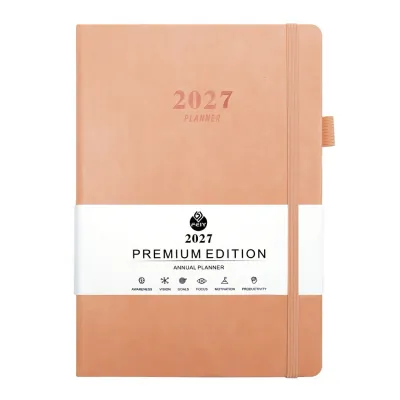

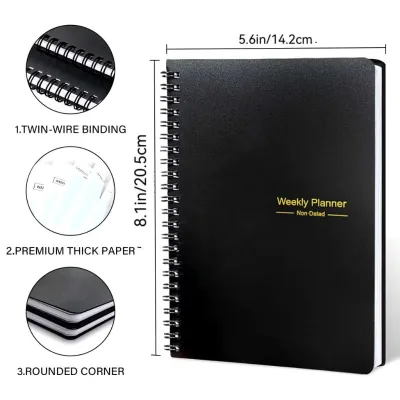
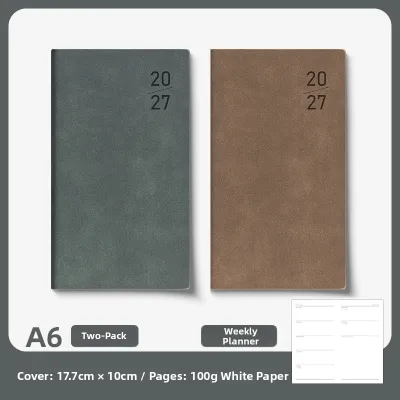
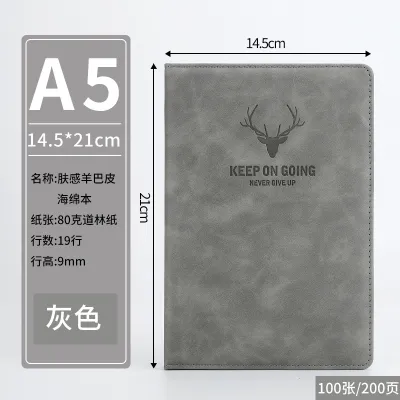
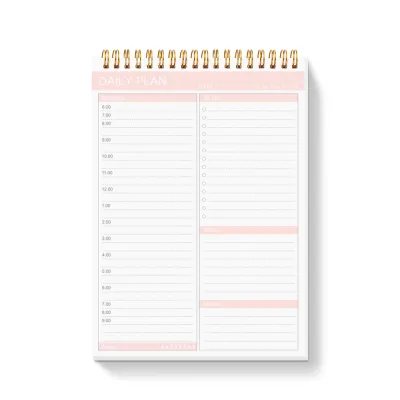
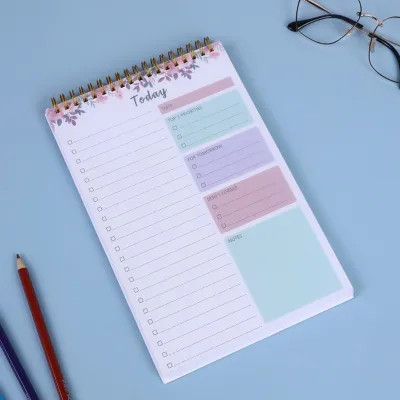
Prices are valid at publication and may change. Please refer to the product page for the latest price.
Weekly layouts, on the other hand, present the entire week across a two-page spread. This format is ideal for those who need to balance a broad overview of their week with moderate daily task tracking. It allows you to see how your Tuesday commitments affect your Thursday deadlines, making it easier to pace your energy and manage your time. Weekly planners are highly favored by office professionals, teachers, and students who need to track project milestones and weekly goals without needing to schedule every single hour of the day.
Monthly layouts offer the broadest perspective, condensing an entire month into a two-page grid. This minimalist approach is best suited for high-level goal setting, tracking major deadlines, and logging significant events like birthdays, travel dates, or monthly bill payments. If you prefer to manage your daily tasks digitally but still want a physical space to visualize your long-term schedule, a monthly planner serves as an excellent, low-maintenance companion.
Evaluate Your Workspace and Portability Requirements
Your planner must fit seamlessly into your physical life, which means evaluating where you will use it most. If you are primarily desk-bound, a larger, heavier planner like an A4 or desk-pad size can work beautifully. It can sit open on your desk all day, serving as a constant visual anchor for your tasks. However, if you are constantly on the move, commuting via transit or moving between different meeting rooms, a bulky planner can quickly become a nuisance.

For those who travel frequently, portability is key. A compact A6 or B6 planner fits easily into a small bag or backpack without adding significant weight. However, a smaller physical size means a higher layout density. If you have large, expressive handwriting, writing in a small planner can feel incredibly cramped and frustrating. You must balance the physical dimensions of the notebook with your natural writing style to ensure you have enough room to write comfortably.
The binding of the notebook also plays a critical role in its usability. Thread-bound planners that lay completely flat when opened are generally the most comfortable to write in, as they allow you to use the entire width of the page without fighting the spine. Wire-o or spiral bindings also lay flat and allow you to fold the planner in half to save desk space, though the metal coils can sometimes get in the way of your hand while writing. Avoid stiff, glued bindings that constantly spring shut, as they make quick note-taking a chore.
Match Your Planning Habits to the Right Layout
To finalize your choice, it helps to look at your actual daily behavior rather than an idealized version of how you want to plan. Ask yourself a few diagnostic questions. Do you find yourself writing down every single detail of your day, or do you prefer to capture only the highlights? If you enjoy journaling, memory-keeping, and tracking daily habits alongside your tasks, a daily planner is the natural fit. If you prefer to see your week at a glance to plan your weekend errands and weekday chores, a weekly layout is much more practical.
If you find yourself torn between different formats, consider a hybrid approach. Many modern planners feature a monthly overview at the start of each section, followed by weekly or daily spreads. This structure allows you to map out your long-term deadlines on the monthly grid while using the detailed pages for your day-to-day execution. You can also use a slim monthly planner alongside a separate blank grid notebook for free-form daily notes, giving you complete control over your system.
Another critical factor is your consistency. If your schedule fluctuates wildly or if you tend to abandon your planner during busy weeks, a traditional dated planner can result in a lot of wasted paper and unnecessary guilt. Undated planners are an excellent alternative for those who need flexibility. They allow you to write in the dates only on the days you actually use the planner, ensuring that no pages go to waste if you take a break for a week or two.
Key Physical Specifications to Verify Before Buying
Before making your final purchase, there are several technical specifications you should verify to ensure a smooth writing experience. First and foremost is paper weight and ink compatibility. In tropical climates with high humidity, paper can absorb moisture from the air, which often exacerbates ink feathering and ghosting. If you prefer using gel pens, fountain pens, or wet highlighters, look for planners with paper weights of at least 80 gsm to 100 gsm. If possible, test your favorite pen on a back page or a sample sheet to check the drying speed and ensure the ink does not bleed through to the other side.
Next, examine the supplementary pages included in the notebook. Many planners come with built-in habit trackers, financial budget sheets, project planners, or dotted grid pages for creative bullet journaling. While these features can be incredibly helpful, make sure they align with your actual organizational workflow. If a planner is filled with pages you will never use, it simply adds unnecessary bulk and weight to your bag.
Finally, pay close attention to the start dates of the planner. While most planners follow the standard calendar year from January to December, others are designed around the academic year, starting in August or September. In the Philippines, where many universities and schools have shifted their academic calendars, choosing an academic planner can be highly beneficial for students and educators. Double-check the start and end dates on the cover or product description to ensure the planner aligns perfectly with your personal or professional cycle.
Frequently Asked Questions (FAQ)
Can I use a weekly planner for detailed daily task tracking?
Yes, you can easily adapt a weekly layout to handle high-detail days by using creative layout tricks and supplementary tools. If your daily column runs out of space, use small sticky notes to list temporary or minor tasks, which can be discarded once completed. You can also use the blank margins or a dedicated weekly notes section to list your top three priority tasks for each day, keeping the main daily boxes reserved for scheduled appointments.
What if my schedule complexity changes throughout the year?
If your workload shifts between busy and quiet periods, you do not need to buy a completely new notebook. Using an undated planner allows you to pause writing during low-activity weeks without leaving empty pages. Alternatively, you can opt for a modular or disc-bound planning system. These systems allow you to easily insert, remove, or rearrange daily, weekly, and monthly pages as your schedule density changes, giving you the freedom to customize your layout on the fly.
Community discussion
Share your experience or ask a question. Comments are reviewed before publication.