
Choosing the right tool to organize your days, track your projects, and manage your time is a highly personal decision. A high-quality table calendar planner serves as more than just a grid of dates; it acts as an analog command center for your daily commitments, academic deadlines, or professional projects. However, selecting the wrong layout can quickly lead to planner fatigue, resulting in either an intimidatingly empty book or a cluttered, unreadable mess. Finding the ideal format requires aligning the physical design of your planner with your cognitive style and daily workflow.
There is no single “best” layout for everyone. The ideal layout depends entirely on whether you need granular hourly tracking, a balanced overview of tasks and appointments, or broad project mapping.
To help you make an immediate, informed decision, consider this high-level selection framework:
Products mentioned in this guide
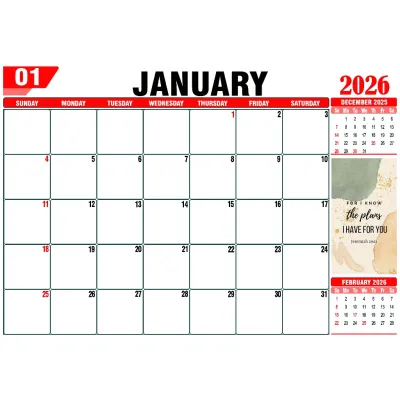
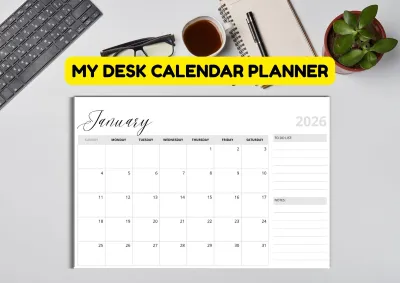
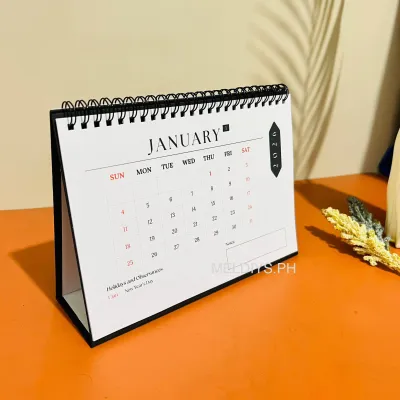
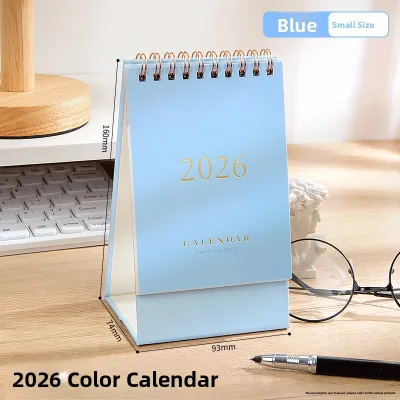
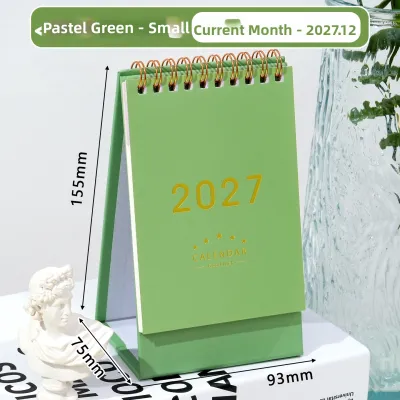
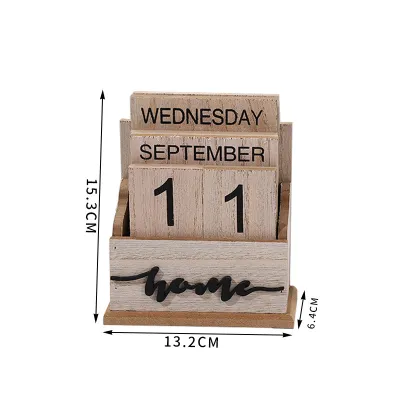
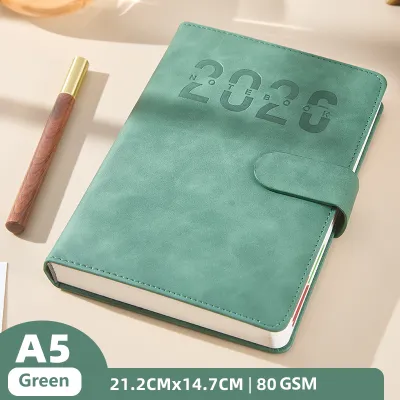
Prices are valid at publication and may change. Please refer to the product page for the latest price.
- Choose a Daily Layout if you manage back-to-back hourly appointments, rely heavily on time-blocking, or need extensive blank space for detailed meeting notes, daily logs, and personal metrics.
- Choose a Weekly Layout if you need to balance daily to-do lists with a broader view of the week's deadlines, meetings, and personal commitments on a single spread.
- Choose a Monthly Layout if you focus on long-term goals, macro-scheduling, social media content calendars, habit tracking, and prefer a lightweight, clutter-free perspective.
- Verify physical constraints first: Before purchasing, always check if your desk space, portability needs, and bag size align with the physical dimensions, binding style, and weight of the planner.
Daily Table Calendar Planners: Maximum Detail and Time-Blocking
Daily table calendar planners are designed for individuals who require an exceptional level of detail in their scheduling. Typically featuring one full page dedicated to a single day, this layout offers structured sections that help you dissect your waking hours. Many daily planners include vertical hourly timelines (often running from 6:00 AM to 9:00 PM), dedicated checklist columns, priority boxes (such as the Eisenhower Matrix), and open space for notes or sketches. This structural depth makes them the ultimate tool for heavy time-blocking, where every hour of the day is assigned a specific task or focus area.
This layout is highly beneficial for professionals with dense, meeting-heavy schedules, such as project managers, medical practitioners, or freelance consultants managing multiple clients. It is equally valuable for students balancing rigorous course loads, exam preparation, and extracurricular activities. By isolating a single day on a page, a daily planner reduces cognitive overwhelm. It forces you to focus entirely on the present 24 hours, keeping distractions from tomorrow’s tasks at bay. Additionally, the generous page real estate allows you to track daily health metrics, water intake, meals, or specific billable work hours without running out of room.
However, the maximum detail of a daily planner comes with distinct physical trade-offs. Because a daily planner requires at least 365 pages (plus monthly overviews and notes pages), these books are inherently bulky and heavy. They often feature thick, robust bindings to hold the massive page count together, which significantly increases their weight. If you rely on a daily planner, it is difficult to get a quick, cohesive view of the upcoming week or month without constantly flipping back and forth. Furthermore, if your schedule varies and you have relatively quiet days, the large empty pages can feel intimidating or wasteful, occasionally triggering planner guilt.
Given these characteristics, daily planners are best suited for a fixed desk setup. They perform exceptionally well when propped up on a dedicated wooden or metal planner stand next to your computer monitor, serving as a constant reference throughout the workday. They are less practical for professionals or students who constantly commute, as carrying a heavy, thick book in a backpack or tote bag can quickly become exhausting.
Weekly Table Calendar Planners: The Balanced Middle Ground
Weekly table calendar planners represent the most versatile and popular layout on the market. This format typically displays an entire week across a two-page spread, allowing you to visualize the rhythm of your week at a single glance. By presenting seven days simultaneously, weekly planners make it easy to spot upcoming deadlines, identify scheduling conflicts, and balance your workload across different days. They offer a comfortable middle ground, providing enough space for daily task lists while keeping you connected to the broader weekly timeline.

This format is ideal for the average office worker, creative freelancer, or student who needs to coordinate multiple projects without getting bogged down in hourly micromanagement. With a weekly planner, you can easily allocate tasks to specific days based on your actual capacity. For example, if you see a major presentation scheduled for Thursday, you can deliberately keep your Monday and Tuesday task lists lighter to focus on preparation. This level of foresight is difficult to maintain in a daily planner.
Despite its versatility, a weekly layout does have limitations. The physical writing space allocated to each day is significantly smaller than that of a daily planner. If you have a day filled with ten different meetings and a long list of errands, you will likely run out of space. To manage this, some users find they must supplement their weekly planner with sticky notes, a separate daily notepad, or digital task managers for extensive brain-dumps and meeting minutes.
When shopping for a weekly planner, you will encounter two main format variations, each catering to a different planning style:
- Vertical Weekly Spreads: These feature days arranged in vertical columns across the spread, often with hourly time increments. This format is ideal for appointment-heavy schedules, allowing you to visually block out time blocks and see gaps in your day.
- Horizontal Weekly Spreads: These present the days of the week in horizontal rows or rectangular blocks. This layout is highly task-oriented, making it perfect for checklist lovers who prefer writing structured, bulleted lists of to-dos rather than tracking precise hourly appointments.
Monthly Table Calendar Planners: Big-Picture Mapping and Macro-Scheduling
Monthly table calendar planners focus on the macro-perspective, stripping away daily noise to highlight long-term deadlines, major milestones, and recurring events. The classic monthly layout features a traditional calendar grid spread across two pages, with small squares representing each day. These planners often include generous side margins or dedicated adjacent pages for setting monthly goals, tracking habits, listing major project milestones, and noting financial commitments like monthly bill payments.
This layout is highly favored by project managers, content creators mapping out editorial calendars, teachers planning syllabus schedules, and event coordinators. It is also an excellent tool for tracking personal milestones, travel itineraries, fitness goals, or family schedules. Because you can see 30 to 31 days at once, the monthly planner is unmatched in its ability to show patterns, project durations, and long-term horizons. It encourages you to focus on high-level priorities rather than getting lost in the weeds of daily micro-tasks.
The primary benefit of a monthly planner is its physical profile. Because it only requires a fraction of the pages of a daily or weekly planner, a monthly planner is incredibly thin, lightweight, and highly portable. It slips effortlessly into any bag, briefcase, or slim folder. It also demands very low maintenance; you do not need to sit down every morning or evening to write out detailed lists, making it much easier to maintain consistently without experiencing burnout.
However, the obvious downside is the lack of daily writing space. The individual daily grid squares (typically measuring around 3×3 cm or 4×4 cm) can only accommodate two or three brief entries. If you try to write detailed hourly appointments or extensive daily checklists, the pages will quickly become unreadable. To overcome this, many professionals use a monthly planner as a “command center” propped up on their desk or mounted on a wall, while relying on a separate digital calendar or a simple daily notepad to execute their day-to-day tasks.
Comparing Layouts: Space, Portability, and Desk Footprint
To help you visualize how these three layouts compare in practical, daily use, review the structured comparison below:
| Layout Type | Writing Space per Day | Physical Bulk & Weight | Desk Footprint when Open | Best Planning Method |
|---|---|---|---|---|
| Daily | Very High (1 page/day) | High (Thick, heavy book) | Large (Requires dedicated space) | Time-blocking, detailed logs, journaling |
| Weekly | Moderate (Columns/Rows) | Moderate (Standard notebook) | Medium (Fits next to keyboard) | Task-oriented planning, weekly rhythms |
| Monthly | Low (Small grid squares) | Low (Very thin, lightweight) | Small to Medium (Can be propped up) | Macro-scheduling, project milestones |
Desk Footprint Analysis
Your physical workspace plays a significant role in determining which planner layout is practical. A daily planner, when fully open, occupies a substantial amount of desk real estate. If you work on a compact desk with a laptop, external monitor, mouse, and keyboard, an open daily planner can easily clutter your workspace.
In contrast, a weekly planner has a more moderate footprint, often fitting comfortably right below your keyboard or to the side of your mouse pad. Monthly planners offer unique flexibility; many are designed as “tent” calendars or wire-bound stands that sit vertically, taking up minimal horizontal desk space while remaining highly visible.
Portability and Environmental Considerations
If you commute regularly, work from coffee shops, or travel frequently, portability is a critical factor. Carrying a heavy daily planner in your bag can add physical strain, especially during daily transits. For those commuting in humid, tropical climates, sudden heavy downpours during the monsoon season pose a real threat to paper products.
If you carry your planner daily, it is wise to invest in a water-resistant cover, such as PU leather or a protective plastic sleeve, to safeguard your pages from moisture. Lightweight weekly and monthly planners are much easier to protect and transport in standard bags compared to thick, heavy daily volumes.
Paper Quality, Ink Compatibility, and Binding
When choosing a table calendar planner, the physical materials are just as important as the layout. You must verify that the paper weight, measured in grams per square meter (GSM), matches your preferred writing instruments:
- Paper Weight (GSM): Look for planners with paper weights between 80 GSM and 120 GSM. In high-humidity environments, paper naturally absorbs ambient moisture from the air. Lower-quality, thin paper (under 70 GSM) becomes highly susceptible to ink feathering (where ink spreads along the paper fibers), bleeding (where ink seeps through to the other side), and significantly slower drying times.
- Ink and Pen Fit: If you prefer writing with fine-tip gel pens (such as 0.38mm or 0.5mm sizes) or quick-drying ballpoint pens, standard 80 GSM paper is usually sufficient. However, if you enjoy using fountain pens, wet rollerballs, or water-based highlighters, you should opt for premium paper (100 to 120 GSM) to ensure excellent bleed resistance.
- Verification Check: Before writing extensively in a new planner, perform a quick patch test on a blank notes page in the back. Write a few words using your favorite pens, wait a few seconds, and check for drying speed, feathering, and ghosting (shadowing on the reverse side). This simple step prevents you from ruining your main planning pages.
- Binding Types: For desk-based planning, twin-loop wire binding (Wire-O) or high-quality lay-flat bookbinding is essential. Wire-O binding allows you to fold the planner back 360 degrees, cutting its desk footprint in half—a massive advantage for cramped workspaces. Lay-flat thread binding ensures that the book remains completely flat when open, allowing you to write comfortably near the center margins without fighting rising pages.
How to Align Your Planner Layout with Your Workflow
Finding the perfect planner setup often involves assessing your daily habits, professional demands, and physical workspace. Rather than forcing yourself into a rigid system that does not feel natural, choose a layout that complements how your brain already processes information.
The Hybrid Approach
Many successful planners do not rely on a single layout. Instead, they combine different formats to create a highly efficient hybrid system. For example, you can use a monthly table calendar planner as your physical “command center” on your desk to track major project deadlines, travel dates, and meetings. Simultaneously, you can use a digital calendar app (like Google Calendar) for real-time notifications and a simple, daily tear-off notepad on your desk to handle your immediate, hourly to-do lists. This keeps your physical planner clean and focused on the big picture while offloading daily details to disposable or digital mediums.
Self-Assessment Questions
To narrow down your choices, ask yourself the following questions:
- Do I need to track specific hours, or just general daily priorities? If your day is dictated by hourly client calls or class schedules, go with a daily layout or a vertical weekly layout. If you just have a list of tasks to complete by the end of the day, a horizontal weekly layout is much better.
- Do I frequently need to look ahead to next week's deadlines to prepare for today? If yes, a daily layout may isolate you too much. A weekly layout will give you the necessary foresight to plan ahead.
- Is my physical desk space limited, or do I work from multiple locations? If you have a small desk or work on the go, a compact weekly planner or a slim monthly planner is far more practical than a thick daily book.
The Golden Rule of Planning
If you are completely undecided, start with a weekly layout. The weekly format is the safest, most balanced option because it offers a functional compromise between daily detail and monthly foresight. If you find yourself consistently running out of space and needing more room for notes, you can confidently scale up to a daily layout for your next planner. Conversely, if you find many of your weekly pages left blank and only write down major events, you can scale down to a monthly layout.
In terms of budget, high-quality planners in the market generally fall into three broad price bands: budget-friendly options under ₱300 (often basic monthly grids or slim weekly pocket diaries), mid-range options from ₱500 to ₱1,200 (featuring durable twin-loop wire binding, thicker paper, and detailed weekly/daily layouts), and premium imported planners priced above ₱1,500 (which feature specialized fountain-pen-friendly paper, elegant leather covers, and highly structured productivity systems). Select the one that matches your budget, test your pens on the back pages, and start building a consistent planning habit.
Frequently Asked Questions (FAQ)
Can I use a table calendar planner for both work and personal life?
Yes, you can easily manage both work and personal commitments in a single planner by establishing clear visual boundaries. The most effective method is color-coding; for example, use blue ink for work tasks, green ink for personal errands, and red ink for urgent deadlines. Alternatively, if you use a weekly layout, you can physically divide each daily block into two sections—using the top half for professional meetings and the bottom half for personal chores, workouts, and family events. This centralized approach prevents scheduling conflicts and ensures you do not overlook personal commitments while managing a busy work week.
What is the best binding type for a table calendar planner?
Twin-loop wire binding (commonly known as Wire-O) is widely considered the best binding type for table calendar planners. Unlike standard bookbinding, twin-loop wire allows the planner to lay perfectly flat on your desk and fold back a full 360 degrees. This is incredibly useful when desk space is limited, as you can display only the current day or page without occupying double the horizontal space. For planners that remain flat on a desk, high-quality thread-stitched lay-flat binding is also an excellent, durable alternative that prevents pages from tearing out over time.
How do I prevent my planner from looking empty if I choose a daily layout?
An empty daily planner page can sometimes feel like a personal failure, but you can easily repurpose unused space to enrich your planning experience. If you have a light schedule, use the extra blank areas for habit tracking, daily gratitude journaling, meal planning, or summarizing key lessons learned during the day. You can also use the space to sketch, write down inspiring quotes, or paste receipts and keepsakes. Treating your daily planner as a hybrid scheduling tool and personal journal removes the pressure of filling every line with work tasks, preventing planner burnout and keeping you engaged with your routine.
Community discussion
Share your experience or ask a question. Comments are reviewed before publication.