
Quick Answer: Dated or Undated?
Choosing between a dated and an undated daily planner notepad depends entirely on your routine and scheduling consistency. If your daily life is governed by strict, back-to-back appointments, continuous habit tracking, and a need for external accountability, a dated planner is your best option. The pre-printed calendar days act as a daily prompt, keeping you anchored to a specific timeline throughout the year.
Conversely, if your schedule fluctuates or you only need structured planning on exceptionally busy days, an undated daily planner notepad is the ideal choice. This format offers absolute flexibility, allowing you to pause and resume your planning without leaving behind a trail of blank, wasted pages. The core trade-off balances the built-in discipline of a calendar-bound book against the waste-free freedom of a customizable notepad.
Key Differences Between Dated and Undated Daily Planners
Before selecting a new paper companion for your desk, it is essential to understand how their structural differences influence your daily planning habits. These two formats cater to entirely different cognitive styles and organizational needs. While one acts as a rigid chronological record, the other serves as a flexible, task-oriented canvas.
Products mentioned in this guide
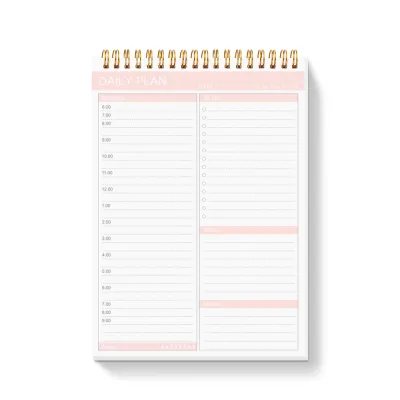
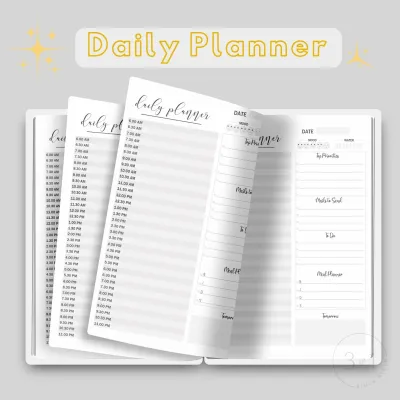
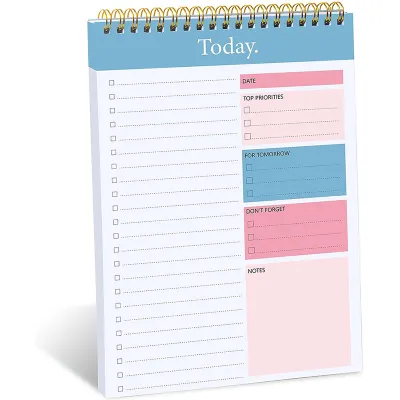
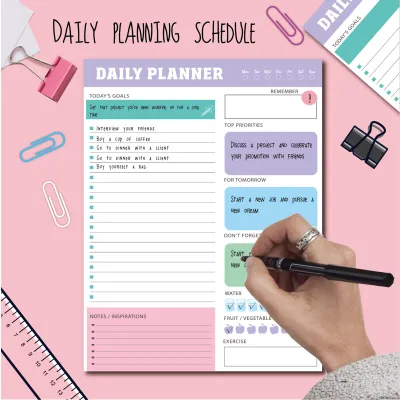
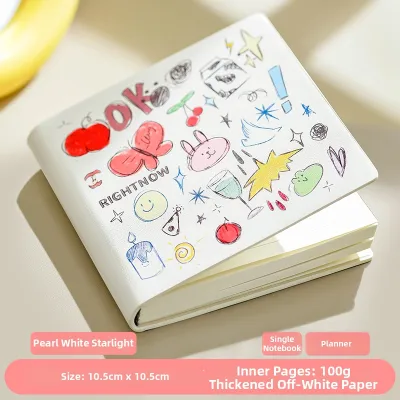
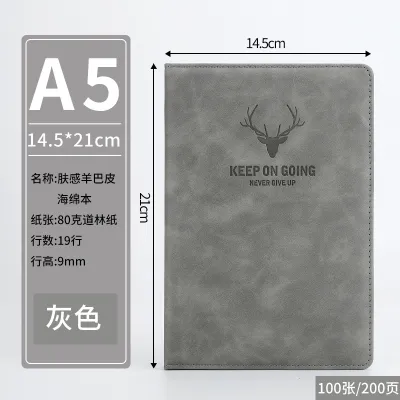
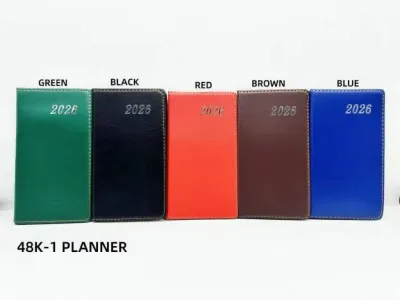
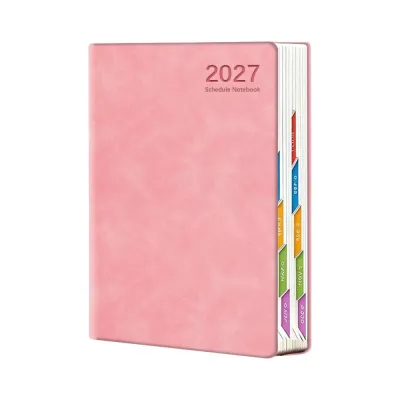
Prices are valid at publication and may change. Please refer to the product page for the latest price.

The physical format of a daily planner notepad dictates how you interact with your tasks. A dated planner establishes a linear path through the year, encouraging daily check-ins and chronological record-keeping. An undated notepad, often designed with tear-off sheets or lay-flat binding, focuses purely on the immediate twenty-four hours ahead, treating each day as an independent unit of productivity.
Consistency and Habit Building
Pre-printed dates carry a unique psychological weight that can significantly influence your commitment to a planning routine. When you open a dated planner, the current day’s page is already waiting for you, creating an immediate call to action. This built-in structure is highly effective for individuals trying to build long-term habits, as the physical progression of dates mirrors the passage of time and reinforces a sense of daily continuity.
For those with strict daily schedules, such as corporate professionals with regular meetings or students with daily lectures, dated planners provide an indispensable chronological anchor. They allow you to map out time-sensitive appointments weeks or months in advance, ensuring that future commitments are securely logged. This makes it much easier to track continuous, unbroken habits, such as daily exercise or project milestones.
However, this rigid structure carries a distinct behavioral risk. If you experience a chaotic week or take a vacation, returning to your planner to find multiple blank, unused pages can trigger a sense of guilt or failure. This psychological friction, often referred to as “planner guilt,” frequently leads users to abandon their dated planners entirely before the year is even half over.
Flexibility and Avoiding Wasted Pages
Undated daily planner notepads eliminate the pressure of the calendar by giving you complete control over when a page begins and ends. Because you write in the dates yourself, a skipped day carries no penalty. If you take a weekend off, go on a week-long holiday, or simply have a quiet day with few tasks, your planner remains exactly as you left it, with no empty pages mocking your absence.
This format is highly efficient for preventing paper waste and maximizing your financial investment. Whether you buy a premium notepad or a budget-friendly option, every single sheet of paper is utilized for actual planning rather than serving as a blank placeholder for a quiet Sunday. You can easily pause your planning during slow periods and resume immediately when your workload intensifies.
This adaptability makes undated planners exceptionally well-suited for project-based professionals, freelancers, and students with irregular schedules. If your work volume peaks during specific seasons or if you only need a daily layout during exam weeks, an undated notepad accommodates these waves of activity perfectly. It also serves as an excellent tool for intermittent journaling or tracking temporary, short-term goals.
Layout Options and Customization
The structural layouts of these two formats reflect their underlying philosophies. Dated planners typically feature highly structured, time-blocking grids with hourly breakdowns, often running from early morning to late evening. These layouts are designed to help you manage a dense schedule of appointments, leaving dedicated but limited space for general to-do lists and personal notes.
In contrast, undated daily planner notepads tend to offer more modular, open-ended layouts. You will frequently find designs featuring blank, dotted, or grid sections alongside flexible boxes for priorities, water intake, and quick sketches. This modularity allows you to adapt the page to your changing daily needs, turning a time-blocking section into a brainstorming area whenever necessary.
The trade-off for this customization is the initial setup effort required. With an undated planner, you must manually write the date, circle the day of the week, or draw your own tracking grids. While this process only takes a minute or two, it introduces a recurring friction point that some users find tedious, especially during busy mornings when they want to start working immediately.
Decision Framework: Which Planner Should You Buy?
To help you choose the right tool for your desk, consider how your daily routine aligns with the following practical scenarios and requirements.
Choose a dated planner if…
- Your daily routine involves a high volume of time-sensitive appointments, client meetings, or scheduled classes.
- You thrive on external structure and need the psychological prompt of a pre-printed date to maintain your planning habit.
- You prefer a ready-to-use tool that requires zero daily setup time or manual date entry.
- You want to maintain a chronological archive of your year to look back on for personal or professional reference.
Choose an undated planner if…
- Your daily workload fluctuates significantly, with some days requiring intense planning and others requiring none.
- You want to avoid the guilt of empty pages and ensure that every sheet of paper you pay for is fully utilized.
- You prefer modular, highly customizable layouts over rigid hourly time-blocking grids.
- You plan to use the notepad intermittently, such as solely for specific work projects, study sessions, or busy travel periods.
Verify first if…
- The paper weight (measured in GSM, or grams per square meter) is sufficient for your preferred writing instruments. For example, a paper weight of 100 GSM or higher is generally recommended to prevent ink bleeding and feathering, especially when using gel pens or highlighters.
- The binding style matches your workspace. Spiral-bound planners lay completely flat, while glue-bound daily planner notepads allow you to tear off completed sheets easily, which is ideal if you like to keep your daily list right next to your keyboard.
- The physical dimensions fit your daily carry. A compact A5 size is highly portable for commuting, while a larger A4 or letter-sized notepad is better suited for a permanent spot on your home office desk.
Neither may fit if…
- You rely entirely on real-time digital notifications, shared team calendars, and collaborative project management software to coordinate your day.
- You only need to jot down occasional, unstructured thoughts or quick phone numbers, in which case a simple blank pocket notebook or a digital scratchpad is more practical.
How to Maximize Your Daily Planner Notepad
Regardless of which format you choose, establishing a consistent daily review habit is the single most effective way to make your planner work for you. Set aside ten minutes at the start of your morning or at the end of your workday to update your tasks. This simple routine helps clear mental clutter, aligns your daily actions with your broader goals, and ensures that your planner remains an active tool rather than a passive desk ornament.
When using paper stationery in tropical climates like the Philippines, environmental factors can subtly affect your writing experience. High relative humidity can cause paper fibers to absorb moisture from the air, which temporarily softens the page. This moisture absorption can make the paper more prone to ink feathering, slower drying times, and bleed-through. To ensure a smooth writing experience, perform a quick ink test on an inconspicuous back page or corner of your notepad with your favorite gel pens, fountain pens, or highlighters to observe how the ink behaves before committing to daily use.
Finally, consider integrating your physical daily planner notepad with your digital tools for a comprehensive hybrid system. Use your digital calendar for real-time alerts, shared team meetings, and long-term scheduling that requires constant updates. Then, transfer your top priorities and hourly schedule for the day onto your physical notepad each morning. This hybrid approach combines the dynamic convenience of digital tracking with the tactile focus and distraction-free environment of paper planning.
Frequently Asked Questions (FAQ)
Can I use an undated planner for long-term goal tracking?
Yes, you can easily adapt an undated daily planner notepad for long-term goal tracking by incorporating manual structural elements. Many users write custom date headers, use colorful tab dividers to separate months, or maintain a dedicated index page at the front of the book to track major milestones. You can also allocate specific pages at the beginning of each section for monthly overviews, or pair your daily notepad with a simple, separate yearly wall calendar to keep your long-term deadlines visible while keeping your daily tasks flexible.
Are dated planners more expensive than undated ones?
Not necessarily, as the retail price of a planner is primarily determined by its manufacturing materials, paper quality, binding type, and brand positioning rather than whether the pages are dated. A premium undated planner with thick, high-GSM paper and a durable cover can cost more than a basic dated planner. However, when evaluating the overall value, undated planners often prove more cost-effective over time because they offer zero wasted pages; you only pay for the days you actually plan, ensuring that every peso of your investment (whether you spend ₱200 or ₱800) goes toward active productivity.
Community discussion
Share your experience or ask a question. Comments are reviewed before publication.