
The Writech Nebula stands out from standard office pens primarily through its emphasis on specialized ink delivery systems, distinct barrel aesthetics, and ergonomic grip designs. While everyday ballpoints prioritize low-cost utility, this specialty line focuses on a tactile writing experience tailored for journaling, sketching, and precise note-taking. To determine if it suits your daily routine, you must look closely at its physical balance, tip architecture, and ink formulation. Because real-world performance varies, verifying the manufacturer’s packaging for specific model details is key to understanding its capabilities.
Assessing Build Quality and Ergonomic Design
When evaluating the Writech Nebula against standard pens, the physical construction is often the first point of contrast. Standard disposable pens typically feature rigid, uniform plastic barrels that can cause hand fatigue during long writing sessions. In contrast, specialty pens like the Nebula often incorporate textured grip zones or softer materials designed to reduce finger strain. In a warm, humid tropical climate like that of the Philippines, a secure, non-slip grip is particularly valuable to prevent your fingers from sliding during extended writing tasks.
The weight distribution and overall balance of the pen also play a critical role in how comfortable it feels in your hand. Standard ballpoints often have a lightweight, front-heavy feel, whereas specialty gel or hybrid pens may feature a more centered gravity point. You can assess this by balancing the pen on your index finger to see where the pivot point lies. A well-balanced pen requires less downward pressure, allowing for a lighter touch on the page.
Products mentioned in this guide
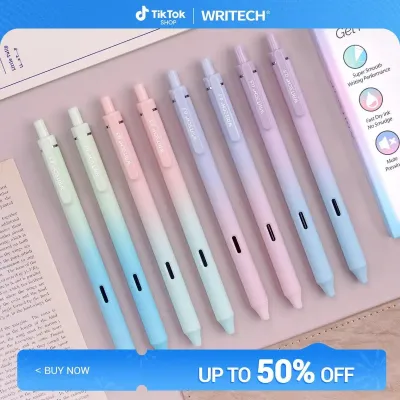
Prices are valid at publication and may change. Please refer to the product page for the latest price.
Additionally, pay close attention to the clip mechanism and cap sealing design. A sturdy, spring-loaded clip ensures the pen remains secure when attached to a notebook cover or a shirt pocket. For capped models, a tight, positive seal is essential to prevent the ink from drying out prematurely—an issue that can be accelerated by dry indoor air conditioning or high ambient temperatures. Retractable models should have a smooth, responsive click mechanism that shields the tip completely when not in use.
Interpreting Ink Formulation and Nib Specifications
The heart of any writing instrument lies in its ink chemistry and nib design. Standard pens usually rely on high-viscosity oil-based inks that roll slowly but resist drying out on the tip. The Writech Nebula, however, typically utilizes advanced gel, liquid, or hybrid ink formulations. These inks flow more freely, reducing friction against the paper and providing a smoother glide. However, because these inks are more fluid, they interact differently with paper fibers, making it important to check the packaging for specific ink properties.

In high-humidity environments, paper naturally absorbs moisture from the air, which can increase the likelihood of ink feathering or bleeding through the page. When choosing a nib size—such as an ultra-fine needle point versus a standard bullet tip—consider your typical paper stock. A fine needle point (such as 0.5mm or smaller) restricts the volume of ink deposited, making it excellent for detailed marginalia, compact planners, and thin paper. Conversely, a broader bullet tip offers bolder lines but may require thicker, high-GSM paper to prevent ghosting.
You should also verify the manufacturer’s claims regarding water resistance and smudge resistance. If you frequently use highlighters or work in environments where water spills are a risk, look for pigment-based inks rather than dye-based ones. Pigment inks contain solid particles that bind to the paper fibers, generally offering better lightfastness and water resistance once fully dry. Always check the recommended drying conditions on the label, as actual drying speeds depend heavily on the paper’s coating and local humidity levels.
How to Verify Performance Claims Before Buying
To ensure you are making a practical investment, it is wise to establish a systematic verification process before purchasing. Start by examining the official product packaging or authorized retailer listings to confirm the exact model number and batch details. Specialty pen brands often release multiple iterations of the same line, each featuring different ink types or tip sizes that behave uniquely on paper.
Once you have the pen, perform a simple swatch test on the specific paper stock you plan to use daily. Draw a series of solid lines, grids, and text blocks, then observe how the ink behaves.
- Dry Time Check: Run a finger across the ink at one-second intervals to determine how long it takes to resist smudging.
- Bleed and Ghosting Check: Turn the page over to inspect whether the ink has seeped through (bleeding) or is highly visible from the back (ghosting).
- Skip Rate Check: Draw fast, continuous loops to see if the ink flow remains consistent or if the line breaks.
Finally, weigh the cost-per-pen in Philippine Pesos (₱) against your actual writing needs. While standard utility pens are highly economical for bulk office use, paying a premium for a specialty pen like the Writech Nebula is justified if you require precise line control, ergonomic comfort for long sessions, or specific ink properties for creative projects.
Frequently Asked Questions (FAQ)
Does the Writech Nebula require special paper to prevent bleeding?
The necessity of special paper depends largely on the ink viscosity and the nib size of your specific model. Highly fluid gel or liquid inks tend to spread and bleed on thin, low-density paper (such as standard 70 GSM copy paper). To minimize bleeding and feathering, it is advisable to use heavier paper stocks, typically 80 GSM or higher, or paper with a smooth, coated finish. Testing the pen on a spare page of your favorite notebook or planner before starting a major project is the most reliable way to ensure compatibility.
How should I store this pen to maintain ink flow and tip integrity?
Proper storage preserves the lifespan of specialty gel and hybrid pens. Generally, storing these pens horizontally is recommended, as it keeps the ink evenly distributed and prevents it from settling away from the tip or causing leaks. Always ensure that capped pens are clicked shut tightly, and retractable models are fully retracted when not in use. This simple habit protects the delicate nib from physical damage and prevents the ink from drying out due to exposure to air.

Community discussion
Share your experience or ask a question. Comments are reviewed before publication.