
Choosing the right Deli 12-piece pen pack depends on your daily writing environment, your paper choice, and how much pressure you like to apply. Gel pens offer vibrant, smooth lines but require drying time; ballpoint pens provide instant, smudge-free reliability on almost any paper; and fountain pens offer a classic, expressive writing experience that rewards a deliberate pace. For busy offices, humid tropical classrooms, or personal journaling, matching the ink type to your specific task ensures your bulk pack delivers consistent performance down to the very last pen.
Whether you are budgeting ₱150 to ₱300 for a reliable set of office tools or looking for the perfect study companion, buying in a 12-pack is a highly practical choice. It ensures you always have a replacement ready when a pen runs out of ink or gets misplaced. By understanding how each pen type behaves on the page, you can avoid the frustration of smudged notes, bleeding ink, or hand fatigue during long writing sessions.
Understanding the Core Differences in Ink and Tip Design
To make an informed decision, it helps to understand the physical and chemical differences that define how these pens write. Gel ink uses a water-based suspension with suspended pigments, offering a fluid flow that sits on top of the paper. This design creates highly saturated, vivid lines that make your writing stand out, though it requires a brief moment to dry.
Products mentioned in this guide
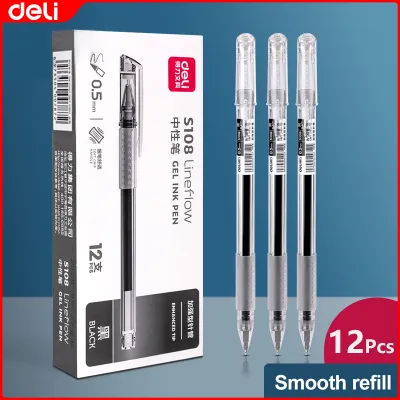
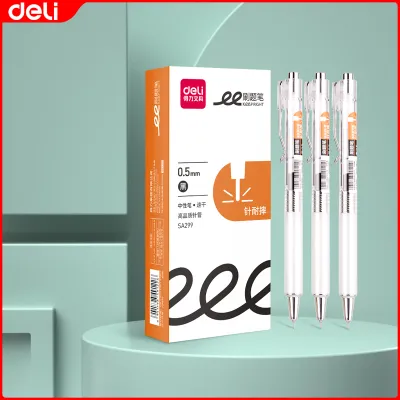
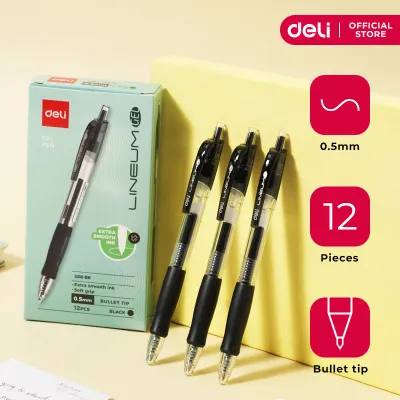
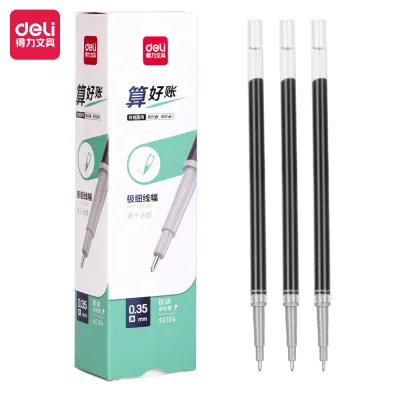
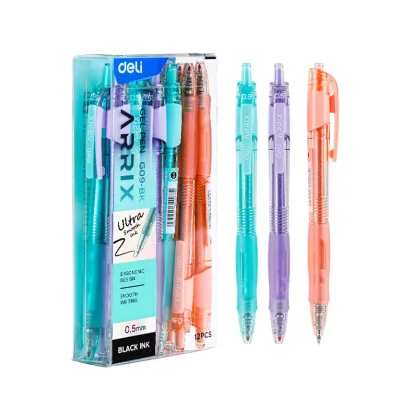
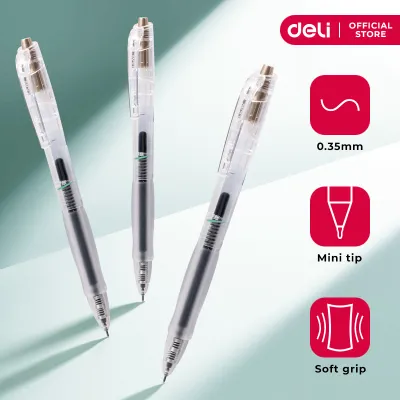
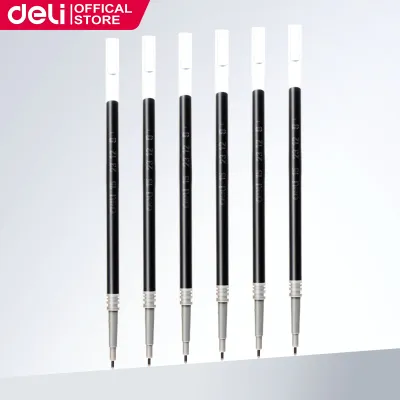
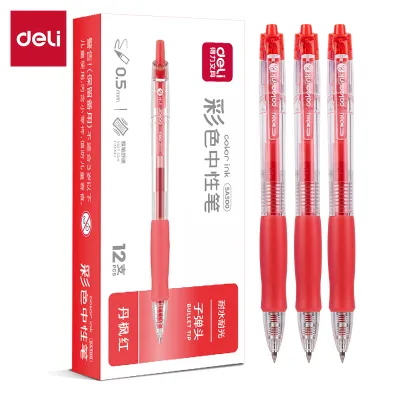
Prices are valid at publication and may change. Please refer to the product page for the latest price.
In contrast, oil-based ballpoint ink is highly viscous and thick. It relies on a rolling ball to paste a thin, fast-drying film onto the paper fibers. Because the ink is oil-based, it is naturally water-resistant and rarely bleeds through even the thinnest sheets. This makes it incredibly reliable for quick, everyday tasks where speed and durability are more important than line intensity.
Liquid fountain pen ink is entirely water-based and flows via capillary action through a metal nib. Instead of relying on a rolling ball, the ink flows naturally as the metal tip touches the paper. This mechanism requires virtually zero writing pressure, offering an incredibly smooth feel, but it demands careful handling and regular maintenance to keep the ink flowing smoothly.
When browsing Deli 12-packs, pay close attention to the tip sizes indicated on the packaging. Gel pens often range from ultra-fine 0.35mm to bold 0.7mm tips, allowing you to choose between precise detailing and bold lines. Ballpoints typically feature 0.5mm to 1.0mm tips, while fountain pens use nib sizes like Extra Fine (EF) or Fine (F) to control the ink flow.
Matching Pen Types to Your Daily Writing Scenarios
Your daily routine is the ultimate guide for choosing the right pen type. If your day involves constant movement, quick notes, and filling out forms, ballpoint pens are the ideal choice. In humid tropical climates, where paper might absorb moisture from the air, oil-based ballpoint ink remains highly stable. It resists smudging, writes instantly even after sitting idle, and works reliably on cheap carbon copy forms, receipts, or standard office paper.

For students and professionals who spend hours taking detailed notes, gel pens offer a superior balance of comfort and legibility. Because gel ink flows with minimal friction, you do not need to press hard against the page. This significantly reduces hand strain during long lectures or brainstorming sessions. The vibrant ink is also excellent for color-coding notes, helping you organize information visually.
If your writing tasks are more deliberate, such as journaling, signing formal documents, or practicing calligraphy, a fountain pen pack provides a unique and rewarding experience. The flexible metal nib allows for natural line variation based on your hand’s angle and pressure. This adds a personal, professional touch to your signature and encourages a slower, more mindful writing pace.
Consider who will be using the pens as well. A 12-pack of ballpoint pens is perfect for sharing in a busy office or household because they require no special care and work for everyone. On the other hand, a pack of gel or fountain pens is often better kept as a personal stash, ensuring the tips are not damaged by users who write with a heavy hand.
Checking Paper Compatibility and Drying Times
Before committing to a specific Deli 12-pack, it is essential to consider the type of paper you use most frequently. Water-based gel and fountain inks dry slower than oil-based ballpoint inks. On standard school notebooks or glossy planner pages, a slow-drying ink can easily smudge under your hand, especially if you write quickly or are left-handed.
To prevent messy pages, you can perform a simple drying time test. Write a single word on your preferred paper and gently run your finger across it after two, five, and ten seconds. If the ink smudges after five seconds, you may want to opt for a finer tip size or switch to a fast-drying ballpoint pen to keep your work clean.
Feathering and bleed-through are other common issues with high-flow inks. When liquid ink hits thin, porous paper, it can spread out along the fibers (feathering) or seep through to the other side (bleed-through). Check both sides of your page during a trial run. If you see significant bleeding, a ballpoint pen or an ultra-fine gel tip is a safer choice than a wet fountain pen.
Always verify manufacturer claims directly on the Deli packaging labels. Look for terms like “water-resistant ink,” “quick-dry formula,” or “archival quality.” These indicators help you select a pack that matches your preservation needs, ensuring your signatures and records remain legible for years to come.
Evaluating Ergonomics and Grip Comfort for Extended Use
A pen’s physical design dictates how long you can write without experiencing cramping or fatigue. Lightweight plastic barrels are easy to carry and maneuver, making them excellent for quick tasks. Slightly heavier barrels provide a grounded feel that guides your hand, which many writers prefer for neat, formal handwriting.
The grip section of the pen is where comfort is won or lost. Many Deli pens feature soft rubberized cushions that absorb finger pressure and prevent slipping, which is highly beneficial during hot, humid days. Hard plastic grips or textured ridges offer a firm, precise hold but may feel uncomfortable during multi-hour writing sessions.
When choosing a 12-pack, check if the pens feature a uniform ergonomic design or a simpler, streamlined body. If you plan to use the pens for extended writing sessions, investing in a pack with dedicated rubber grips will save your fingers from calluses. For quick, shared use at a reception desk or counter, simple plastic barrels are highly practical and cost-effective.
Frequently Asked Questions (FAQ)
Can I mix gel and ballpoint refills in the same pen body?
Generally, you cannot mix gel and ballpoint refills within the same pen casing unless the manufacturer explicitly states they use a standardized housing format. Gel and ballpoint pens use different internal spring tensions, tip lengths, and ink tube diameters to accommodate their respective ink viscosities. Always check the specific model number printed on your Deli pen barrel before purchasing replacement refills to ensure a proper fit.
How should I store a 12-pack to prevent the ink from drying out?
To maximize the lifespan of your Deli 12-pack, store gel and ballpoint pens horizontally. This keeps the ink column in constant contact with the back of the ball tip, preventing air pockets from forming. For fountain pens, store them horizontally when inked to keep the feed moist without causing leaks, or store them vertically with the nib pointing upward if you want to minimize ink pooling in the cap during short breaks.

Community discussion
Share your experience or ask a question. Comments are reviewed before publication.