
Choosing between a Deli gel pen and a Deli ballpoint pen for your daily writing tasks comes down to how you balance writing speed, paper compatibility, and visual clarity. There is no single universal option that fits every scenario. Instead, the ideal pen depends on your specific writing environment, the type of paper you use, and your personal comfort during long writing sessions. Gel pens provide a highly saturated, fluid line that glides effortlessly across the page, making them excellent for signatures, creative journaling, and structured notes. Ballpoint pens, on the other hand, offer exceptional reliability, rapid drying times, and the ability to write on almost any paper surface, making them the practical choice for fast-paced note-taking and multi-part forms.
In the Philippines, where high humidity and warm temperatures can affect how ink behaves on paper, understanding these differences is essential. Whether you are a student preparing for exams in a warm classroom, an office worker signing official documents, or a professional filling out carbon copy forms, selecting the right ink delivery system ensures your work remains legible and your hand stays comfortable. By examining the physical properties of each pen type, you can make an informed decision that matches your daily routine.
Core Differences in Ink and Mechanism
To understand why these two pen types perform so differently, it is helpful to look at the chemistry of their inks and the mechanics of their tips. A Deli ballpoint pen utilizes a thick, oil-based ink paste. This formulation has a high viscosity, meaning it is resistant to flow and requires physical pressure to transfer from the pen to the paper. The ink is housed in a reservoir and relies on a tiny, tightly fitted rotating ball at the tip. As you write, the friction between the ball and the paper surface pulls the viscous paste down, coating the ball and transferring a thin, controlled layer of ink onto the page.
Products mentioned in this guide
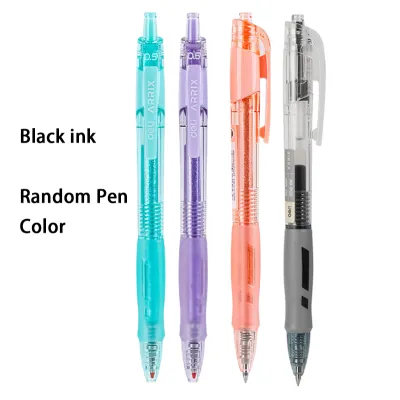
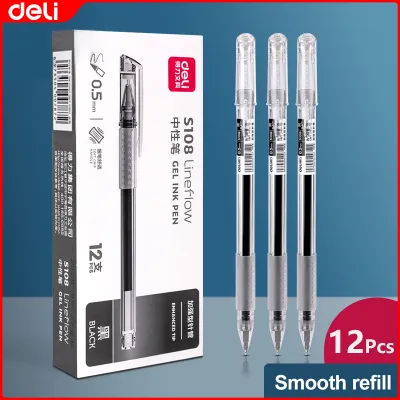
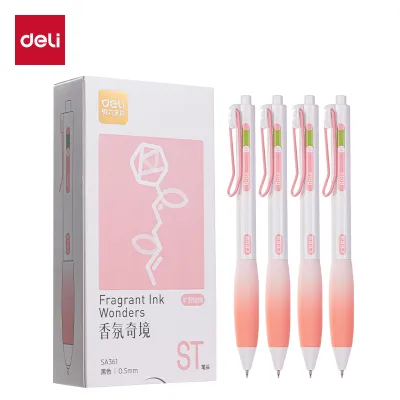
Prices are valid at publication and may change. Please refer to the product page for the latest price.
In contrast, a Deli gel pen uses a water-based gel ink. This ink contains suspended pigments within a water-soluble polymer matrix. Gel ink is thixotropic, which means it behaves as a thick gel while at rest inside the refill, but liquefies instantly under the shear force of the rotating ball at the tip. This physical transformation allows the ink to flow much more rapidly and generously than oil-based ink. The tip mechanics of a gel pen are designed with slightly looser tolerances to accommodate this higher flow rate, resulting in a thicker, wetter line on the paper.
The difference in viscosity directly impacts how the ink interacts with various paper fibers. The oil-based paste of a ballpoint pen sits primarily on top of the paper fibers, drying almost instantly through a combination of solvent evaporation and physical adhesion. The water-based gel ink, however, must penetrate the paper fibers to dry. This absorption process takes longer, which is why gel ink lines appear more vibrant but remain wet on the surface for a few seconds after writing.
Writing Performance and Hand Feel
The physical sensation of writing is one of the most noticeable differences when comparing these two instruments. Because Deli gel pens release a generous amount of low-viscosity ink, they offer minimal writing resistance. The pen glides smoothly across the page with very little downward pressure required from your hand. This effortless glide makes gel pens highly comfortable for extended writing sessions, as you do not need to grip the barrel tightly or press hard to maintain a consistent line. If you suffer from hand fatigue or finger cramping during long lectures or meetings, a gel pen can provide significant relief.

Conversely, a Deli ballpoint pen requires a deliberate, firmer touch. The high viscosity of the oil-based ink means you must apply consistent downward pressure to keep the ball rotating and the ink transferring smoothly. While this resistance can feel tiring during long writing sessions, it also offers a high degree of control. The physical feedback from the paper helps you guide the pen precisely, which is often preferred by individuals who write quickly or have highly stylized handwriting that benefits from a bit of drag.
Line quality and visual appearance also differ dramatically between the two types. Deli gel pens are known for their high opacity and deep color saturation. Because the ink contains rich pigments suspended in a water base, the lines are solid, bold, and highly visible, even in fine tip sizes like 0.5mm. Ballpoint pens typically produce a more muted, less saturated line. The oil-based ink can sometimes result in minor skipping or “white tracks” in the center of a stroke if the ball does not rotate perfectly, though modern Deli ballpoints are engineered to minimize this effect.
To verify which pen suits your hand feel, you can perform a simple observable trial. Take a sheet of your standard notebook paper and write a series of continuous loops with both pens. Observe the amount of pressure your hand naturally applies to keep the line solid. If you notice your hand tensing up with the ballpoint, or if the gel pen feels too slippery and causes your writing to lose shape, you will immediately know which mechanism aligns better with your natural grip and writing speed.
Practical Use Cases for Daily Tasks
Matching your pen to your specific daily tasks is the most practical way to ensure a frustration-free writing experience. Deli ballpoint pens excel in fast-paced, unpredictable environments. If you frequently write on low-quality, thin, or highly absorbent paper—such as cheap newsprint, standard receipt paper, or utility bills—the ballpoint is your safest option. Its quick-drying, oil-based ink is highly resistant to bleeding through the page, meaning you can write on both sides of thin paper without ruining the legibility of your notes. Furthermore, because ballpoints require physical pressure to write, they are the only suitable choice for filling out multi-part carbon copy forms, where the pressure must transfer through several layers of paper.
Deli gel pens are the ideal choice when presentation, contrast, and precision are your primary goals. If you are signing official documents, contracts, or certificates, the bold, dark line of a gel pen looks professional and authoritative. Gel pens are also excellent for creative journaling, bullet journaling, and color-coded study notes, as they are available in a wide variety of vibrant colors and metallic finishes that stand out clearly on premium, heavy-weight paper. Additionally, because gel ink is highly opaque, certain specialized Deli gel models can write legibly on dark or colored paper surfaces where standard ballpoint ink would be invisible.
For left-handed writers, managing the physical mechanics of writing presents a unique challenge. Because left-handed individuals push the pen across the page from left to right, their hand naturally follows the freshly written line. This dragging motion can easily smudge wet ink. To manage this risk, left-handed writers should exercise caution when using gel pens, which require a few seconds to dry completely. If you are left-handed and prefer the smooth glide of a gel pen, look for Deli models specifically labeled as quick-drying, or opt for a fine 0.5mm tip that deposits less ink on the page, reducing the drying time. Alternatively, a Deli ballpoint pen remains the most reliable smudge-free option for left-handed users due to its near-instantaneous drying speed.
Durability, Storage, and Ink Longevity
Managing your stationery inventory requires an understanding of how long each pen type lasts and how they should be stored, especially in tropical climates. One of the most significant trade-offs between these two pens is ink consumption. Because gel pens deposit a much thicker layer of liquid ink onto the paper, they consume ink at a significantly faster rate than ballpoint pens. If you write continuously, you will find that a Deli gel pen refill empties much sooner than a ballpoint refill of the same size. When purchasing, you can check the manufacturer’s specifications for write-out length, which is often measured in meters, to estimate how long a refill will last under your typical usage patterns.
Storage conditions are particularly important in warm, humid environments. Deli gel pens are water-based, which makes them susceptible to drying out if left uncapped. Always ensure that you click the retractable mechanism or firmly replace the cap after every use to prevent the tip from clogging. If a gel pen is left exposed to the air, the water in the ink tip can evaporate, creating a dry plug that prevents the ball from rotating. To store gel pens for long periods, keep them horizontal or tip-down to ensure the ink remains in contact with the writing tip, preventing air bubbles from forming in the reservoir.
Deli ballpoint pens are incredibly resilient and have an exceptionally long shelf life. The oil-based paste does not evaporate easily, meaning a ballpoint pen can sit in a drawer for months or even years and still write immediately when needed. However, extreme heat can cause the oil-based ink to thin, which may lead to minor leaking or pooling around the tip. To prevent this, avoid leaving your ballpoint pens in direct sunlight, inside a hot car, or near heat-emitting electronic devices. Storing them horizontally or tip-up can help prevent gravity from forcing the thinned ink out of the tip assembly.
Tip durability is another factor to consider if you frequently drop your writing instruments. The tip of a pen is a precision-engineered component where a tiny metal ball is held in place by a metal collar. If a gel pen is dropped directly on its tip while uncapped, the impact can easily deform the collar or chip the ball, causing the pen to skip, leak, or stop writing entirely. Ballpoint pens, with their thicker ink and sturdier tip construction, are slightly more forgiving of accidental drops, though any severe impact can still ruin the writing mechanism.
How to Choose the Right Deli Pen for Your Needs
To finalize your decision, consider this straightforward framework based on your daily writing environment and personal preferences.
Choose a Deli ballpoint pen if:
- You need an affordable, long-lasting pen for rapid note-taking, exams, or general office work.
- You frequently write on thin, low-quality paper, receipts, or multi-part carbon copy forms.
- You are left-handed and require ink that dries instantly to prevent smudging.
- You want a low-maintenance pen that can be stored for long periods without drying out.
Choose a Deli gel pen if:
- You prioritize a smooth, effortless writing experience with minimal hand strain.
- You want bold, highly saturated, and professional-looking lines for signatures, journaling, or formal documents.
- You enjoy using a variety of vibrant colors and tip sizes for creative projects or structured study notes.
- You primarily write on high-quality, thicker paper that can handle a wetter ink flow without bleeding.
Before making your final purchase, always verify the specific details on the product packaging. Check the tip size, which typically ranges from ultra-fine 0.35mm to bold 0.7mm or 1.0mm, to ensure it matches your handwriting style. Additionally, look for specific ink labels, such as “quick-dry” or “water-resistant,” on the exact Deli model you are considering, as these features can significantly enhance your daily writing experience.
Frequently Asked Questions (FAQ)
Do Deli gel pens smudge more than ballpoint pens?
Yes, Deli gel pens generally have a higher risk of smudging than ballpoint pens because of their water-based ink formulation. The gel ink deposits a thicker, wetter layer on the paper surface, which requires a few seconds to absorb and dry completely. In contrast, the oil-based ink of a ballpoint pen dries almost instantly upon contact with the paper. To minimize smudging with a gel pen, allow the ink to dry for a few moments before touching the page, or select a Deli model specifically labeled with quick-drying ink technology.
Which pen type is better for left-handed writers?
For most left-handed writers, a Deli ballpoint pen is the more practical and reliable choice because its oil-based ink dries instantly, preventing the writer’s hand from smudging the text as it moves across the page. However, if a left-handed writer prefers the smooth glide of a gel pen, they can successfully use one by choosing a fine tip size, such as 0.5mm or smaller, which deposits less ink. Using a quick-drying Deli gel pen model and adopting an under-writing hand position can also help prevent smudges.
Can I use gel pens on glossy or coated paper?
Gel pens are generally not recommended for use on glossy, coated, or non-porous paper surfaces, such as glossy photo paper, laminated sheets, or some types of plastic-coated labels. Because gel ink is water-based, it relies on the porous fibers of standard paper to absorb the liquid and dry. On a glossy surface, the ink cannot penetrate, causing it to pool, smear, or wipe off entirely. For coated or glossy materials, a Deli ballpoint pen or a specialized permanent marker is a much more effective choice.
Community discussion
Share your experience or ask a question. Comments are reviewed before publication.