
Quick Answer: Can Deli Replace Premium Brands for Daily Use?
When selecting writing instruments for daily tasks, the choice between budget-friendly options and established premium brands often comes down to balancing cost against performance. A deli pencil can indeed replace premium brands like Faber-Castell and Staedtler for many everyday writing needs, but this substitution comes with specific trade-offs. Deli offers an exceptionally cost-effective alternative that excels in high-volume environments, casual note-taking, basic schoolwork, and temporary drafting.
However, for tasks requiring strict consistency in graphite grading, professional technical drafting, or archival-quality sketching, Faber-Castell and Staedtler remain the superior options. Rather than declaring a single absolute winner, the decision should be framed around your budget constraints and the specific demands of your daily writing tasks. While Deli matches the basic utility of premium brands, the consistency of its wood casing and graphite bonding can vary more between production batches compared to the rigorous standards maintained by the established European manufacturers.
Key Comparison Dimensions for Everyday Pencils
Evaluating everyday pencils goes far beyond simply looking at the brand label stamped on the barrel. While it is easy to assume all wooden pencils perform similarly, the underlying manufacturing processes dictate how comfortable, durable, and reliable a pencil will be over its lifespan. Without standardized, independent laboratory tests available for every retail batch, everyday users must rely on observable physical traits and performance indicators to make an informed choice.
Products mentioned in this guide
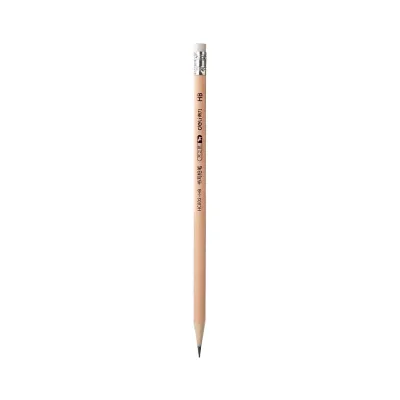
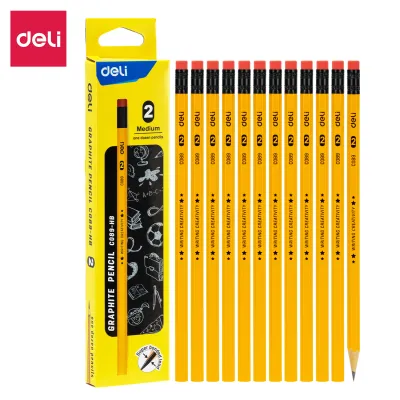
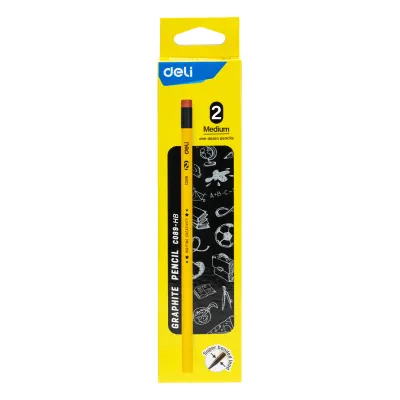
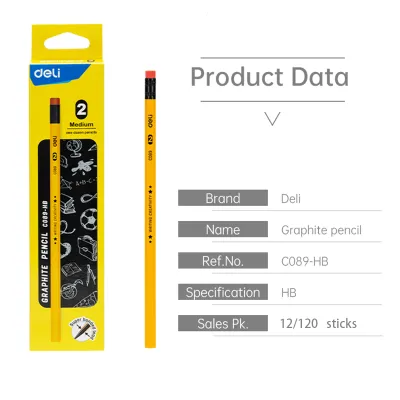
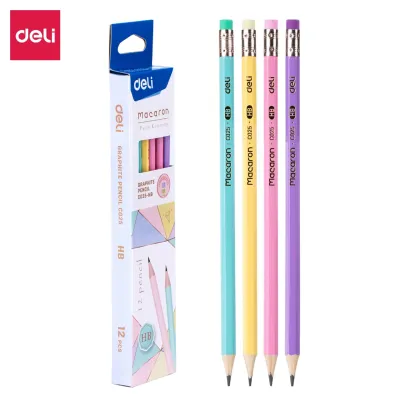
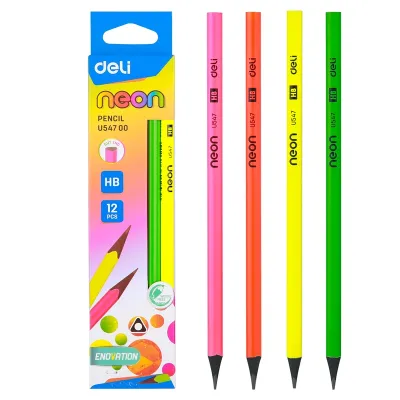
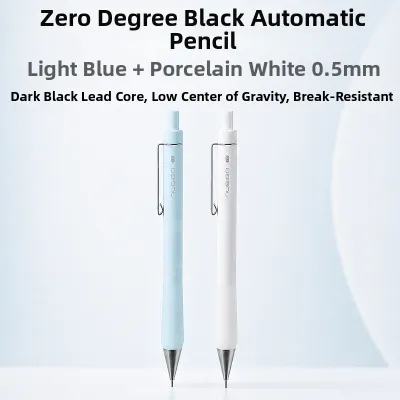
Prices are valid at publication and may change. Please refer to the product page for the latest price.

By paying close attention to details such as the barrel’s painted finish, the manufacturer’s graphite bonding claims, and how the wood behaves during sharpening, you can easily distinguish a high-performing tool from a frustrating one. To provide a clear comparison between Deli, Faber-Castell, and Staedtler, we must examine three main pillars: writing feel, structural durability, and material quality.
Graphite Smoothness and Line Darkness
The tactile experience of writing is primarily determined by the composition of the pencil lead, which is a carefully calibrated mixture of graphite and clay. Premium brands like Faber-Castell and Staedtler typically enforce exceptionally strict quality control over their clay-to-graphite ratios, ensuring that an HB or 2B pencil delivers a highly consistent level of darkness and smoothness every time. Faber-Castell is renowned for its smooth, dark laydown that glides effortlessly across the page, while Staedtler pencils often feature a slightly firmer formulation that retains a sharp point longer without feeling overly scratchy.
To evaluate these characteristics yourself, it is highly useful to test the pencils on different paper types common in your daily environment, such as low-gsm notebook paper and standard 70 to 80 gsm printer paper. In the tropical climate of the Philippines, high relative humidity can soften paper fibers, which directly impacts how graphite transfers to the page. On humid, absorbent paper, a premium pencil’s consistent lead formulation helps maintain a clean, legible line without requiring excessive downward force.
Budget options like a deli pencil are highly functional but may exhibit slight variations in darkness and tactile feedback between different production batches. You might occasionally find a Deli pencil that requires slightly more writing pressure to achieve the same dark line as a Faber-Castell, or you may encounter minor gritty spots within the lead where the clay was not ground as finely. For casual note-taking, high-volume list writing, or general office tasks, these minor variations represent an entirely acceptable trade-off for the substantial cost savings. However, for detailed shading, uniform technical lines, or prolonged writing sessions where hand fatigue is a concern, the reliable smoothness of premium brands justifies their higher cost.
Lead Strength and Break Resistance
There are few things more frustrating than a pencil lead that repeatedly snaps during writing or shatters entirely inside the wood casing while being sharpened. A pencil’s ability to withstand daily wear, heavy writing pressure, and accidental drops depends heavily on the internal bonding process used during manufacturing. Premium manufacturers invest heavily in proprietary bonding technologies, such as Faber-Castell’s SV (secural) bonding or Staedtler’s full-length protective gluing, which secure the entire length of the graphite core to the surrounding wood casing.
When buying pencils, always check the product packaging or official specifications for specific anti-break or core-bonding claims. These advanced bonding techniques ensure that even if a pencil is dropped onto a hard surface, such as a tiled classroom floor or a concrete office floor, the internal graphite core remains intact rather than fracturing into multiple useless fragments.
In contrast, budget brands like Deli may use more simplified industrial adhesive bonding methods. While these methods are perfectly adequate for normal, careful use, the lead inside a deli pencil may be more susceptible to internal micro-fractures if the pencil is dropped repeatedly or subjected to rough handling in a student’s backpack. A practical way to evaluate break resistance in your specific environment is to observe how often the lead breaks during sharpening or under heavy writing pressure. If you find yourself repeatedly shaving away wood only to have the newly exposed point fall out immediately, it is a strong indicator of fractured internal lead, an issue that occurs less frequently with the robust bonding of Faber-Castell and Staedtler.
Wood Quality and Sharpening Experience
The wood casing is the structural backbone of the pencil, and its quality directly dictates how cleanly the pencil sharpens and how long it will last. Premium lines from Faber-Castell and Staedtler frequently utilize high-grade incense cedar or sustainably sourced premium basswood. These woods possess a uniform density and straight grain that allow a sharpener blade to shave away thin, continuous ribbons of wood with minimal resistance.
Budget pencils, including many Deli models, often utilize standard poplar, reconstituted wood, or softer mixed hardwoods to keep production costs low. While these materials are fully functional, they are more prone to splintering, uneven sharpening, and causing the lead to fall out if the wood splits along a weak grain line. Furthermore, in highly humid environments, lower-grade woods can absorb moisture more rapidly than dense, treated cedar, making them slightly spongy and more difficult to sharpen cleanly.
To assess the wood quality of your pencils, take a close look at the exposed wood grain near the tip, check for a smooth, uniform painted finish on the barrel, and even note the scent when sharpening. Premium incense cedar has a distinct, pleasant aroma, whereas budget woods may smell neutral or slightly chemical due to the adhesives used. To accurately gauge the structural integrity of the wood, always test new bulk purchases with a sharp, high-quality manual sharpener rather than an electric one. A manual sharpener allows you to feel the resistance of the wood directly, helping you identify if the casing is shaving smoothly or splintering under pressure.
Evaluating Price and Long-Term Value
When managing school budgets, office supplies, or personal stationery collections in the Philippines, price is inevitably a major deciding factor. There is a substantial price gap between bulk budget packs of Deli pencils and premium retail boxes of Faber-Castell or Staedtler available through local school suppliers and online marketplaces. While a single premium pencil can cost anywhere from ₱15 to ₱40 or more depending on the specific product line, a deli pencil can often be purchased in bulk packs for a fraction of that cost, sometimes averaging as low as ₱3 to ₱5 per pencil.
To determine the true long-term value of these options, it is helpful to look beyond the upfront purchase price and calculate the “cost per successful sharpening.” This practical metric factors in how much of the pencil is actually usable versus how much wood and graphite are wasted due to internal breakage, splintering, or poor sharpening performance.
For students, large corporate offices, or community outreach programs where pencils are frequently lost, borrowed, or consumed in massive quantities, Deli offers immense upfront savings. The sheer volume of pencils you receive for a small budget easily offsets the occasional broken lead or splintered casing. In these high-turnover scenarios, premium pencils are often a poor investment simply because they are lost long before they are fully used.
Conversely, for professionals, architects, engineering students, or artists, the premium price of Faber-Castell or Staedtler is easily justified. The reduced downtime spent at the sharpener, the predictable line weights, and the absolute reliability during critical tasks—such as drafting a schematic or taking a timed board exam—make the higher cost per pencil a sensible business expense. To ensure you are getting genuine value, always purchase your pencils from authorized sellers or official brand stores on online marketplaces, as counterfeit premium pencils are common and offer performance that is often far worse than even the cheapest legitimate budget brands.
Decision Framework: Which Pencil Fits Your Needs?
Choosing the right writing tool does not require a one-size-fits-all solution. Depending on your daily tasks, budget, and performance expectations, different brands will serve you better. Use the following scenario-based guidelines to determine which pencil aligns best with your current needs:
- Choose Deli if: You require a high volume of pencils for casual note-taking, general office tasks, schoolwork, or distribution to large groups. If your primary goal is to minimize upfront costs while securing fully functional writing tools that perform reliably under normal conditions, Deli provides excellent value.
- Choose Faber-Castell if: You prioritize a consistently smooth, dark, and effortless writing experience. If you value eco-friendly, sustainably sourced wood and require dependable graphite grading for daily academic, professional, or creative writing, Faber-Castell is an outstanding choice.
- Choose Staedtler if: You demand exceptional lead durability, precise line weights, and high resistance to breakage. If you work in demanding environments where pencils are frequently dropped, or if you engage in technical drafting and detailed sketching, Staedtler’s strict manufacturing standards are well worth the investment.
- Verify first if: You are purchasing pencils for official standardized board exams, legal document signing, or archival work. For these critical applications, always verify the specific graphite grade (usually 2B is strictly required for optical mark readers in exams), smudge resistance, and non-toxic certifications directly on the product packaging before buying in bulk, regardless of the brand you choose.
Frequently Asked Questions (FAQ)
Are the HB and 2B grading standards the same across all three brands?
While HB and 2B are internationally recognized designations on the graphite hardness scale, the exact darkness and physical hardness can vary slightly between manufacturers. European brands like Faber-Castell and Staedtler adhere to strict regional standards that tend to produce slightly firmer leads, whereas Asian brands like Deli may occasionally lean slightly softer and darker for the same grade. Because of these subtle differences, it is highly recommended to test a single pencil from a new brand or batch on your preferred paper before committing to a large bulk purchase to ensure the line darkness meets your specific expectations.
Do budget pencils contain toxic materials?
Reputable budget brands like Deli that are distributed through major retail chains and verified online marketplaces comply with international safety regulations. These products are manufactured to meet standard non-toxic guidelines for wood, paint finishes, and graphite cores. For peace of mind, especially when purchasing stationery for young children who may have a habit of chewing on the ends of their pencils, parents and educators should check the packaging for recognized safety certifications such as EN71 (European safety standard) or ASTM D-4236 (American standard for labeling art materials).
Which pencil is best for preventing smudging during left-handed writing?
Smudging is primarily influenced by the specific graphite formulation, the hardness grade of the lead, and the texture of the paper, rather than the brand name alone. Left-handed writers, whose hands naturally drag across freshly written text, should look for pencils labeled as smudge-proof or opt for slightly harder grades such as H or 2H from any of the three brands. Harder leads contain a higher clay-to-graphite ratio, which deposits less loose powder on the page and significantly reduces smearing. Testing the drying speed and smudge resistance of a pencil on your typical notebook paper is the most reliable way to find a comfortable writing match.
Community discussion
Share your experience or ask a question. Comments are reviewed before publication.