
Deciding whether to write calligraphy yourself on a blank personalized card or to order from a professional service depends on your batch size, timeline, and skill level. If you are preparing a single card or a very small batch for an intimate occasion, possess basic penmanship skills, and want to add a deeply personal, handcrafted touch, the DIY route is highly rewarding. Conversely, if you are managing a large mailing list, require strict visual consistency, lack the time to practice, or want specialized finishes like foil stamping, outsourcing to a professional personalized card service is the more practical and stress-free choice. By evaluating your current resources, timeline, and the physical properties of your materials, you can make an informed decision that ensures your cards look polished and arrive on time.
When to Choose DIY Handwritten Calligraphy
Taking the DIY route allows you to infuse each personalized card with unique character and a sense of warmth that digital printing cannot fully replicate. Before committing to this path, honestly evaluate your current calligraphy skill level. Calligraphy is a muscle-memory skill that requires consistent practice; if you have not picked up a dip pen or brush pen recently, you will need to dedicate time to practicing basic strokes on scrap paper before touching your final card stock. If you enjoy the meditative process of lettering and have the patience to guide your hand through every curve, writing the cards yourself can be a deeply satisfying creative outlet.
The batch size of your project is a primary deciding factor for going DIY. Hand-addressing a single birthday card, a few anniversary notes, or a small set of dinner party place cards is highly manageable and allows you to customize each piece for the recipient. In these small quantities, minor variations in letter spacing or ink density are not seen as flaws; instead, they serve as authentic proof of handcrafting. However, if your guest list grows larger, the physical demand of maintaining consistent letterforms increases dramatically.
Products mentioned in this guide
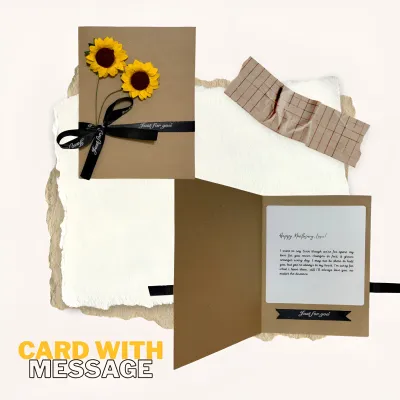
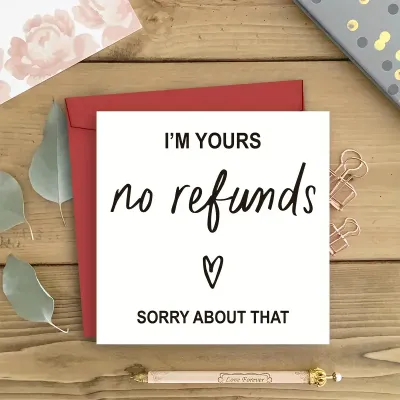
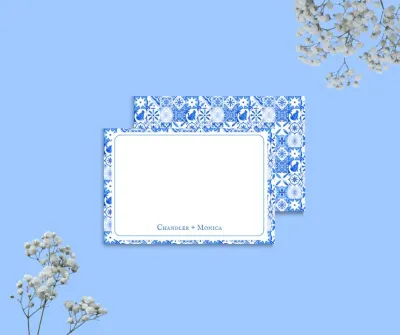
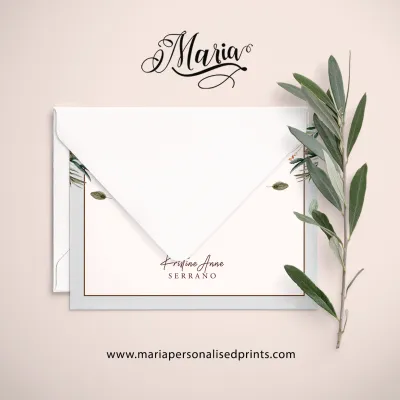
Prices are valid at publication and may change. Please refer to the product page for the latest price.
Your choice of tools and materials also dictates DIY success. You will need a reliable pen—such as a traditional dip pen with flexible nibs, a fountain pen, or a high-quality brush marker—along with compatible calligraphy ink. In warm, humid tropical climates, paper fibers naturally absorb moisture from the air, which can cause ink to feather or bleed outward in fuzzy lines. You must verify that your blank card stock is thick and sized properly to handle wet media, and you should always rule light pencil guidelines on the card surface to keep your writing straight and balanced.
When to Order from a Personalized Card Service
Ordering from a professional personalized card service is the most reliable choice when you are dealing with high-volume events or strict deadlines. For large-scale occasions like weddings, corporate gatherings, or extensive holiday mailings, you need cards that look uniform and remain highly legible. Professional printing ensures that every single card looks exactly as crisp and perfect as the first one, eliminating the risk of human error or physical fatigue that naturally occurs during long writing sessions.

Time and physical stamina are critical constraints that often make professional services the superior option. Writing calligraphy by hand requires sitting in a controlled posture, maintaining precise grip tension, and working slowly to let the ink dry. If you are balancing a busy work schedule or managing the logistics of a major event, you may not have the spare hours required to write, dry, and pack each card. Outsourcing the task frees up your schedule and spares you from the physical hand cramping and neck strain associated with repetitive lettering.
Furthermore, professional services offer design capabilities and specialized finishes that are incredibly difficult to achieve at home. If your vision for the personalized card includes metallic foil stamping, deep embossing, letterpress textures, or complex digital layouts with integrated photography, a professional printer is essential. These services use industrial machinery and specialized dies to apply heat, pressure, and specialized inks to heavy card stock, resulting in a tactile, high-end finish that standard home tools cannot replicate.
Core Dimensions to Compare for Your Personalized Card
To make the best decision for your project, you must weigh several practical trade-offs across time, cost, error tolerance, and scalability.
The time investment for DIY calligraphy includes not just the writing itself, but also the preparation phase. You must factor in hours for sourcing materials, practicing your script, ruling pencil guidelines on every single card, waiting for the ink to dry completely, and carefully erasing the pencil marks afterward. With a professional service, your time is spent upfront on digital design, selecting paper options, proofreading the text, and uploading your address list. Once the order is submitted, the production and shipping lead times are handled entirely by the provider, though you must plan for these transit times so your cards arrive before your deadline.
The cost structure of these two approaches is also vastly different. DIY calligraphy has a low entry cost if you already own basic pens, but purchasing premium blank cards, specialized calligraphy inks, high-quality nibs, and practice paper can add up. If you make mistakes, you will also need to buy extra blank cards as a buffer. A professional service typically charges a setup fee and a per-unit price that decreases as your order volume increases. While the initial quote for a professional service might seem higher than buying a few bottles of ink, it often proves more cost-effective for large batches when you calculate the value of your own labor and the cost of wasted materials.
Error tolerance is another crucial factor. When writing by hand, a single ink smudge, a misspelled name, or a slipped nib can ruin an entire card instantly. You must purchase extra blank card stock to account for these inevitable mistakes. With a professional service, the printing process is automated and highly precise, meaning physical smudges are rare. However, any spelling errors in your submitted digital file will be printed exactly as written, making meticulous digital proofreading absolutely vital before you click the submit button.
| Dimension | DIY Calligraphy | Professional Service |
|---|---|---|
| Time Investment | High (hours of practice, ruling lines, writing, drying, and erasing) | Low to Medium (digital design, proofreading, and waiting for delivery) |
| Cost Structure | Low upfront for tools; higher per-unit cost if buying premium blank stock in small quantities | Higher upfront setup fees; lower per-unit cost for large bulk orders |
| Consistency | Organic variations; letters will have slight differences in shape and ink density | Perfect uniformity; identical text alignment and color across all cards |
| Scalability | Low; highly exhausting for large batches of cards | High; easily handles hundreds of cards with automated printing |
| Customization Limits | Limited by your hand skills and tool capabilities | Access to foil stamping, embossing, and complex digital layouts |
Step-by-Step Action Plan for Your Decision
If you decide to take the DIY path, begin by testing your ink compatibility. Take one of your blank cards and write a few test strokes in an inconspicuous area or on a spare scrap of the exact same paper. Observe if the ink spreads, bleeds through to the back, or takes longer than a few minutes to dry. Once you confirm the paper and ink work well together, use a soft pencil and a ruler to draw light horizontal guidelines on your cards; this ensures your calligraphy does not slant upward or downward. Finally, pace your writing sessions by breaking the work into small batches, allowing your hand to rest so your writing quality remains consistent.
If you choose to use a professional personalized card service, start by requesting physical paper proofs or a sample kit if the provider offers them. This allows you to feel the weight of the card stock and see the true colors of the ink in person. Next, compile your guest list or card text in a spreadsheet and double-check every single spelling, capitalization, and address detail. Before finalizing your order, confirm the production and shipping timelines with the provider, ensuring you have a buffer before you need to mail or hand-deliver the cards.
Establish clear stop conditions to protect your timeline and budget. If you choose the DIY route but find that your ink constantly bleeds on the chosen card stock, your hand begins to cramp after writing just a few cards, or you realize your event deadline is too close, abandon the DIY attempt immediately. Switching to a professional service early prevents you from wasting expensive blank cards and ensures you still receive beautiful, legible personalized cards in time for your special occasion.
Frequently Asked Questions (FAQ)
Can I mix DIY calligraphy with a printed personalized card service?
Yes, combining these two methods is an excellent way to achieve both professional polish and a warm, personal touch. You can order personalized cards from a service with the main body text, illustrations, or borders already printed, leaving a designated blank space for the recipient’s name or a short note. This hybrid approach gives you the visual contrast of crisp, uniform printed text paired with the organic beauty of hand-written calligraphy. Before ordering, ask the service provider if the card stock is uncoated or has a matte finish that can easily accept fountain pen or dip pen ink without smudging or resisting the wet medium.
What type of blank card stock is best for DIY calligraphy?
The best blank card stock for DIY calligraphy is a heavy, high-quality paper with a smooth surface and proper sizing. Look for card stock with a heavy weight rating, which provides a sturdy feel and prevents wet ink from buckling the paper. Papers with a high cotton content or those labeled as watercolor and mixed-media friendly are excellent choices because they are designed to handle wet inks without feathering. Always perform a quick test on a hidden corner or a scrap piece of the card stock using your specific pen and ink combination to ensure the ink dries cleanly and does not bleed through to the other side.
Community discussion
Share your experience or ask a question. Comments are reviewed before publication.