
To determine how many folders and binders a document organizer file storage box can hold, you must look beyond external dimensions and calculate the box’s minimum internal usable width against the spine thickness of your filing items. A standard office storage box with an internal width of 12 inches (approx. 305 mm) can hold up to 30 slim manila folders containing light paperwork, but only about 4 standard 3-inch (75 mm) lever arch files. Failing to account for the physical footprint of binder rings, folder tabs, and box taper often leads to bulging lids, torn documents, and structural failure. Understanding the exact spatial relationship between your storage containers and your document formats ensures your archives remain organized, accessible, and protected from environmental wear.
Quick Framework for Estimating Storage Box Capacity
Many office managers and home organizers make the mistake of relying on external dimensions or total volume ratings when purchasing storage solutions. A product listing might advertise a “30-liter capacity” or display external measurements of 400 mm x 330 mm x 250 mm. However, because folders and binders are rigid, rectangular objects rather than liquids or loose items, they cannot conform to fill every cubic centimeter of a box. The only measurement that truly dictates how many files you can line up side-by-side is the linear internal width of the box’s base.
To calculate your storage capacity, you must use a straightforward linear equation: divide the usable internal width of the storage box by the average thickness of the binders or folders you intend to store. For example, if a heavy-duty plastic box provides 330 mm of flat, unobstructed internal floor width, and your standard ring binders have a spine thickness of 50 mm, the absolute maximum capacity is six binders (330 divided by 50 equals 6.6). This mathematical approach prevents the common frustration of buying containers that look spacious on the outside but fail to accommodate your actual filing system once the walls, lids, and handles are accounted for.
Products mentioned in this guide
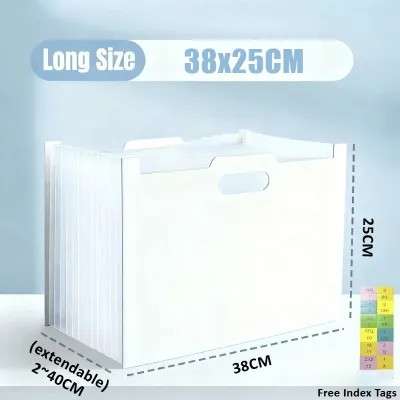
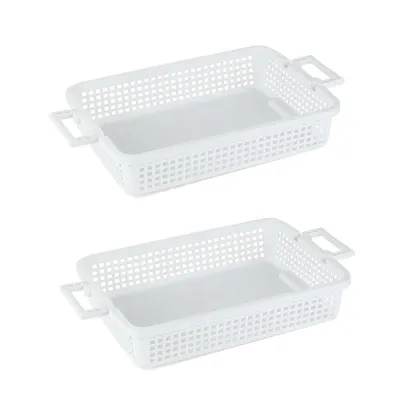
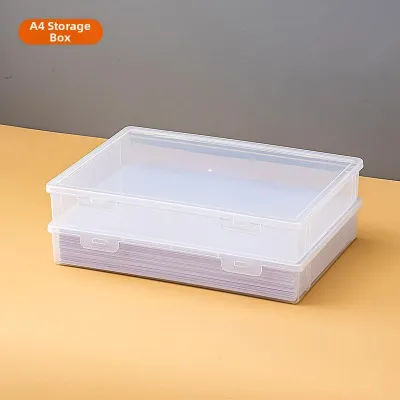
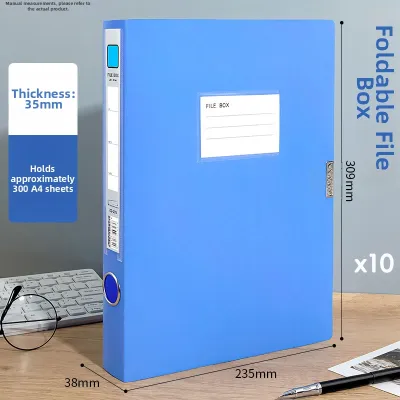
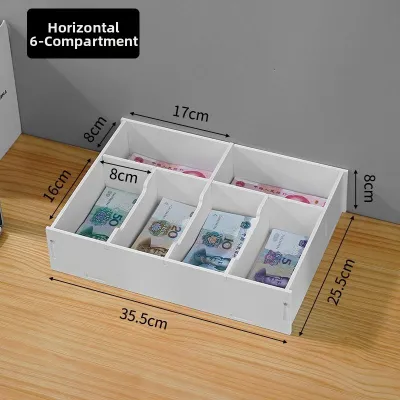
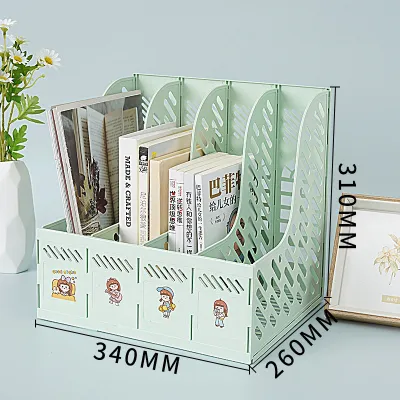
Prices are valid at publication and may change. Please refer to the product page for the latest price.
Baseline Dimensions for Folders and Binders
To perform accurate capacity calculations, you must first establish the physical baseline measurements of the specific filing media in your collection. Filing systems vary dramatically in thickness, and even empty folders take up more space than most people anticipate once they are filled with standard copy paper.

Standard File Folders and Hanging Folders
Standard manila folders and pocket files are relatively thin when empty, typically measuring less than 2 mm. However, once filled with a standard load of 100 to 150 sheets of paper, a single manila folder expands to a thickness of approximately 10 mm to 15 mm (0.4 to 0.6 inches). If your filing system relies on hanging folders, you must account for both the thickness of the paper inside and the physical suspension mechanism. Hanging folders feature metal or plastic rods with hooks that extend past the width of the paper. Standard A4 hanging folders require an internal box width of at least 325 mm to allow the hooks to rest properly on side rails, while Legal hanging folders require a wider clearance of approximately 385 mm to 400 mm. The hanging hardware itself adds about 5 mm to 8 mm of thickness per folder, even before documents are inserted, which significantly reduces the total number of files you can fit compared to loose manila folders.
Ring Binders and Lever Arch Files
Ring binders and lever arch files are engineered to hold massive volumes of documents, but their rigid construction consumes a fixed amount of linear space regardless of how many pages are inside. A standard 1-inch (25 mm) round-ring binder actually has a spine width of about 35 mm to 40 mm to accommodate the cover overhang. Larger 2-inch (50 mm) D-ring binders feature a spine width of approximately 65 mm, while heavy-duty 3-inch (75 mm) lever arch files typically have a spine width of 75 mm to 80 mm. Lever arch files, which are highly popular in corporate and legal offices across the Philippines, also feature a wider footprint and a metal finger-pull ring that can slightly protrude. Furthermore, lever arch files stand taller than standard binders, often measuring 315 mm to 320 mm in height for A4 sizes, meaning your storage box must have a minimum internal height of 325 mm to ensure the lid can close flat without putting pressure on the top of the files.
How to Measure Usable Space in a Storage Box
Accurately assessing the usable space inside a document organizer file storage box requires a tape measure and an eye for structural details. You should never rely on the manufacturer’s stated dimensions on the product label, as these almost always represent the maximum external points, including the lid overhang, protruding handles, and exterior reinforcement ribs.
To find the true usable space, open the box and measure the internal dimensions at the narrowest points. Many plastic storage boxes are injection-molded with a slight taper, meaning the bottom of the box is narrower than the top opening to allow for nesting during transport. Always measure the internal width and length at the very bottom of the box, as this is where the spines of your binders or the edges of your folders will rest. Additionally, subtract the thickness of the box material itself; double-walled corrugated cardboard can reduce internal space by 10 mm to 12 mm compared to external measurements, while heavy-duty plastic walls with interior structural ribbing can reduce usable space by up to 20 mm.
Look closely for internal obstructions that can disrupt a clean line of folders. Molded plastic handles are a major culprit, as they often protrude inward, creating a physical barrier that can rob you of 20 mm to 40 mm of usable linear width on each side. Built-in dividers, pen trays, or reinforced corner pillars also create dead zones where files cannot sit flat. Finally, measure the internal height from the floor of the box to the lowest point of the lid when it is fully seated. If you use hanging folders, ensure there is enough vertical clearance below the rails so the bottom of the folders does not drag on the floor of the box, which causes them to bunch up and misalign.
Step-by-Step Calculation for Your Document Collection
Once you have gathered the measurements of both your storage box and your filing items, you can follow a structured process to determine the perfect fit.
First, compress your document collection naturally on a desk. Use a ruler to measure the total linear width of the collection. For example, if you have ten 1.5-inch binders, their combined physical width on the shelf might measure around 450 mm.
Second, compare this total collection width to the minimum internal width of your target storage box. If your box has a usable internal width of 400 mm, your 450 mm collection will not fit, requiring you to split the documents across two boxes or select a larger container.
Third, always apply a 10% to 15% buffer space. If your box has an internal width of 500 mm, do not pack more than 425 mm to 450 mm worth of files. This empty space allows you to easily slide your fingers between binders to retrieve them and leaves room for future document additions.
Fourth, plan for mixed layouts. If you are storing a combination of upright binders and flat folders, place the rigid binders on one side to act as a bookend, preventing the loose folders from sliding downward or bending.
Fifth, calculate the total weight. A standard ream of A4 paper (500 sheets of 80gsm) weighs approximately 2.5 kilograms. A standard 3-inch lever arch file fully loaded can easily weigh up to 4 kilograms. If you pack five of these files into a single box, the total weight will reach 20 kilograms. Verify that the box’s base support and handle designs are rated to carry such a heavy load safely.
Common Sizing and Packing Mistakes to Avoid
Avoiding common pitfalls during the packing process will save your documents from permanent damage and extend the lifespan of your storage boxes. One of the most frequent errors is overstuffing a box to maximize space. When binders are crammed too tightly, the lateral pressure forces the metal rings of adjacent binders against each other, warping the rings or creasing the index tabs. If you must use significant force to slide a file into the box, it is a clear sign that the box has reached its safe limit.
Another common oversight is ignoring the handle clearance trap. Many plastic utility boxes feature clip-lock handles that fold inward to secure the lid. These handles can press directly into the sides of your folders, crushing paper edges or cracking plastic binder covers when the lid is latched down. Always position your sturdiest binders adjacent to these handle areas to prevent delicate documents from being pinched.
Additionally, do not assume that a box labeled “Letter/A4 compatible” will fit your entire filing setup. While standard A4 paper measures 210 mm x 297 mm, a hanging folder designed for A4 paper is significantly wider due to the hanging rods, and a lever arch binder is both wider and taller.
In the tropical climate of the Philippines, environmental factors play a massive role. High relative humidity, which regularly exceeds 80% during the monsoon season, softens the cellulose fibers in standard cardboard boxes. If a cardboard document organizer file storage box is overpacked with heavy files in a humid environment, the structural walls will gradually bow outward and sag. For long-term archiving in non-air-conditioned spaces in the Philippines, it is highly recommended to invest in heavy-duty, moisture-resistant plastic storage boxes with secure lids to prevent mold growth and physical degradation.
Frequently Asked Questions (FAQ)
Can I store hanging folders in any document organizer file storage box?
No, you cannot store hanging folders in just any standard storage box. Hanging folders require a box with built-in internal rails, molded plastic ledges, or a highly specific internal width that matches the standard hanging rod dimensions (typically 325 mm for A4 or 385 mm to 400 mm for Legal sizes). If the box is too wide, the folders will fall off the tracks and slip to the bottom; if it is too narrow, the hooks will not fit, preventing the folders from hanging freely.
How much weight can a standard plastic storage box hold?
You must check the manufacturer’s product label or specifications for the exact weight limit of your specific box, as load capacities vary widely based on plastic thickness and design. Generally, standard utility plastic boxes can safely support between 15 to 25 kilograms of evenly distributed weight. However, because paper is exceptionally dense, a fully packed box of documents can easily exceed this limit, risking handle failure or cracking when lifted.
Should I store binders upright or flat?
You should store binders upright, similar to books on a library shelf, to preserve their structural integrity. Storing binders upright keeps the weight of the paper distributed evenly across the spine and prevents the metal rings from warping. If you must store binders flat, avoid stacking them more than three high, as the cumulative weight of the upper binders can crush the rings of the bottom binder, making it difficult to open or close.
Community discussion
Share your experience or ask a question. Comments are reviewed before publication.