
Finding the perfect daily writing companion is a critical task for students, teachers, and office professionals across the Philippines. When preparing for long lecture notes, board exam reviews, or daily office documentation, the reliability of your pen directly impacts your writing speed and physical comfort. The dong a gel pen point 5 has long stood as a household name in local classrooms and offices, celebrated for its bold line and distinct ink delivery. However, the budget stationery market has expanded rapidly, introducing numerous local store brands and regional imports that challenge this classic choice. Choosing the right pen requires looking beyond the initial price tag to evaluate how the ink, tip, and barrel design perform under real-world writing conditions.
Quick Answer: Which Budget Gel Pen Wins for Everyday Writing?
The ideal budget gel pen depends heavily on your specific writing style, speed, and the type of paper you use daily. There is no single winner that suits every hand, but clear performance differences can guide your choice.
The dong a gel pen point 5 is the top contender for writers who prioritize a highly saturated, bold 0.5mm line, a firm rubberized grip, and consistent ink flow that does not skip during fast-paced writing. Its formulation is highly suited for standard notebook paper and intermediate pads commonly used in local schools.
Products mentioned in this guide
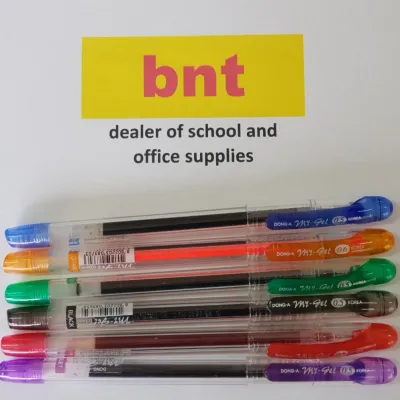
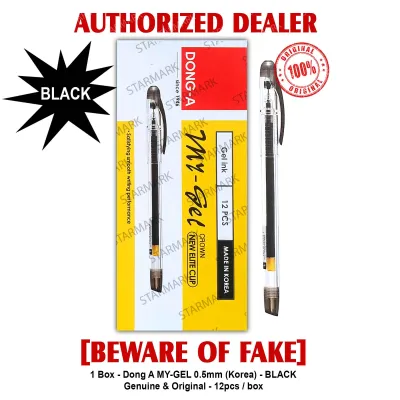
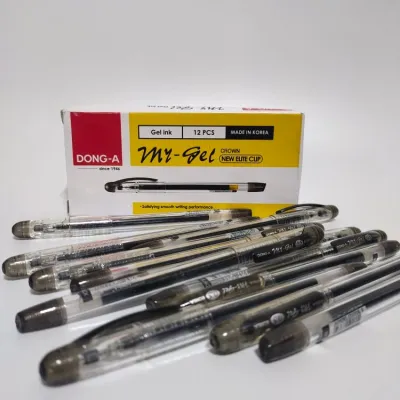
![[2s/3s] Dong-A My-Gel Pen (0.3/0.4/0.5/0.6/0.7)](https://img.lazcdn.com/g/p/e5823b92b1ad1a9e19107b3960d03788.jpg_400x400q80.jpg_.webp)
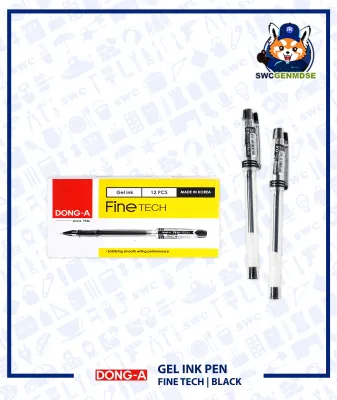
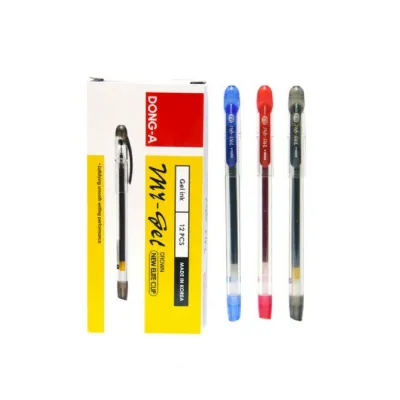
Prices are valid at publication and may change. Please refer to the product page for the latest price.
Conversely, alternative budget gel pens may be superior if you prefer a needle-tip design for ultra-fine diagrams, require a lighter overall barrel weight to reduce hand fatigue, or need a vast palette of color options for creative journaling. Ultimately, the true value of any budget pen is determined by how its specific ink formula interacts with your preferred paper stock without feathering or bleeding through.
Defining the Contenders: Dong A Gel Pen Point 5 vs. Market Alternatives
To make an informed decision, it is essential to understand what makes the dong a gel pen point 5 unique and how it compares to the broader budget landscape in the Philippines. The Dong A My Gel series, particularly the 0.5mm variant, features a classic ribbed rubber grip, a clear plastic barrel that displays the remaining ink level, and a secure cap design. It uses a dye-based gel ink that flows generously, producing a dark, legible line that is slightly broader than some other 0.5mm pens due to its rich ink laydown. It has earned its reputation as a reliable workhorse in local high schools, universities, and corporate offices.

On the other side of the comparison are various budget gel pens available in local book stores, school supply shops, and online marketplaces. These alternatives generally fall into three categories: generic store brands, affordable Asian imports, and value-tier Japanese or Korean brands. In this budget segment, pricing typically ranges from ₱15 to ₱45 per single pen. While these options are highly accessible, their physical construction, ink capacity, and tip assembly vary significantly. Defining the best option requires looking closely at how these design differences translate to daily performance.
Key Comparison Dimensions for Everyday Gel Pens
Evaluating a gel pen requires analyzing its physical and chemical properties during active use. A pen that looks excellent on a store display might skip on cheap paper, cause hand cramps during a two-hour exam, or smudge easily under a highlighter. We break down these differences across three critical dimensions: ink performance, tip durability, and physical ergonomics.
Ink Flow, Smoothness, and Drying Time
The ink formula is the heart of any gel pen, determining how smoothly the tip glides across the page and how clean the final text appears. The Dong A 0.5mm is known for its wet, highly saturated ink flow. This high flow rate ensures that every stroke is dark and fully formed, eliminating the faint or hollow lines common in dry pens. However, this generous ink delivery means the ink requires a few extra seconds to dry completely, especially on smooth, low-absorbency paper.
When writing on highly absorbent, low-cost paper like standard intermediate pads or newsprint-grade school notebooks, a wet ink formula can lead to feathering (where the ink spreads sideways along the paper fibers) or bleed-through (where the ink shows through or leaks to the back of the page). Under these conditions, some budget alternatives with drier or hybrid gel-ink formulas may perform better, leaving a sharper line with less back-page ghosting.
To evaluate ink performance on your own materials, perform a simple trial. Draw a thick grid pattern on your standard notebook paper and observe if the ink pools at the intersections or skips on quick diagonal strokes. Turn the page over to inspect the level of bleed-through. If you are left-handed, pay close attention to the drying speed: a faster-drying, slightly drier alternative will prevent your hand from smudging the text as it moves from left to right across the page.
Tip Durability and 0.5mm Line Consistency
The structure of the pen tip determines how the ink is transferred to the paper and how the pen feels physically as you write. Most gel pens in this category utilize either a conical tip or a needle tip. The Dong A 0.5mm typically features a robust conical tip, which houses the tiny rotating ball securely within a cone-shaped metal housing. This design is exceptionally durable, resisting bending or alignment issues even if you write with a heavy hand or at a steep angle.
Many budget alternatives opt for a needle tip, where the ball is held at the end of a thin, straight metal tube. Needle tips offer superior visibility, making them excellent for drawing fine lines, mathematical symbols, or compact Asian characters. However, they are inherently more delicate. A dropped needle-tip pen or excessive writing pressure can easily bend the tip, causing the pen to scratch the paper or stop writing entirely.
When comparing line consistency, observe how the line behaves when you change your writing angle. A high-quality 0.5mm tip should maintain a uniform line width whether held vertically or at a relaxed 45-degree angle. Check for physical feedback: if you feel a scraping sensation or hear a scratching sound, the ball may not be rotating smoothly within its housing, or the metal casing may be uneven. Budget pens can occasionally suffer from manufacturing variances, so inspecting the tip for symmetry right out of the package is a smart habit.
Grip Comfort and Barrel Ergonomics
Ergonomics play a vital role in preventing hand strain, especially during long writing sessions such as essay writing, journaling, or taking board exam notes. The Dong A 0.5mm features a prominent, textured rubber grip that provides a secure, cushioned hold. This grip is particularly beneficial in the tropical, high-humidity climate of the Philippines. When hands become sweaty during warm afternoons in classrooms or offices without air conditioning, the textured rubber helps maintain control and prevents the fingers from sliding down toward the tip.
In contrast, many modern budget alternatives feature sleek, minimalist designs with hard plastic barrels and no rubber grip. While these pens look elegant and are incredibly light, the smooth plastic can become slippery when exposed to moisture or hand oils. This forces the writer to grip the pen more tightly, leading to rapid hand fatigue and cramping over extended periods.
Weight distribution also varies. Pens with heavy caps can feel back-heavy when posted (placing the cap on the back of the pen while writing), which alters your natural writing balance. The Dong A 0.5mm is well-balanced both posted and unposted, thanks to its lightweight plastic body. When testing alternatives, pay attention to where the center of gravity lies; a pen that feels balanced in your hand will allow you to write longer with less physical effort.
Price-to-Performance Value: Are Budget Alternatives Worth It?
To calculate the true value of a gel pen, you must look beyond the initial purchase price and consider its lifespan, ink capacity, and refill options. While a generic gel pen priced at ₱15 seems like an incredible bargain compared to a Dong A priced at ₱25 to ₱35, the cheaper pen may contain significantly less ink or suffer from structural failures before the ink is fully depleted.
Ink consumption rates vary widely. Because the Dong A 0.5mm delivers a rich, wet line, it naturally consumes ink faster than alternatives with drier formulations or smaller tip sizes. However, Dong A offers widely available replacement refills in major local stationery stores. Purchasing refills is not only more environmentally friendly but also lowers your long-term cost per page, as refills are typically priced lower than a brand-new pen.
Many ultra-cheap alternatives do not offer official refills. Once the ink runs out, or if the tip becomes damaged, the entire pen must be discarded. This disposable nature can make generic pens more expensive over a school semester or a fiscal quarter in an office.
When sourcing pens, look for bulk bundle deals or boxes of 12 in local retail stores to secure the lowest per-unit cost. Be cautious when purchasing from unauthorized online sellers on ecommerce platforms. While the prices may seem remarkably low, poorly stored gel pens exposed to high warehouse temperatures can suffer from dried-out tips or separated ink formulas, rendering them useless upon arrival. Buying from reputable local dealers ensures you receive fresh stock that has been stored in optimal conditions.
Decision Framework: Choose Dong A or an Alternative?
To finalize your choice, evaluate your writing environment, paper preferences, and physical comfort requirements against this structured decision framework.
Choose the Dong A 0.5mm if:
- You write on standard paper: Your daily work involves standard copy paper, intermediate pads, or school notebooks where a wet, dark line is highly legible.
- You experience sweaty hands: You write in warm, humid environments and need a reliable, textured rubber grip to prevent slipping.
- You prefer a bold, dark line: You enjoy the high-contrast look of rich gel ink and do not mind a slightly longer drying time.
- You want long-term reliability: You prefer a durable conical tip that can withstand heavy writing pressure without bending or scratching.
Choose a Budget Alternative if:
- You need instant-drying ink: You are left-handed or write rapid notes where immediate smudge resistance is mandatory.
- You use ultra-thin paper: You write in delicate planners or bibles where ink bleed-through must be kept to an absolute minimum.
- You prefer a needle tip: You require maximum tip visibility for detailed drawing, mathematical notation, or extremely compact handwriting.
- You want a minimalist aesthetic: You prefer a lightweight, click-retractable pen without a bulky rubber grip.
Verify first if:
- You are buying for an organization: If you are ordering in bulk for an office, school event, or business, always purchase a single test unit first. Write several pages on the exact paper stock your organization uses to ensure the ink does not bleed or feather excessively before committing to a large order. This simple step prevents costly procurement mistakes and ensures user satisfaction.
How to Test and Verify Your Gel Pen Before Buying in Bulk
Before committing to a large purchase of gel pens for your school year or office supply closet, conducting a quick, practical assessment will save you time and money. Use this simple three-step testing method on your actual daily paper:
- The Scribble Test: Draw rapid, continuous loops and figure-eights across the page. This checks the consistency of the ink flow and the rotation of the ball. A quality pen should deliver a continuous line without skipping, scratching, or leaving dry patches in the middle of curves.
- The Smudge Test: Write a short sentence, then immediately run your finger across the text after one, three, and five seconds. Note how long it takes for the ink to set completely. This is crucial for determining if the pen is suitable for fast note-taking or left-handed writers.
- The Pressure Test: Write a few lines using your lightest touch, then transition to your normal writing pressure, and finally apply slightly heavier pressure. A durable 0.5mm tip should handle these transitions smoothly, without digging into the paper or showing signs of tip wobbling.
Additionally, always inspect the physical packaging before buying. Look for clear manufacturing dates or batch codes on the box or pen barrel. Gel ink is a water-based emulsion that can degrade, separate, or dry out if stored in warm, humid retail environments for years. Choosing fresh stock ensures the ink flows smoothly from the very first stroke.
Frequently Asked Questions (FAQ)
Are Dong A 0.5mm gel pens refillable?
Yes, the standard Dong A 0.5mm gel pen is fully refillable. Replacement ink cartridges are widely distributed across major office supply stores and stationery shops in the Philippines. To replace the ink, simply unscrew the tip cone or the end cap of the barrel, slide out the empty cartridge, insert the new refill, and secure the barrel back together. This refill system is highly cost-effective and reduces plastic waste. While some budget alternatives also offer refills, many generic or ultra-cheap brands are strictly single-use, meaning you must buy a completely new pen once the ink runs dry.
How do I prevent gel ink from drying out in a humid climate?
To maximize the lifespan of your gel pens in the humid Philippine climate, proper storage is essential. Always keep the cap securely clicked in place or retract the tip immediately when the pen is not in use; leaving the tip exposed to air allows the water-based gel ink to evaporate, leading to clogs. Store your pens horizontally or tip-down in a pen holder. Storing them tip-up can cause air bubbles to travel up the cartridge, disrupting the ink flow. Finally, keep your stationery away from direct sunlight, metal desk organizers exposed to heat, or areas near air conditioning exhaust vents, as extreme temperature fluctuations can cause the ink emulsion to separate or leak.

Community discussion
Share your experience or ask a question. Comments are reviewed before publication.