
Choosing the right dotted notebook requires looking beyond a beautiful cover to evaluate the technical specifications that dictate your daily writing experience. The ideal notebook balances dot spacing, paper weight, binding style, and physical dimensions to match your specific pens and lifestyle. By comparing these key details, you can avoid issues like ink bleeding through the pages, cramped handwriting, or a spine that refuses to lie flat on your desk.
Decoding Dot Spacing and Grid Visibility
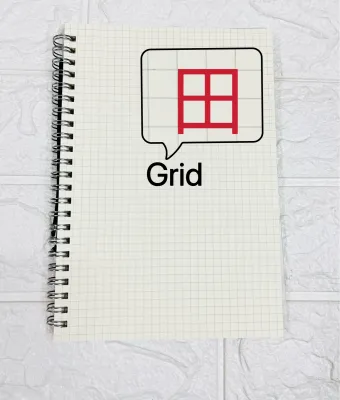
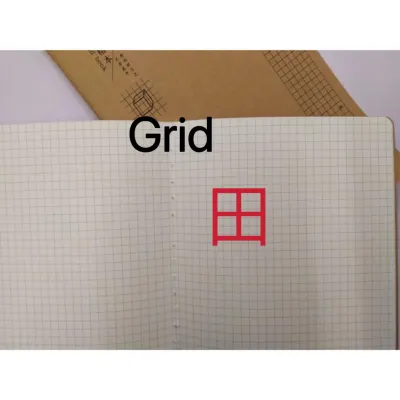
Standard dot spacing is typically 5 mm, which closely matches the line height of narrow-ruled paper and suits average to small handwriting. If you have larger, expressive handwriting or plan to use the notebook for bold sketching, look for wider spacing options like 6 mm or even 7 mm. Conversely, compact writers or those doing detailed technical drawings may prefer a tighter 4 mm grid.
The visual prominence of the dots also plays a major role in how clean your pages look. Dark, heavy dots can create visual clutter that competes with your ink, while faint, light gray dots provide a subtle guide that virtually disappears when you step back. When shopping on an online marketplace, zoom in on product images or check user reviews to verify the dot opacity and color.
Products mentioned in this guide
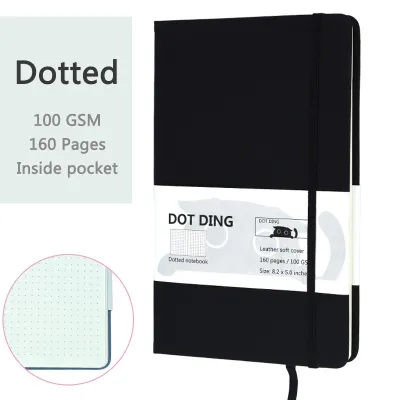
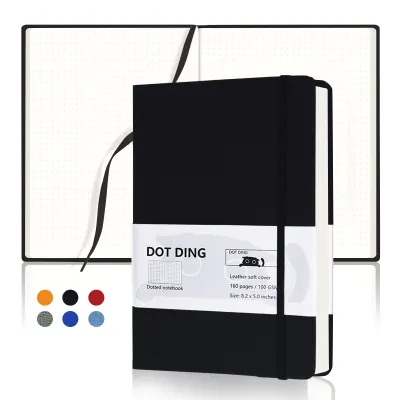
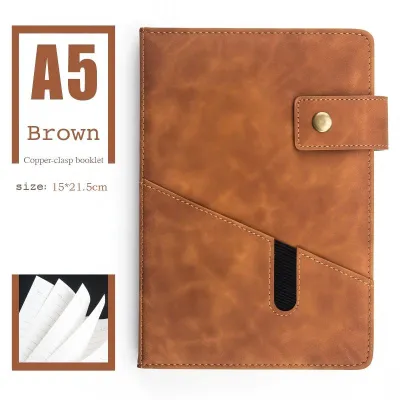
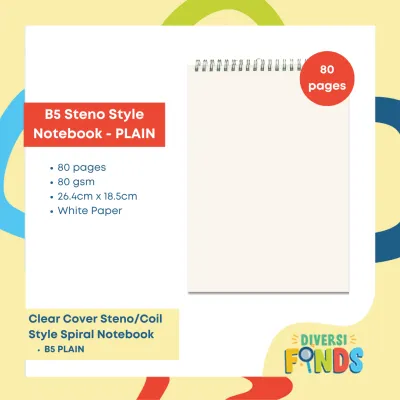
Prices are valid at publication and may change. Please refer to the product page for the latest price.
Evaluating Paper Weight for Your Preferred Pens
Paper weight is measured in grams per square meter (GSM), which indicates the density and thickness of the sheets. Higher GSM paper is generally more opaque and durable, making it less prone to ghosting (where writing is visible on the other side) and bleeding (where ink seeps through the paper). In humid tropical climates like the Philippines, paper can absorb moisture from the air, making ink absorption and paper quality even more critical to prevent feathering.

For standard ballpoint pens and light gel pens, a paper weight of 80 GSM to 90 GSM is usually sufficient for daily note-taking. If you prefer wet inks, fountain pens, heavy gel pens, or creative markers, you should target 100 GSM to 120 GSM to ensure clean, readable pages on both sides. Artists using light watercolor washes or heavy brush pens will want to look for specialized notebooks offering 140 GSM to 160 GSM.
Beyond weight, pay attention to the paper’s texture and coating. Smooth, coated papers slow down ink drying times but prevent feathering, while toothy, uncoated papers dry quickly but may cause wet inks to spread. You can verify these characteristics by reading detailed product descriptions or checking if the manufacturer offers sample swatches.
Comparing Binding Types and Lay-Flat Performance
The way your notebook is bound determines how easily it opens and how well it survives being tossed into a backpack or tote bag. Thread-sewn binding, often called Smyth-sewn, is highly regarded for durability and lay-flat performance because the pages are stitched together in sections. Glued bindings are common in budget-friendly options but can crack over time, causing pages to fall out under heavy use.
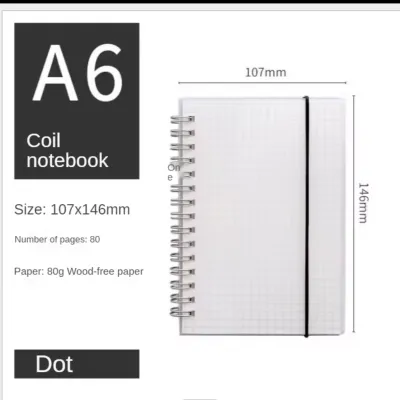
For those who prioritize flexibility, spiral or wire-bound notebooks allow you to fold the cover completely back, which is excellent for writing on your lap or in cramped spaces like a commute. Disc-bound and loose-leaf systems offer high customization, letting you rearrange, add, or remove pages as needed. However, these open systems expose page edges to wear and tear more easily than traditional bound books.
A true lay-flat design is essential for dotted notebooks, especially if you draw grids or write across the center gutter. If a notebook does not lay flat naturally, you will constantly fight the curve of the spine, which disrupts your hand posture and ruins straight lines. Check product specifications for terms like “exposed spine” or “180-degree lay-flat” to ensure a comfortable writing surface from the first page to the last.
Balancing Dimensions, Page Count, and Portability
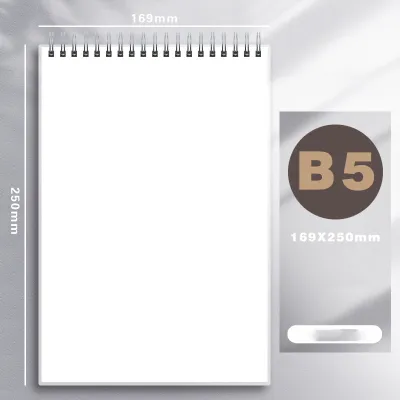
Notebook sizes are standard international formats, with A5 (148 mm x 210 mm) being a popular choice for dotted journals due to its balance of writing area and portability. If you need a highly portable option that fits into a small bag or pocket for quick notes on the go, consider an A6 or pocket-sized notebook. For desk-bound planning, sketching, or extensive project layouts, a larger B5 or A4 size provides ample room to work.
Page count directly influences the thickness and weight of your notebook, which is a key consideration if you carry it daily. A notebook with 160 pages of 120 GSM paper will be significantly heavier and bulkier than one with 80 pages of the same weight. Consider your typical writing volume and whether you prefer a slim notebook that you replace frequently or a thick, archival volume that lasts an entire year.
The cover material also plays a protective role, especially in humid environments where paper can warp. Hardcovers made of bookboard or thick synthetic materials offer a sturdy writing surface anywhere and protect pages from bending in crowded bags. Softcovers, such as flexible cardstock or thin faux leather, are lighter and conform better to tight spaces, though they offer less protection against accidental spills or rough handling.
Building Your Specification Shortlist by Use Case
To simplify your decision, align the notebook’s specifications with your primary activity. For bullet journaling, look for a thread-sewn A5 notebook with 100 GSM to 120 GSM paper, standard 5 mm dot spacing, and a durable hardcover. This combination supports various pens, lies flat for easy layout design, and survives daily handling.
If your focus is sketching, drafting, or hand lettering, prioritize paper weight and dot visibility. A notebook with 120 GSM to 160 GSM paper will prevent ink bleed from heavy markers, while faint, light-gray dots will guide your layout without distracting from your finished artwork. A sturdy hardcover is also beneficial here to act as a portable drawing board.
For professional meeting notes and daily carry, optimize for portability and speed. A slim B5 or A5 notebook with 80 GSM to 90 GSM paper and a flexible softcover keeps the weight low in your bag. A spiral binding can also be highly practical in meetings, allowing you to fold the notebook in half to save desk space.
Frequently Asked Questions (FAQ)
Can I use fountain pens in any dotted notebook?
Not all dotted notebooks are suitable for fountain pens, as wet inks require paper that resists feathering and bleed-through. Standard or low-GSM paper often absorbs ink too quickly, causing the lines to spread out and seep through to the back of the page. To ensure a good experience, look for notebooks specifically labeled as fountain-pen friendly or those featuring high-density paper of at least 100 GSM with a smooth, coated finish.
Does dot spacing affect digital scanning or copying?
Yes, the color and opacity of the dots determine how they appear when scanned or photocopied. Light gray or faint dots are designed to drop out during scanning, especially when using mobile scanner apps with high-contrast or document-enhancement filters. If you plan to digitize your notes or sketches regularly, test a single page first to see if the dots disappear, leaving only your clean handwriting or drawings.
Community discussion
Share your experience or ask a question. Comments are reviewed before publication.