
Quick Answer and Decision Framework
Choosing between duplicate and triplicate carbonized receipt books depends entirely on how many physical copies your business workflow requires for a single transaction. A duplicate (2-part) book generates an original and one copy, while a triplicate (3-part) book creates an original and two copies simultaneously.
You should choose a duplicate format if your operations only require one copy for the customer and one copy for your internal daily sales log. This setup is highly efficient for direct-to-consumer transactions where a single record satisfies your accounting needs.
You should choose a triplicate format if a third party, such as a delivery driver, warehouse coordinator, or external accountant, requires a physical copy of the transaction. This ensures all departments remain synchronized without the need for manual photocopying.
Products mentioned in this guide
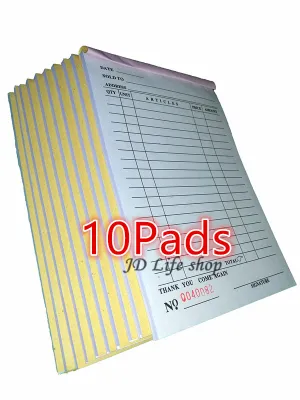
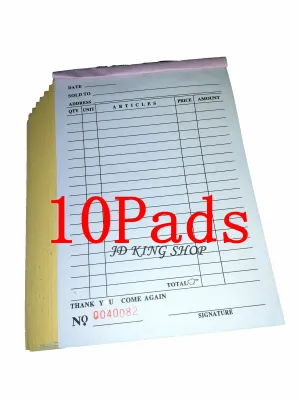
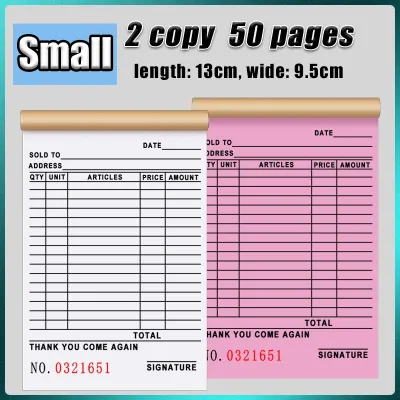
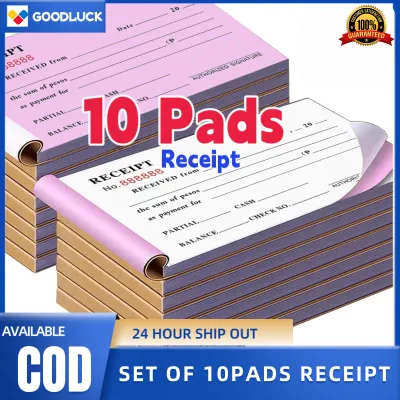
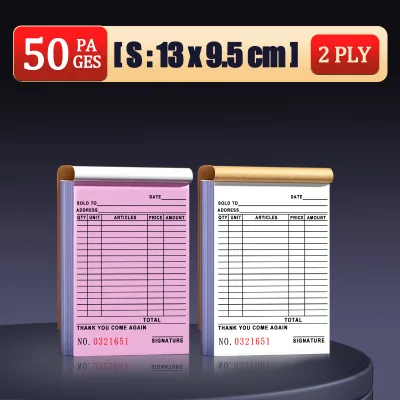
Prices are valid at publication and may change. Please refer to the product page for the latest price.
Before purchasing, verify if your local tax authority, such as the Bureau of Internal Revenue in the Philippines, or specific corporate client contracts mandate a minimum number of physical copies. Some regulatory frameworks require businesses to retain a specific color-coded copy on-site for auditing purposes, which makes the triplicate format a necessity.
Core Differences Between 2-Part and 3-Part Books
The primary distinction between these two formats lies in their sheet configuration and standard color-coding sequences. Carbonless paper, often referred to as NCR (No Carbon Required) paper, relies on a chemical reaction between micro-encapsulated dye on the back of one sheet and a reactive clay coating on the front of the next. In a duplicate book, the standard sequence is a white top sheet for the customer and a yellow second sheet for the merchant. Triplicate books introduce a third layer, typically utilizing a white top sheet, a yellow middle sheet, and a pink bottom sheet to differentiate destination departments.

Physical thickness and book bulk are also critical factors to consider, especially for mobile operations. Because a triplicate set contains three sheets of paper instead of two, a book with the same number of transactions (usually 50 sets) is significantly thicker and heavier. This added bulk can make triplicate books more challenging to store in compact cash drawers or carry in a delivery rider’s bag. The extra paper weight also means that shipping and storage costs for bulk orders will be higher.
From a financial perspective, triplicate books carry a higher upfront cost per book and a higher cost per transaction. The manufacturing process for 3-part carbonless paper requires more chemical coatings and raw paper materials, which is reflected in the retail price. You should compare the unit prices at your local stationery supplier to determine if the operational benefit of a third copy justifies the additional expense for your volume of transactions. If your business does not actually utilize the third copy, opting for triplicate books results in unnecessary paper waste and inflated operational expenses.
Operational Scenarios for Duplicate Receipt Books
Duplicate receipt books are the standard choice for retail boutiques, food stalls, independent service providers, and direct-to-consumer pop-up shops. In these environments, transactions are straightforward, involving only the seller and the buyer. Once the sale is finalized, the customer receives the original white receipt, and the yellow copy remains bound in the book for the merchant’s daily reconciliation.
This 2-part workflow offers several practical benefits, including faster tearing and less paper waste. Because there are fewer sheets to manage, sales associates can complete transactions quickly, which is vital during peak hours in busy retail environments. The lighter weight of duplicate books also makes them highly suitable for mobile service providers, such as plumbers, electricians, or mobile food vendors, who need to carry receipt books throughout the day.
However, duplicate books have clear limitations when business operations expand. If your business model requires you to send a copy of the receipt to a warehouse for inventory deduction while keeping another copy in the main office, a duplicate book cannot support this without manual copying. Attempting to use a 2-part book in a multi-department workflow often leads to administrative bottlenecks and lost records.
Operational Scenarios for Triplicate Receipt Books
Triplicate receipt books excel in complex business environments such as wholesale distribution, B2B transactions, logistics, and inventory-managed sales. These operations typically involve multiple stages of fulfillment, where different departments must act on the same transaction simultaneously. For instance, when a delivery is made, the customer keeps the original white copy, the delivery driver returns the yellow copy to the logistics office as proof of delivery, and the pink copy goes directly to the accounting department for invoicing.
This simultaneous update system eliminates the need to photocopy or manually rewrite transaction details, reducing human error and saving valuable administrative time. It provides an immediate, tamper-evident paper trail that ensures warehouse staff, delivery personnel, and office administrators are all working with identical information. This level of tracking is particularly valuable in high-humidity environments where digital devices might fail or where physical signatures are required at multiple touchpoints.
Despite these advantages, triplicate books present operational trade-offs. They are bulkier, meaning they take up more physical storage space on office shelves and in delivery vehicles. Because they contain more sheets per transaction, a single book of 50 sets will run out faster than a duplicate book of the same set count, requiring more frequent replacements. If your staff routinely discards the third copy because it serves no functional purpose, the extra expense and bulk are entirely wasted.
Key Specifications to Verify Before Ordering
Before placing an order for carbonized receipt books, you must verify the physical dimensions and ruling format to ensure they fit your daily workflow. Common sizes include A4, A5, and half-letter formats. If your transactions require detailed itemization, a larger A4 size with pre-printed columns for quantity, description, unit price, and total amount is essential. For simple services or quick retail sales, a compact A5 or pocket-sized book with minimal ruling may be more practical.
Binding type is another critical specification that affects usability and durability. Glued edge books allow you to easily pull out individual sheets or entire sets, making them ideal for quick distribution. Stitched or stapled books with perforated lines keep the merchant’s copy securely bound inside the book while allowing the customer’s copy to be torn away cleanly. Ensure the binding style is compatible with your existing receipt holders, clipboards, or point-of-sale drawers to prevent tearing or damage during busy shifts.
Finally, check for sequential numbering and perforation quality. Sequential numbering is a fundamental requirement for internal auditing, tax compliance, and tracking missing transactions. High-quality, clean perforations are crucial in humid tropical climates, as moisture can cause carbonless paper sheets to stick together, leading to uneven tears or ruined receipts if the perforation is poorly executed.
Frequently Asked Questions (FAQ)
Can I use a standard ballpoint pen on carbonized receipt paper?
Yes, a standard ballpoint pen is the ideal writing instrument for carbonized receipt paper. The chemical transfer mechanism in carbonless paper relies on physical pressure to rupture the micro-capsules of dye on the upper sheets, which then react with the clay coating on the sheets below. A ballpoint pen has a hard, structured tip that allows you to apply the firm, even pressure necessary to create a clear, legible copy on the duplicate or triplicate sheets. Gel pens, rollerball pens, and fountain pens use liquid inks that can smudge or bleed on the coated paper, and they do not transfer enough physical pressure to create a sharp image on the lower copies.
How should I store unused carbonized receipt books?
Unused carbonized receipt books should be stored flat in a cool, dry place, away from direct sunlight, extreme heat, and high humidity. Tropical climates with high humidity can cause the chemical coatings on carbonless paper to degrade or stick together, which can ruin the transfer capability of the sheets. Avoid placing heavy objects on top of the books during storage, as accidental pressure can rupture the micro-capsules and cause dark, unsightly smudge marks to appear on the underlying pages before they are even used.
Is it possible to customize the fields on these receipt books?
Yes, many local stationery suppliers and commercial printers offer custom printing services for both duplicate and triplicate carbonless books. Customization allows you to include your business logo, contact information, tax identification numbers, and specific terms and conditions directly on the sheets. While generic, pre-printed receipt books are highly cost-effective and readily available for immediate use, custom-printed books are highly recommended for established businesses that require specific data fields to match their internal accounting software or regulatory compliance standards.
Community discussion
Share your experience or ask a question. Comments are reviewed before publication.